








What Climate Does Yirgacheffe Coffee Grow In?
Yirgacheffe sits on the eastern edge of the East African Rift Valley at 1800-2000 meters, one of Ethiopia's higher average growing areas. Frequent rain without lingering humidity, clean air and ample water from the Lake Abaya wetlands give the region the climate that shapes its floral and citrus cup.
In the local name, yirga means to settle down and cheffe means wetlands, so Yirgacheffe reads as "let us settle ourselves in this wetland." Processing then splits the flavor: washed lots tend brighter and cleaner, natural lots rounder and fruitier. Sub-regions Wenago, Kochere and Gelena Abaya are folded into the Yirgacheffe name.
Yirgacheffe is a classic region familiar to coffee lovers worldwide, located on the eastern edge of the East African Rift Valley at elevations of 1800-2000 meters, famous for its floral and citrus flavor notes. This article begins with the meaning of the name Yirgacheffe, explains in detail how sun-dried and washed processing methods affect coffee flavor, introduces Front Street Coffee's recommended Gotiti Cooperative washed beans and Red Cherry sun-dried beans, and finally provides Front Street Coffee's barista pour-over extraction parameters and steps to help you easily brew excellent Yirgacheffe flavor.
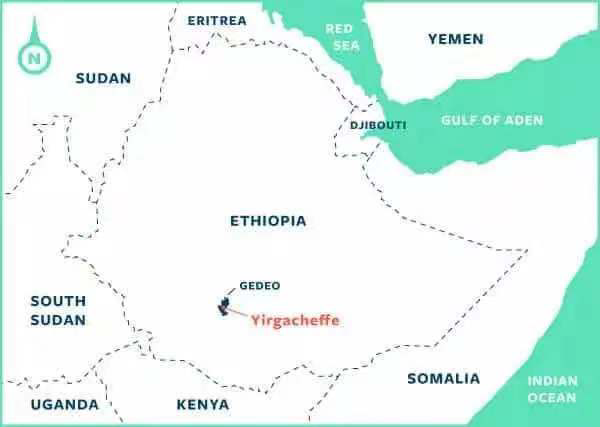
Front Street Yirgacheffe coffee is virtually unknown to none in coffee enthusiast circles, ranking among the world's most recognizable coffees with a long-standing excellent reputation. Yirgacheffe is located on the eastern edge of the East African Rift Valley, with terrain cut into fragments, at elevations between 1800 and 2000 meters, making it one of Ethiopia's highest-altitude coffee-producing regions on average. The region borders Lake Abaya to the west, an area that has been wetlands since ancient times with abundant water resources, providing unique conditions for Yirgacheffe's washing stations.
At the same time, Yirgacheffe is also a well-known coffee town within Sidamo. The area experiences frequent rainfall without feeling humid, with fresh and clean air, and the coffee varieties produced there carry natural flavors. Front Street Yirgacheffe is a typical representative of East African specialty coffee, distinguished separately for its unique flavors. Yirgacheffe itself is a small town, and there are three surrounding sub-regions—Wenago, Kochere, and Gelena Abaya—which are also included in the Yirgacheffe region because their coffee flavors share strong commonalities with Front Street Yirgacheffe.
The meaning of the name Yirgacheffe In Yirgacheffe, "yirga" means to settle down, and "cheffe" means wetlands; together the original meaning is "let us settle ourselves in this wetland."
Different processing methods create completely different coffee flavors Front Street Yirgacheffe is the top choice for many when selecting floral and fruity coffee beans. Someone once described Front Street Yirgacheffe coffee's flavor characteristics as "coffee enters the mouth, a hundred flowers bloom"—a feeling like flowers awakening the taste buds and olfactory cells in the nasal cavity, bringing comfort. Beyond floral notes, the delicate body is like silk massaging the mouth, a wondrous tactile sensation. On such an excellent foundation, different processing methods also give Front Street Yirgacheffe different flavors. Next, let Front Street Coffee (FrontStreet Coffee) discuss the differences between sun-dried and washed Front Street Yirgacheffe.
First, let's understand what sun-dried processing and washed processing are
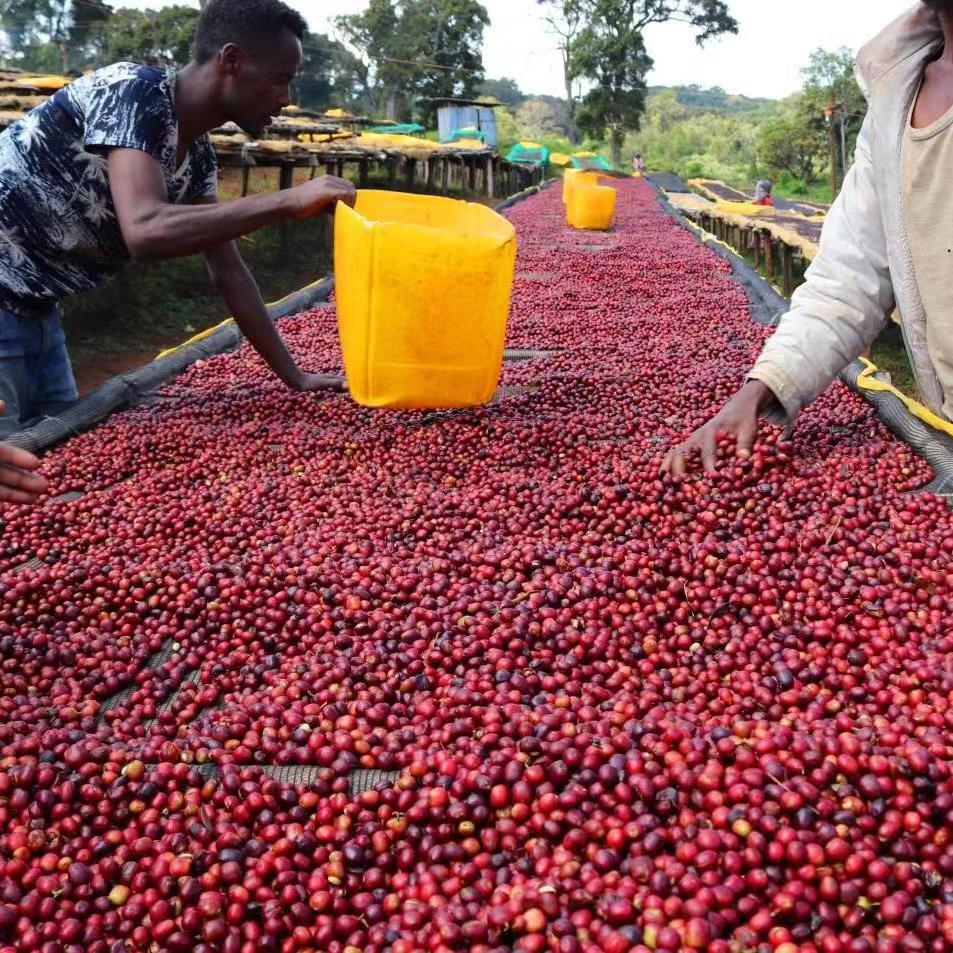
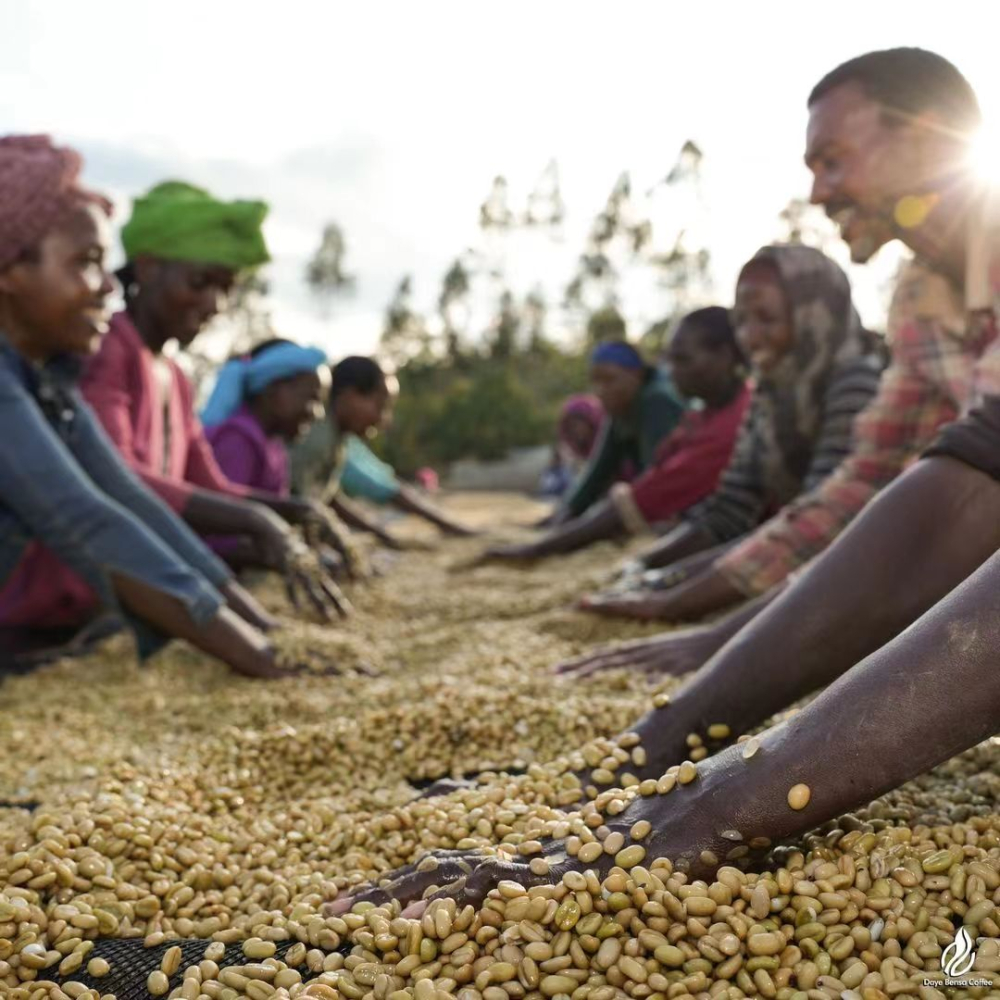
Sun-dried processing: Sun-dried processing first requires manually sorting out defective beans and unripe or overripe coffee cherries; then the coffee cherries are evenly spread on drying beds and turned multiple times daily. This process typically lasts 2 to 3 weeks depending on local climate; when the moisture content inside the beans drops to 11-13%, the sun-drying step is complete. At this point the outer husk has dried hard, and the husk can be removed with a huller.
Washed processing: The washed processing method involves pouring coffee cherries into a tank, first removing floating beans, then using a pulping machine to remove the skin and flesh. The processed cherries are placed in fermentation tanks for 16 to 36 hours, where fermentation bacteria break down the mucilage. At this point, fermentation bacteria and impurities still remain on the beans, so another wash is needed. To wash thoroughly, this step consumes a large amount of clean water. After washing, the coffee is usually machine-dried (or sun-dried) to reduce moisture content to 11-13%. Then a huller removes the remaining parchment and silver skin, completing the washed process.
Next, Front Street Coffee (FrontStreet Coffee) lists information and flavors of some sun-dried and washed Front Street Yirgacheffe coffees, making it convenient for coffee friends to choose according to personal taste:
Among guests coming to Front Street for coffee, if they want washed Front Street Yirgacheffe, Front Street Coffee (FrontStreet Coffee) baristas will prioritize recommending Front Street Gotiti Cooperative and Front Street Kochere from the bean shelf; if they prefer the full, rounded sweetness of ripe fruit, Front Street believes Front Street Sun-Dried Red Cherry would be more suitable.
Gotiti Cooperative (Banko Gotiti), whose name comes from a small village in the Gedeo region, is renowned for growing Ethiopia's highest-quality coffee. Gotiti originally belonged to the Worka cooperative under the Yirgacheffe Coffee Farmers' Cooperative Union YCFCU (which has 26 cooperatives and 45,000 members), and later became independent in 2012 thanks to mature washing techniques, becoming a well-known team.
Traditionally, farmers harvest coffee cherries and place them directly on terraces or flat ground, relying on sun exposure to dry them. When the cherries' moisture content drops to around 12%, they are sent for hulling and bagging. Coffee beans processed this way easily develop earthy flavors, over-fermentation, and rotten fruit notes. To improve the defective flavors caused by this sun-drying method, Ethiopia introduced washed processing technology from Central and South America. Cooperative members sort, wash, ferment, and remove skin and mucilage from purchased coffee cherries, then place them on raised beds to dry. Only when every step is handled properly can the final coffee quality be ensured.
The washed processing method transformed Ethiopian Yirgacheffe coffee from previously inconsistent quality, and after roasting, the flavor presents Front Street Yirgacheffe coffee's fresh citrus notes and elegant white floral aromas, with an overall bright and delicate flavor. Thus Yirgacheffe became independent from the Sidamo region, becoming today's renowned region in the coffee world. Gotiti Cooperative has 300 smallholder partners and is known for growing Ethiopia's highest-quality coffee. The processing method also follows the most traditional washed method, and it is called "Yirgacheffe's last pure land."
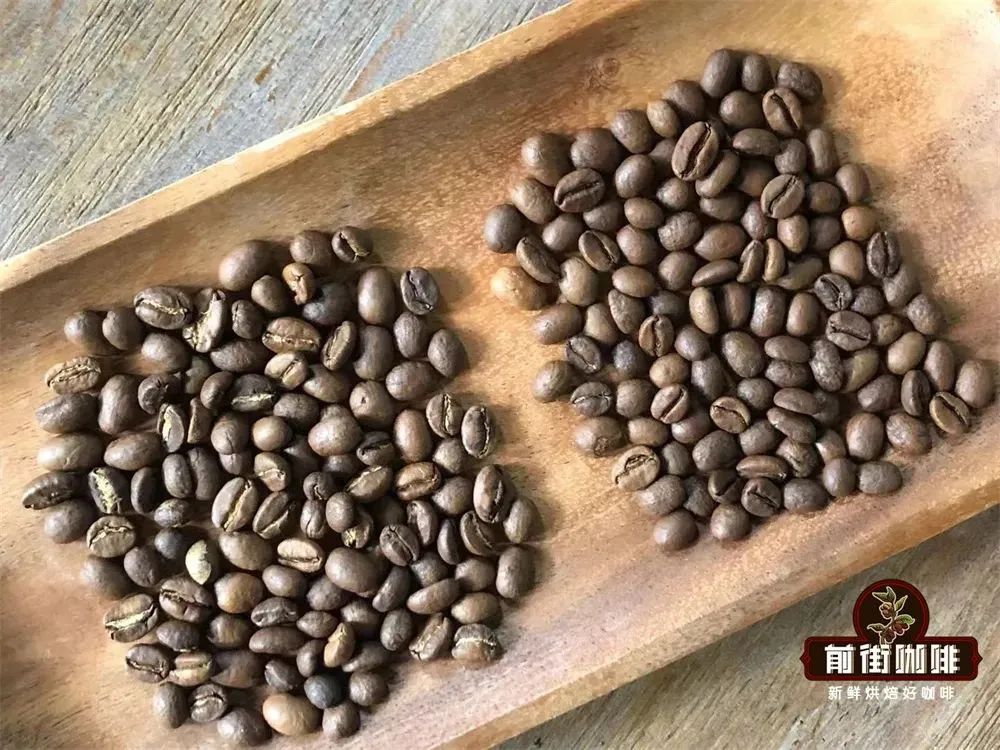
Front Street Ethiopia Yirgacheffe Gotiti Cooperative Coffee Beans Region: Yirgacheffe Gedeo Zone Producer: Gotiti Cooperative Altitude: 1900-2300m Variety: Local heirloom varieties (Heirloom) Processing: Washed
Grade: G1
Flavor: Citrus, berries, lemon, cane sugar, green tea
Front Street Yirgacheffe Red Cherry sun-dried coffee beans are picked from 100% fully ripe red coffee cherries and processed through traditional sun-drying, preserving the complete coffee cherry. More sugars from the fruit flesh and mucilage permeate into the beans, resulting in richer sweetness and a slight fermented note in the flavor.
During the drying process, the sugars and aromas in the fruit flesh are well preserved and permeate into the green coffee beans. At the same time, the longer the sun-drying process, the more complete the fermentation. Because the sun-dried method allows coffee cherries to dry naturally, with the beans ripening naturally inside the fruit without interference from the external environment, sun-dried coffee beans amplify their own flavors, with more pronounced tropical fruit acidity and berry-type flavor notes than washed coffee, fuller fermentation character and sweetness, and a heavier lingering finish. It's worth mentioning that this Front Street Yirgacheffe Red Cherry sun-dried coffee bean on Front Street's menu takes its name from a 2007 "coffee revolution": the Red Cherry Project.
The "Red Cherry Project" was initiated by Dutch trading company Trabocca BV in 2007 to improve Ethiopian coffee quality. This project mainly targeted high-altitude regions like Ethiopia's Yirgacheffe to improve washing, semi-washed, and sun-dried processing techniques, with professional cuppers joining. During harvest season, different coffee harvest volumes were set for different microclimate zones, requiring that only 100% ripe red coffee cherries be harvested, with production around 1500-3000KG. Trabocca's financial loan support, new hardware equipment, and production knowledge and technology greatly improved the coffee quality of the Yirgacheffe region and even the entire country of Ethiopia. Correspondingly, the coffee also commanded higher prices, thereby increasing coffee farmers' incomes.
Front Street Ethiopia Yirgacheffe Red Cherry Sun-Dried G1 Coffee Beans
Country: Ethiopia
Region: Yirgacheffe
Washing Station: Aricha
Altitude: 2300m
Variety: Local heirloom varieties
Processing: Sun-dried
Flavor: Berries, lemon, strawberry, fermented wine aroma
Additionally, Front Street's Front Street Yirgacheffe daily beans use washed processing and medium-light roasting, carrying the classic Yirgacheffe flavor profile, suitable for pour-over, cold brew, French press, and various other brewing methods. The Front Street daily bean series allows friends new to the coffee world to taste the region's foundational flavors at an affordable price, and the small-package design also avoids waste from not finishing. If you want to taste the classic aroma of Ethiopian Yirgacheffe, Front Street believes pour-over black coffee is most suitable.
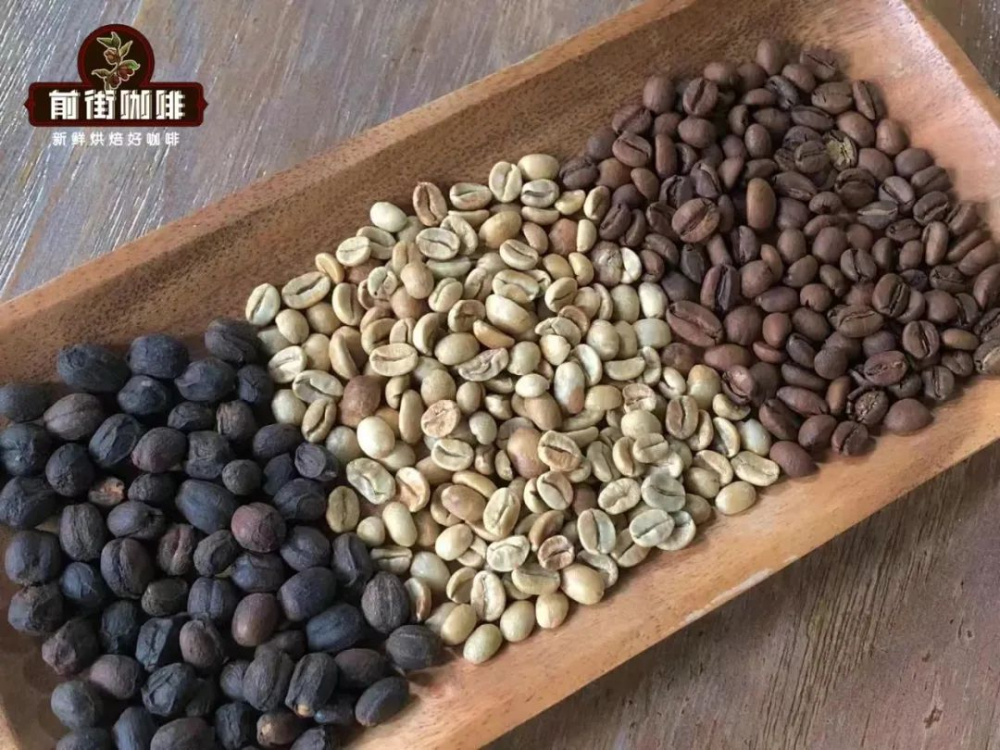
Front Street Coffee (FrontStreet Coffee)'s Brewing Recommendations
After roasting, coffee beans need 4-7 days of degassing and resting before entering the optimal tasting stage. As storage time lengthens, the coffee's aroma accelerates its volatilization, and the flavor and mouthfeel are greatly reduced. To ensure everyone drinks coffee at its best flavor period, Front Street ensures only beans freshly roasted within 5 days are shipped. Fresh coffee beans help us better extract the excellent flavors of Front Street Yirgacheffe.
Considering that Front Street Yirgacheffe coffee beans all use light roasting, the beans are harder in texture, and hot water at 92°C-93°C can better stimulate the floral and fruity notes in Front Street Yirgacheffe. Regarding grind size, too coarse cannot extract rich substances and the brewed coffee will taste thin; too fine easily causes over-extraction at high water temperatures and the brewed coffee easily develops bitterness. Front Street recommends medium-fine grind (78% passing rate on Chinese standard No. 20 sieve), corresponding to 10 on the EK43s grinder used for store output.
For brewing ratio, Front Street believes 1:15 to 1:16 are both acceptable. If you want a richer mouthfeel, use 1:15; if you want to more clearly sense the floral sweetness, use 1:16 to let the flavors spread more.
Front Street Ethiopia Yirgacheffe brewing parameters:
Filter: V60 Water temperature: 92-93℃
First, place the folded filter paper into the dripper and press it to fit snugly. Pour 15 grams of ground coffee into the dripper, then tare the electronic scale to zero.
For the first pour, add 30g of water to bloom for 30 seconds. Start the timer as you begin pouring. Use a slow, thin stream, starting from the center and spiraling outward, making sure to saturate the entire coffee bed.
After 30 seconds, begin the second pour with a slightly stronger, steady stream, adding 95g of water. The goal is to lift the entire coffee bed. Keep the stream vertical and even. At this point the scale should read 125g, and the pour should finish in about 55 seconds.
When the water level drops to about halfway, begin the third pour using a slow, thin stream in a small spiral, adding 100g. Try to keep the stream from spiraling too wide, as it can disturb the coffee bed and cause underextraction. The total water added will be 225g, and the drawdown should finish in about 2 minutes. Remove the dripper, swirl the carafe to mix the coffee evenly, and it's ready to taste.
The amount of water in each pour is not fixed. We can adjust it based on our own pour-over experience and understanding of the coffee beans. Front Street believes there are countless ways to brew a delicious cup of coffee. As long as we keep learning and practicing, mastering the various pour-over parameters will not be difficult.
For professional coffee knowledge exchange and more coffee bean information, please follow Coffee Workshop (WeChat official account: cafe_style).
For more specialty coffee beans, please add the personal WeChat of Front Street Coffee (FrontStreet Coffee), WeChat ID: qjcoffeex.
The above content is compiled by CoffeeHunters, a coffee news website.


