








How Are Coffee Beans Grown and Processed in Costa Rica?
Costa Rica is known for sweetness, and the Musician Series on Front Street's bean list leans on honey processing to bring that out. The series covers Mozart, Beethoven, and Bach. Honey processing keeps as much of the mucilage layer on the parchment bean as possible, and the amount left before drying determines the sweetness and body of the finished cup.
Limited water resources and local climate pushed honey processing to spread across Costa Rica. It is an improvement on Brazil's semi-dry method, aimed at raising sweetness. The retained mucilage is graded into black, golden, yellow, red, and white honey, so the same coffee beans grown on one estate can land at very different points on the sweetness scale.
Costa Rica has always been known for its sweetness, and the Musician Series on Front Street Coffee's bean list pushes that sweetness to the extreme. This series mostly uses honey processing, described by customers as "floral and fruity aroma, sweet as honey." This article will start with the principles of honey processing, outline the background of Canet Estate, introduce one by one the region, variety, altitude, processing method, and flavor differences of the three beans Mozart, Beethoven, and Bach, and include Front Street's V60 brewing parameters and actual tasting notes. Finally, it will also mention the Blueberry bean from the Brunca region as a supplementary option. Whether you want to understand the characteristics of Costa Rican regions or want to get the Musician Series for comparison, you will find useful information in this article.

When it comes to the sweetest coffee-producing area in the Americas, Costa Rica is second to none. On Front Street Coffee's bean list, there is a set of Front Street Costa Rica Musician Series coffee beans. Most beans in this series use honey processing, and customers habitually describe it as "floral and fruity aroma, sweet as honey."
There is quite a bit of know-how behind honey processing, and Front Street will now walk you through it: constrained by water resources and climate conditions, honey processing has become increasingly popular throughout Costa Rica. It is actually an improvement on Brazil's semi-dry method, aimed at enhancing sweetness. Its core lies in retaining as much of the mucilage layer attached to the parchment beans as possible. This is delicate work: the final color of the coffee beans depends on how much sticky mucilage remains before drying. The amount of mucilage directly determines the coffee's sweetness; generally speaking, the more mucilage or "honey" left behind, the higher the sweetness and body of the final product. According to different mucilage proportions, honey processing is further divided into categories such as black honey, golden honey, yellow honey, red honey, and white honey.
Earlier we mentioned Costa Rica's Musician Series. In fact, the "Front Street Costa Rica Musician Series" includes a total of four beans: "Front Street Mozart," "Front Street Beethoven," "Front Street Bach," and "Front Street Chopin." However, "Front Street Chopin" cannot be sourced as green beans in the short term, so we will not go into detail here and will only briefly mention that "Front Street Chopin" has quite outstanding rose aroma, tea-like quality, and sweetness, tasting as if you are enjoying a cup of floral tea.
Front Street's "Costa Rica Musician Series" comes from Canet Estate (Canet), located in Costa Rica's highest-altitude coffee-growing area of Tarrazu. Canet is the name of a small farm in this area, covering only 5 hectares, located in the town of San Marcos in the Tarrazu region, and owned by the family of the three Robles brothers, Leo, Elian, and Melvin. They have farmed and produced together for more than ten years and jointly built a small wet processing plant (Beneficio).
With equipment adjustments, the estate can produce coffees with different degrees of honey processing. At the same time, this area is also the most densely fruit-growing region in Costa Rica. The estate owner's main crop is passion fruit, while coffee cultivation is relatively sparse, with coffee planted only in specific blocks and given special care, picking only ripe red cherries; therefore, the coffee produced receives more careful attention in care, picking, and processing, and its quality and flavor are more outstanding.
Next, Front Street will focus on introducing the three beans "Front Street Mozart," "Front Street Beethoven," and "Front Street Bach," and use them to briefly introduce Costa Rica's coffee-producing regions.
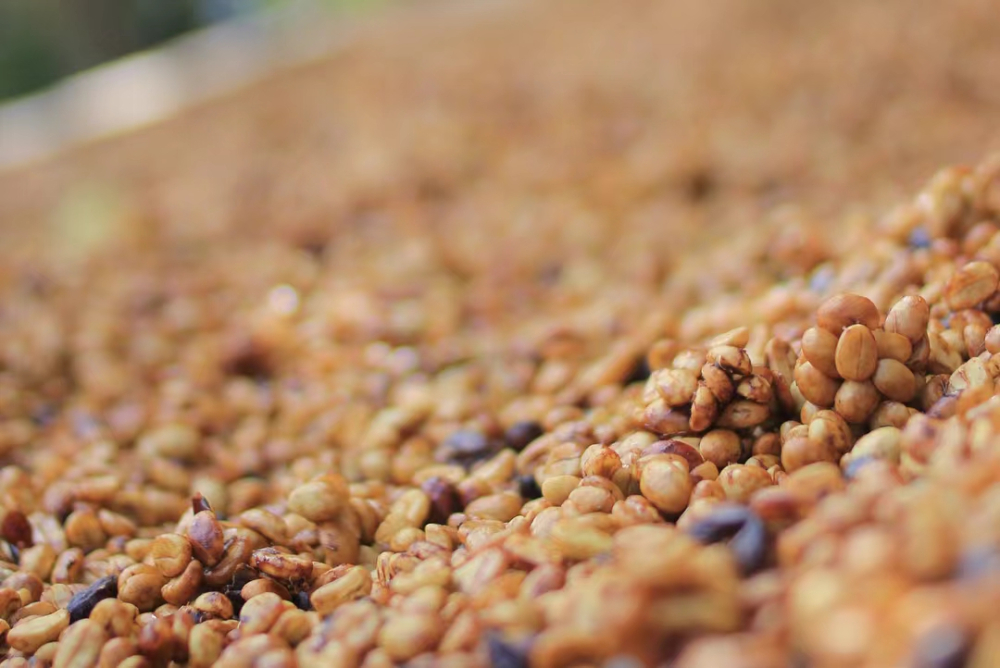
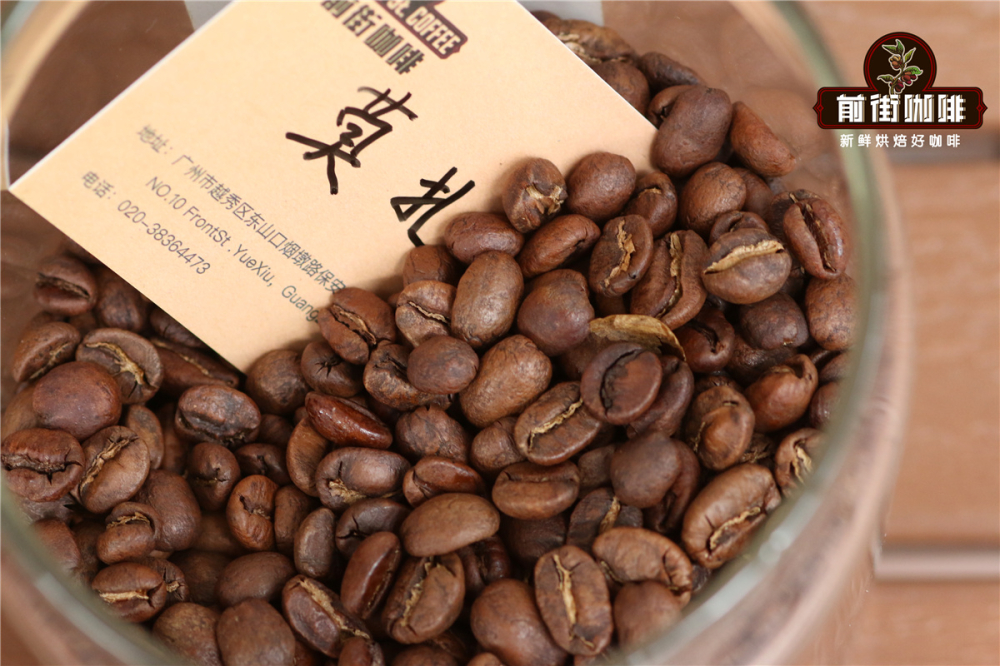
FrontStreet Coffee · Costa Rica Canet Estate Musician Series Mozart Region: Tarrazu Variety: Caturra, Catuai Altitude: 1950 Processing: Raisin honey processing Flavor: Osmanthus, berries, fermented wine aroma, raisins
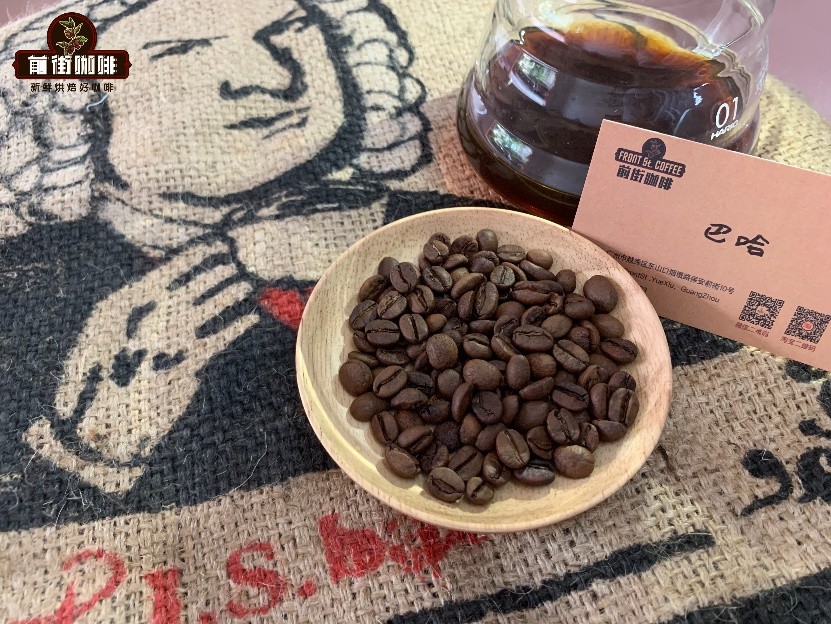
FrontStreet Coffee · Costa Rica Canet Estate Musician Series Bach Country: Costa Rica Region: Tarrazu Altitude: 1950m Processing method: Raisin honey processing Grade: Strictly Hard Bean SHB Variety: Caturra Flavor: Tropical fruit, nuts, cream, fermented aroma
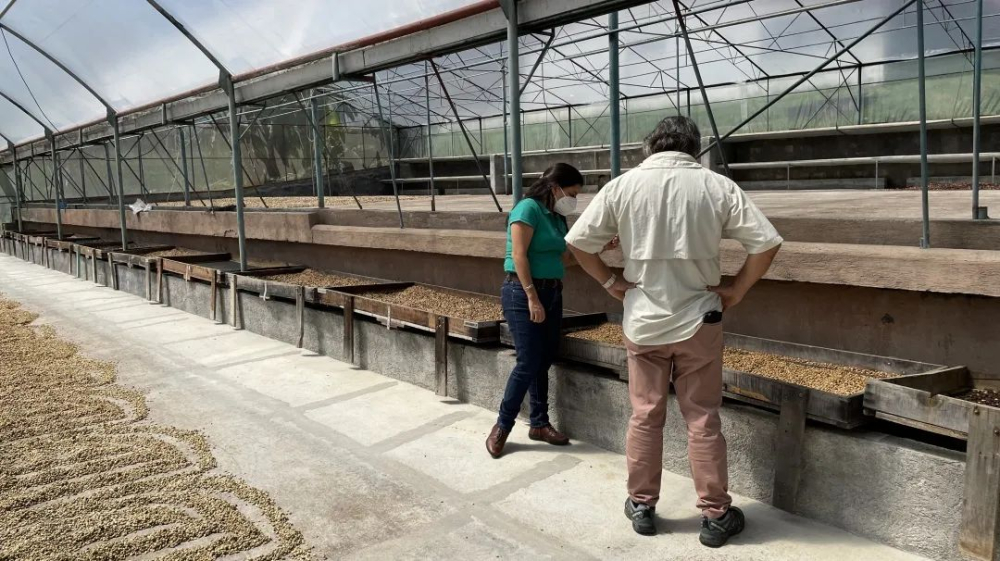
These two Front Street Costa Rican coffees—"Front Street Mozart" and "Front Street Bach"—both use raisin honey processing, which differs slightly from the honey processing mentioned earlier. Raisin honey processing is actually a double fermentation method. On the day the coffee cherries are harvested, the harvested fruit is poured into a large water tank, defective beans are removed, and the selected coffee cherries are placed on raised beds to dry for at least three days. Then the cherry skin is removed, the coffee mucilage is retained, and drying continues. During drying, they must be turned constantly to ensure even drying, while the turning frequency must be well controlled to prevent over-fermentation. This processing method, which retains 100% mucilage and uses zero water treatment, not only increases the difficulty of honey processing but also imposes strict requirements on timing.
Next, let's look at Front Street Beethoven, which uses a different processing method within the Musician Series:
FrontStreet Coffee · Costa Rica Canet Estate Musician Series Beethoven Region: Tarrazu Estate: Finca Canet Variety: Yellow Catuai Altitude: 1900m Grade: Strictly Hard Bean SHB Processing method: Washed Flavor: Citrus, black tea, caramel
This "Front Street Beethoven" uses the washed processing method. After harvesting, it first goes through a sorting step to pick out underripe or overripe beans again, then removes the pulp, uses a centrifugal washer to remove the sticky mucilage from the beans to avoid fermentation, then rinses with clean water, and finally dries on shaded raised beds for 12 to 14 days, turning constantly during this period to achieve even drying. Washed beans have a cleaner and brighter taste.
Although the processing methods differ, you will find that all three coffees come from the Tarrazu region. Front Street's research shows that Costa Rica has a total of 8 coffee-producing regions, including West Valley, Central Valley, Tarrazu, Tres Rios, Orosi, Brunca, Turrialba, and Guanacaste. Among them, Tarrazu is one of the world's most important coffee-producing regions.
Front Street's Musician Series coffee beans come precisely from this region. Tarrazu can be regarded as one of Costa Rica's most valued coffee-growing areas. The coffee of Tarrazu "La Minita Tarrazu" is a local specialty, but production is limited, about 72,600 kilograms per year, produced from a piece of land called "La Minita," owned by the McAlpine family of the United Kingdom for the last three generations, with the La Minita estate in the Tarrazu region producing only 160,000 pounds annually. In fact, this land can produce more than 450 tons of coffee each year.
It should be noted that coffee cultivation in Tarrazu does not use artificial fertilizers or pesticides, and harvesting and sorting are done entirely by hand. This is to avoid the degree of damage to coffee beans caused by air-jet sorting. At the same time, the high altitude of over 1,500 meters means that nearly 95% of the coffee beans grown in Tarrazu are Strictly Hard Bean (SHB).
Many consumers at Front Street think that coffee beans from the same region and the same estate in the Front Street Costa Rica Musician Series should not differ much in flavor! Actually, that is not the case. Even within the same estate, a consistent coffee-growing environment cannot be guaranteed; altitude and bean variety are both variables affecting flavor. If you do not believe it, why not buy the complete Front Street Musician Series and conduct a comparison yourself! Of course, you can also follow Front Street now for a "cloud experiment."
Front Street brewing parameters:
V60 dripper
Water temperature 91°C
Water-to-coffee ratio 1:15
Dose 15g
Grind size (80% passing through China standard No. 20 sieve)
Front Street brewing method: Use 30 grams of water for a 30-second bloom, pour in a small stream in circles until 125 grams, then pause in stages. When the water level drops and is about to expose the coffee bed, continue pouring until 225 grams and stop. When the water level drops and is about to expose the coffee bed, remove the dripper. (Start timing at the beginning of the bloom.) Extraction time is 2'00".
"Front Street Mozart" dry aroma: berry aroma and fermented aroma. Wet aroma: raisins and sweet orange on the palate; as the temperature changes, fermented wine aroma and osmanthus aroma become more obvious.
"Front Street Beethoven" dry aroma: berries, tea aroma. Wet aroma: citrus and black tea on the palate; as the temperature changes, caramel and tea-like qualities become more obvious.
"Front Street Bach" dry aroma: fermented aroma. Wet aroma: tropical fruit and fermented notes on the palate; as the temperature changes, cream, nuts, and caramel become more obvious.
In terms of mouthfeel, "Front Street Mozart" and "Front Street Bach" have more prominent fermented notes and fruit tones, a fuller body, and abundant sweetness; "Front Street Beethoven" has more prominent citrus and black tea notes, with a clean and refreshing mouthfeel.
In terms of aroma, "Front Street Mozart" has a prominent aroma with rich and complex layers; "Front Street Beethoven" leans toward tea aroma and is more refreshing; "Front Street Bach" has a complex and intense fermented fruit aroma.
Of course, for some people, Front Street Costa Rica Musician Series coffee may not be the best choice. At Front Street, we have also prepared for everyone the Front Street Costa Rica Blueberry coffee bean from the Brunca region, using anaerobic heavy honey processing. Its dry aroma has a light rose fragrance and a slight fermented note, with an overall blueberry gummy candy-like mouthfeel and a finish with a slight cooling mint sensation. It is a coffee that is very enjoyable both hot and iced.
The above content is compiled by CoffeeHunters, a coffee news website.


