







What Makes Golden Mandheling Different From Regular Mandheling?
Aged Mandheling is the rare coffee sold on age rather than freshness. Its origin traces to the Dutch colonial period in Indonesia, when beans shipped across the ocean to Europe picked up a mellow sweetness from the long voyage and sea breezes. Today production is standardized: wet-hulling, strict screening, and two to three years of aging in temperature- and humidity-controlled warehouses.
That aging lets acidity fade while sugars concentrate. Golden Mandheling is a higher standard, made by PWN through one machine sorting plus three hand sortings, placing it well above G1 grade. Cupping shows nuts, dark chocolate, caramel, and herbal spice. A three-stage pour-over suits the dark roast and draws out these layered flavors.
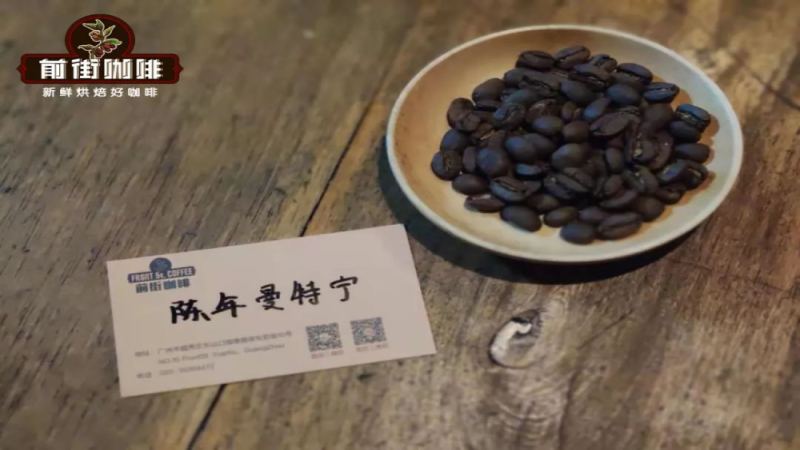
We usually pursue freshly roasted coffee beans, but aged Mandheling is an exception—it is actually highly sought after under the name of "expired." Behind this lies an accidental story from the Dutch colonial period in Indonesia: back then, coffee beans were shipped across the ocean to Europe, and the long sea voyage and erosion by sea breezes unexpectedly gave rise to a mellow sweetness reminiscent of Pu'er tea. Today, the production of aged Mandheling has long been standardized. It requires wet-hulling, strict screening, and aging for 2 to 3 years in temperature- and humidity-controlled warehouses at the place of origin, allowing acidity to gradually fade and sugars to concentrate. Golden Mandheling, on the other hand, represents a higher standard. Through one machine sorting plus three hand sortings, PWN has created a specialty coffee far above the G1 grade. During cupping, Front Street Coffee captured layers of flavors including nuts, dark chocolate, caramel, and herbal spices. This article will also share Front Street Coffee's three-stage pour-over parameters and technique for dark-roasted Mandheling, taking you through a complete tasting of this legendary coffee.
In most cases, we always repeatedly emphasize the importance of coffee bean freshness, and we also compare the differences between beans from the new crop season and the old crop season, reminding everyone to choose fresh coffee whenever possible. However, one bean breaks this convention: aged Mandheling. What exactly makes it special, and why does it continue to attract so many coffee lovers despite being "expired" coffee?
What is aged Mandheling?
It can be said that its birth came from an accident. The story dates back to the period when Indonesia was colonized by the Dutch. Sumatra was then one of the world's main supply sources of coffee beans, and the coffee produced locally needed to meet the enormous demand of European consumer countries. Indonesia had long exported coffee beans to Europe, and in order to ensure uninterrupted supply, it would appropriately store a batch of beans. However, constrained by external conditions such as the long voyage, the transportation time was greatly extended. Combined with the erosion of sea breezes, by the time the coffee beans reached Europe, they had developed a unique flavor, which European coffee connoisseurs rushed to pursue.
Thus people discovered that by aging processed coffee beans for several years, the acidity of the coffee gradually fades, leaving a solid aftertaste and sweet finish, with a flavor as fascinating as Pu'er tea. But one cannot always rely on "accidents" to produce aged beans, as this undoubtedly adds uncertain risk to coffee quality. We must be clear about one point: "aged beans" are not simply coffee beans thrown into a warehouse for a few years, because beans stored too long will rot, or even become moldy and infested with insects. What you get then is not "aged beans," but bad beans. Therefore, the production model of aged Mandheling has gradually become standardized and mature.
Aging process of Mandheling
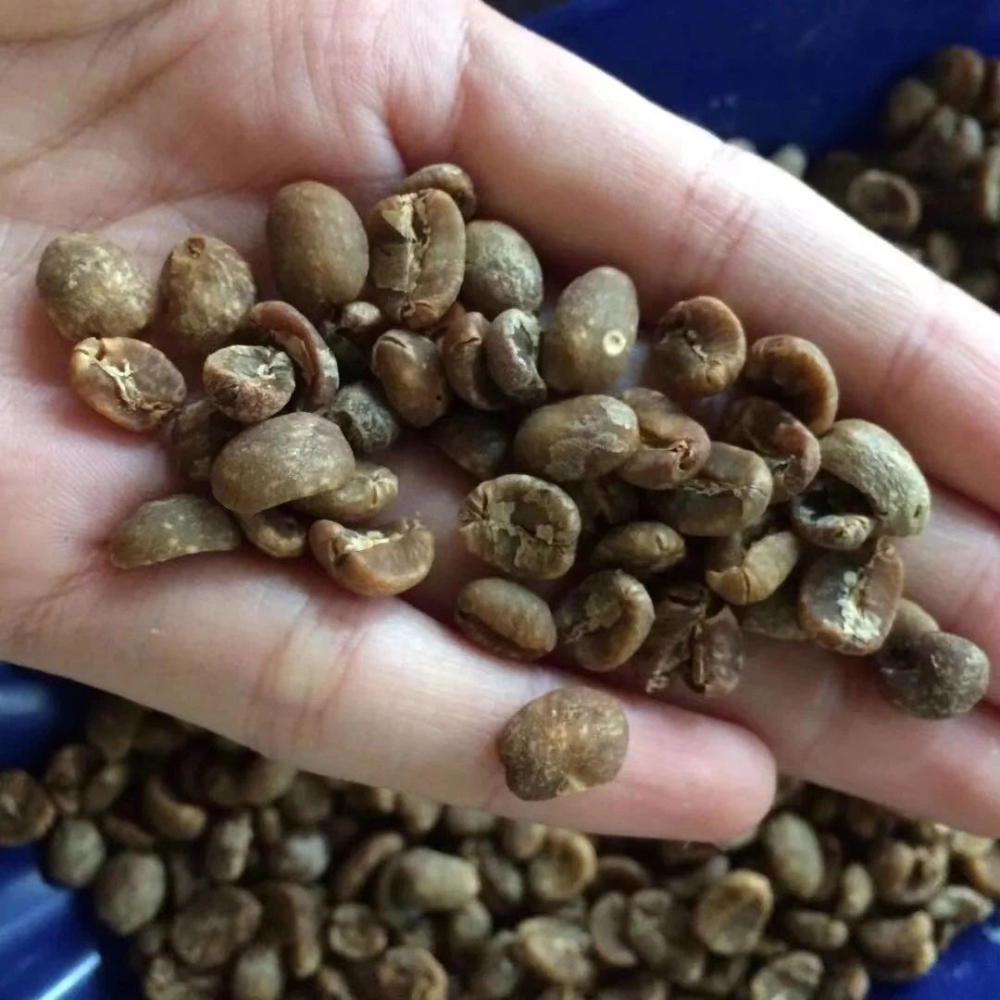
First, freshly picked coffee cherries must undergo conventional processing. Taking Front Street Coffee's aged Mandheling coffee beans as an example, they are processed using the wet-hulled method. In this step, high-quality beans (plump, large screen size, defect-free) must be carefully selected for aging. After screening is completed, the coffee beans are stored in warehouses and enter the aging stage.
The aging process must be carried out at the place of origin, in warehouses with temperature and humidity control or good ventilation. During aging, the beans must be frequently turned and inspected, for two purposes: first, to allow the coffee beans to evenly contact the air and maintain consistent dryness; second, to check for moldy beans or insect-damaged beans and prevent large-scale contamination.
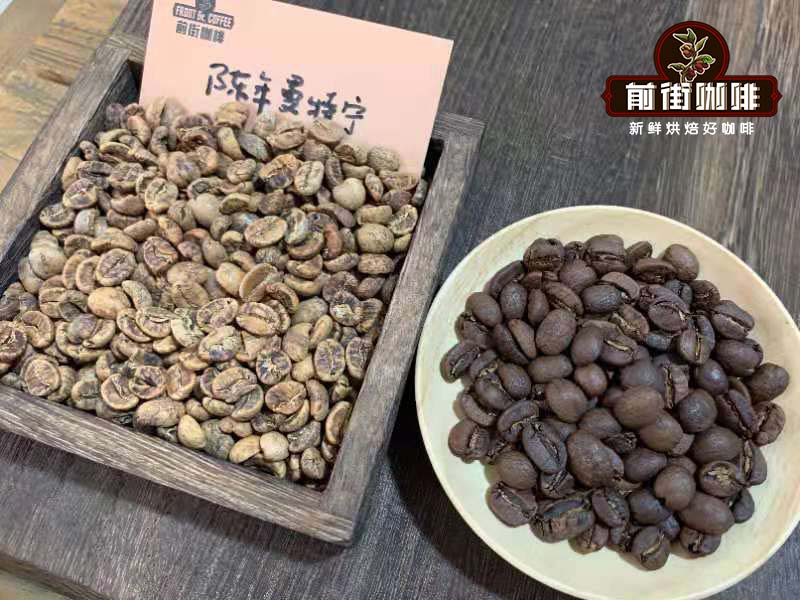
Today, the aging time for aged Mandheling is usually 2 to 3 years. During this period, the acidity of the coffee beans gradually weakens and converts into sugars, and the color also becomes deeper, mostly yellowish-brown or dark brown, making it highly recognizable.
What is Golden Mandheling?
The fame of Mandheling coffee comes from Pawani Coffee Company (PWN) successfully bringing Mandheling to the Japanese market. Unlike many local green bean traders in Indonesia, PWN is the exclusive supplier of high-grade Golden Mandheling coffee and has contracted the best Mandheling coffee producing regions in Indonesia. The Mandheling beans it produces are all top-grade.
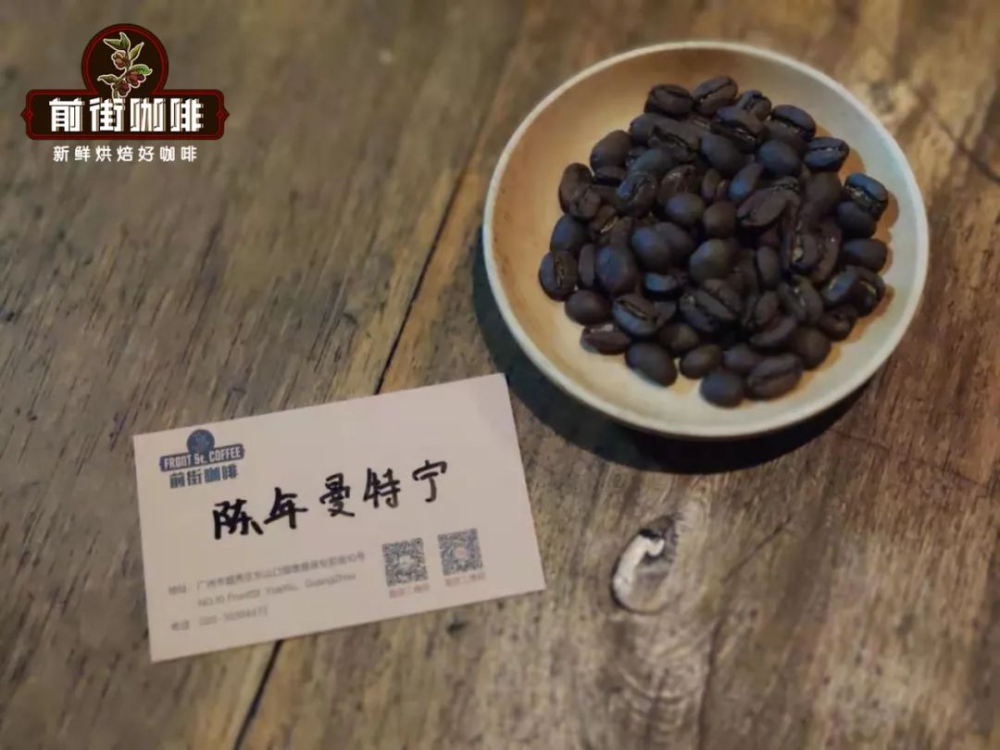
The wet-hulled method saves a great deal of time and labor costs in green bean processing, but the rapid process also brings a higher defect rate. Therefore, only strict hand sorting can remove defects that machines cannot screen out. PWN subjects the Mandheling green beans it purchases to one machine sorting plus three hand sortings, giving a quality far higher than Indonesia's local highest G1 grade. To meet Front Street's PWN Golden Mandheling production standard, the following points must be satisfied:
1. Green bean screen size: above 18-19 after one hand sorting
2. Fewer than 3 defective beans in a 300-gram green bean sample
3. Green coffee bean grade: G1
4. Color tending toward dark green, uniform in size, neat in shape
Before launching a coffee bean, Front Street always evaluates it through cupping. Cupping is an assessment of coffee bean quality and flavor. A unified standard allows a more objective identification of the strengths and weaknesses of the flavors presented by the beans, as well as their characteristics. After cupping at Front Street, Lindong Mandheling everyday beans present a rich nutty tone, with a hint of melon aroma in the finish; after the temperature drops, herbal plant flavors emerge, with a mellow mouthfeel and full aroma. Front Street PWN Golden Mandheling not only has the aromas of dark chocolate, nuts, and caramel, but also the flavors of herbal spices and pine wood, with the sweet finish of dark chocolate, a full aftertaste, and high cleanliness; after the temperature drops, it carries a gentle fruit acidity.
Pour-over parameters for Mandheling coffee
Brewing water temperature: 87–88°C
Coffee powder: 15 grams
Coffee-to-water ratio: 1:15
Dripper: KONO dripper
Grind size: medium-coarse grind (70% passing through a Chinese standard No. 20 sieve)
Brewing technique: three-stage pouring
Dark roasting makes the internal texture of coffee beans loose, so they can be crushed with a gentle pinch of the hand. This shows that the structure of the coffee beans has been greatly altered, and after grinding into powder, they have strong water absorption. In order to avoid over-extraction after the coffee powder absorbs water and the release of a large amount of bitter substances, Front Street uses a coarser grind than for light-roasted coffee beans. Here, a medium-coarse grind is used (70% passing through a Chinese standard No. 20 sieve), with the shop's EK43s at setting 11.
Roasting causes coffee beans to undergo caramelization and the Maillard reaction. As the roast level deepens, more non-enzymatic browning occurs as monosaccharides and amino acids interact and decompose under heating conditions, making it easier to release bitter large-molecule substances. In order to avoid extracting too many off-flavors, Front Street lowers the water temperature a little. The brewing water temperature for light-roasted coffee is 91–93°C, while for dark-roasted coffee beans Front Street recommends 87–88°C.
For coffees with a mellow mouthfeel such as Indonesian Mandheling coffee, Brazil Queen's Estate coffee, and Jamaica Blue Mountain coffee, Front Street Coffee baristas give priority to the KONO dripper for brewing.
Front Street Coffee baristas consistently use the three-stage pouring method. Pouring in three stages can better express the mellow mouthfeel and caramel sweetness of Golden Mandheling coffee, while also offering greater controllability of time and water volume.
Rinse the KONO dripper so the filter paper fits the coffee dripper more closely. After pouring out the water in the sharing pitcher, add 15g of ground coffee powder, and bloom with 30g of water for 30s. This pouring should wet all the coffee powder to allow degassing, so that the coffee's flavor substances can be better extracted afterward.
Some friends, when extracting light-roasted coffee beans, extend the bloom time to 45 or 50 seconds to enhance the aroma in the front section of the coffee. However, if dark-roasted Mandheling coffee is bloomed for too long, it easily releases too much of that woody taste and off-flavors, so Front Street chooses to bloom for 30 seconds.
The second stage begins by slowly pouring hot water in a small stream in circles from the center until reaching 125g, where the stage ends. The water stream needs to be poured steadily throughout; too forceful agitation can easily break the coffee powder wall, resulting in uneven extraction.
When the coffee powder layer drops to half the height of the dripper and the coffee bed is exposed, begin pouring the second stage in the same manner until 225g. After all dripping is completed, the dripper can be removed. The extraction time is two minutes, with a margin of 10 seconds either way.
Finally, swirl the coffee liquid in the server to mix it evenly, and you can begin tasting the pour-over Golden Mandheling black coffee. The brewed Mandheling coffee enters the mouth with the aromas of spices, dark chocolate, nuts, caramel, and pine wood. The mouthfeel is mellow and clean, with obvious sweet finish and a lasting aftertaste.
The above content is compiled by CoffeeHunters, a coffee news website.


