







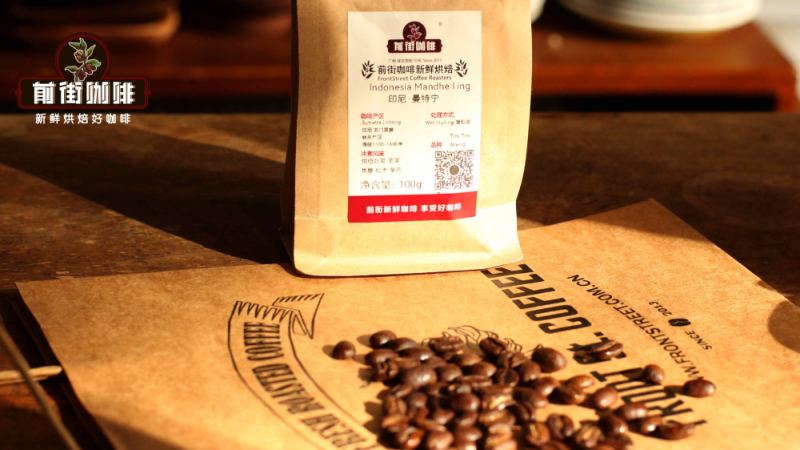
What does Mandheling coffee taste like?
Mandheling is a classic Indonesian coffee from the highlands of northern Sumatra, and the beans are known for a full body with notes of pine and spice. Front Street P.W.N Golden Mandheling G1 is a screened lot from that origin, offering higher cleanliness and more solid sweetness than standard Mandheling through stricter sorting standards.
A medium-dark roast brings out those signature pine and spice notes, along with herbal, dark chocolate, and caramel layers. For pour-over, baristas at Front Street use a Kono dripper with a three-stage pouring process, adjusting water temperature, coffee-to-water ratio, and grind size for the dark roast. It suits anyone learning flavor identification.
Mandheling is a classic that coffee enthusiasts can't avoid when starting out, and Front Street P.W.N Golden Mandheling G1 is the benchmark of quality among them. This article begins with the history of Indonesian coffee and the origin of the name Mandheling, introducing this coffee bean with its full body and notes of pine and spice. It also details PWN's strict screening standards, explaining why Front Street Golden Mandheling has higher cleanliness and more solid sweetness. Then follows a pour-over recipe designed by Front Street baristas specifically for dark-roasted beans, including the choice of Kono dripper, water temperature, coffee-to-water ratio, grind size, and a three-stage pouring process, helping you brew a rich layered cup interweaving herbal, dark chocolate, and caramel notes.
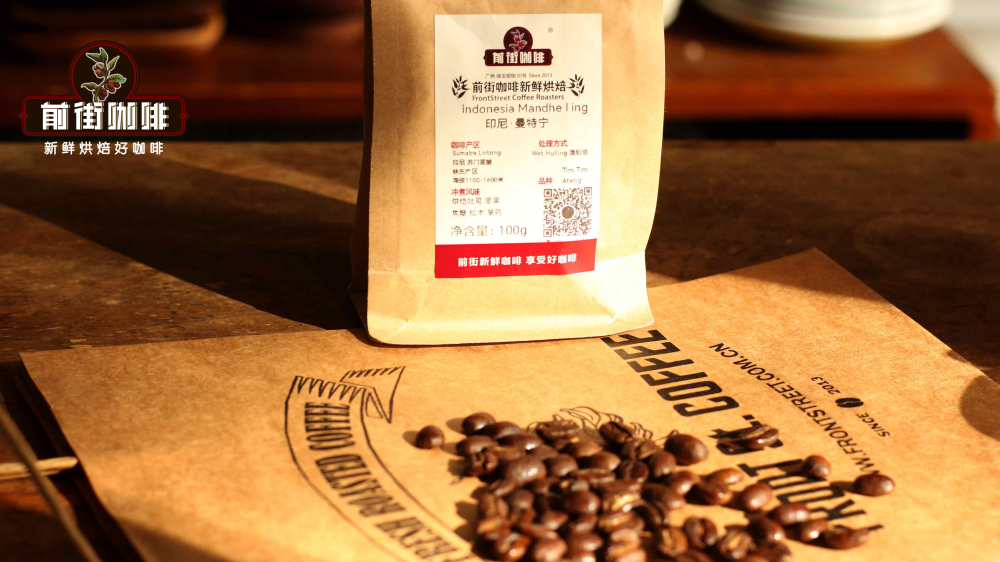
Front Street Mandheling is a coffee with a distinctive character. A medium-dark roast brings out its signature pine and spice notes, with an extremely full and solid mouthfeel and a wild, rustic quality. It's great for beginners to train their flavor identification, and it's also one of the top choices for those who prefer strong, bitter black coffee.
What exactly is Mandheling?
Indonesia, known as the "Nation of a Thousand Islands," has a coffee-growing history dating back to 1696. After more than three centuries of evolution, the local industry still operates mainly on a smallholder model, mostly using organic cultivation and relying on manual harvesting and sorting to ensure quality. Coffee is grown on almost every Indonesian island, and flavors vary by geography.
Elegant Arabica varieties are mostly found in the highlands of northern Sumatra, Sulawesi, and Java. Although they account for only about ten percent of Indonesia's total coffee production, standout names like Mandheling, Golden Mandheling, Sulawesi coffee, and Aged Mandheling have kept Indonesian coffee famous in the specialty scene for decades.
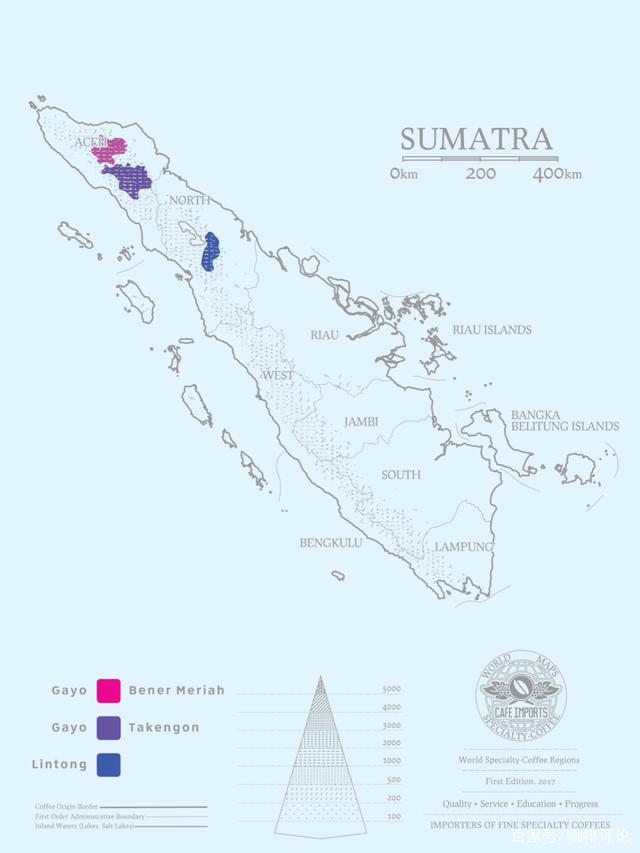
Indonesian coffee originated on Java, but the focus of cultivation has since shifted to other islands, with Sumatra, Bali, and Sulawesi all being important producing regions. Sumatran coffee is legendary, one of the earliest regions in the world to develop large-scale cultivation, with the vast majority coming from the northern province of Aceh and North Sumatra province south of Aceh. These two major origins are distributed around the famous volcanic lakes—Lake Toba and Lake Tawar—traditionally known as the Lintong region and the Aceh region. Volcanoes bring fertile soil to Sumatra, and the coffee produced here often carries creamy, chocolatey, and earthy aromas, favored by the Japanese for many years.
It's said that during World War II, when Japanese troops occupied Indonesia, a soldier drank an extremely rich and aromatic cup of coffee in a café and asked the owner what coffee it was. The owner mistakenly thought he was being asked where he was from and casually answered "Mandailing." After the war, the soldier remembered the "Mandheling" he had drunk in Indonesia and had 15 tons shipped back to Japan, where it became hugely popular, and the name Mandheling spread from there. Today, Mandheling is not only a classic in specialty coffee history but also represents the high-quality Arabica of Sumatra, continuously sought after by coffee lovers worldwide.
If you've been into coffee for a while, have a grasp of extraction theory and regional flavors, and want to buy a higher-grade, high-quality Mandheling, then we'd recommend Front Street PWN Golden Mandheling.
Why recommend Front Street P.W.N Golden Mandheling?
Indonesian green bean grading is mainly based on the number of defect beans and bean size—in short, fewer defects and larger beans mean a higher grade. Indonesia's requirements for standard quality include: no live insects, no moldy or rotten beans, maximum moisture content of 12.5%, and impurity rate below 0.5%. Grading by defect rate (based on 300 grams), Grade is mainly divided into 6 levels, namely G1 to G6.
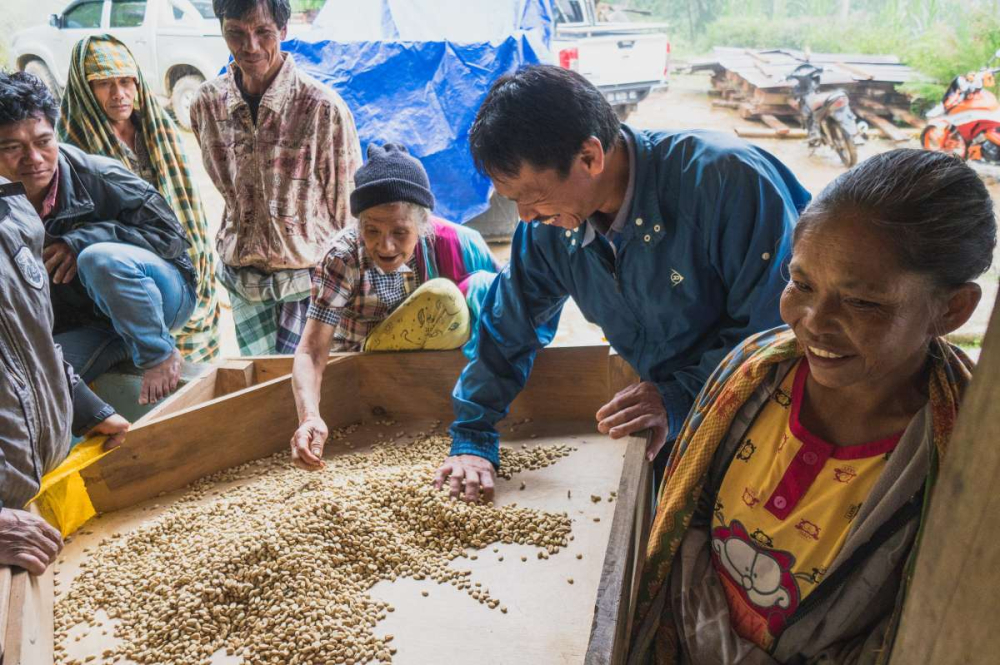
PWN, which pursues perfection in the screening process, strictly applies one machine sort plus three hand picks to G1-grade Mandheling, ensuring defect beans are thoroughly removed and greatly reducing the defect rate. In addition, before packaging, PWN sends the green beans through machines for density and color sorting, giving Golden Mandheling a uniform and translucent appearance.
Mandheling's rise to fame stems from Pawani Coffee Company (PWN) successfully bringing Mandheling to the Japanese market. Unlike many local Indonesian green bean traders, PWN is the exclusive supplier of high-grade Golden Mandheling, contracting the best Mandheling-producing regions in Indonesia, and all its beans are of superior quality. After Front Street sources excellent Golden Mandheling, it immediately cupping-tests the beans once roasting is complete—extremely high cleanliness on the palate, clear and transparent aromas, prominent sweetness, full and solid body.
The best pour-over method for Front Street Golden Mandheling
Front Street Golden Mandheling has a complex aromatic profile. To drink it at its best, Front Street recommends brewing with freshly roasted coffee beans. Coffee beans enter their optimal flavor window 4 to 7 days after roasting; beyond this stage (about a month and a half), aromas gradually fade and woody defect flavors appear. Front Street believes freshness is especially crucial, so all beans shipped are freshly roasted within 5 days. Combined with shipping time, you can brew and drink them directly upon receipt.
Front Street's brewing approach for each bean is based on the characteristics shown during cupping. For example, Front Street Golden Mandheling's flavors include herbal, dark chocolate, caramel, nut, and pine. For beans with this kind of full-bodied profile—besides Front Street Golden Mandheling, there are also Front Street Jamaica Blue Mountain and Front Street Brazil Queen's Estate—Front Street Coffee (FrontStreet Coffee) baristas all choose the Kono dripper.
Kono's ribs are less than half the height of the dripper. This design is meant to let the filter paper cling tightly to the dripper wall after wetting, thereby restricting airflow, extending the water absorption time of the coffee grounds, making extraction more even, and enhancing the full-bodied mouthfeel. The groove structure at the bottom of the Kono dripper is the key to producing the siphon effect during brewing.
Dark-roasted coffee beans have a looser structure and strong water absorbency, making them prone to over-extraction from absorbing too much water, resulting in bitter and astringent Mandheling. Therefore, Front Street uses a coarser grind and brews with lower-temperature water.
Recommended brewing parameters: water temperature 87–88°C, 15 grams of coffee grounds, coffee-to-water ratio 1:15, medium grind (70% passing rate on China standard No. 20 sieve).
The brew uses a three-stage pour. Three stages better showcase Front Street Golden Mandheling's full body and caramel sweetness. First stage: bloom with 30ml of water, fully wetting the coffee grounds for degassing and laying the foundation for subsequent flavor extraction; second stage: pour 100ml, mainly to flush out Front Street Golden Mandheling's golden foam and raise the coffee bed; final stage: gently pour 95ml in the center. Once all the coffee has dripped through, remove the dripper and gently swirl the carafe to even out the coffee.
The pour-over Front Street P.W.N Golden Mandheling tastes of rich spice and herbal notes, with an overall full-bodied, bittersweet mouthfeel, accompanied by caramel and aromas of chocolate, cedar, and roasted nuts, with a finish like ripe pu-erh—very layered indeed.
The above content is compiled by CoffeeHunters, a coffee news website.


