







How Does Mandheling Coffee Reach Its Full-Bodied Flavor?
Mandheling coffee comes from the Lintong and Lake Toba areas of northern Sumatra, Indonesia. The Dutch brought coffee trees to the archipelago in the mid-17th century, and Indonesia now exports around 300,000 tons a year, about 75,000 tons of it Arabica. Lintong Mandheling is known for a full-bodied, low-acid cup, shaped by the region's wet-hulling process and local smallholder farming.
Around 90 percent of Indonesian coffee is grown by smallholders on farms of one hectare or less. The main coffee producing regions sit across Sumatra, Java, and Sulawesi, and Sumatra's Mandheling is the most widely recognized. Lintong refers to a small growing area southwest of Lake Toba, where the wet-hulling method and clay plateau soils give the beans their heavy body and low acidity.
Mandheling is the most recognizable flavor representative of Indonesian coffee, and the Mandheling produced in the Lintong region has captured the taste buds of countless coffee lovers with its full-bodied, low-acid profile. This article begins with the history of coffee cultivation and the distribution of producing regions in Indonesia, then covers the variety composition of Lintong Mandheling, the origins and development of the wet-hulling process, as well as Front Street Coffee's roasting approach and pour-over method for this bean. Whether you are a beginner just getting to know Mandheling or a seasoned enthusiast looking to refine your brewing technique, you will find practical reference information here, including specific parameters such as water temperature, coffee-to-water ratio, and grind size.
For more specialty coffee knowledge, please follow our WeChat official account: Front Street Coffee (FrontStreet Coffee)
Many coffee lovers first encountered Front Street Coffee (FrontStreet Coffee) because they saw a 9.9 yuan daily-drinker bean promotion while shopping for coffee beans online, thought they might as well give it a try, and ended up becoming loyal users of Front Street's freshly roasted coffee beans. Front Street's daily-drinker beans serve as the "flagship" among the various producing regions, with high regional flavor distinctiveness, all while offering an accessible price and excellent value for money. Among them, Front Street Lintong Mandheling coffee, as the most representative expression of Indonesian flavor, has become the Indonesian-region flavor ambassador in Front Street's daily-drinker bean lineup.
Mandheling Coffee
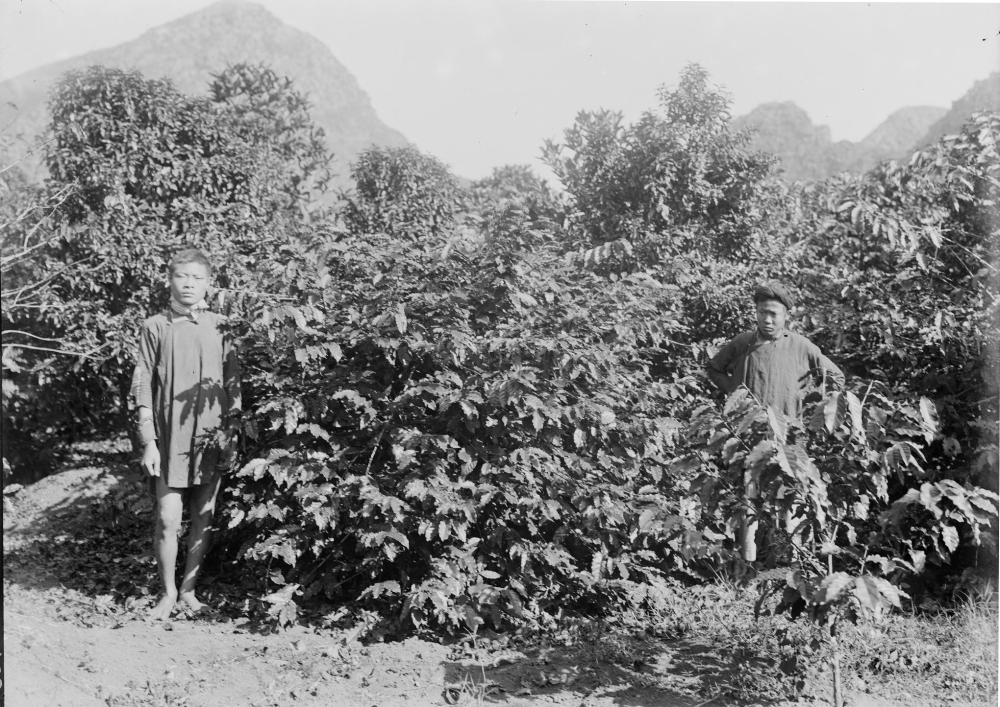
In the mid-17th century, the Dutch brought coffee trees to Indonesia. Last year Indonesia exported 300,000 tons of coffee, ranking as the world's fourth-largest producer. About 75,000 tons of that is Arabica coffee. Ninety percent of this coffee is grown by smallholders on farms of one hectare or less.
Indonesia's main coffee-producing regions are distributed across Sumatra, Java, and Sulawesi, with the "Mandheling" from Sumatra being the most well-known. The Lake Tawar producing area at the northern tip of Sumatra can be called Aceh coffee or Lake Tawar coffee, while the Lintong and Lake Toba areas are called Mandheling. Indonesia's coffee-producing regions span eight provinces in total, but only two provinces cultivate coffee in large quantities — Aceh Province and North Sumatra Province. The most representative coffee-producing areas in these two provinces are, first, the Gayo Mountains surrounding Lake Tawar in Aceh Province, where the indigenous Gayo people grow coffee; and second, the area surrounding Lake Toba in North Sumatra Province, which is an extremely large lake and the largest volcanic lake in the world. The Mandheling produced around Lake Tawar and Lake Toba is known as the famous "Two Lakes, Two Mandhelings," and the area south of Lake Toba is the Lintong producing region.
Front Street Indonesian Lintong Mandheling Coffee
Country: Indonesia
Region: Sumatra, Lintong
Altitude: 1,100-1,600 meters
Variety: Typica, Caturra
Process: Wet-hulled
Flavor: Baked toast, nuts, caramel, pine, herbs
Coffee Producing Regions
Mandheling is actually neither the name of a coffee bean variety nor the name of a producing region, but the name of a tribe. Back then, the Japanese mistakenly took it as the name of the coffee bean, and this name has been used ever since.
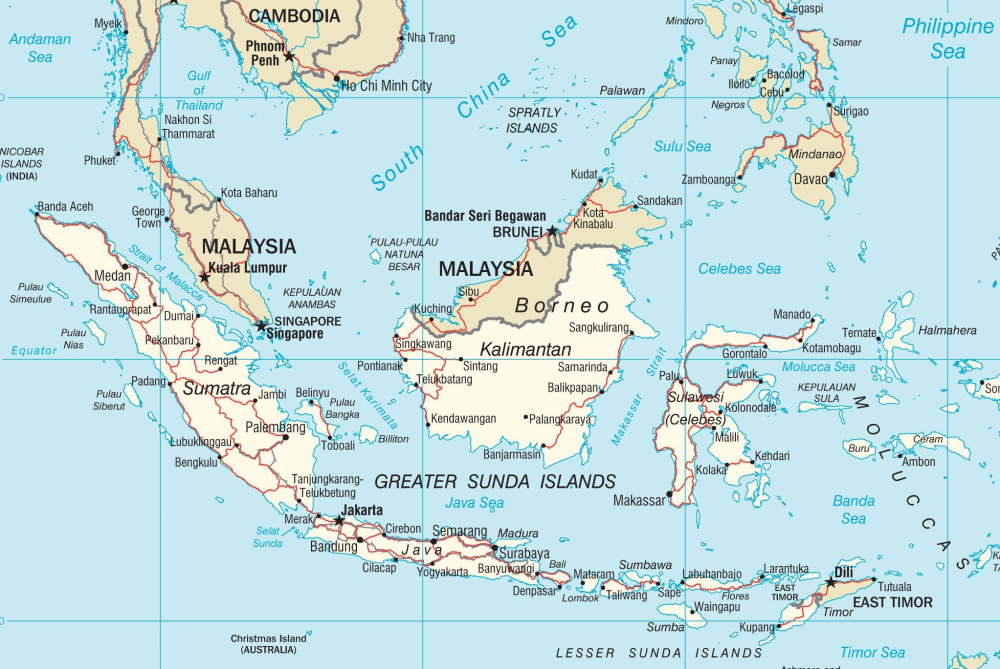
Front Street Lintong Mandheling comes from the Lintong highlands in north-central Sumatra, near Lake Toba. Front Street Lintong Mandheling grows in highland mountains at an altitude of 1,000-1,500 meters, with multiple volcanoes and numerous volcanic lakes in the area, the most famous coffee-growing area being located at Lake Lawar, a freshwater lake. The local fresh soil originates from volcanic earth, belonging to primitive brown podzolic material, mixed with a considerable amount of organic matter. Combined with a tropical rainforest climate and abundant rainfall year-round, this provides the most suitable geographical and climatic conditions for coffee growth.
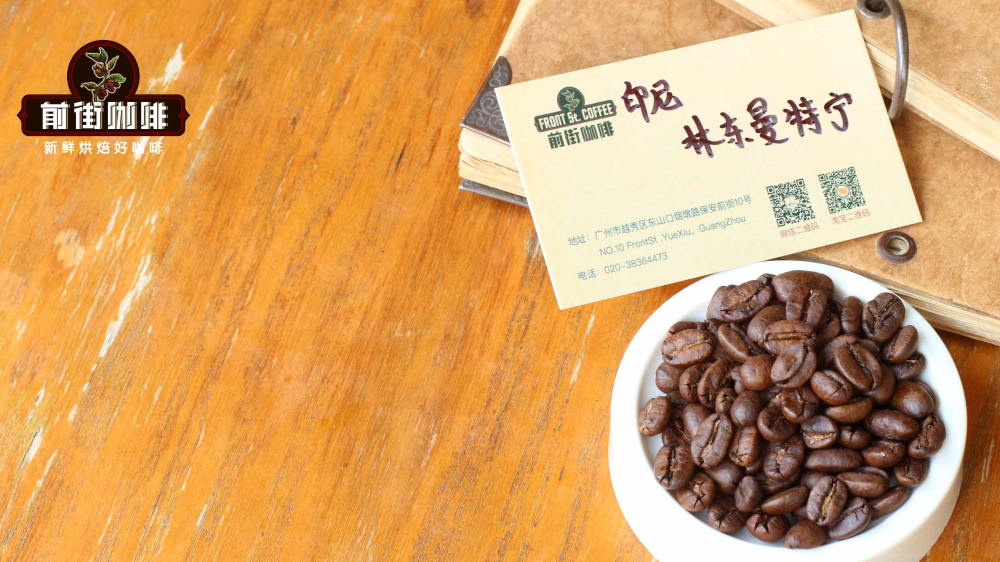
Front Street Lintong Mandheling is the regular version of Mandheling. Front Street Lintong Mandheling also uses the conventional wet-hulling process, creating characteristics of low acidity and high body. However, one consequence of the wet-hulling process is that the half-hard, half-soft moist raw beans are easily crushed when the mucilage and parchment layer are removed, causing the beans to crack open in a hoof shape, commonly known as hoof beans. These are not defective beans, and can be said to be a very distinctive feature of Front Street Mandheling.
Front Street Lintong Mandheling is not finely sorted during the screening stage, so beans of varying sizes may appear. This lack of refinement in processing can easily lead to less consistent coffee output, but this does not diminish the world's love for its full-bodied flavor.
Coffee Varieties
The Mandheling variety is a mix of Ateng and Tim Tim, among which the coffee variety of Golden Mandheling is Ateng, named after the Central Aceh (Aceh Tenggah) region. The Ateng series is the collective name for Catimor varieties on Sumatra and other Indonesian islands. It is a hybrid of Arabica and Robusta, widely planted on Sumatra, with high yield, strong resistance to coffee leaf rust and coffee berry disease, and relatively good cupping performance.
Coffee Processing Methods
Wet hulling is a method of processing coffee beans quickly, allowing the flavor to present as full-bodied and intense, with a very distinct character. Coffee drying generally takes 2-3 weeks on average, because Indonesia's humidity is between 70-90% year-round, with constant typhoons and heavy rainfall. In such a humid climate, drying coffee becomes a major problem, and farmers also pursue more efficient economic returns. It is clearly different from the washed method: the skin and pulp are removed, the parchment and mucilage are retained and fermented in a tank, then the mucilage is washed off, and the beans are sun-dried with the parchment for 2-3 days until the moisture content reaches 20-24%, after which the parchment is removed for the final drying step. In this way, sunlight directly hits the surface of the raw beans, causing them to dry rapidly, 2-3 times faster than the washed process, so the beans are relatively easily crushed, forming small indentations — this is what we commonly call horse-hoof or hoof beans.
Front Street Coffee (FrontStreet Coffee) Roast Analysis
Front Street's roaster used a medium-dark roast for this Front Street Lintong Mandheling coffee bean, in order to highlight Mandheling's rich abundance of spice and herbal notes as well as its full-bodied mouthfeel.
Front Street Coffee (FrontStreet Coffee) Brewing Recommendation
Front Street uses a Kono dripper when brewing Front Street Lintong Mandheling coffee. Kono's ribs extend less than half the height of the dripper, a design intended to ensure that the filter paper clings tightly to the dripper wall after wetting, thereby restricting airflow. This increases the water absorption time of the coffee grounds, resulting in a more even overall extraction and enhanced full-bodied mouthfeel. It is suitable for brewing medium-dark roasted coffee beans such as Front Street Golden Mandheling and Front Street Jamaica Blue Mountain. Additionally, the grooved skeleton at the bottom of the Kono dripper is the key design that allows the subsequent brewing to produce a siphon effect.
Dose: 15 grams
Coffee-to-water ratio: 1:15
Recommended water temperature: 87-88°C
Grind size: Coarse sugar size (70% passing through a No. 20 standard sieve)
Front Street Coffee (FrontStreet Coffee) brewing method: Bloom with 30 grams of water for 30 seconds, then pour in a slow circular stream until the scale reads 125 grams for the first stage; when the water level drops and is about to expose the coffee bed, continue pouring until 225 grams and stop; when the water level drops and is about to expose the coffee bed again, remove the dripper. (Start timing from the beginning of the bloom.) Total extraction time: 2'00''.
[Front Street Lintong Mandheling] Brewed flavor: Sweet herbs, cinnamon-like spices, orange and grapefruit peel notes, full-bodied rich sweetness, creamy walnut chocolate. The fruit acidity is restrained and soft, the aroma carries a strong melon sweetness, and as the temperature drops, herbal notes emerge, with faint spices and a full-bodied herbal character with intense sweetness.
The above content is compiled by CoffeeHunters, a coffee news website.


