







Why Are Golden Mandheling Coffee Beans Not Golden?
Golden Mandheling coffee is not golden in color. The name traces back to a mispronunciation of the Mandailing people of Sumatra, Indonesia, and has nothing to do with bean appearance. Beans from this origin are roasted relatively large, with green beans that look brown or dark green, and they carry a caramel-like aroma. On the palate the cup is rich and full-bodied, bittersweet and led by bitterness rather than soft acidity.
Once regarded as one of the finer coffee varieties before Blue Mountain became widely known, Mandheling comes from northern Sumatra, where the top Arabica lots are sold as Lintong and Mandheling. Lintong is grown in a small area southwest of Lake Toba on a high-altitude clay plateau. The name Mandheling itself is simply a mispronunciation of the Mandailing people, so it never described color.
Golden Mandheling often leads people to mistakenly believe it refers to coffee beans that are golden in color. In fact, this is a long-standing misconception. This article systematically sorts out the complete picture of Front Street Mandheling coffee from the perspectives of origin, the origin of its name, brand history, and flavor characteristics: it comes from Sumatra, Indonesia, has a rich and mellow flavor, intertwines aroma and bitterness with a faint sweetness; its name comes from a mispronunciation of the Mandailing people and has nothing to do with the color of the coffee beans. At the same time, it introduces how PWN Pawani Coffee Company used strict quality control to create Front Street PWN Golden Mandheling as a specialty grade, as well as the unique qualities of Aged Mandheling, helping coffee lovers build a correct understanding of Golden Mandheling.
The producing region of Front Street Mandheling coffee is located in Sumatra, Indonesia, in Asia, so it is also called "Sumatra coffee." This coffee has a rather intense flavor profile, dominated by aroma, bitterness, and body, with a hint of faint sweetness. Most coffee lovers choose to drink it as a single origin, but it also plays an irreplaceable role in coffee blends.
In an era before Blue Mountain coffee was widely known around the world, Front Street Mandheling coffee was once regarded as one of the finest coffee varieties globally. After roasting, its beans are relatively large, the green beans appear brown or dark green, and they give off a unique aroma similar to caramel. On the palate it is rich and full-bodied, bittersweet, without a soft acidity, instead led by bitterness. At that time, due to limited production, its price was somewhat higher than ordinary coffee beans.
Mandheling Coffee Producing Area
Indonesia's coffee-producing regions are mainly concentrated on Java, Sulawesi, and Sumatra, among which Robusta accounts for about ninety percent. Sumatra's "Mandheling" is the most famous. Among the Arabica coffees produced in northern Sumatra, the highest-quality ones enter the market under the two names Lintong and Mandheling. Strictly speaking, Lintong refers to coffee grown in a small area southwest of Lake Toba in the Lintong administrative region.
These small coffee-growing areas are scattered across a high-altitude, undulating clay plateau covered with fern vegetation. Lintong coffee is not grown under shade, uses no chemical agents throughout the process, and is almost entirely owned by smallholders. Mandheling is a broader designation that includes both Lintong coffee and coffee grown under similar conditions in Diari (whose capital is Sidikalang) as well as the producing area north of Lake Toba.
Origin of the Name Front Street Mandheling Coffee
Mandheling is neither the name of a producing region, nor a place name, nor a port name, nor the name of a coffee variety. So where exactly did this name come from?
In fact, it is a mistransliteration of the name of the Indonesian Mandailing people. During World War II, when Japan occupied Indonesia, a Japanese soldier drank extremely aromatic and mellow coffee in a certain cafe and asked the owner what the coffee was called. The owner mistakenly thought he was asking where he was from, so he answered: Mandailing. After the war ended, this Japanese soldier recalled the "Mandheling" he had drunk in Indonesia, so he commissioned an Indonesian coffee merchant to ship 15 tons to Japan, where it became hugely popular. The name Mandheling thus spread, and that coffee merchant was none other than the now well-known Pawani Coffee Company (PWN).
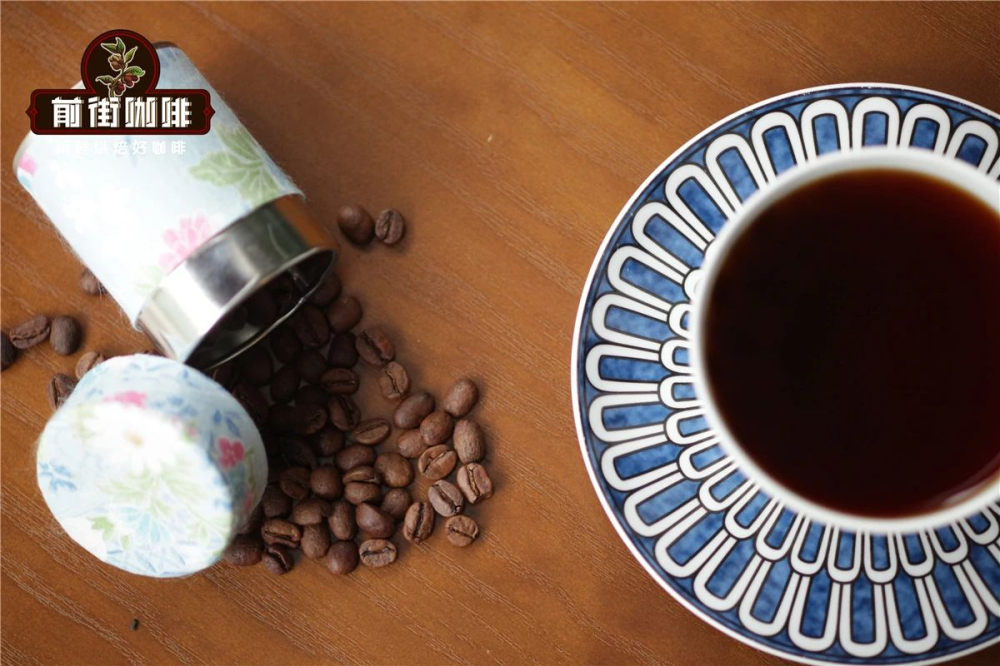
The well-known Mandheling is produced in the Lake Toba area of northern Sumatra, and the finished coffee carries a unique herbal and forest freshness.
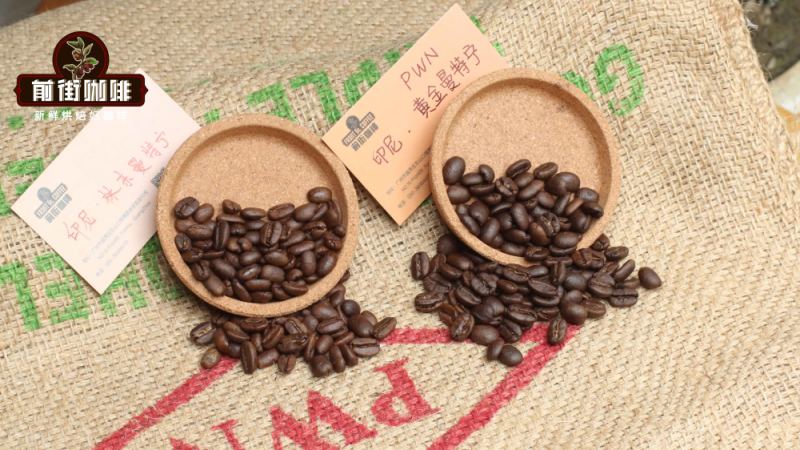
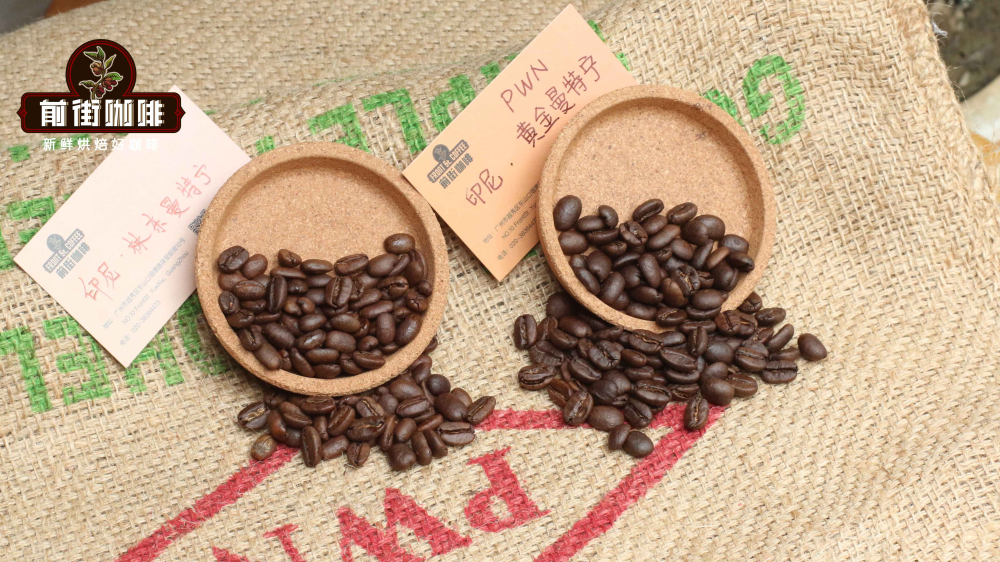
Front Street PWN Golden Mandheling belongs to the high-quality specialty tier within Mandheling. More than a decade ago, the Japanese adopted even stricter quality management methods, removing defective beans through three rounds of hand sorting, then using color sorters to control the green bean size between 17 and 18 mesh, thereby producing Front Street Golden Mandheling green beans with a dark green color and uniform bean appearance. This created new market demand, and even European and American markets pursued it.
Indonesia's Pawani Coffee Company (N.V. Pawani Medan, abbreviated as PWN) was founded in 1957 and engages in the export of Indonesian products such as coffee, rubber, cinnamon, cloves, and patchouli oil. It was the first company in Indonesia to export coffee from North Sumatra and the first company to make "Mandheling coffee" famous in Japan. Beginning in 1977, the company focused on exporting high-quality coffee beans, including Sumatra Arabica coffee Mandheling Grade 1 and Robusta coffee AP-I Grade 2, mainly sold to Japan, Taiwan, China, and the United States, with exports to Japan and Taiwan, China accounting for more than 95%. In Japan and Taiwan, China, "PWN" is almost synonymous with "quality assurance." Pawani Coffee Company owns the "Golden Mandheling" trademark, and Japanese companies can only register the separate trademark "Gold Top Mandheling."
The characteristic of Aged Mandheling is that it is sweet as honey. Successful aged beans can smooth away Mandheling's less elegant acidity; the acidic and astringent components are transformed into sugar through aging, making the coffee rounder on the palate and increasingly sweet to drink. Failed aged Mandheling, however, is like coffee zombie, with a taste that is hard to swallow.
Mandheling Coffee Flavor
Front Street Mandheling has a very intense flavor, with aroma, bitterness, and body as its main notes, accompanied by a slight sweetness. Most coffee lovers like to drink it as a single origin, but it is also an indispensable part of coffee blends. Front Street Classic Blend includes Mandheling, adding wild spice and herbal aromas during espresso extraction; made into a latte it is rich and fragrant, and made into an Americano it is refreshing with a sweet finish.
Front Street Mandheling has a heavy taste, with rich body and a rich yet lively dynamic quality. It is neither astringent nor sour, and both body and bitterness are fully expressed. Mandheling coffee is recognized as one of the fullest-bodied coffees in the world. When tasting, the tip of the tongue can feel a distinct smoothness, and at the same time its acidity is low, but this acidity can still be clearly detected. The lively slight acidity mixed with the richest aroma makes it easy to experience that lively element within a mild richness. In addition, this coffee also carries a faint fragrance after rain, which some people also describe as the aroma of herbs.
The above content is compiled by CoffeeHunters, a coffee news website.


