







Do Kenyan Coffee Bean Grades Like AA Define Flavor?
Kenyan coffee bean grades such as AA and AB describe bean size, not cup quality. Kenya is a leading specialty coffee producer in East Africa, and its beans are known for a full, juice-like body and layered flavor. Grading by screen size cannot be equated directly with flavor, so the AA label alone does not tell you how a lot will taste.
The Kenyan coffee board judges auction lots by cupping flavor rather than size, and specialty-grade auction lots have stayed expensive. Kenya's coffee producing regions, including Nyeri and Kirinyaga, each carry their own terroir, and varieties such as SL28 and SL34 plus the washed K72 method shape the cup. Comparing AB-grade lots from Nyeri's Gathaithi Cooperative and the Mugaya plant shows how much these regions differ.
Kenya, as the most important specialty coffee producing country in East Africa, is known for its coffee's full juice-like body and distinct flavor layers. However, many people habitually define Kenyan beans by a "small tomato" taste, a judgment that Front Street Coffee considers overly simplistic—the true core characteristic of Kenyan producing regions lies in their solid juice-like mouthfeel. This article will systematically outline the full picture of Kenyan specialty coffee, starting from Kenya's coffee production and marketing system, grading standards, the terroir of six major producing regions, the characteristics of SL28 and SL34 varieties, and the iconic K72 washed processing method. At the same time, Front Street Coffee compares the flavor differences between two AB-grade beans—from the Gathaithi Cooperative in Nyeri and the Mugaya Processing Plant—through roasting, cupping, and brewing, helping readers understand the diversity of Kenyan coffee more comprehensively.
For more specialty coffee knowledge, please follow our WeChat public account: FrontStreet Coffee
When many coffee enthusiasts mention Kenyan beans, their first reaction is that distinctive small tomato aroma, and some even feel that without this flavor, it isn't authentic Kenyan coffee. Front Street Coffee does not agree with framing Kenyan beans in this way—the original flavor foundation of Kenyan coffee is actually a rich, solid juice-like texture.
All plants are influenced by their environment, and coffee trees are no exception. Changes in a region's climate and soil conditions can cause fluctuations in the flavor of beans from each harvest season. Front Street Coffee has cupped several Kenyan coffees in recent months, and regardless of the producing region, they all present a full juice-like body. Of course, they are not entirely identical, and their acidity and flavor directions still have their own characteristics.
Kenya is a well-known coffee-producing country in East Africa and a key player on the global specialty coffee map. Kenyan coffee is rich in flavor and highly recognizable, and its trading system is also quite sophisticated. Bean size grading marked as AA or AB cannot directly equate to flavor quality; the coffee board's auction lots are judged based on cupping flavor, and prices for specialty-grade Kenyan auction lots have remained high. Most Kenyan coffee is grown at altitudes of 1,500 to 2,100 meters, with two harvest periods per year. To ensure only ripe cherries are picked, people need to patrol the groves repeatedly, about 7 times back and forth.
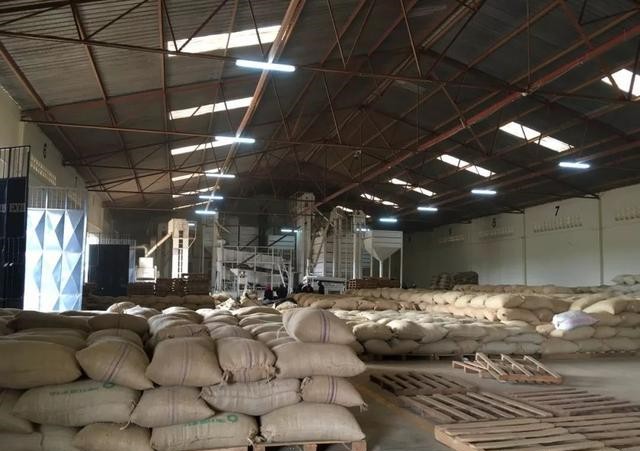
Kenyan coffee sales are divided into two paths: one is auction at the Nairobi Coffee Exchange (the central auction system), through which about 85% of beans are sold; the other is direct trade, usually called the "second window," through which only 15% of beans are traded.
The Nairobi Coffee Exchange is the core platform for Kenyan coffee auctions. Auctions are currently held once every two weeks, with bidding fixed on Tuesdays. Twelve days before the auction begins, marketing agents deliver green bean samples to the NCE for display, giving buyers ample time to select suitable items for cupping. Each auction usually has hundreds of lots, sometimes more than a thousand, and the whole process runs from 9:30 a.m. until four or five in the afternoon with no break in between. Dozens of buyers in the room pore over green bean catalogs, bidding while recording the transaction price of each lot.
The current Kenyan coffee industry chain is roughly as follows: after farmers harvest the fruit, they send it to a washing station, where preliminary density grading is carried out, and then it is handed over to marketing agents. At the washing station stage, the beans are already sorted by screen size, which are the familiar grades such as AA, AB, PB, and C. Then green bean samples are sent to the NCE to participate in the auction and provide a catalog. At the auction, buyers bid, and after the transaction is completed, the coffee is exported abroad. It can be seen that the NCE sits in the middle of the entire industry chain, serving as an auction platform.
Kenyan coffee bean grades AA Plus (AA+): AA grade with particularly excellent cup quality (flavor, mouthfeel). AA screen size: 17-18 mesh. AB screen size: 15-16 mesh, accounting for most of production. C screen size: smaller than AB. TT: lighter beans blown out from AA and AB grade beans by an airflow sorter. T: lighter beans blown out from C grade beans by an airflow sorter. E Elephant Bean: a large mutant bean formed by two beans fused together, also called elephant ear. PB Peaberry: classified by appearance, unrelated to flavor or weight. Kenyan coffee producing regions are mainly six major regions including: Thika, Kirinyaga, Mt. Kenya West, Nyeri, Kiambu, and Muranga. The harvest periods of the six major producing regions are from October to December (main crop season) and June to August (fly crop season) each year. Among them, Nyeri and Kirinyaga are the most famous.
Nyeri is located in the high mountain area near Mount Kenya and is an important producing region for Kenyan specialty coffee, with an average altitude of more than 1,500 meters. Many high-quality Kenyan coffees come from here. Nyeri is sufficiently high in altitude and lies east of the Aberdare Range, exactly at the promontory position between Mount Kenya and the main mountain. The high terrain and fertile soil make Nyeri a major center of Kenya's central coffee industry, and its related supporting facilities are also quite complete.
The Kirinyaga producing region is located on the slopes of Mount Kenya, at an altitude between 1,300 and 1,900 meters. It is adjacent to the Nyeri producing region and is world-famous for its intense flavor, rich layers, and solid mouthfeel. Along with Nyeri, it is regarded as one of the two currently finest producing regions in Kenya.
Coffee bean varieties
SL28 is a single variety selected in 1935 from a drought-resistant population of Tanganyika stock. SL28 is suitable for cultivation at medium to high altitudes and has drought resistance, but it is relatively sensitive to major coffee diseases. SL28's bean appearance is close to the Bourbon variety, round and thick, and recent genetic testing has also confirmed that SL28 belongs to the Bourbon genetic group.
SL34 was initially selected in the late 1930s at Kenya's Scott Agricultural Laboratories. It came from a tree on the Kabete Loresho estate in Kenya, known as the "French Mission." SL34's bean appearance is close to the Typica variety. Front Street Coffee has screened out beans from Kenyan coffee that resemble Typica in appearance, with elongated oval bodies that look relatively flat from the side. Recent genetic testing indicates that SL34 is related to the Typica genome.
Coffee bean processing methods
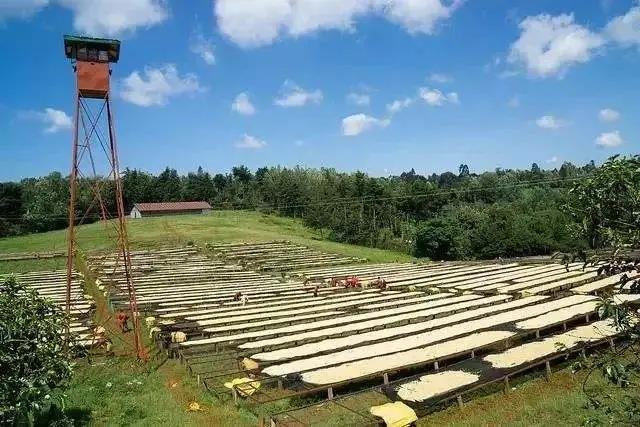
Generally speaking, the washed processing method for coffee beans first removes the skin and pulp of the coffee cherry, leaving only a thin layer of mucilage for washing fermentation for 24 to 48 hours, and finally drying by machine or sunlight. However, Kenyan-style washed processing is different, as the entire fermentation process lasts 72 hours.
Kenyan-style washed processing uses a method of washing after fermentation and repeating in cycles. On the day of harvest, the highest-quality cherries are selected, depulped, and fermented for 24 hours, then washed with clean river water. Next, they are fermented again with clean river water for 24 hours and washed again, repeating this cycle 3 times for a total of 72 hours, so it is called the Kenyan-style 72-hour fermentation washed processing method, or K72 for short. Front Street Coffee believes that this processing method allows the coffee beans to ferment for a long time at low temperatures, giving the beans a brighter, cleaner yet fuller flavor.
Next, Front Street Coffee compares coffee beans from two producing regions through roasting, cupping, and brewing to see how their flavors differ.
FrontStreet Coffee — Kenya Gathaithi Cooperative AB coffee beans
Region: Kenya Nyeri Gathaithi Cooperative
Processing plant: Gathaithi Processing Plant
Altitude: 1825m
Variety: SL28&SL34
Processing method: K72 washed
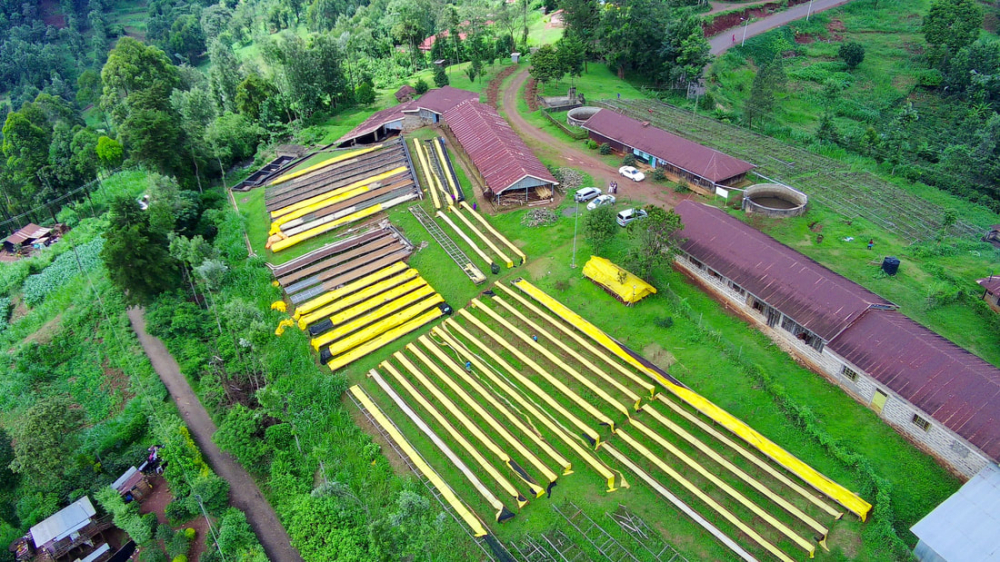
FrontStreet Coffee — Kenya Mugaya AB coffee beans
Region: Kenya Mugaya Processing Plant
Altitude: 1400m
Variety: SL28&SL34
Processing method: K72 washed
Harvest season: 2020
FrontStreet Coffee roasting record Gathaithi coffee bean roasting: Front Street's roaster used a Yangjia 800N semi-direct fire, with a charge weight of 480g. The drum temperature was 165°C when the beans were added, the airflow was set to 3, and the heat was 120. Turning point: 1'28". When the temperature rose to 140°C, the airflow was set to 4. Roasted to 6'00'', at 153°C, the bean surface turned yellow, the grassy smell completely disappeared, and dehydration was complete. When ugly wrinkles and dark spots appear on the bean surface, and the toast aroma clearly turns into coffee aroma, this can be defined as the prelude to first crack. At this time, listen carefully for the sound of first crack. First crack began at 9'17'', the airflow remained unchanged, the heat was lowered to 90 at 188°C, first crack development time was 2'00'', and the beans were dropped at 193.5°C.
Mugaya coffee bean roasting: Front Street's roaster used a Yangjia 800N semi-direct fire, with a charge weight of 480g. The drum temperature was 160°C when the beans were added, the airflow was set to 3, and the heat was 120. Turning point: 1'28". When the temperature rose to 130°C, the airflow was set to 4. Roasted to 6'00'', at 154.6°C, the bean surface turned yellow, the grassy smell completely disappeared, and dehydration was complete. When ugly wrinkles and dark spots appear on the bean surface, and the toast aroma clearly turns into coffee aroma, this can be defined as the prelude to first crack. At this time, listen carefully for the sound of first crack. First crack began at 9'28'', the airflow remained unchanged, first crack development time was 2'20'', and the beans were dropped at 193.8°C.
FrontStreet Coffee cupping report
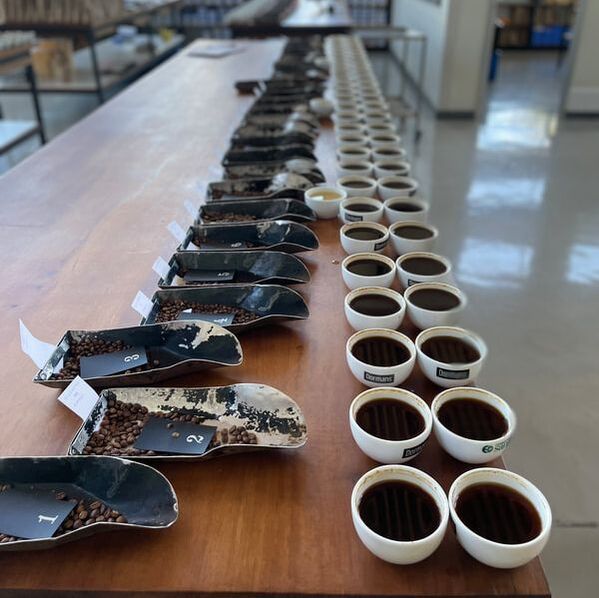
FrontStreet Coffee conducts cupping within 8-24 hours after the sample coffee beans are roasted. The cupping bowl used by FrontStreet Coffee baristas generally has a capacity of 200ml and is a ceramic bowl. The water temperature used for cupping is 94°C. The grind size is controlled so that the passing rate through a No. 20 standard sieve (0.85 mm) is 70%-75%. Ratio: 11 grams of coffee powder plus 200 milliliters of hot water, that is, 1:18.18, so that the extracted concentration is exactly within the golden cup range of 1.15%-1.35%, and the steeping time is 4 minutes.
Gathaithi coffee bean dry aroma: citrus; wet aroma: plum; flavor: citrus, plum, berries, honey, grape, tea-like. Mugaya coffee bean dry aroma: berries; wet aroma: caramel; flavor: smoked plum, plum, grape, caramel, nuts. From cupping the two beans, we can notice that the higher-altitude Gathaithi coffee beans have richer acidity, because the large temperature difference between day and night at high altitude slows the growth of coffee trees, allowing more time for coffee flavor formation.
FrontStreet Coffee brewing notes
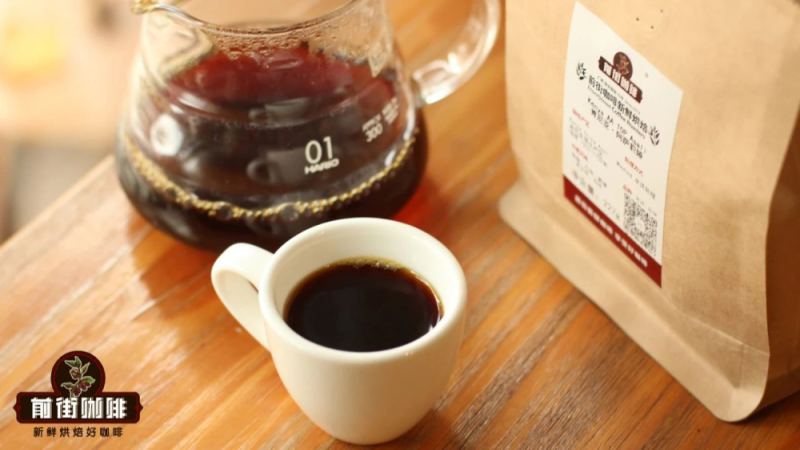
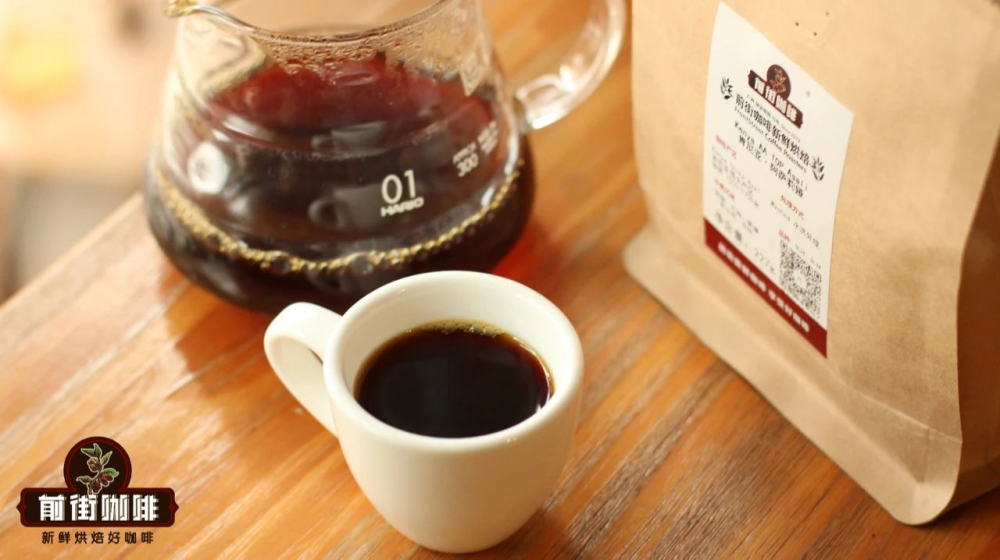
Dripper: V60 #01 Water temperature: 90°C Dose: 15g Coffee-to-water ratio: 1:16 Grind size: medium-fine grind (77% passing through a No. 20 sieve)
Front Street brewing method: First rinse the filter paper and preheat the dripper and coffee pot. Use 30 grams of water for a 30-second bloom, then pour in a small stream in circles until 130 grams for a split pour. When the water level drops and is about to expose the coffee bed, continue pouring until 240 grams and stop. When the water level drops and is about to expose the coffee bed, remove the dripper. (Start timing from the beginning of the bloom.) The extraction time is 2 minutes.
The above content is compiled by CoffeeHunters, a coffee news website.


