







Does planting coffee trees affect drip bag brewing quality?
Drip bag coffee needs only four steps: tear, hang, pour, and remove. Grind coffee into a filter bag, place it over a cup, and pour hot water in stages. The article explains the correct process, four common mistakes, and three techniques for better flavor: a gooseneck kettle, controlled coffee-to-water ratio, and managed water temperature.
Freshly roasted and freshly ground coffee tastes different from drip bags because volatile aromatic compounds escape quickly once beans are ground. Front Street covers flavors from Yirgacheffe, Brazil, Kenya, Butterfly, Mandheling, and Honduras Sherry, and can turn customer beans into drip bags on demand.
Drip bag coffee, with its portability and ease of use, has become the top choice for many people to enjoy specialty coffee daily. But the seemingly simple four steps of tear, hang, pour, and remove actually hide many details that are easy to get wrong. This article, based on Front Street Coffee's hands-on experience, systematically sorts out the correct brewing process for drip bag coffee and four common mistakes, and shares three key techniques to enhance flavor: pouring with a gooseneck kettle, controlling the coffee-to-water ratio, and managing water temperature. At the end, it compiles ten representative drip bag products from Front Street, covering regional flavors such as Panama Butterfly, Kenya Little Tomato, Yirgacheffe Red Cherry, Mandheling, and Brazil Cerrado, with options ranging from bright acidity to full body and winey notes, making it easy to choose according to taste.
Even with the same batch of coffee beans, the experience of drinking freshly roasted and freshly ground coffee differs from that of drip bag coffee. The reason is that once coffee is ground into powder, volatile aromatic compounds dissipate much faster. Some of Front Street's long-time customers also prefer to have the store grind the beans in advance before shipping. In such cases, Front Street usually reminds them to finish the coffee as soon as possible. Of course, if the goal is to save time and effort and there is not enough time for a leisurely pour-over, drip bag coffee packets remain a very practical alternative.
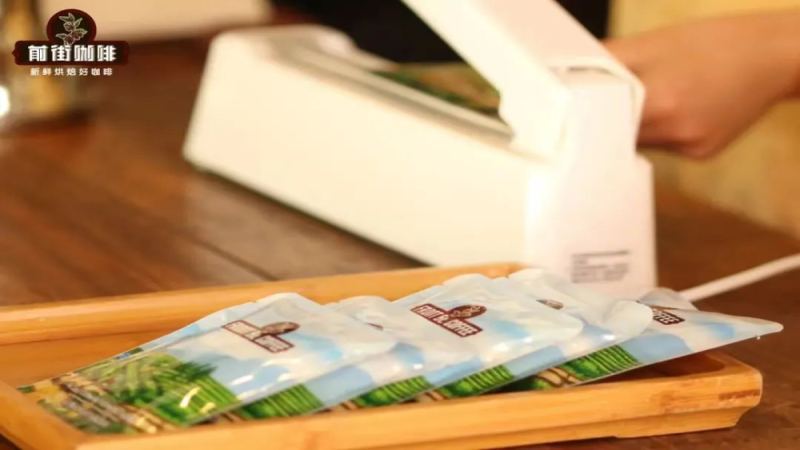
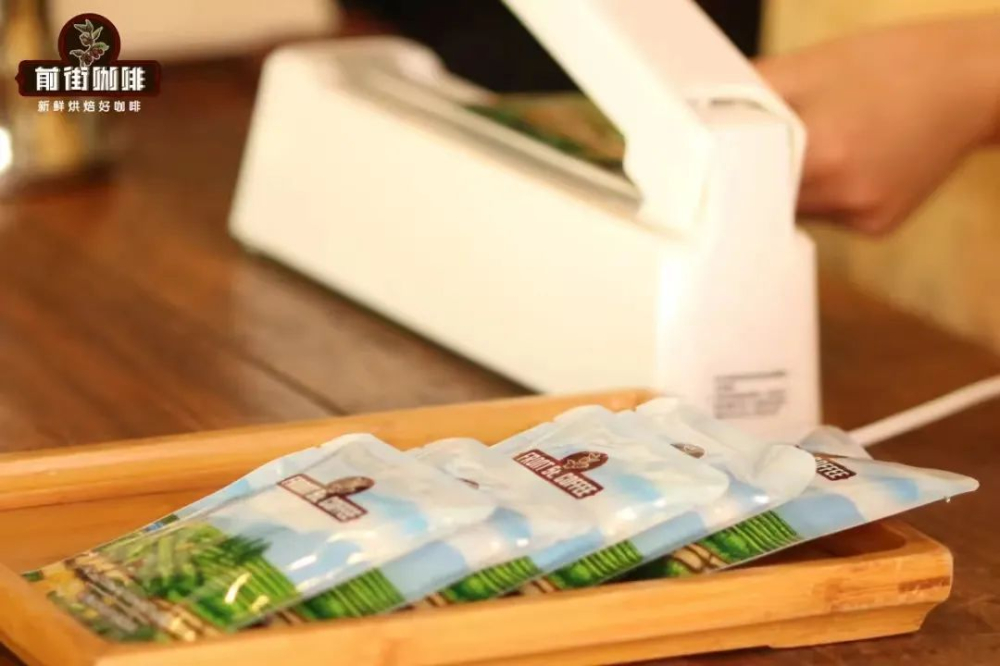
Front Street drip bag coffee covers flavors from multiple regions, such as Yirgacheffe, Brazil, Kenya, Butterfly, Mandheling, and Honduras Sherry. If customers have other coffee beans on hand and also want them processed into drip bag filter coffee packets, Front Street can also make them on demand. For example, recently a customer tried Front Street PWN Golden Mandheling in the store, liked the flavor, and did not want to grind beans at home, so we made it into drip bags for him on the spot.
How exactly should drip bag coffee be used? Front Street will now introduce drip bag coffee to everyone. Let's first understand its basic brewing method—it actually requires only a little more than instant coffee. [Correct method for brewing drip bag coffee]
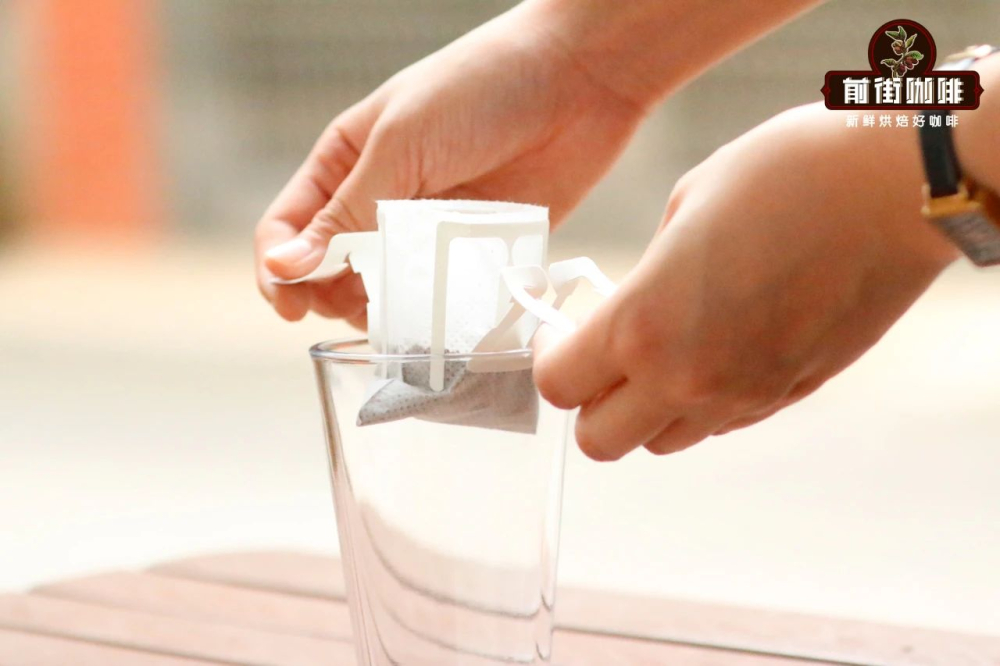
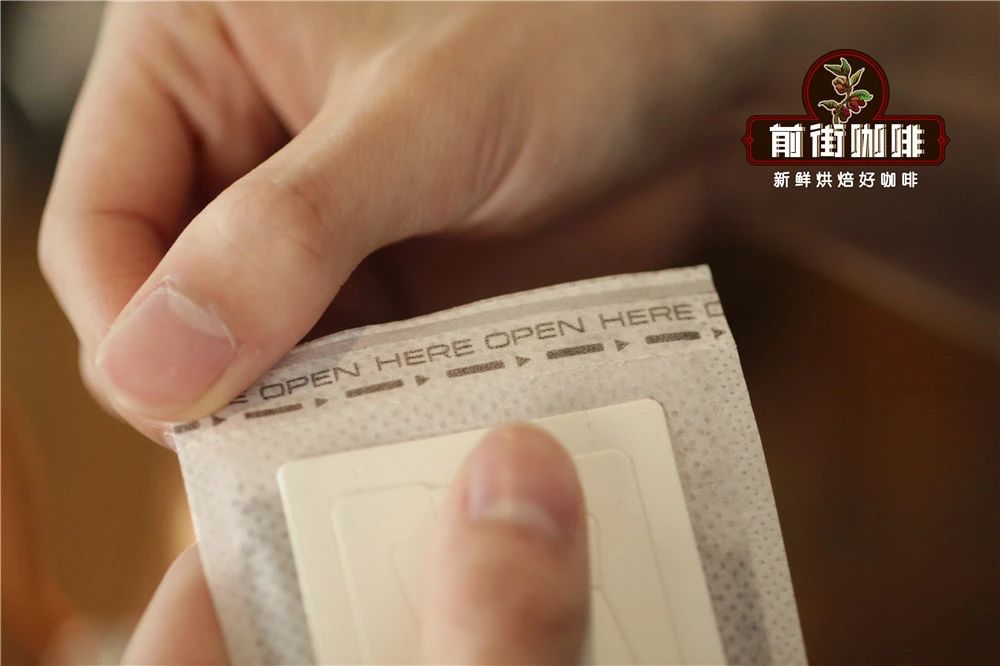
1. Tear open the package along the indicated mark; the opening is usually easy to tear. Be careful when choosing a cup—the rim should not be too wide, otherwise the drip bag may not be able to rest on it.
2. Pour in hot water at about 90°C, just enough to submerge the coffee grounds, and let it bloom for 20 to 45 seconds.
3. After a brief bloom, the coffee grounds have already released a fairly rich aroma. Each Front Street drip bag contains 10g of coffee. At a 1:15 coffee-to-water ratio, pour in about 150ml of hot water. For a stronger taste, use less water; for a lighter taste, use more. The ratio can be flexibly adjusted entirely according to personal preference. As for whether to pour in stages, Front Street is often asked this by customers. Actually, simply pour in a small stream in a circular motion directly to 150ml. Drip bag coffee is all about being simple and convenient, so there is no need to set too many hurdles.
4. Lift out the drip bag and throw it in the trash. Then add sugar or milk according to your preference. If you plan to add milk, it is recommended to brew the drip bag coffee stronger, then mix it with milk at a 1:8 ratio of coffee to milk; you can also use a milk frother to froth the milk, and you will get a simple latte.
[Wrong methods for brewing drip bag coffee]
1. Treating the coffee grounds in the drip bag as instant coffee. Front Street Coffee previously received feedback from a customer saying there was a lot of sediment in the coffee. Upon asking, it turned out the customer mistakenly thought drip bag coffee was the same as instant coffee and directly poured the grounds out to mix with water. Although the customer said it tasted okay, a mouthful of coffee sediment still seriously affects the drinking experience.
Front Street Coffee reminds everyone here: Do! Not! Pour! The! Coffee! Grounds! Out! Of! The! Drip! Bag! This is wrong!
Instant coffee is a dried extract obtained by evaporating the water from coffee extract, and it dissolves quickly in hot water, fundamentally different from real coffee. The powder used in drip bag coffee comes from grinding freshly roasted coffee beans and contains a large amount of insoluble components such as plant fibers, so it needs drip extraction to avoid sediment ruining the taste.
2. Steeping the drip bag like a tea bag. Front Street Coffee has also encountered customers saying the coffee had no flavor. Upon asking, it turned out they had directly dropped the drip bag into the cup.
Drip bags and tea bags do both use non-woven fabric bags, and they look somewhat similar. But the two large paper ears on a drip bag cannot be ignored, unless you want to drink a cup of bland hot water that tastes like soaked paper... Remember! Drip bag coffee must be hung up and brewed!
3. Brewing without tearing open the opening. This is the most frequent mistake Front Street Coffee has seen. Most brands print "OPEN" clearly on the seal of the drip bag, and Front Street Coffee's drip bags are also marked with "OPEN." Some people think a drip bag is just a tea bag that hangs up, and never think to tear the opening. But if you do not tear it open, the process of water flowing through and brewing is missing, so the coffee flavor is naturally under-extracted. Front Street Coffee suggests that the first step in brewing a drip bag is to tear the opening!
4. Various other mistakes
Here Front Street Coffee gives two examples. The first is doing the first three steps correctly but omitting the "remove" step. After brewing, please remove the drip bag within 2 minutes, otherwise it not only gets in the way but also tends to over-extract and affect the taste. The second is completing all four steps—tear, hang, pour, remove—perfectly, but then picking the drip bag back up after finishing the cup to brew a second one. Front Street Coffee kindly reminds you: after brewing, please discard the drip bag directly and do not reuse it! The coffee flavor is already almost gone, and brewing again will not extract anything useful.
Front Street Coffee tips: three details to make drip bag coffee taste better!
1. Use a gooseneck kettle instead of a water dispenser to pour water
Many people brewing drip bag coffee just take it under the water dispenser and let the hot water rush out noisily.
But if you want the coffee to taste better, the water stream needs to be soft and steady so that too many off-flavors are not washed out. Just having a simple gooseneck kettle allows you to pour a steady stream, reducing the extraction of unpleasant off-flavors and giving a better flavor.
2. Getting the brewing ratio right is important
Many people wonder, is there a difference between 1:10, 1:15, and 1:20 coffee-to-water ratios? Front Street Coffee's answer is: A huge difference!
Too strong or too weak directly affects how it tastes. Front Street Coffee believes that nailing the ratio is crucial for coffee brewing. Front Street Coffee suggests using a graduated measuring cup instead of an ordinary mug when brewing drip bag coffee, so the ratio can be controlled more precisely.
3. Use a thermometer to measure water temperature
When introducing pour-over coffee, Front Street Coffee explained that water temperature is one of the four major variables in coffee extraction, and the temperature directly affects the extraction result.
Although drip bags do not need to be as precise as pour-over down to a specific degree, if you want better flavor, Front Street Coffee suggests keeping the water temperature at 80-95°C. The reason is that water that is too hot easily dissolves a large amount of fibrous components from the coffee grounds, giving the coffee a sandy mouthfeel that is not very pleasant. To avoid water that is too hot, you can use an electronic thermometer; if you do not have a thermometer on hand, usually after pouring boiling water into a gooseneck kettle and letting it sit for about 1 minute, the temperature will drop below 95°C. Of course, it should not be too low either, otherwise the drip bag coffee may come out with little flavor.
Master these three key points, and the flavor of your drip bag coffee will improve by a notch without a problem!
[Drip bag brand recommendations]
The choice of coffee beans for drip bag coffee is actually quite broad, mainly depending on personal taste preferences. Front Street Coffee recommends the following representative coffee beans, with acidic, full-bodied, and winey options.
1. Front Street Panama Washed Butterfly Drip Bag Coffee
Panama is located in Central America, bordering Costa Rica to the west and Colombia to the east. Panamanian coffee is famous in the coffee world for Hacienda La Esmeralda's Geisha, and the whole country is filled with a strong Geisha atmosphere, with many estates planting Geisha coffee beans. But Geisha is difficult to grow, low in yield, and outstanding in flavor, so its price is naturally not low. This Front Street Panama Butterfly has 70% high-quality Geisha lineage, along with Catuai and Caturra, planted in the Baru Volcano area of Boquete at an altitude of 1,600 meters. The local special microclimate brings abundant rainfall and a large temperature difference between day and night, and together with careful harvesting and refined processing, this Front Street Panama Butterfly performs quite well in body, acidity, and floral aroma.
What is even more surprising is that with such excellent quality and conditions, the price is very affordable, allowing people to experience Geisha flavor at a very high cost-performance ratio.
The washed method first uses a machine to remove the skin and pulp, leaving only the coffee beans wrapped in parchment. At this point, a layer of mucilage still clings to the surface of the beans, and the washing process is meant to clean off this mucilage. But the mucilage adheres strongly and is not easy to remove, so it must be placed in a tank for about 18-36 hours to ferment and break down the mucilage.
Flavor description: citrus, floral, tea-like, honey, high sweetness.
2. Front Street Kenya Little Tomato Drip Bag Coffee
Kenyan coffee mostly grows at altitudes of 1,500-2,100 meters and is harvested twice a year. Kenyan coffee is grown by smallholder farmers, with production areas concentrated near Mount Kenya in the central region, and the planted variety is high-quality Arabica.
Kenya grades coffee by bean size and cupping results. According to bean size, shape, and hardness, from high to low, the grades are AA or AA+, AB, PB, C, E, TT, and T. For AA and AB green coffee beans, an additional special grading based on cupping results is also added (not officially recognized by the Kenyan government, but set by exporters), from high to low as TOP, PLUS (+), and FAQ.
Kenyan coffee's distinctive acidity is closely related to its excellent processing method. General washed processing selects highly ripe coffee cherries, removes the skin and pulp, and then soaks them in a fermentation tank to remove pectin. This process rarely exceeds 36 hours, but Kenyan coffee ferments for as long as 72 hours. After that, it is dried until the moisture content drops to 12%.
Flavor description: cherry tomato and smoked plum acidity, prominent sweetness in the middle, berry and brown sugar sweetness in the finish, green tea aroma.
3. Front Street Yirgacheffe Natural Red Cherry Drip Bag Coffee
Red Cherry is actually a commercial program to promote coffee quality, initiated by Menno Simons, founder of the Dutch green bean trader Trabocca. Trabocca realized that Ethiopian coffee beans varied greatly in quality, making it difficult to raise prices, and coffee farmers' incomes were not high. To turn this situation around, they jointly launched the Red Cherry program with local coffee farmers to solve the problem at the source. By raising the purchase price of high-quality green coffee beans, they encouraged farmers to carry out every step of picking and processing more carefully, using fully manual labor during the picking stage and selecting highly ripe coffee cherries.
The natural process is the oldest and most primitive method of processing coffee beans. This Front Street Yirgacheffe Natural Red Cherry places whole coffee cherries, with the pulp and skin fully retained, on raised beds for sun drying, isolating them from contact with the ground to prevent direct sun exposure from producing earthy off-flavors. After more than two weeks of sun drying, the dark brown coffee cherries are stored to await full flavor maturation, and only before shipment does the processing plant remove the coffee beans from the cherries. This natural processing method gives the beans lower acidity, obvious sweetness, and body, but cleanliness is not as high as with washed processing.
Flavor description: obvious sweet-and-sour sensation, with lemon, berries, and fermented wine aroma; the lemony acidity in the finish is long-lasting with obvious sweet aftertaste.
4. Front Street Washed Yirgacheffe Drip Bag Coffee
Yirgacheffe is located in the Gedeo region of southern Ethiopia. Because the coffee it produces has a unique flavor and is widely popular, it stands as its own category in product classification and holds a place in the global specialty coffee market. Yirgacheffe itself is a small town, and nearby there are also three small production areas, Wenago, Kochere, and Gelena Abaya. Because the flavor of the coffee they produce shares considerable commonality with Yirgacheffe, these small production areas are also classified into the Yirgacheffe production area.
Originally, the coffee trees of Ethiopian Yirgacheffe were planted by European monastery monks, and later responsibility shifted to farmers or cooperatives. Coffee trees are mostly planted in farmers' own backyards or intercropped with other crops on farmland. Each household produces only a small amount, making it a typical garden coffee. Garden coffee is one of Ethiopia's four major cultivation systems, referring to farmers planting coffee trees in their own backyards or farmland and intercropping them with other crops, with only 1,000-1,800 trees per hectare. Coffee from this intercropping method accounts for 50% of Ethiopia's total output.
Traditionally, Yirgacheffe used the oldest natural processing method, but early naturally processed coffee beans were mostly spread on the ground to dry, inevitably picking up earthy and dusty off-flavors, and lacking reasonable sorting, the quality of natural beans was average. In 1972, Ethiopia introduced washed processing technology from Central and South America to improve coffee quality, making Yirgacheffe coffee's jasmine floral notes and citrus-lemon freshness clearer and brighter, and it leaped to become one of the representatives of the world's specialty coffee.
Flavor description: lemon, floral, sucrose, black tea.
5. Front Street Sumatra Mandheling Drip Bag Coffee
Indonesia first began growing coffee under Dutch colonial rule, and afterward gradually formed its own unique special coffee flavors, the most famous of which is Sumatra Mandheling coffee. Mandheling was originally the name of a tribe. Because the Japanese mistakenly thought it was the name of the coffee when spreading it, it was propagated under that name by a twist of fate.
The local weather is mostly rainy, with constant typhoons, unable to achieve the good weather needed for natural drying, and the local economic situation is poor, so there is also no capacity to use the more expensive washed method. The combination of these factors gave rise to the highly local wet-hulling method (that is, during the ordinary washed process, drying in parchment for 2-3 days until the moisture content is 20-24%, then removing the parchment).
Flavor description: herbal medicinal notes, dark chocolate, caramel, sweet aftertaste.
6. Front Street Brazil Cerrado Red Bourbon Drip Bag Coffee
From the perspective of natural conditions, Brazil is located in the tropical region. The north has a tropical rainforest climate, hot and humid year-round, suitable for tropical crops. Coffee trees are also sun-loving crops, and abundant sunlight provides conditions for their growth. The Brazilian semi-washed method (also called pulped natural) is common in some parts of Brazil. After the coffee cherries are pulped, the parchment beans still covered in mucilage are sun-dried for 1-3 days, then machine-dried to 12% moisture content, after which they can be placed into storage containers for maturation. The Brazilian semi-washed method greatly shortens the time (traditional natural drying requires 2-3 weeks) and also reduces the chance of coffee beans absorbing off-flavors, greatly improving quality. Flavor description: prominent nutty and chocolate flavors, low acidity.
7. Front Street Yunnan Small-Bean Coffee
Front Street Coffee (FrontStreet Coffee) has been involved in coffee cultivation since the very beginning of entering the coffee industry. Front Street Coffee (FrontStreet Coffee) also has its own coffee plantation, growing Typica and a small amount of Bourbon in Yunnan. At Front Street you can see two Yunnan coffee beans: one is Front Street Yunnan Small-Bean from Baoshan, and the other is Front Street 2013 Typica. Front Street Yunnan Small-Bean is the Catimor variety, while Front Street 2013 Typica is the old variety Typica. In Yunnan, 99% are now Catimor varieties. Front Street calls Front Street 2013 Typica Yunnan specialty coffee, while Catimor is classified as Yunnan small-bean. Flavor description: melon, nuts, cream.
8. Front Street Costa Rica Tarrazu Drip Bag Coffee
Costa Rica's Tarrazu production area accounts for about 35% of the country's total output. The Tarrazu production area is Costa Rica's most important and highest-quality specialty production area. In addition to micro-lots, Tarrazu also produces large quantities of ultra-high-quality large lots. Tarrazu is located in Costa Rica's picturesque Central Valley, with distinct dry and rainy seasons, perfect soil composition and terrain, and an altitude of about 1,200-1,800m. All these factors make this region a truly perfect growing area for Arabica. The name "Tarrazu" comes from the ancient Huetar indigenous people who once settled there. Flavor description: nuts, sweet orange, honey.
9. Front Street Colombia Washed Huila Drip Bag Coffee
Colombian Huila coffee beans are the finest of Colombia's top-quality coffees. Its balance is recognized as the best, and it belongs to the specially selected high-mountain coffee beans of the Colombian national company, known as a Colombian national treasure. With superior geographical and climatic conditions, Colombian coffee has always maintained relatively high quality. Usually, Colombian coffee beans without a special market trademark name come from the National Federation of Colombia Coffee Growers, a very large federation spanning Colombia. This federation has always been known for strict quality control and active promotion. Flavor description: nuts, dark chocolate, caramel, soft fruit acidity.
10. Front Street Honduras Washed Caturra Drip Bag Coffee
Honduras's geographical conditions are no inferior to those of its neighboring coffee-producing countries, such as Guatemala and Nicaragua. Honduras has 280,000 hectares of coffee farms, mainly small coffee farms, most smaller than 3.5 hectares. These coffee plantations account for 60% of Honduras's entire coffee production.
Flavor description: obvious chocolate, nuts, cream, balanced, cocoa finish, moderate acidity.
The above content is compiled by CoffeeHunters, a coffee news website.


