







What makes Yirgacheffe coffee beans so distinctive?
Yirgacheffe, Ethiopia's most iconic specialty region, is known for lemon-citrus flavor and a clean mouthfeel. This analysis covers the region's background, cooperative structure, and processing differences, then gives brewing parameters for Front Street's washed Gidding and sun-dried Red Cherry, plus answers about uneven bean sizes.
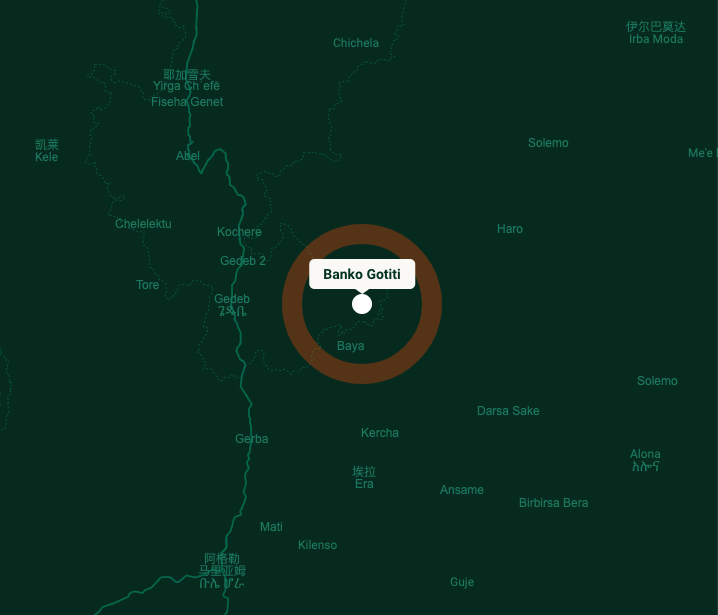
Yirgacheffe is also the country's highest-altitude coffee-producing region, home to many cooperatives including Gidding and Kochere. Kochere sits southeast of Yirgacheffe at roughly 1,800 to 2,000 meters, where smallholder farmers rely on coffee income and the area's water processing equipment keeps washed lots at a high standard.
Yirgacheffe, as Ethiopia's most iconic specialty coffee region, is world-renowned for its lemon-citrus profile and clean mouthfeel. This article will provide a comprehensive analysis of Yirgacheffe coffee beans' flavor characteristics, from the region's background, cooperative features, and processing method differences to brewing parameters. It will also introduce brewing recommendations for Front Street Coffee's washed Gidding and sun-dried Red Cherry products, and answer common questions about uneven bean sizes, helping coffee enthusiasts gain a deeper understanding of this African specialty bean's unique charm.
To learn more about specialty coffee, welcome to follow our WeChat official account: Front Street Coffee.
Driven by the third wave of specialty coffee, coffee is no longer just a pick-me-up beverage but has become part of many people's daily lives. A seemingly simple cup of coffee can often bring a whole day of happiness. As the birthplace of coffee, Ethiopia's shepherd legend has cast a mysterious veil over coffee.
Among Ethiopia's many coffee beans, the Yirgacheffe region is undoubtedly the most well-known, with an overall flavor profile dominated by lemon and citrus notes and a very clean mouthfeel. The Huakui coffee produced in Hambela of the Guji region is equally famous. It is precisely because these two regions possess unique flavor expressions that the ECX separated them out individually. Yirgacheffe was originally just a small town in Ethiopia and is also the country's highest-altitude coffee-producing region. The area is home to numerous cooperatives, among which the Gidding Cooperative and Kochere are particularly prominent.
Kochere is located southeast of Yirgacheffe and is a small producing area dominated by smallholder farmers, with a rather limited cultivation area at an altitude of approximately 1,800 to 2,000 meters. Coffee beans are the main source of income for local residents. This region is equipped with relatively advanced green bean water processing equipment, so it has consistently maintained a high standard in washed processing. Yirgacheffe coffee beans present a complex profile interweaving honey and citrus, clean and sweet.
The Gidding Cooperative was originally established after splitting off from the Worka Cooperative. When roasting Front Street Yirgacheffe Gidding, Front Street typically opts for a light roast to highlight its bright fruit acidity. As a result, the brewed Front Street Yirgacheffe Gidding performs exceptionally well in flavors such as citrus, black tea, floral notes, and cream.
When Front Street baristas brew Front Street washed Yirgacheffe Gidding for customers, they prefer to use a higher water temperature, such as 91°C. The reason is that this Front Street Gidding is light-roasted and requires a higher water temperature to fully release its Yirgacheffe flavors. Front Street typically uses 15 grams of coffee grounds and extracts at a 1:15 coffee-to-water ratio. When tasting, you can feel Gidding's bright citrus fruit acidity, with clearly defined flavor layers.
When Front Street Coffee baristas brew this Yirgacheffe, many attentive customers have noticed that Front Street washed Yirgacheffe coffee beans vary in size and appear quite uneven. Some customers then asked: Are your beans really from Ethiopia? Have other defective beans been mixed in? Front Street would like to explain: Front Street's beans are indeed authentically produced in Ethiopia, and the phenomenon of uneven bean sizes is closely related to Ethiopia's own coffee management model.
Traditionally, Yirgacheffe coffee beans used the oldest sun-dried processing method. However, early sun-dried beans were mostly spread flat on the ground to dry, inevitably picking up off-flavors like dirt and dust. Combined with insufficiently standardized screening, the overall quality of sun-dried beans was not ideal. In 1972, in order to improve coffee quality, Ethiopia introduced washed processing technology from Central and South America, which made Yirgacheffe coffee beans' jasmine floral notes and citrus-lemon freshness become clearer and more transparent, propelling them into the ranks of the world's representative specialty coffees.
As the homeland of coffee, Ethiopia possesses an extremely rich variety of coffee species, and to this day a large number of wild coffee varieties have yet to be officially announced. Therefore, such a multitude of coffee varieties are collectively referred to as local heirloom varieties. Take a large estate as an example: if the estate uniformly cultivates the Bourbon variety, then the resulting beans will naturally be relatively uniform in size. Front Street gives another example: suppose an estate mixedly plants multiple varieties such as Bourbon, Typica, Caturra, Catuaí, and Castillo in the same plot. When harvesting, the farmers do not distinguish the specific variety of each coffee tree but instead collect the ripe cherries all together into the same basket. Therefore, the coffee beans purchased by merchants will inevitably vary in size.
For this reason, Ethiopia's coffee has also developed its own grading system. According to previous standards, washed coffee beans were typically graded as G1 and G2, with a lower number indicating a higher grade; sun-dried processing used G3, G4, and G5 for grading. However, it is understood that Ethiopia has now introduced new grading standards.
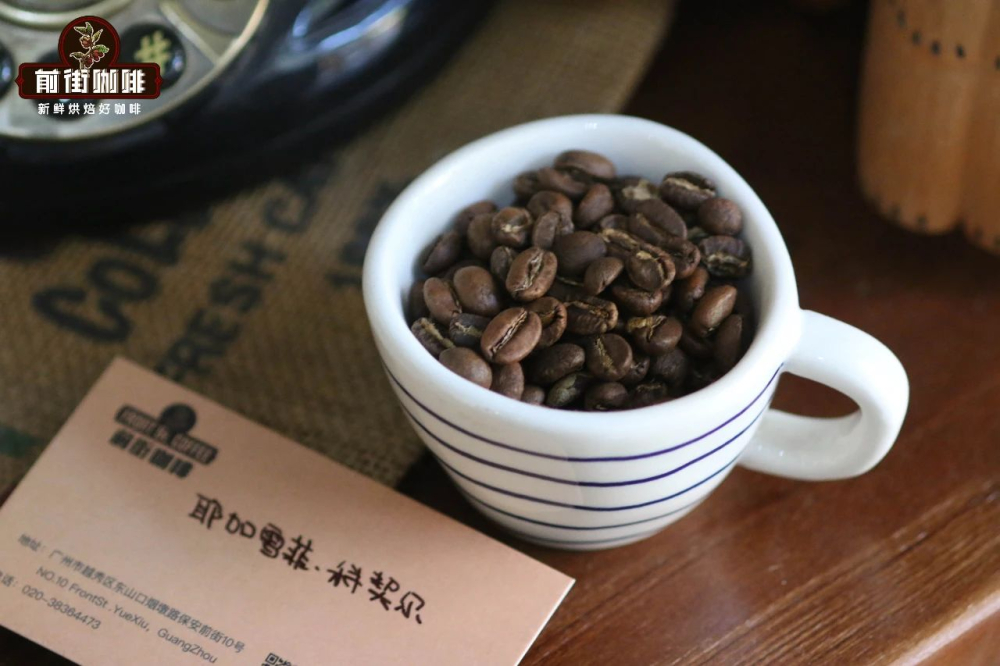
If you frequently visit Front Street Coffee stores, you will find that there are plenty of green bean and roasted bean samples available for observation. Generally speaking, washed green beans are blue-green in color, while sun-dried green beans tend toward yellow-green, and the difference between the two is quite obvious. You will also notice that washed Yirgacheffe coffee beans have more silver skin, while sun-dried beans have relatively less silver skin. Of course, the roast level is also closely related to the amount of residual silver skin—the darker the roast, the more thoroughly the silver skin falls off. Ethiopia's coffee processing has traditionally been dominated by sun-drying, but washed processing is also used to ensure stable production of high-quality coffee beans. Front Street Yirgacheffe Gidding is precisely washed-processed, offering a citrus and black tea texture on the palate.
Front Street has also launched a Front Street Yirgacheffe sun-dried Red Cherry Project coffee bean. This Front Street sun-dried Red Cherry originates from the Red Cherry Project jointly promoted by a Dutch green bean merchant and Ethiopia. The initiator was a Dutch green bean merchant, who found in practice that Ethiopia's coffee quality often fluctuated, leading to low green bean prices. They then joined hands with Ethiopian coffee farmers to jointly implement this Red Cherry Project.
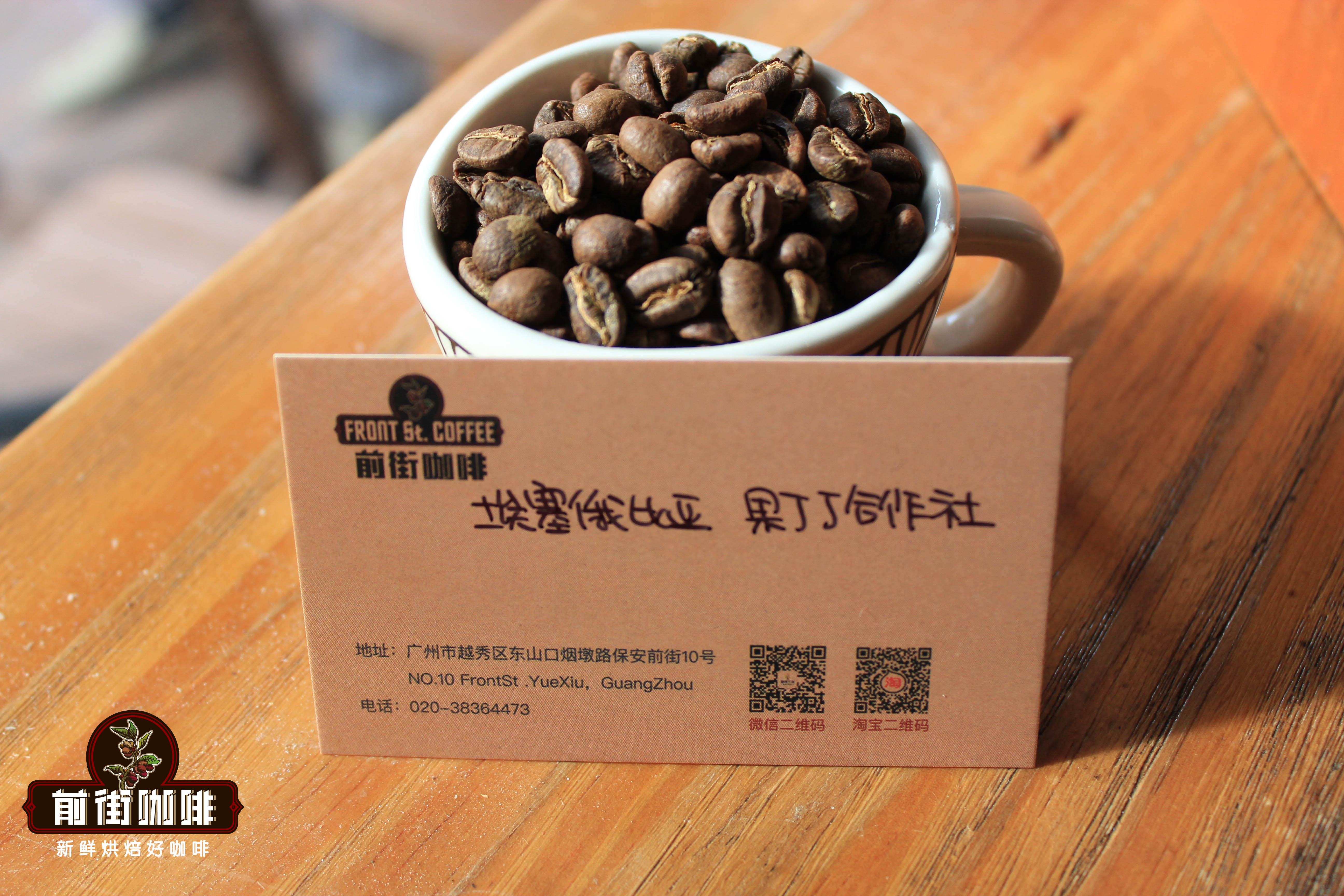
The project starts from the source, using higher purchase prices for high-quality green coffee beans to incentivize coffee farmers to more diligently complete each stage, including picking and processing. The picking stage is entirely done by hand, selecting only coffee cherries with high ripeness.
Yirgacheffe Red Cherry coffee first adopts the oldest sun-dried processing method. Through hand-picking fully ripe coffee cherries, the farmers then dry the processed cherries. When the coffee's moisture content drops to 12%, it is hulled using a hulling machine, after which defective beans are removed by hand. As a result, Red Cherry Project green coffee beans are relatively uniform in size, and the brewed coffee tastes even better.
Yirgacheffe coffee beans have an extremely clear and bright flavor. When tasting, the mouthfeel is clean and crisp, and on the palate you can sense a dry lemon-citrus aroma and delicate floral notes. This is mainly thanks to the washed processing method. Washed coffee beans tend to have a clearer flavor with no off-tastes. Therefore, most of the different-region daily-drinker beans launched by Front Street use washed processing, because washed processing better showcases a region's most original flavor characteristics. And Ethiopian coffee is precisely most famous for washed Yirgacheffe coffee beans.
For more specialty coffee beans, please add the private WeChat of Front Street Coffee: kaixinguoguo0925
The above content is compiled by CoffeeHunters, a coffee news website.


