







Can a Geisha Coffee Blend Still Be Single-Origin Coffee?
Yes. A Geisha blend can still be single-origin coffee, because single-origin refers to where the beans come from, while a blend refers to combining varieties or lots. Two examples are Front Street Panama Boquete Butterfly and the Costa Rica Mirazu Estate Strawberry Candy Geisha blend, both sold as single-origin coffees despite the word blend in their names.
Geisha was found in Ethiopia in 1931, reached Kenya the same year, spread to Uganda and Tanzania in 1936, and arrived in Costa Rica in 1953. Don Pachi Serracin brought trees to Panama in 1963, and La Esmeralda's 2004 competition entry made the variety famous. Coffee bean processing, including washed and raisin honey methods, shapes the floral and citrus notes.
Geisha coffee has always been known for its floral and citrus notes, but when you see many products on the market labeled as "blends" of Geisha, do they still count as single-origin coffee? This article takes two representative Geisha blends from Front Street Coffee—the Panama Boquete Butterfly and the Costa Rica Mirazu Estate Strawberry Candy Geisha Blend—as examples, and walks through the spread and history of Geisha, the origin and varietal composition of these two beans, the washed and raisin honey processing methods, the roasting curve design, and the actual brewing parameters and flavor performance one by one. After reading, you will understand why the concepts of "Geisha blend" and "single-origin coffee" do not conflict, and you will grasp the complete brewing approach for these two beans.
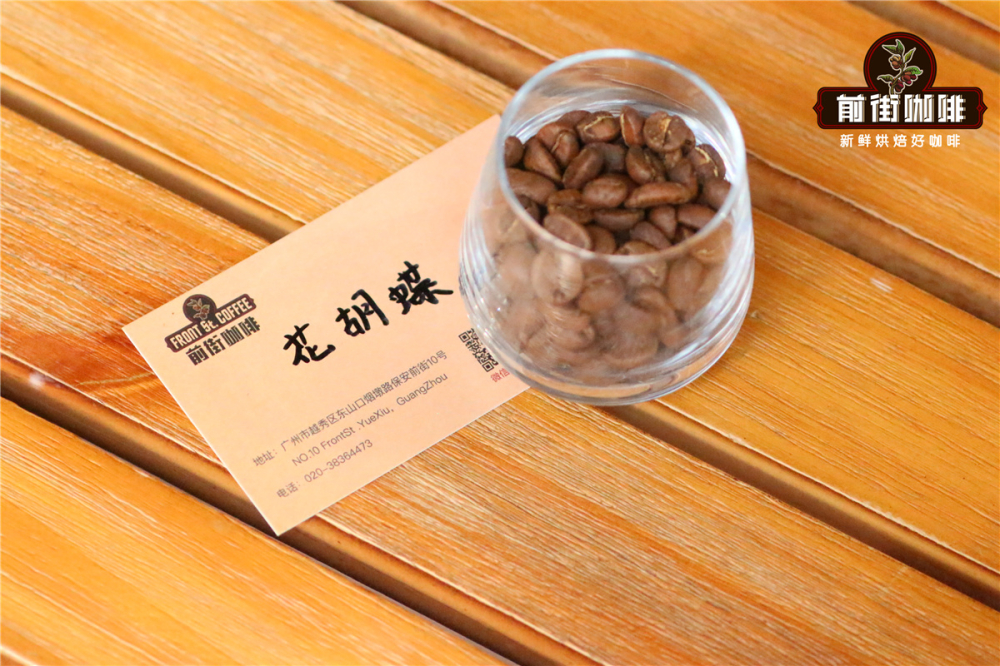
Front Street Coffee currently offers two Geisha blend products, namely Front Street Panama Butterfly Coffee and Front Street Costa Rica Mirazu Estate Strawberry Candy Geisha Blend Coffee. Although the names contain the word "blend," they are actually both standard single-origin coffee beans.
The rise of Geisha in Panama and Costa Rica
The Geisha variety was first discovered in 1931 in the Geisha forest of Ethiopia, then sent to a coffee research institution in Kenya, introduced to Uganda and Tanzania in 1936, and introduced to Costa Rica in 1953.
In 1963, Don Pachi Serracin brought Geisha trees from Costa Rica to Panama. Because this variety has low yields, which directly affects farmers' harvest returns, enthusiasm for planting it remained low. The turning point came at Panama La Esmeralda—owner Daniel Peterson accidentally discovered that the coffee beans from the Geisha trees originally planted as a windbreak at the highest point of the estate carried the citrus and floral aromas typical of African beans. So he decided to process this batch separately and send it to the 2004 Panama coffee bean cupping competition, where it became famous overnight. After that, Geisha advanced irresistibly, winning the Panama coffee cupping competition championship for many consecutive years. In today's global specialty coffee circle, Geisha coffee beans can be called a top-tier treasure.
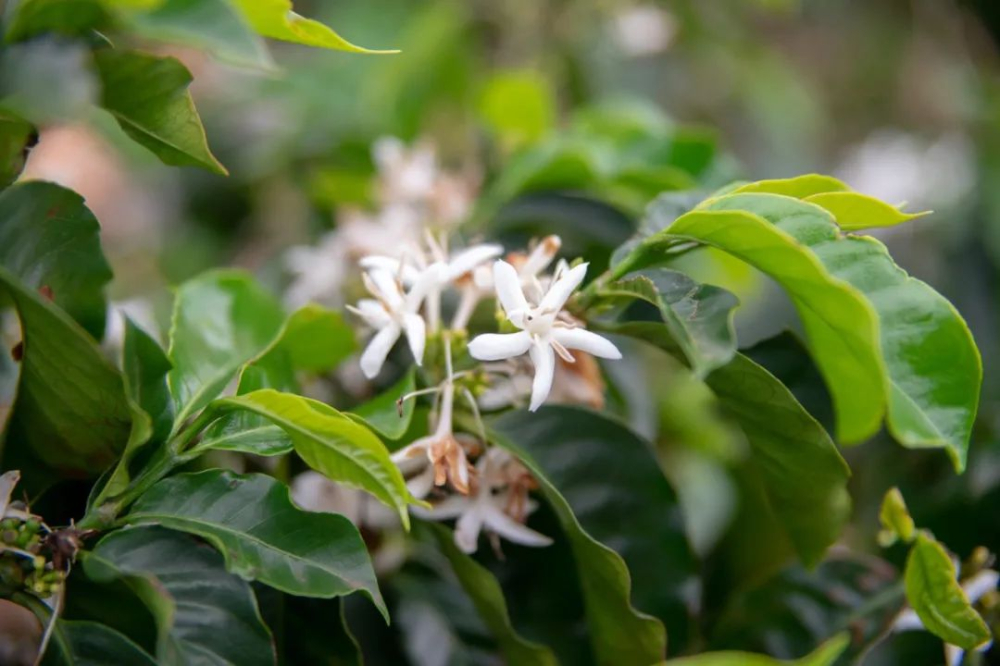
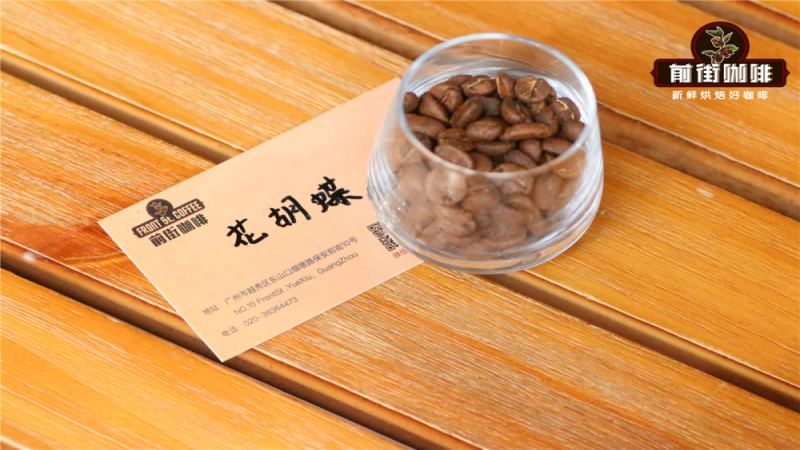
Front Street Panama Boquete Butterfly Coffee Beans
Region: Panama · Boquete
Altitude: 1600m
Varieties: 70% Geisha, Caturra, Catuai
Processing method: Washed
In Front Street Panama Boquete Butterfly, the Geisha variety accounts for 70%, and it is composed of three varieties: Geisha, Caturra, and Catuai, grown in the Baru Volcano area of Boquete at an altitude of 1600 meters. The processing station uses a fine washed process. The area's unique microclimate brings abundant rainfall and a marked temperature difference between day and night, and together with volcanic soil conditions and careful harvesting and processing, this makes Front Street Panama Butterfly quite outstanding in body, acidity, and floral expression.
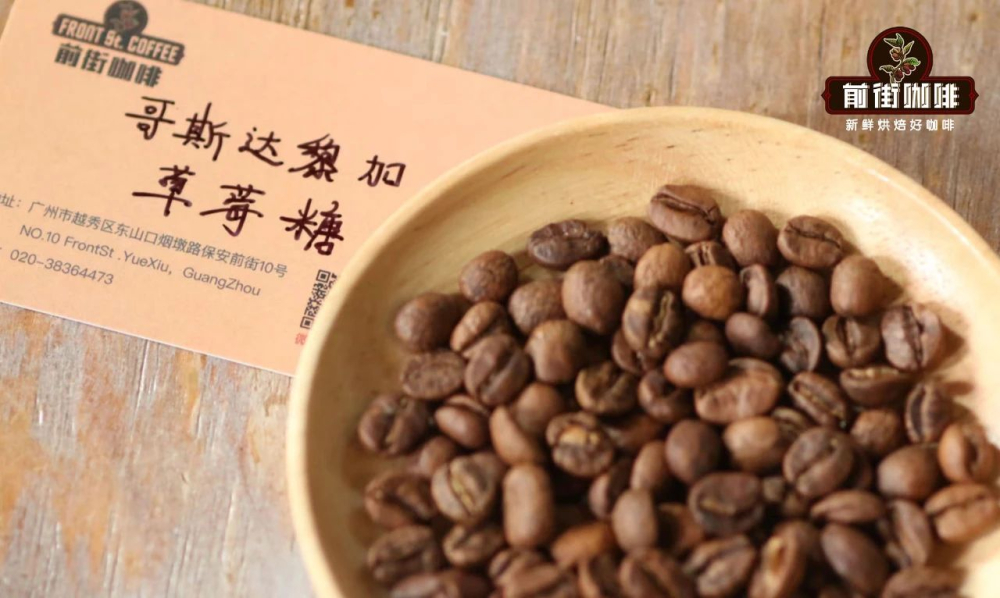
Front Street Costa Rica Mirazu Estate Strawberry Candy Geisha Blend Coffee Beans
Region: Costa Rica Tarrazu
Estate: Mirazu Estate
Altitude: 1700m
Varieties: Geisha, ET47, SL28, MAICO
Processing method: Raisin honey process
Similarly, the Front Street Mirazu Estate Strawberry Candy Geisha Blend from Costa Rica is composed of Geisha, ET47, SL28, and MAICO. These varieties are all grown on the same estate and then blended, making it a single-origin coffee bean. Worth mentioning are ET47 and SL28: ET47 is a native variety originating from Ethiopia. In the 1990s, the Costa Rica Coffee Institute distributed many introduced varieties to farmers in the Tarrazu region as materials for leaf rust resistance research. SL28 was initially selected and bred with both high quality and pest and disease resistance in mind, while some production areas pursued only high yield and ignored disease resistance. Thanks to its Bourbon genes, although SL28's yield did not meet expectations, its bronze leaves and fava-bean-like shape bring excellent sweetness, balance, and complex flavors, as well as signature citrus and smoked plum notes.

So do these two blended coffee beans count as single-origin coffee? Front Street's view is that single-origin coffee usually refers to coffee from a single origin, specifically a certain estate or an even smaller micro-region. Front Street Panama Butterfly comes from smallholder growers in the Boquete region, and Front Street Costa Rica Strawberry Candy Geisha Blend comes entirely from Mirazu Estate, so both fully meet the definition of single-origin coffee. The so-called Geisha blend coffee exists because the bean variety is not the only one: Geisha is the main bean, blended with other coffee varieties from the estate.
Coffee bean processing methods
Front Street Panama Butterfly Coffee uses the washed process: first, coffee cherries are selected and sent to a depulper to initially remove the skin and pulp; the green beans with residual pulp and mucilage are soaked in water and fermented for about 24 hours; after fermentation is complete, the parchment beans are placed in a flowing water channel to be washed, removing pulp and mucilage; after washing, they are dried in the sun or with a dryer until the moisture content drops to about 12%; finally, the parchment is removed. The washed process makes Front Street Butterfly's acidity brighter and also highlights the floral characteristics of the Geisha beans.
Front Street Mirazu Strawberry Candy Geisha Blend Coffee uses the raisin honey process, retaining 100% mucilage and with zero water treatment throughout. This method increases the difficulty of honey processing and places extremely high demands on timing control. On the day of harvest, the coffee cherries are poured into a large water tank; ripe, plump fruits sink to the bottom, while underdeveloped or overripe fruits float and must be removed. The selected coffee fruits are placed on raised beds to dry for at least three days, then depulped while retaining mucilage to continue drying. At this stage, climate is the key to success or failure in honey processing. During drying, the fruits must be turned constantly to ensure even drying, while also controlling the turning frequency, drying slowly to promote fermentation but not so slowly that fermentation goes too far. The raisin process significantly enhances the sweetness of this Front Street Mirazu Strawberry Candy Geisha Blend.
Front Street Coffee roasting analysis
Considering the varietal particularity of Front Street Panama Butterfly, Front Street's roaster decided to use a medium-light roast. Because the beans are dense and hard, high heat is used initially for dehydration, then the heat is reduced before first crack to lower the rate of temperature rise as it enters first crack, preserving small-molecule aromatic substances such as floral notes as much as possible and avoiding damage to Geisha's characteristic aromas of flowers, white grapes, caramel, honey, and black tea.
Roasting amount 550g: preheat the roaster to 200°C and charge; after 30 seconds adjust the heat to 160, open the damper to 3, turning point at 1'31", maintain the heat; at 4'50" the beans turn yellow, the grassy smell disappears, and the dehydration stage begins; at 165°C lower the heat to 130°C and keep the damper at 4. At 7'50" dehydration is complete, the bean surface shows wrinkles and dark streaks, and the toast smell turns into coffee aroma, which is the prelude to first crack; at this point pay attention to listening for the sound of first crack. At 8'31" first crack begins, fully open the damper to 5, and adjust the heat to 70°C. Development time after first crack is 1'28", and the beans are dropped at 193°C.
Front Street Coffee brewing recommendations
Brewing parameters
Water temperature: 90-91°C
Grind size: 80% passing through a No. 20 standard sieve (fine granulated sugar size)
Coffee-to-water ratio: 1:15
Dose: 15 grams
Front Street brewing method: For the first pour, add 30 grams of water and bloom for 30 seconds; then pour 95 grams (the scale shows about 125 grams), finishing the pour in about 1 minute; when the water level drops to 2/3 of the coffee bed, pour the remaining 100 grams (the scale shows about 225 grams), finishing the pour in about 1 minute 40 seconds. Dripping is completed at 1'55''-2'00''; remove the dripper and extraction is complete.
[Front Street Panama Butterfly] Brewed flavor: floral, black tea, berries, citrus, with a slight nuttiness in the finish, smooth mouthfeel, low bitterness, moderate acidity, and a medium aftertaste.
[Front Street Costa Rica Mirazu Estate Strawberry Candy Geisha Blend] Brewed flavor: the fresh fragrance of jasmine, soft fruit acidity, an almond aftertaste, and noticeable sweetness.
The above content is compiled by CoffeeHunters, a coffee news website.


