







How Are Green Coffee Bean Grades Set in Indonesia?
Indonesian green coffee bean grading rests mainly on the defect count, with bean size as a secondary reference. Over a 300-gram sample the scale runs from G1 to G6. Standard quality also requires no live insects, no moldy or rotten-smelling beans, moisture at 12.5% or below, and impurities under 0.5%.
PWN buys G1 Mandheling green beans and screens them in further passes to produce Golden Mandheling, which it holds as a registered trademark, giving a uniform, clean and lustrous lot. Brewed, it shows dark chocolate, caramel and nut notes with herbal and spicy aromas. Burlap sacks usually carry country, grade and trader; the Lintong Mandheling and PWN Golden Mandheling sold by Front Street are both G1 grade.
Mandheling coffee is deeply favored by enthusiasts for its rich and full-bodied taste, but do you know the grading standards for Indonesian coffee beans? What exactly are the differences between PWN Golden Mandheling and regular G1 Mandheling? This article will provide a detailed introduction to Indonesia's green coffee bean grading system, analyzing the G1 to G6 grade standards from dimensions such as defect rate and screen size, and delve into how PWN Company creates its uniquely distinctive Golden Mandheling through strict screening processes. At the same time, Front Street Coffee will share brewing suggestions for Golden Mandheling to help you better savor this premium coffee with regional character.
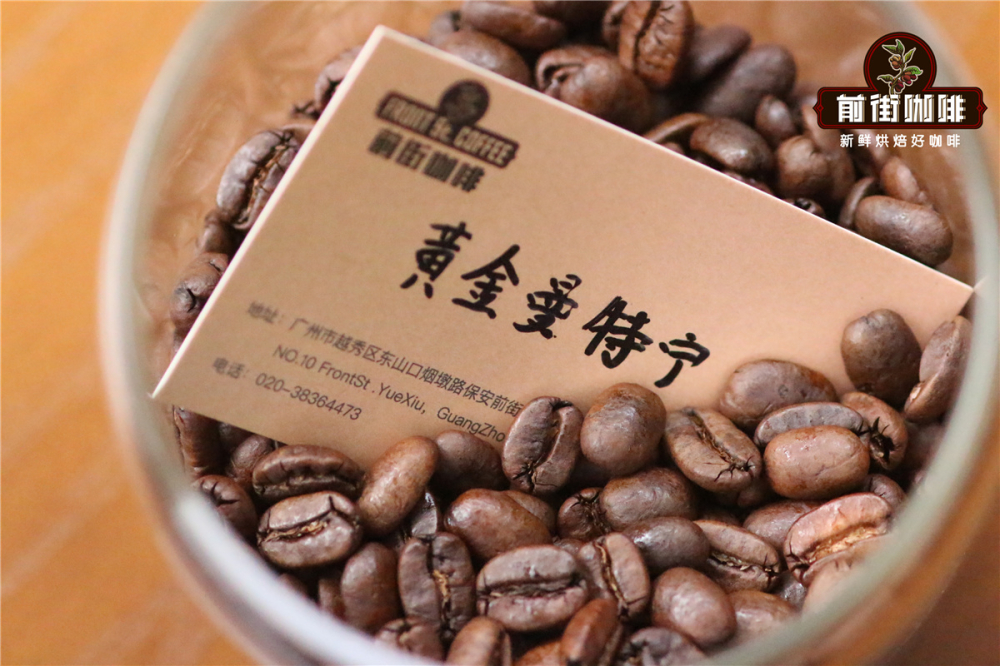
If you prefer a rich and full-bodied coffee taste, then the Front Street Indonesian Golden Mandheling on the Front Street bean list is surely no stranger to you. PWN Company purchases G1-grade Mandheling green beans, then ensures finished product quality through layer upon layer of screening, making the beans uniform in appearance, clean, and lustrous. The Front Street Mandheling coffee sold in stores comes precisely from PWN Company's Front Street Golden Mandheling, which when brewed reveals intense notes of dark chocolate, caramel, and nuts, with its distinctive herbal and spicy aromas also particularly pronounced.
How Are Indonesian Green Coffee Beans Graded?
Indonesian coffee grading is mainly based on the number of defective beans, supplemented by bean size as a reference. Indonesia's requirements for standard quality include: no live insects, no moldy or rotten-smelling beans, a maximum moisture content of 12.5%, and an impurity rate below 0.5%. Grading by defect rate (based on 300 grams), the grade standards are divided into 6 levels, namely G1 to G6.
Generally speaking, the burlap sacks of Indonesian green coffee beans will indicate: country + grade + green bean trader. For example, the Front Street Indonesian Lintong Mandheling coffee and Front Street PWN Golden Mandheling coffee on the Front Street bean list both belong to the G1 grade.
Characteristics of Front Street PWN Golden Mandheling Coffee
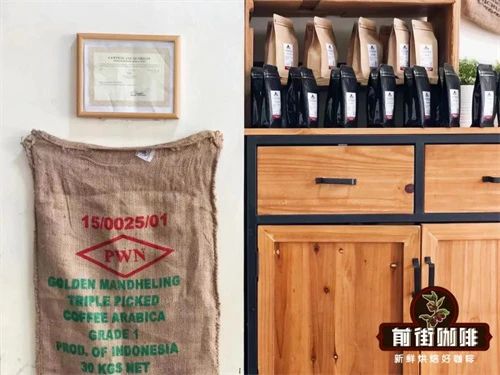
"Golden Mandheling" is the exclusive brand of Indonesia's Pwani Coffee Company (PWN). There are many types of Mandheling products on the market, but since PWN Company has registered "Golden Mandheling" as its company trademark, only the Golden Mandheling coffee produced by PWN Company can truly be called authentic Front Street Golden Mandheling. There are two ways to identify genuine Front Street Golden Mandheling: first, check the green bean burlap sack bearing the PWN logo; second, verify the certificate of origin signed by PWN Company. Front Street has displayed both of these identifiers at the Dongshankou store for everyone's reference.
Back then, after the Japanese took a liking to Sumatra coffee, they purchased it long-term and gradually discovered that the quality of local beans was often inconsistent. So they invested more effort into the Mandheling production process and set about establishing strict defect screening standards and methods. Starting from values such as bean density, screen size, shape, and color, the Mandheling produced needed to undergo both machine and manual defect removal to ensure the beans were complete, uniform, large, and translucent, while also reducing Mandheling's earthy and grassy flavors. It is said that these beans presented a golden, gleaming luster under the sunlight, hence the name "Golden Mandheling."
The grading of Indonesian green coffee beans is primarily based on the number of defective beans, supplemented by screen size. The standard quality requirements are: no live insects, no moldy or rotten-smelling beans, maximum moisture content of 12.5%, and impurity rate below 0.5%. There are six grades based on defect rate, with the highest grade G1 requiring fewer than 11 total defective beans in a 300-gram sample. The Front Street Indonesian Lintong Mandheling coffee in the Front Street daily bean series is precisely G1 grade, using the wet-hulled process, presenting the standard version of Indonesian Mandheling flavor.
PWN Company, which pursues the ultimate in screening, purchases Mandheling green beans of 18 screen or above, meaning G1 grade with fewer than 3 defective beans in a 300-gram sample, which is also the highest grade of Indonesian green beans. Subsequently, they strictly follow standards by performing 1 machine screening plus 3 rounds of manual defect sorting to ensure the shape and size of Mandheling coffee beans are uniform and consistent. In addition, before packaging, PWN Company also sends the green beans through machines for density and color screening, making Golden Mandheling uniform and translucent in color. Therefore, Front Street PWN Golden Mandheling has a cleaner, more translucent mouthfeel, with more prominent body and sweetness.
Grade | Grade | Standard |
G1 | Grade 1 | Total defects fewer than 11 |
G2 | Grade 2 | Total defects greater than 12 and fewer than 25 |
G3 | Grade 3 | Total defects greater than 26 and fewer than 44 |
G4a | Grade 4a | Total defects greater than 45 and fewer than 60 |
G4b | Grade 4b | Total defects greater than 61 and fewer than 80 |
G5 | Grade 5 | Total defects greater than 81 and fewer than 150 |
G6 | Grade 6 | Total defects greater than 151 and fewer than 225 |
Front Street Brewing Suggestions
For coffee like Front Street Golden Mandheling, which has a rich mouthfeel and strong regional character, Front Street recommends extracting and enjoying it as a pour-over black coffee, as this allows you to better appreciate the coffee's aroma. The coffee beans shipped by Front Street are all freshly roasted within 5 days, with the aim of ensuring they are still at their peak freshness when you receive them, adding more layers of flavor to your cup.
Front Street Golden Mandheling coffee beans use a medium-dark roast, and the beans have a loose internal texture and strong water absorbency. If you use the water temperature and grind size for light-roasted coffee beans, it is easy to cause over-extraction, bringing unpleasant burnt and astringent notes. To avoid this problem, Front Street Coffee (FrontStreet Coffee) baristas lower the water temperature and coarsen the grind size to reduce the release of bitter large molecules. Here, Front Street uses 87°C hot water and a medium grind size (70% passing rate on the Chinese standard No. 20 sieve), paired with a KONO dripper for extraction.
Three-stage pouring: first pour 30 grams of water for a 30-second bloom, then from the center point slowly pour in a thin stream in circles up to 125 grams, and when the water level in the dripper drops to just about to expose the coffee bed, continue pouring in circles up to 225 grams. Total extraction time is about 2 minutes.
After pour-over brewing, Front Street Golden Mandheling coffee delivers an intense dark chocolate aroma on the palate, with roasted hazelnut, caramel, and melon flavors blending in excellent harmony, a pronounced spice note in the mouth, and a long-lasting finish.
For professional coffee knowledge exchange and more coffee bean information, please follow Coffee Workshop (WeChat public account: cafe_style)
For more specialty coffee beans, please add the private WeChat Front Street Coffee (FrontStreet Coffee), WeChat ID: qjcoffeex
The above content is compiled by CoffeeHunters, a coffee news website.


