








How does the coffee process change Yirgacheffe flavor?
In Yirgacheffe, the natural and washed coffee process routes produce clearly different cups. Coffee has been part of Ethiopia's culture and economy for centuries, and the country is widely treated as the birthplace of coffee. Terroir varies sharply between regions, but Ethiopian Arabica from any of them tends to draw attention. Processing decides how much fruit and how much clarity ends up in the cup.
Ethiopian coffee processing methods drive the difference: washed lots tend to show fresh citrus acidity, while natural lots build fermented sweetness and heavier fruit. The country exports about 60% of its beans, with the rest kept for local ritual use, including coffee mixed with honey and herbs. Roasting curves should follow the process rather than a single template.
Yirgacheffe is Ethiopia's most iconic specialty coffee region, and its two processing methods—natural and washed—create distinctly different flavor profiles. In this article, Front Street Coffee will systematically review the cultural background and cultivation overview of Ethiopian coffee, take an in-depth look at the cup profile differences between Yirgacheffe natural and washed beans, analyze the recommended roasting curves for the two processing methods, and share brewing parameters and flavor descriptions to help coffee lovers fully understand the charm of this classic region.

For more specialty coffee knowledge, please follow our WeChat public account: Front Street Coffee (FrontStreet Coffee).
Front Street Coffee (FrontStreet Coffee) points out that coffee has been rooted in Ethiopia's social structure and cultural economy for hundreds of years. For local people, coffee is both central to their culture and an important economic pillar for most households. As the globally recognized birthplace of coffee, Ethiopia enjoys an extremely high reputation in the specialty coffee world, and Ethiopian coffee can be found on cafe menus almost everywhere around the world—Front Street Coffee (FrontStreet Coffee) is no exception. So why does Ethiopian coffee receive such high praise? Front Street Coffee (FrontStreet Coffee) believes that the terroir differences among the country's regions are extremely pronounced, but no matter which region it comes from, as long as it is Ethiopian Arabica coffee, it fascinates countless people. Next, let Front Street Coffee (FrontStreet Coffee) take you into this country of coffee's origin.
Ethiopia is located in East Africa, and in the forests of the Kaffa region in its south alone, as many as five thousand native Ethiopian coffee varieties have been found. Front Street has learned that, as Africa's largest coffee-producing country, Ethiopia exports only 60% of its coffee beans, while the rest is consumed in various forms of ritual. For example, at weddings, people pair coffee beans with coffee fruit pulp, and they also mix coffee with honey and various herbs to make a medicinal drink used to ward off bad luck. It is clear from this that coffee has long been deeply integrated into local daily life.
Ethiopian Coffee Culture
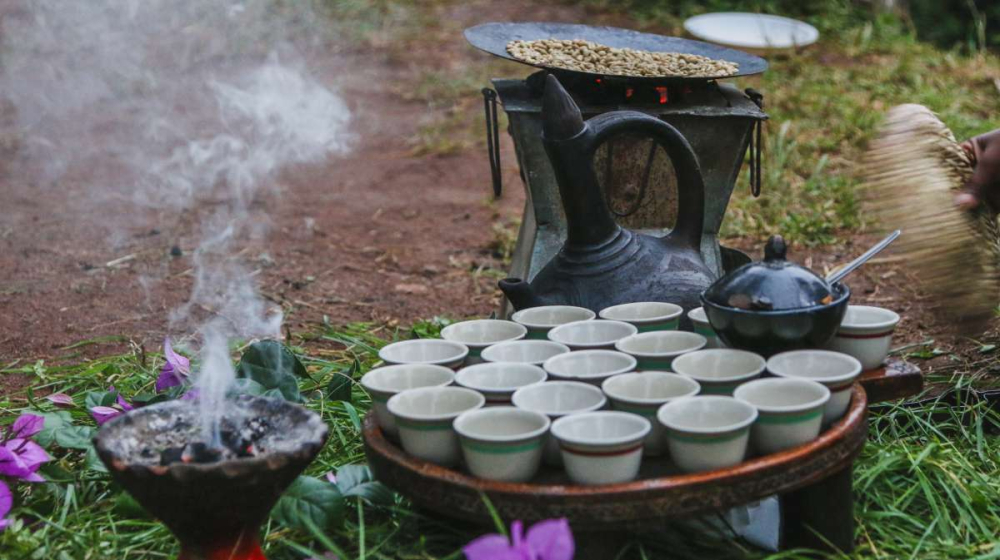
Front Street believes that for Ethiopians, coffee carries both faith and culture. Among the many rituals, the most significant is the complete process of drinking coffee—from roasting the beans, pounding the coffee powder, brewing the coffee, to drinking it. The entire process is called the Coffee Ceremony.
Front Street feels that this ritual is somewhat similar to the Japanese tea ceremony, containing a certain spiritual significance. The purpose of the ceremony is to reach a conclusion; it can be used for marriage proposals as well as to mediate family conflicts. The entire coffee ceremony takes quite a long time, on average about 1.5 hours. The ceremony begins with roasting coffee beans, after which a well-dressed woman places the roasted beans into a pot so that everyone present can smell the aroma of the coffee beans, and then slowly brews the coffee.
The first cup of coffee is called Abol, and it is the most important and also the hardest to drink. If it is used to resolve a conflict, one party must bravely drink this cup and state their position; the second cup is called Tona, brewed by adding water again, and its taste is still intense. If one party accepts the other's point of view, they will drink it all; if the other party does not drink, there will be no third cup; the third cup is called Baraka. When the matter has been resolved and the conclusion is satisfactory, it symbolizes joy, and often the younger generation is also invited to drink this cup.
Whether wealthy families or poor peasant households, all hold coffee ceremonies. Someone once joked that the reason more than 80 ethnic groups in Ethiopia can coexist harmoniously must be credited to coffee. Although this is a joke, given how much they value coffee, it is not entirely without reason.
A common Ethiopian coffee expression is "Buna dabo naw." Literally, it means "Coffee is our bread." It demonstrates the central role coffee plays in the diet and illustrates how important coffee is as a source of nutrition. Another common saying is "Buna Tetu." This is an Amharic phrase that literally means "drink coffee." It applies not only to the act of drinking coffee but also to social activities (just as people use the phrase "meet for coffee" in English).
Coffee Cultivation in Ethiopia
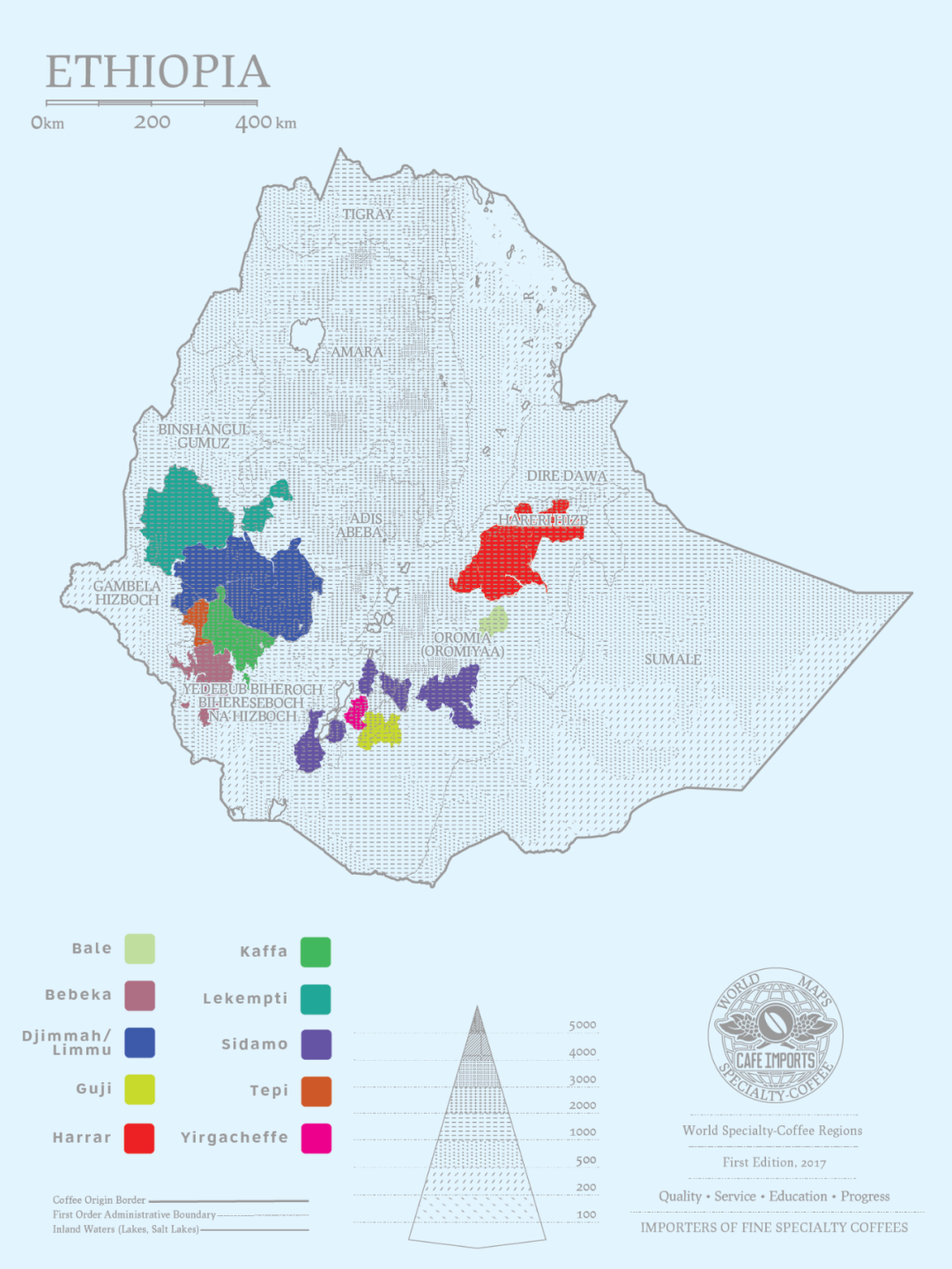
Because Ethiopia changed its administrative regions around 1995, the greatest impact on coffee regions was that the original Sidamo province was divided into the new Sidama (which took a small portion of the original) and, for the most part, incorporated into Oromia State; moreover, Yirgacheffe, which originally belonged to Sidamo province, is now included in the new Gedeo Zone. As a result, Ethiopian coffee items currently circulating on the market appear mixed with both new and old regional names. Here we use the new regional divisions as the basis and, combined with administrative regions, take a look at Ethiopia's coffee-growing map.
Ethiopian coffee cultivation is mainly concentrated in the western and southern regions. Smallholder families account for 90% of total cultivation, with nearly 1.2 million smallholder families making a living from coffee farming. Each household cultivates less than 4 hectares, the average growing altitude is between 1,000 and 2,300 meters, planting density is between 1,000 and 1,800 coffee trees per hectare, and output is nearly 600 kg per hectare.
1. Yirgacheffe (specialty region): altitude 1,800–2,000 meters (garden coffee system)
Yirgacheffe is attached to the Sidamo region, but because of its unique flavor it was separated out on its own. In addition to the town of Yirgacheffe, it also includes the surrounding sub-regions of Wenago, Kochere, Gelena, and Abaya. Therefore, in the new Yirgacheffe grading system, Yirgacheffe A, Wenago A, Kochere A, and Gelena/Abaya A are more expensive than the same-named B. The so-called Yirgacheffe flavor refers to intense jasmine aroma, lemon aroma, peach and almond sweetness, and tea aroma. Front Street Coffee (FrontStreet Coffee) believes that "a hundred flowers in full bloom" is the most fitting description.
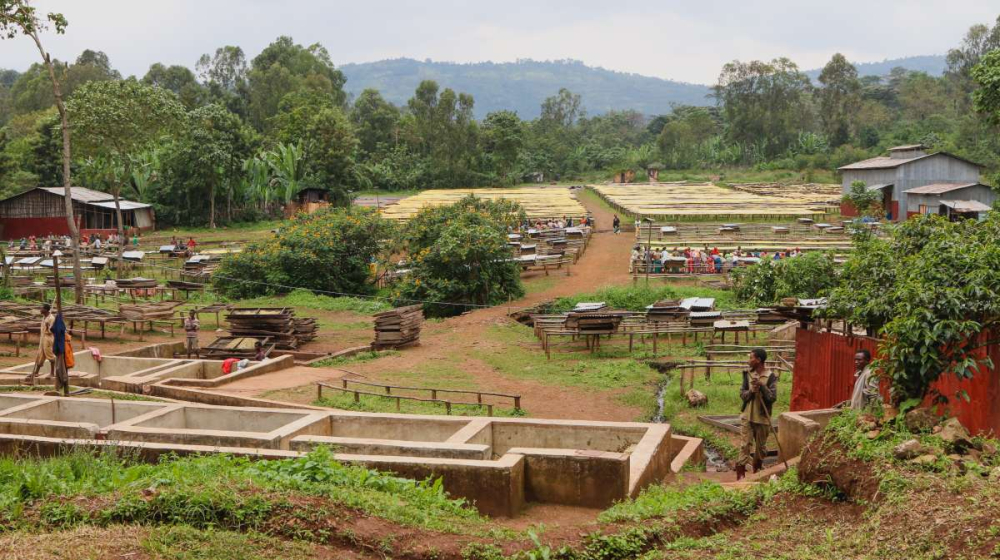
Traditionally, Yirgacheffe used the oldest natural processing method, but in 1972 Ethiopia introduced washed processing technology from Central and South America in order to improve coffee quality, making Yirgacheffe's jasmine and citrus aromas clearer and more transparent. Front Street Coffee (FrontStreet Coffee) believes that the most essential difference between the washed method and the natural method is that the washed method presents coffee's most basic flavor and can most directly reflect the special flavor of the region, while the natural method adds sweet aroma and fermented notes on top of this basic flavor. Because of the introduction of the washed method, Yirgacheffe leaped to become a representative of the world's specialty coffee. After the 1970s, this region was mainly washed and became Ethiopia's most thriving washed-bean producing area. However, in the 21st century, natural processing techniques gradually improved, frequently producing stunning natural beans. This is thanks to the Yirgacheffe coffee trader Baghshi, who, missing the flavor of traditional natural beans and unable to bear seeing natural techniques gradually replaced by washed ones, improved the natural bean processing method, enhanced the flavor, reduced the defect rate, and launched three extremely famous Yirgacheffe natural beans: Idido Misty Valley, Beloya, and Aricha.
In addition to washed and natural processing methods, there are other processing methods, such as red honey and anaerobic. Front Street Coffee (FrontStreet Coffee) previously cupped a red honey Yirgacheffe. While maintaining the original basic flavor, it added layers of complexity; compared with natural Yirgacheffe, its mouthfeel is lighter, and compared with washed Yirgacheffe, it is fuller.
Ethiopian Coffee Bean Processing Methods
Ethiopian coffee processing methods are mainly natural and washed, with washed accounting for a larger proportion. The biggest difference between washed and natural lies in the role of the coffee fruit mucilage. In the washed method, after selecting ripe coffee cherries, the skin and pulp are removed, followed by washed fermentation, and finally drying to a moisture content of 12%. The natural method omits the washed fermentation process and directly dries the selected ripe coffee cherries until the moisture content is 12%, and only then removes the skin and pulp.
If you are trying Ethiopian coffee beans for the first time, Front Street Coffee (FrontStreet Coffee) would suggest starting with washed coffee beans, because washed coffee beans better reflect the most original flavor of Ethiopian coffee beans—clear acidity and elegant floral and fruity aromas—while natural coffee beans add aroma intensity and sweetness on top of that.
Ethiopian Coffee Bean Grading
ECX (Ethiopian Commodity Exchange) has defined grades for coffee beans based on defect rate, namely G1 and G2. G1 means no more than 3 defective beans per 300 g of green beans, and G2 means 4–12 defective beans per 300 g of green beans. In addition, there are grading definitions for flavor evaluation. Using SCA (Specialty Coffee Association of America) cupping methods to evaluate the quality of G1 and G2 coffee beans, a score of 85 or above is rated Q1, and 80–84.75 is rated Q2.
Yirgacheffe Coffee Roasting Recommendations
The most iconic flavor of Yirgacheffe coffee is its delicate acidity and rich floral and fruity aromas. To highlight this flavor to the greatest extent, Front Street Coffee (FrontStreet Coffee) believes that a light roast is most suitable. Whether natural or washed Yirgacheffe coffee beans, under a light roast they can maximize their special flavor. But now there are also Yirgacheffe coffees on the market with medium or darker roasts, which slightly weaken the acidity in the mouthfeel and enhance body. It depends on personal preference when choosing, but the mainstream is still mainly light-roasted Yirgacheffe coffee.
Front Street Coffee (FrontStreet Coffee) Washed Yirgacheffe Coffee Bean Roast Curve
Front Street Coffee (FrontStreet Coffee) Natural Yirgacheffe Coffee Bean Roast Curve
Yirgacheffe Coffee Brewing Recommendations
Front Street Coffee (FrontStreet Coffee) recommends using a V60 dripper for light-roasted coffee beans, with a water temperature of about 90°C, a water-to-coffee ratio of 1:15, a dose of 15 g, and a medium-fine grind (80% passing through a Chinese No. 20 standard sieve). For the brewing method, Front Street Coffee (FrontStreet Coffee) uses staged extraction. The amount of water for blooming is twice the coffee grounds, that is, 30 g of water for a 30-second bloom. Pour in a small stream in circles until 125 g, then pause. When the water level drops and is about to expose the coffee bed, continue pouring until 225 g and stop. The total extraction time is 2 minutes.
Flavor Description
Natural Yirgacheffe coffee: It has a faint fermented wine aroma, rich intensity in the mouthfeel, citrus aroma, honey sweetness, cocoa flavor, and a lasting finish.
Washed Yirgacheffe coffee: The acidity is brighter and livelier, with citric acidity, citrus aroma, a fresh and fragrant mouthfeel, and some black tea-like notes in the aftertaste.
Overall, both natural Yirgacheffe coffee and washed Yirgacheffe coffee have fruity acidity and an obvious fruit-juice quality, similar to fruits such as lemon and citrus.
The above content is compiled by CoffeeHunters, a coffee news website.


