







Why does Yirgacheffe Kochere stand out in arabica coffee?
Yirgacheffe, in Ethiopia's Gedeo region, is often treated as the flavor foundation of Ethiopian coffee, and it is listed as its own category in commodity classification. Kochere, one of its sub-regions alongside Wenago and Gelena Abaya, delivers a washed profile of clean sweetness with honey and citrus, supported by modern washing stations and careful cupping grading. Ethiopia is the birthplace of arabica coffee.
In November 2009 Ethiopia introduced a new trading and grading system that added Wenago, Kochere and Genlena Abaya as separate sub-regions beside Yirgacheffe, reflecting how distinct these areas taste. The article covers regional division, washed processing, roast curve, cupping records and a V60 three-pour method for brewing this specialty coffee at home.
Ethiopia, as the birthplace of Arabica coffee, has nurtured many distinctive coffee-producing regions. Among names like Yirgacheffe, Sidama, and Guji, which region best embodies the classic character of Ethiopian specialty coffee? Front Street Coffee believes Yirgacheffe is fully deserving of that title. And Kochere, as an outstanding sub-region within the Yirgacheffe system, showcases a clean sweetness interwoven with honey and citrus, thanks to its advanced washed processing facilities and meticulous cupping grading. This article will comprehensively examine the flavor code and practical recommendations of this bean from the dimensions of regional division, washed processing techniques, the roasting curve of Front Street Kochere coffee beans, cupping records, and the V60 three-pour brewing method, helping coffee enthusiasts more systematically understand the charm of Ethiopian washed coffee.
For more specialty coffee knowledge, please follow our WeChat official account: FrontStreet Coffee
Ethiopia is the birthplace of Arabica coffee, and precisely because of this, it has built a coffee landscape that commands the world's attention. Walking into a Front Street store and browsing the bean list, the renowned producing regions from Ethiopia are too numerous to count—names like Yirgacheffe, Sidama, Guji, and Anasora often dazzle friends who are just getting into coffee. So some people ask: among so many producing regions, which one can truly represent the flavor foundation of Ethiopian coffee?
Front Street's answer is: Yirgacheffe. Yirgacheffe is located in the Gedeo region of southern Ethiopia. The coffee produced here has a highly recognizable flavor personality and a large following, which is why it is listed as a separate category in commodity classification and has always held an important position in the global specialty coffee landscape. Yirgacheffe itself is a small town under the Sidama province, adjacent to three micro-regions: Wenago, Kochere, and Gelena Abaya. The coffee produced in these three areas is almost on par with Yirgacheffe in flavor, running neck and neck, so Kochere is likewise included in the Yirgacheffe regional classification. In November 2009, Ethiopia introduced a new trading and grading system, adding three separate sub-regions—Wenago, Kochere, and Genlena Abaya—alongside Yirgacheffe, which shows that the flavor refinement of these three origins is sufficient to support further subdivision.
Kochere's coffee cherries come from numerous local smallholder farmers and are ultimately assembled from a vast number of harvest lots. These small-scale growers have an average cultivated area of only about 1 hectare (roughly 15 mu), with coffee mostly planted at altitudes between 1,800 and 2,000 meters. Because this region is equipped with relatively advanced green bean water processing equipment, it has consistently maintained a very high standard in washed processing. The coffee produced has a complex tonality interwoven with honey and citrus, clean and sweet, and is widely acclaimed. The mainstream production model locally is: smallholders deliver each harvest of red cherries directly to the nearby cooperative's washing station for unified subsequent processing.
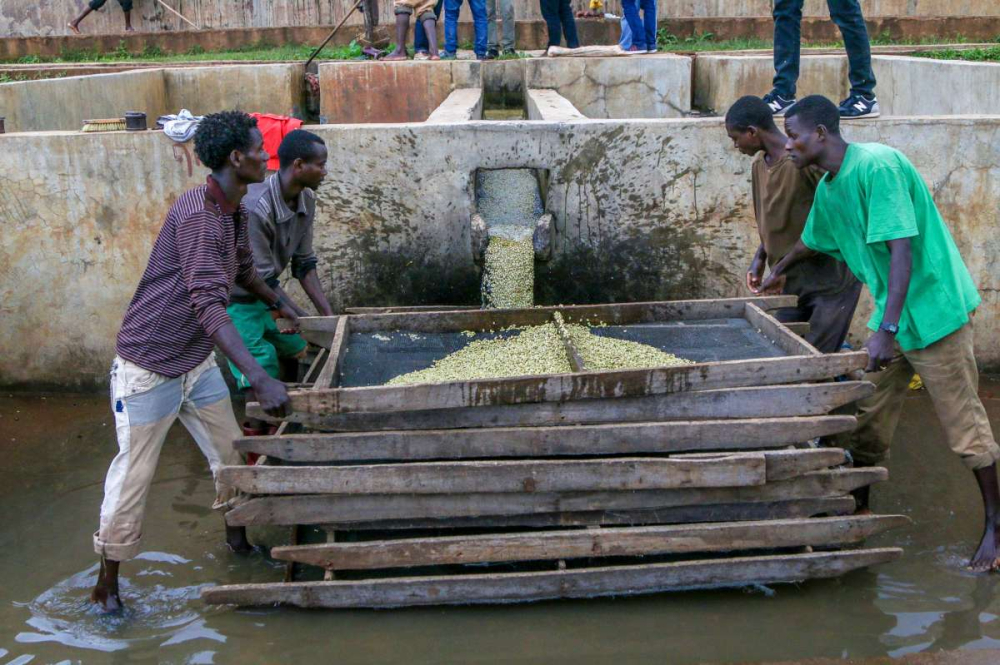
The Kochere coffee beans selected by Front Street also undergo washed processing. The principle of the washed method is to remove the skin, pulp, and mucilage through washing and soaking (fermentation), so farms using the washed method must build washing channels and be able to continuously introduce fresh water.
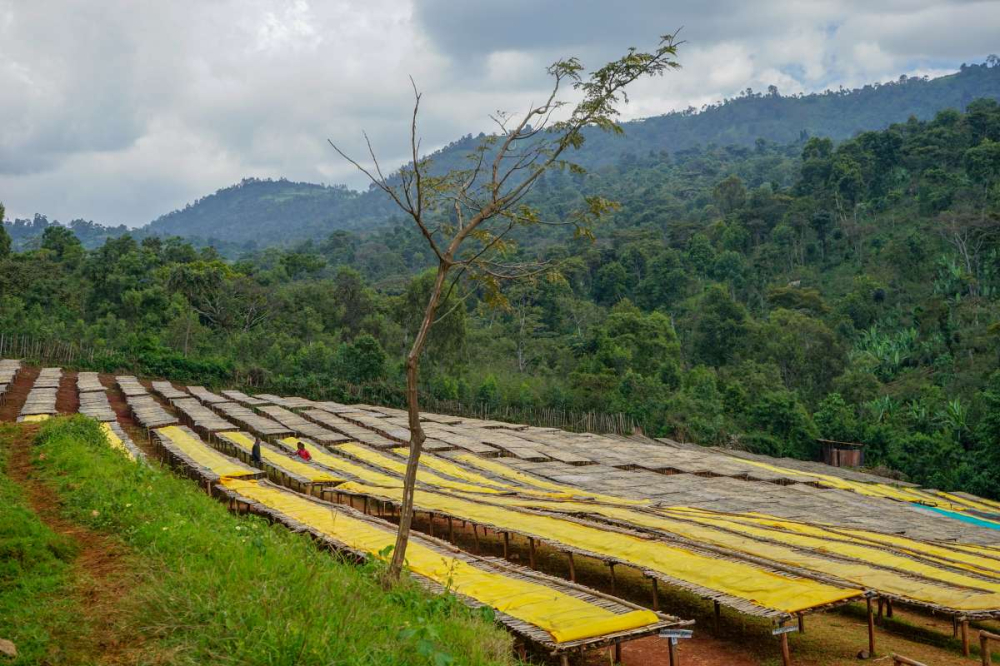
During processing, the fermented beans are pushed back and forth in the channel, relying on friction between the beans and the flushing action of running water to wash the coffee beans to a smooth and clean state. After washing, the coffee beans are still wrapped in the parchment layer, with a moisture content of about 50%. At this point, drying must be carried out to reduce the moisture content to 12%, otherwise the beans will continue to ferment and then mold and spoil. The ideal drying method is sun drying. Although it takes 1 to 3 weeks, the flavor performance is exceptionally outstanding and highly favored.
The washing station first selects coffee cherries at red cherry ripeness, then directly depulps, washes, and ferments them. After washing, the parchment green beans are placed on raised beds to dry naturally in the sun. Once the moisture drops to 12% or lower, they are sent directly to the Ethiopian Commodity Exchange (ECX) warehouse in Awassa. Cupping grading and quantity statistics are also conducted there. Typically, washed beans are stored in parchment form until dehulling is carried out before export.
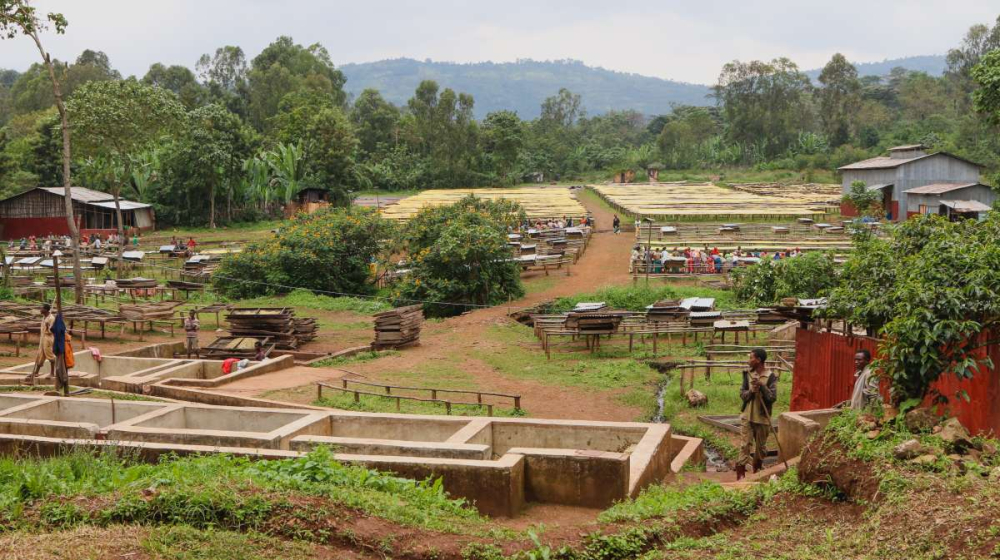
In earlier years, traditionally sun-dried coffee beans had a relatively high defect rate, but after the introduction of washed techniques, the defect rate of coffee beans dropped noticeably and quality became higher. Precisely because of this, the new washed processing adopted in the Kochere region significantly improved the quality of local coffee beans and also attracted a large number of coffee hunters to come and source beans.
FrontStreet Coffee Ethiopia Kochere Coffee Beans
Region: Yirgacheffe Kochere
Altitude: 1,650m–1,800m
Processing method: Washed
Grade: G1
Variety: Local heirloom
Roast level: Medium-light roast
FrontStreet Coffee Roast Analysis Roaster: Yangjia 600g, semi-hot air
Light roasting allows Yirgacheffe, grown in the tropics, to present a brighter and richer fruity aroma, with a slight acidity on entry, resembling the acidity of apples, and this acidity instead brings out the coffee's body, while the bitterness also becomes aroma-filled and memorable. After all, coffee is essentially a fruit, and being able to retain fruit-like sweet acidity after high-temperature roasting is exactly what makes Yirgacheffe special. The roast uses a fast-roasting profile. When the drum temperature rises to 200°C, charge the beans, with the damper set to 3; after 1 minute, adjust the heat to 160°C, keeping the damper unchanged; when roasting reaches 4 minutes 50 seconds at 150°C, the bean surface turns yellow, the grassy smell completely dissipates, and dehydration is complete. Adjust the heat to 130°C and open the damper to 4;
At the 8th minute, irregular wrinkles and dark spots appear on the bean surface, and the toasted bread smell clearly turns into coffee aroma, which can be regarded as the prelude to first crack. At this point, listen carefully to identify the sound of the first crack. At 8 minutes 20 seconds, first crack begins. Reduce the heat to 70°C and open the damper fully (adjusting the heat requires extra caution—do not reduce it so much that the cracking sound cannot be heard). Drop the beans at 192°C.
FrontStreet Coffee Cupping Record
Front Street conducts cupping 8 to 12 hours after the coffee beans are roasted. The flavors shown by the Kochere coffee beans in cupping are orange blossom, lemon, black tea, and fruity sweet acidity.
FrontStreet Coffee Brewing Suggestions
Front Street believes that the freshness of coffee beans has a huge impact on their flavor performance. Generally, the optimal tasting period for coffee is from the 4th day to the 40th day after the roast date. If you want to taste a richer flavor from the coffee, Front Street suggests buying freshly roasted coffee beans and grinding and brewing them fresh. Front Street's coffee beans are all roasted and shipped fresh. If shipped by express, Front Street will send coffee beans roasted within 5 days, so that when they reach the customer, they have just passed the resting period and can be consumed immediately.
Kochere Coffee Bean Brewing Parameters
Dripper: V60 dripper
Dose: 15g coffee
Water temperature: 91°C
Grind size: Medium-fine grind for pour-over (80% passing through a No. 20 sieve) Water-to-coffee ratio close to 1:15
Pouring scheme: Three-pour method
First pour: 30ml water for a 30-second bloom;
Second pour: Pour in a small stream in circles around the center to 125ml;
Third pour: After the water level drops to half, pour to 225ml;
Total time: 2 minutes.
Pour-over flavor description: The acidity brought by washed processing is brighter, similar to citric acid, the mouthfeel is more refreshing, the citrus aroma is more prominent, and the finish carries some black tea-like tea sensation.
The above content is compiled by CoffeeHunters, a coffee news website.


