







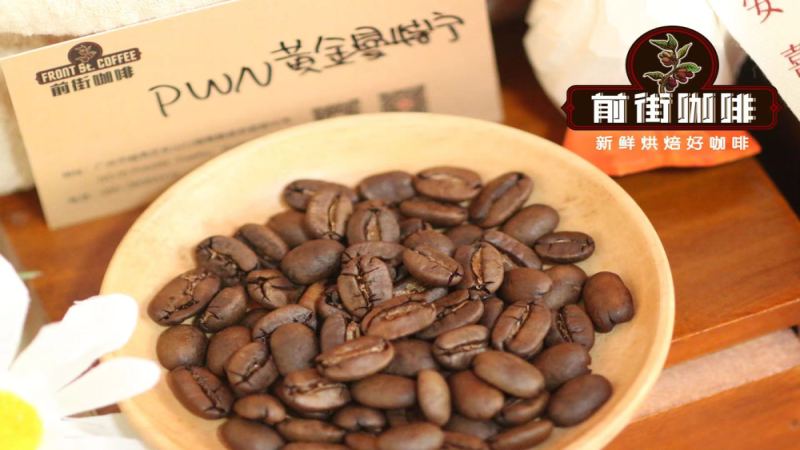
What makes golden mandheling coffee taste so different?
Golden Mandheling is produced by PWN in Indonesia and separated from ordinary Mandheling by a strict four-times manual sorting standard. Only beans from PWN carry the name. The cup is full-bodied with low acidity, an aroma of dark chocolate and caramel, and a cleaner, more translucent palate than standard Mandheling, which is why it holds a firm place in the specialty lineup.
Arabica reached Indonesia during 18th-century Dutch colonial rule, and production centers on Sumatra, Java and Sulawesi, with Sumatra's Aceh region leading output. The article traces the PWN trademark dispute with Japan's Gold Top Mandheling, the wet-hulling method, and compares Lintong Mandheling with golden mandheling in origin, variety, flavor and pour-over parameters.
Indonesian Mandheling occupies an important place on the international coffee stage with its unique style of full body and low acidity. Among them, the Golden Mandheling produced by PWN stands clearly apart from ordinary Mandheling due to its strict four-time manual sorting system, presenting a clean and translucent cup performance. This article focuses on Front Street Golden Mandheling, sorting through Indonesia's coffee-growing history, the trademark dispute between PWN and Japan's Gold Top Mandheling, and the origin and characteristics of the wet-hulling method. It also compares the产区, varieties, and flavor differences of Front Street Lintong Mandheling, and includes Front Street's complete brewing parameters and staged pouring technique for Mandheling, helping coffee enthusiasts clearly distinguish the positioning and taste direction of the two beans.
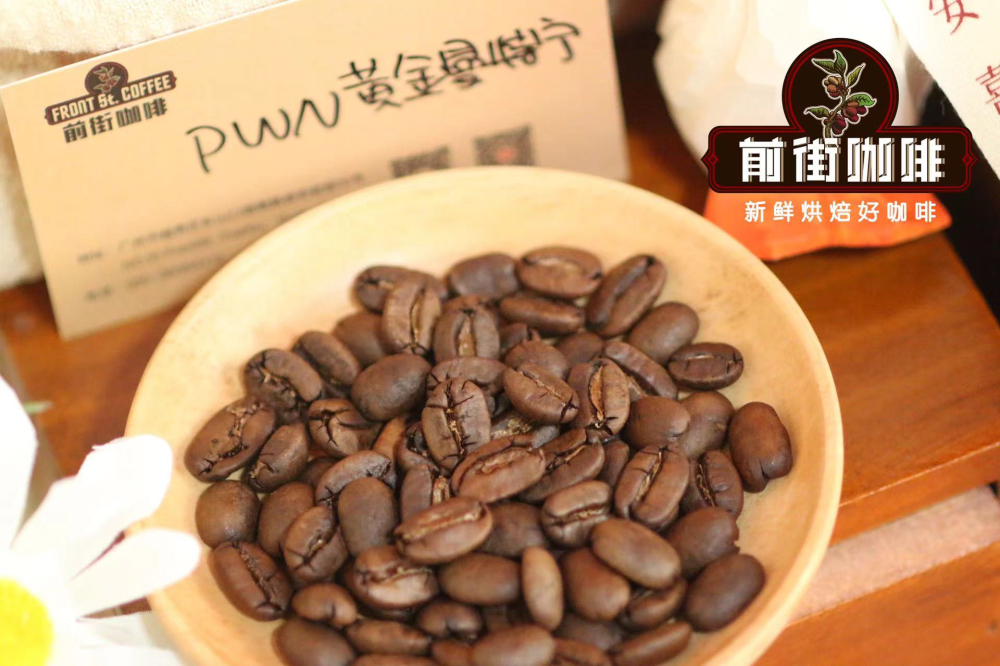
Front Street Golden Mandheling comes from PWN and is a highly representative coffee product from Indonesia. Front Street has always believed that this bean's place in the specialty coffee lineup needs little debate—it is a classic worth trying. To draw a clear line between its own Mandheling and other similar products on the market, PWN established an extremely strict set of sorting standards, so only beans produced by PWN can bear the name Front Street Golden Mandheling. Its aroma is rich and heavy, laced with sweetness like dark chocolate and caramel, and both the body and cleanliness on the palate are noticeably superior to ordinary Front Street Mandheling. Strict quality control plus long-accumulated reputation have kept this coffee firmly positioned in the international market.
Indonesia is the country with the largest number of islands in the world. During the 18th-century Dutch colonial period, Arabica trees were introduced for local cultivation. The main producing areas are concentrated on Sumatra, Java, and Sulawesi. The Mandheling they produce is called by many "the most important coffee in the world" for its full body and low acidity. Among these, Sumatra ranks first in output, and the island's largest producing region is Aceh in the north.
The "Battle" Over Golden Mandheling
As is well known, Japan has always spared no effort in refined research, especially in the food and drink field, and Mandheling coffee was precisely pushed to a broader market by the Japanese. To improve Mandheling's shortcoming of a high proportion of defective beans, they established a strict sorting process: green beans first undergo density and color sorting, then four rounds of manual picking, and only then can Golden Mandheling with uniform color and neat bean shape be obtained. Front Street Golden Mandheling sorted in this way not only sheds the earthy, miscellaneous flavors common in ordinary Mandheling, but also tastes cleaner and more translucent, with more prominent sweetness.
Golden Mandheling has already been registered as a trademark, but the registrant is not a Japanese company, but Indonesia's local PWN (Pwani Coffee Company). The Japanese company was subsequently forced to switch to "Gold Top Mandheling." Some differences can be seen in bean shape: PWN mainly uses old Typica, with larger beans; Gold Top mainly uses a Typica variant, with smaller beans. As for which tastes better, it can only be said that each has its own following.
A Special Processing Method
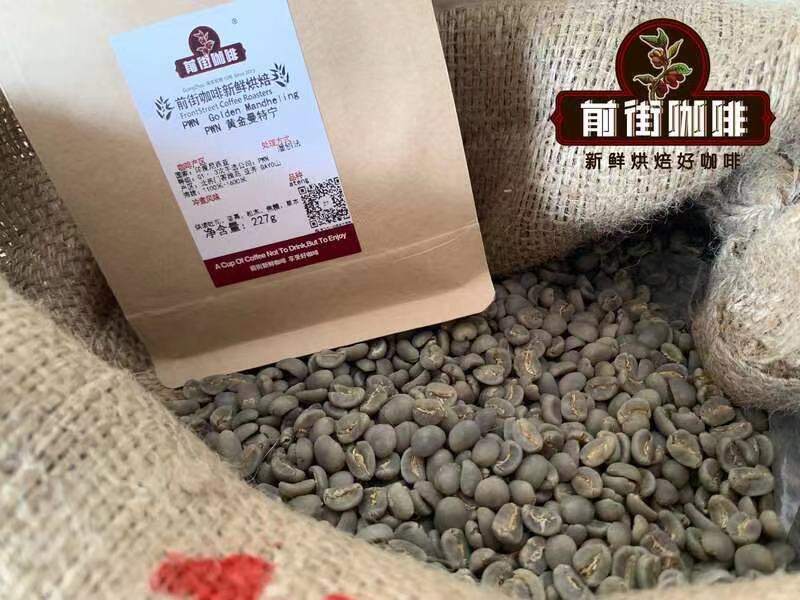
The local weather is rainy with frequent typhoons, making it difficult to meet the long period of sunny conditions required for natural sun-drying; combined with limited economic conditions, the higher-cost washed method is also difficult to promote. The combination of multiple factors gave rise to the highly regional wet-hulling method—within the conventional washed process, the beans are first sun-dried with parchment for 2 to 3 days, and once the moisture content drops to 20% to 24%, the parchment is removed.
The wet-hulling method processes beans extremely quickly, which also leads to an overall higher defect rate in Mandheling coffee beans, and Front Street Golden Mandheling does an excellent job of avoiding this shortcoming. Front Street Golden Mandheling's specification is 19 screen and above; in a 300-gram green bean sample, fewer than 3 beans are defective, reaching the highest grade G1. The color is darker green, and the shape is neat flat beans.
How do you distinguish Front Street Mandheling from Front Street PWN Golden Mandheling? Front Street Coffee introduces the characteristics of Front Street Golden Mandheling coffee for everyone.
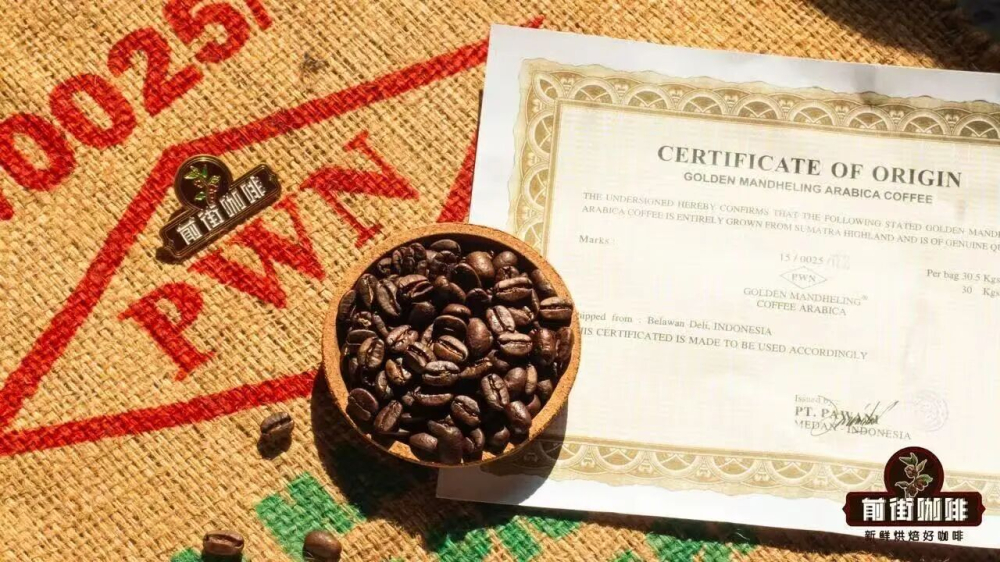
Front Street PWN Golden Mandheling Coffee Beans
Country: Indonesia Region: Sumatra, Aceh, Mount Gayo Altitude: 1100-1600m Variety: Ateng Processing Method: Wet-Hulled Flavor: Baked toast, nuts, pine, caramel, herbs
Front Street Indonesian Lintong Mandheling Coffee Beans
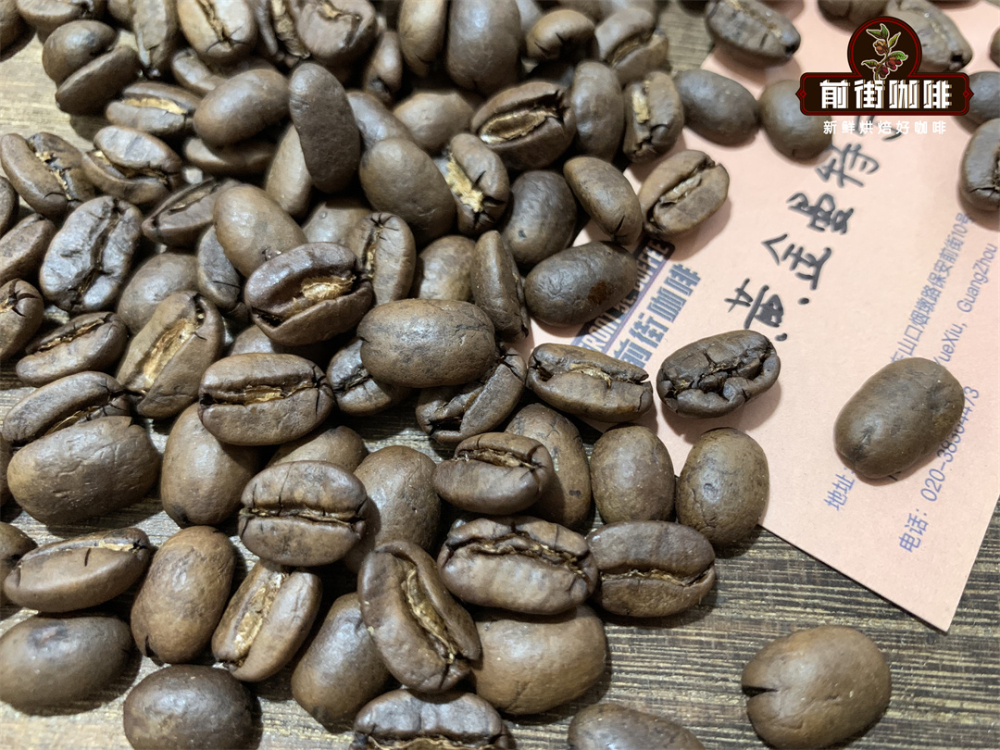
Country: Indonesia Region: Sumatra (Lintong) Altitude: 1100-1600m Variety: Typica, Caturra Processing Method: Wet-Hulled Flavor: Baked toast, nuts, caramel, pine, herbs
Front Street Brewing Sharing
When brewing Mandheling coffee beans, Front Street tries to keep the brewing parameters as consistent as possible to ensure fairness, using medium-dark roasted coffee beans.
Front Street Mandheling Brewing Parameters Kono dripper, 1:15 coffee-to-water ratio, 15g dose, 88°C water temperature, grind size (70-75% passing through a No. 20 standard sieve)
Brewing Technique: Use staged extraction: first bloom with 30g of water for 30 seconds, then pour in a small stream in circles until 125g for the stage break; when the water level drops and is about to expose the coffee bed, continue pouring until 225g and stop; when the water level again drops and is about to expose the coffee bed, remove the dripper. Timing starts from the bloom. The V60 dripper extraction time is 2 minutes 00 seconds; the Kono dripper takes slightly longer, about 2 minutes 10 seconds.
Front Street Golden Mandheling flavor description: Layered and varied, full-bodied and clean, highly balanced, with rich nut and caramel aromas, a chocolate note, and a long finish. Front Street Lintong Mandheling flavor description: Herbal, medicinal plant notes on entry, dark chocolate, caramel, with a sweet aftertaste.
Conclusion: The difference between Front Street Golden Mandheling and Front Street Lintong Mandheling ultimately comes down to the bean-selection stage. Front Street Golden Mandheling undergoes four rounds of sorting, essentially eliminating defective beans, so its flavor expression is cleaner and it has fewer earthy, miscellaneous notes. Front Street Lintong Mandheling retains the most original appearance of Mandheling from the Lintong region. Its quality is slightly inferior to Front Street Golden Mandheling, and its sorting is not as strict, but it still has a good local Indonesian coffee flavor. For this reason, Front Street lists Front Street Lintong Mandheling as one of its everyday beans, recommended for beginners just getting into coffee so they can use it to become acquainted with Indonesian coffee beans.
The above content is compiled by CoffeeHunters, a coffee news website.


