







How does volcanic soil shape coffee from the coffee tree?
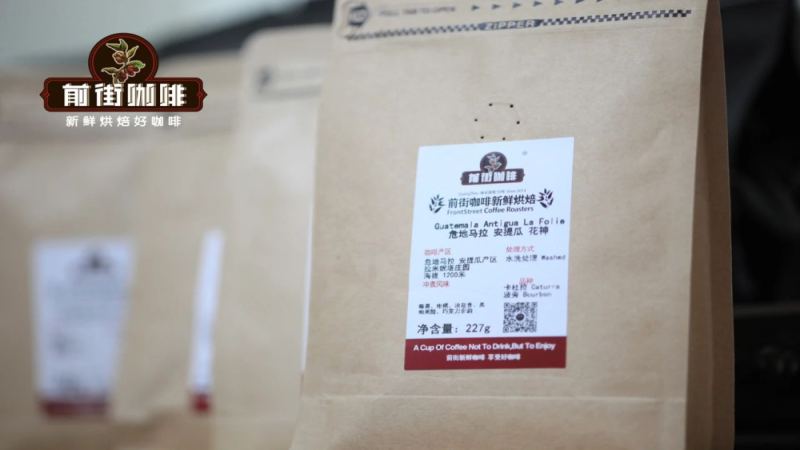
Flor del Café comes from the La Minita family's Guatemalan brand in the Antigua region, grown at 1,200 to 1,600 meters from Bourbon and Caturra varieties and washed after harvest. The cup pairs a faint smokiness with delicate white floral notes, an unusual combination for Guatemala, where smoky character is common but clear florals are not.
Antigua sits in Guatemala's central highlands in the Panchoy Valley, surrounded by the Agua and Fuego volcanoes. Eruptions spread mineral-rich ash across the land, and the subtropical monsoon climate brings steady rain, giving coffee trees fertile soil, bright acidity and fruity notes. La Minita's quality control runs from green bean sorting through the medium-light roast.
In the Antigua region of Guatemala, fertile soil nourished by volcanic ash gives rise to a distinctive coffee—the Flor del Café beans from the La Minita family's "La Flor del Cafe" brand. Based on Bourbon and Caturra varieties and processed by washing, this bean delivers a double surprise in the cup: a subtle smokiness interwoven with delicate white floral notes, as if finding a blooming flower amidst scorching volcanoes. This article will take you into the Antigua region, explore the La Minita family's strict quality control system, analyze the varietal characteristics of Flor del Café, its washed processing flow, and medium-light roast profile, and share Front Street Coffee's brewing parameters and flavor experience, comprehensively presenting this star product from origin to cup.
Front Street Guatemala coffee typically carries a smoky note, but this Front Street Guatemala Flor del Café bean from La Minita estate brings a double surprise to the palate. Beyond that faint smokiness, this Front Street Flor del Café bean also releases elusive white floral notes, like discovering a flower within a volcano, making it especially stunning.
FrontStreet Coffee Guatemala Flor del Café Region: Antigua Estate: La Minita family Altitude: 1200-1600m Varieties: Bourbon, Caturra Processing: Washed Grade: SHB
Antigua Region The Antigua region is located in the central highlands of Guatemala. It is a famous ancient city in Guatemala, Central America, built in the Panchoy Valley at an altitude of 1500 meters, surrounded by mountains and several volcanoes, close to the peaks of Agua and Fuego volcanoes. The chain of volcanoes not only gives Antigua a beautiful landscape, but each eruption also spreads volcanic ash rich in minerals across the surrounding land, providing a fertile growing environment for plants and coffee trees. The area has a subtropical monsoon climate with abundant rainfall and fertile volcanic ash soil. The coffee produced has bright acidity and fruity notes, making Antigua a renowned coffee region in Guatemala.
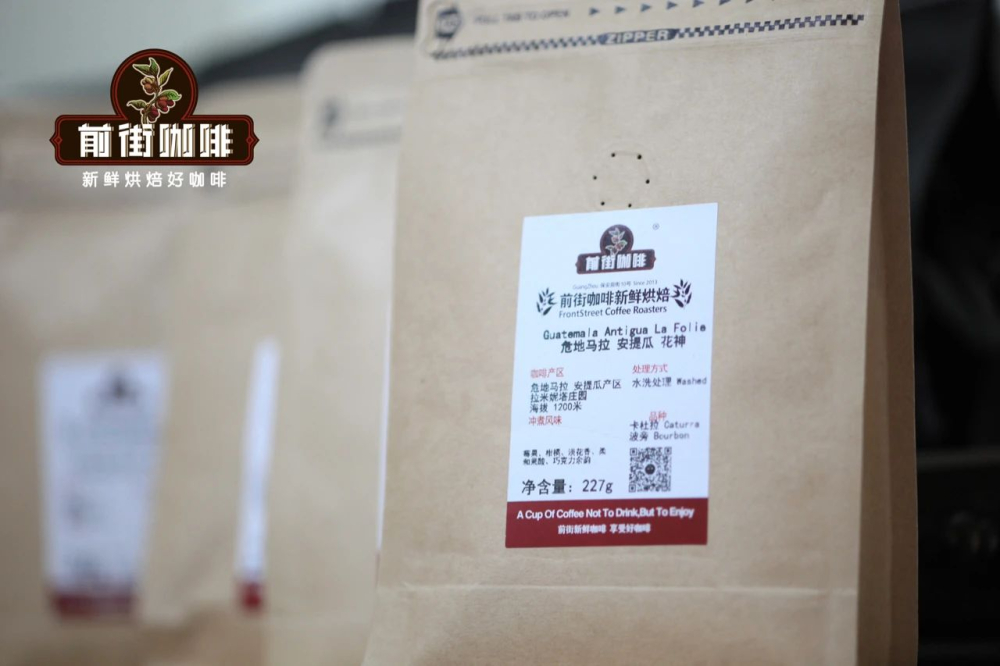
La Minita Family La Minita is a multinational estate, with its flagship estate located in Tarrazú, Costa Rica. The La Minita family established its own coffee brand in Guatemala called "La Flor del Cafe," meaning "Flower of Coffee," translated into Chinese as "花神."
The La Minita family has a strong reputation in green bean processing and quality control, offering the industry's highest standards of cultivation and processing technology, and directly dispatching specialists to Guatemala to participate in quality control. La Minita Flor del Café is a flagship product, processed by the well-known local Guatemalan processing facility Pastores mill. Quality is under La Minita's strict supervision—from green bean procurement to washing and sun-drying, all procedures follow La Minita's rigorous control protocols, strictly overseeing the entire process of Flor del Café from cultivation to packaging. These meticulous steps ensure that Pastores mill provides only the highest quality coffee beans.
Coffee Varieties The batch of Front Street Guatemala Flor del Café purchased by FrontStreet Coffee consists of Bourbon and Caturra varieties. Bourbon is a natural mutation of Typica and, alongside Typica, is considered an old, high-quality variety. The beans are slightly smaller and rounder than Typica. Caturra is a natural mutation of Bourbon, with a fresh lemon-citrus acidity on the palate, though slightly less sweet than Typica and Bourbon.
Processing Method The batch of Front Street Flor del Café beans purchased by FrontStreet Coffee is washed. First, the harvested coffee cherries are poured into a large water tank. Underdeveloped, inferior beans float to the surface, while ripe, plump fruits sink to the bottom. The defective beans (fruits) floating on the surface are then removed.
Then a pulping machine removes the outer skin and pulp of the coffee fruit. At this point, a slippery layer of mucilage still clings to the coffee beans.
The mucilage-covered coffee beans are then placed into fermentation tanks for 16 to 36 hours, during which microorganisms break down the mucilage. After fermentation is complete, large amounts of clean water are used to rinse away the remaining mucilage from the beans.
Finally, the washed coffee beans are dried to reduce moisture content to 10-14%. Then a hulling machine removes the parchment layer, completing the processing.
FrontStreet Coffee Roast Analysis The batch of Front Street Guatemala Flor del Café purchased by FrontStreet Coffee consists of Bourbon and Caturra varieties. Bourbon is a natural mutation of Typica and, alongside Typica, is considered an old, high-quality variety. The beans are slightly smaller and rounder than Typica. Caturra is a natural mutation of Bourbon, with a fresh lemon-citrus acidity on the palate, though slightly less sweet than Typica and Bourbon. The Front Street roaster decided to use a medium-light roast for this Front Street Flor del Café bean.
Charged at 200°C, airflow set to 3, after 30s adjust heat to 160°C, airflow unchanged, turning point at 1'36", maintain heat, at 4'50" bean surface turns yellow, grassy notes completely disappear, entering the dehydration phase, heat reduced to 140°C, airflow adjusted to 4.
At 4'50" dehydration is complete, heat reduced to 140°C. At 8'32" the bean surface shows ugly wrinkles and dark patches, and the toast aroma clearly turns to coffee fragrance, which can be defined as the prelude to first crack. At this point, listen carefully for the sound of first crack. At 8'37" first crack begins, reduce heat to 80°C, airflow fully open to 5 (adjust heat very carefully, not so low that cracking sounds stop). After first crack, develop for 1'50", drop at 195.3°C.
FrontStreet Coffee Brewing Guide Dose: 15g Coffee-to-water ratio: 1:15 Water temperature: 90°C Grind size: medium-fine (77% passing through Chinese standard No. 20 sieve) Dripper: Hario V60
FrontStreet Coffee staged extraction method: First, use 30g of water to fully wet the coffee bed into a "hamburger" shape and bloom for 30s (if no "hamburger" shape appears, we should note that the beans may not be fresh enough or the grind is too coarse).
Then proceed to the second pour. At 54s on the timer, pour water until 125g, then stop and wait for the water level to drop to 2/3 of the coffee bed before pouring the third stage (this stage extracts the sweet and acidic flavor compounds from the coffee grounds). At 1'40" on the timer, pour water until 225g. Total extraction time is 2'10". (This stage extracts the rich, full-bodied flavor compounds from the coffee grounds.) After extraction is complete, gently swirl the carafe, and once the coffee liquid is fully uniform, it is ready for tasting.
Brewing flavor: At high temperature, a bright lemon-like acidity on entry; as it gradually cools, a juicy mouthfeel with elusive white floral notes; then cocoa and a subtle smokiness add layers to this coffee; finally, a caramel-like finish brings this cup to a perfect conclusion.
The above content is compiled by CoffeeHunters, a coffee news website.


