







How Is Blue Mountain Coffee Graded and Certified?
Authentic Blue Mountain Coffee comes only from Jamaica's Blue Mountain region and must pass the Coffee Industry Board (CIB) certification system. Beans are graded by size and quality into , No.2, No.3, and PB (peaberry), so a bag labeled Blue Mountain without a grade or CIB mark may not meet the standard.
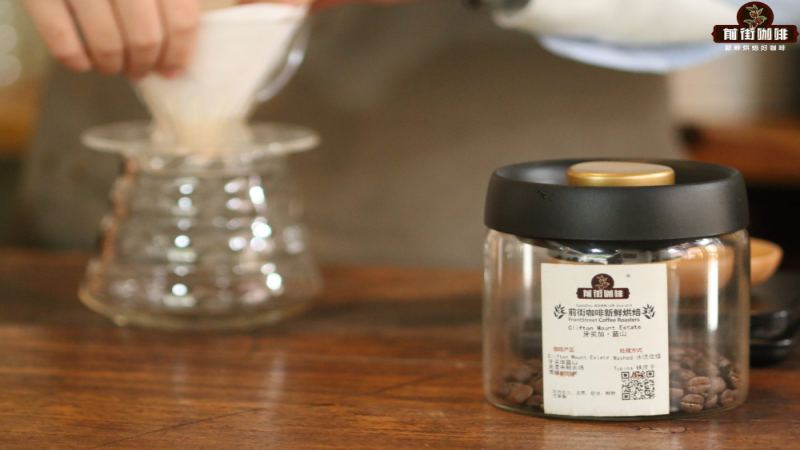
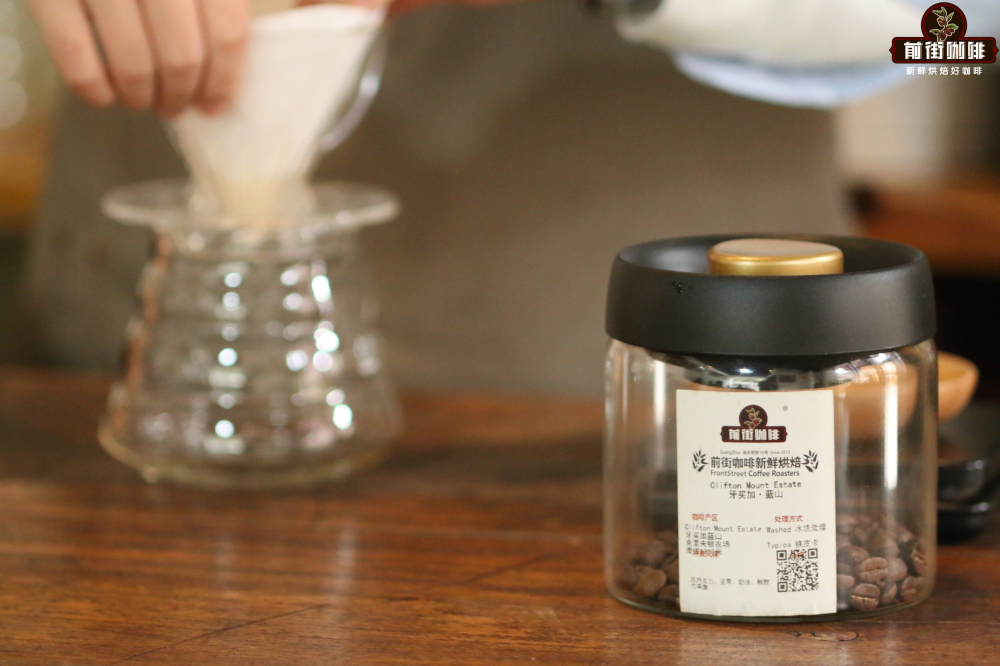
Jamaican coffee has been grown since the 18th century, and Japanese firm UCC helped revive the industry. Clifton Mount Estate sits at 1,310 meters and grows the Typica variety, and it holds Rainforest Alliance certification. Washed processing was the original method, though natural processed Blue Mountain is now also produced.
The fame of Blue Mountain Coffee is almost universally known, with "Blue Mountain flavor" beverages ubiquitous on supermarket shelves and in vending machines. But how exactly are coffee beans that truly meet Jamaican Blue Mountain standards defined? And how does the Jamaican coffee industry classify its coffee? From the perspective of Front Street Coffee, this article outlines the production region of Blue Mountain Coffee, the differences between washed and natural processing methods, the rainforest certification background of Clifton Mount Estate, reviews the historical trajectory of Jamaican coffee from its rise in the 18th century to the revival with UCC's intervention from Japan, and provides a detailed interpretation of the CIB certification system and bean size grading standards such as NO.1, NO.2, NO.3, and PB, helping coffee enthusiasts establish a practical framework for identifying authentic Blue Mountain Coffee.
For more specialty coffee knowledge, welcome to follow Front Street Coffee (Frontsteet Coffee).
When it comes to Blue Mountain Coffee, Front Street believes that the vast majority of coffee enthusiasts will not find it unfamiliar. Its fame is simply too great, so great that it can be seen almost everywhere—on supermarket shelves and in automatic beverage vending machines. However, these products are certainly not true Blue Mountain Coffee; they are at best caffeinated Blue Mountain-flavored drinks. So what counts as authentic Blue Mountain Coffee? This article from Front Street will discuss this topic.
Front Street Coffee (FrontStreet Coffee): Jamaican Washed Blue Mountain No.1 Coffee Beans
Country: Jamaica Region: Blue Mountain (Clifton Mount Estate) Altitude: 1310m Variety: Typica Processing Method: Washed Flavor: Brown sugar sweetness and berry acidity on the entry, nutty cocoa flavors in the mid-to-late palate, creamy mouthfeel, rich and distinct layers, with walnut aroma in the finish.
Front Street Coffee (FrontStreet Coffee): Jamaican Natural Blue Mountain No.1 Coffee Beans
Country: Jamaica Region: Blue Mountain (Clifton Mount Estate) Altitude: 1310m Variety: Typica Processing Method: Washed Flavor: Dark chocolate and nutty flavors on the entry, high cleanliness, very bright, good body, balanced acidity, sweetness, and bitterness.
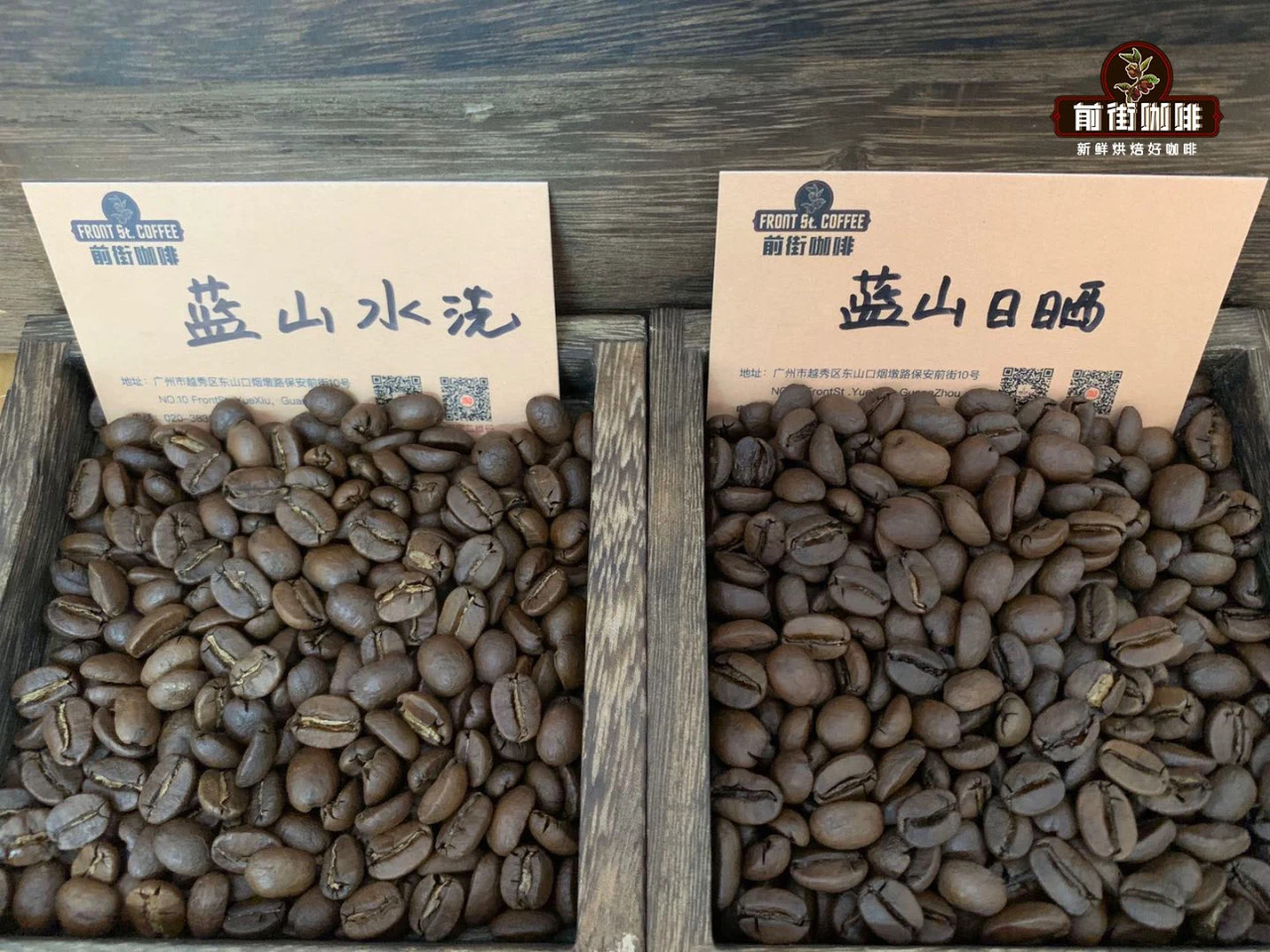
As shown above by Front Street, Blue Mountain Coffee exists in both washed and natural processed forms. However, tracing back to its origins, Blue Mountain Coffee was originally only washed. The reason is that washing better locks in the flavor characteristics of the region itself, making the coffee taste cleaner and brighter. Therefore, historically Blue Mountain Coffee has always used the washed method, presenting the purest Blue Mountain flavor to consumers.
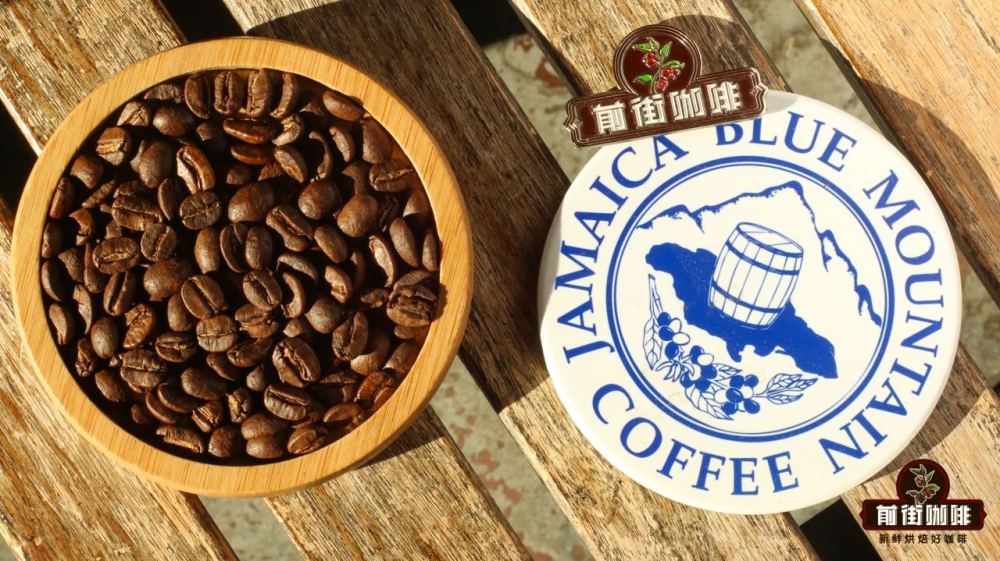
The reason natural Blue Mountain Coffee appeared is that the Blue Mountain region also chose to keep up with the times. Various special processing methods emerge endlessly in the specialty coffee market, and Blue Mountain Coffee has likewise followed this trend. Even though implementing natural processing in the Blue Mountain region is quite difficult, the locals still insisted on exploring and advancing with the times.
Every time Front Street introduces coffee beans from a certain region to coffee fans, it prioritizes recommending the washed version, because washing best reflects the original flavor of that region. Of course, Blue Mountain Coffee adopting natural processing is more out of consideration for following market development.
Clifton Mount Estate
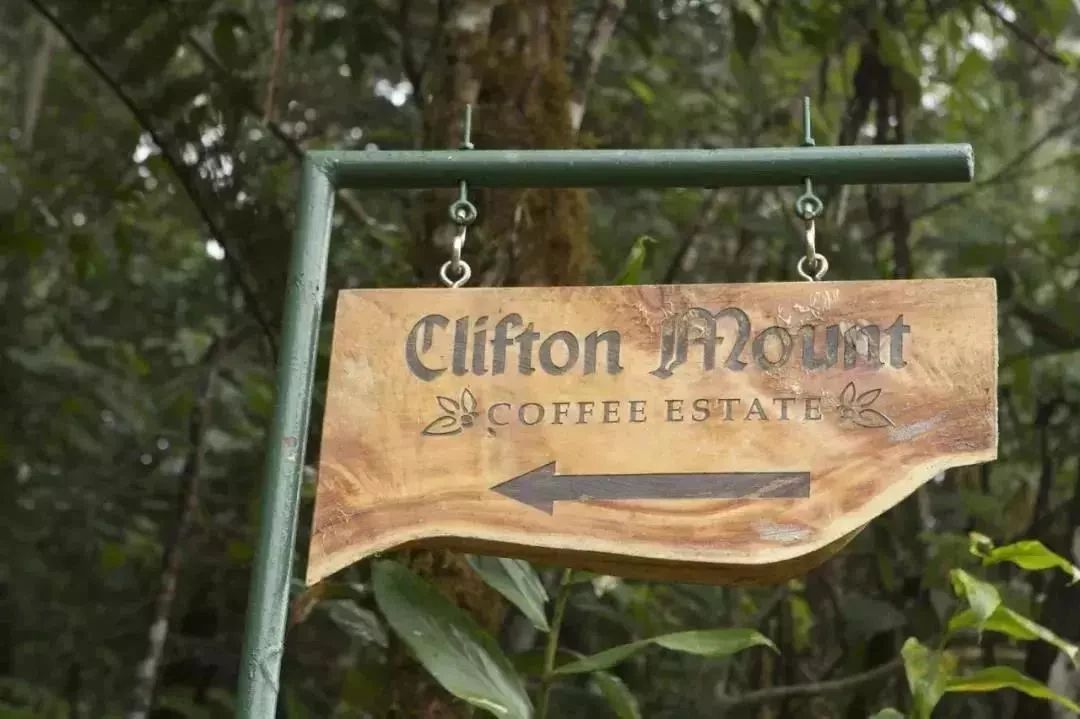
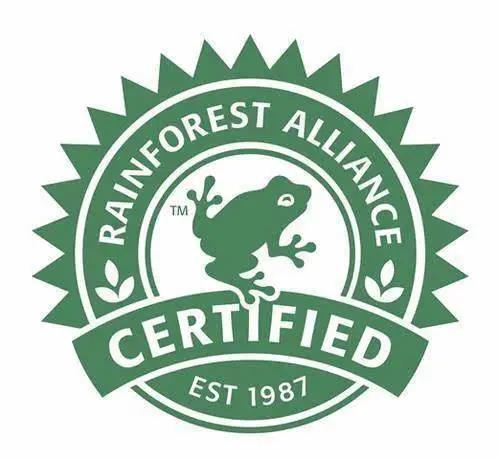
The two Blue Mountain coffees mentioned above by Front Street both come from Clifton Mount Estate, the most historically significant estate in the Blue Mountain region, and the only estate in Jamaica holding "Rainforest" certification. The threshold for obtaining this certification is quite high—the farm must meet the standards set by the "Rainforest Alliance," which evaluates the protection of the farm and surrounding ecosystems, the degree of restrictions on pesticide use, waste management, and many other indicators. Only coffee that passes all evaluations and obtains certification is eligible to be called "Rainforest Alliance Certified Coffee."
The symbol of "Rainforest Certification" is a green frog. Therefore, Blue Mountain Coffee with this green frog printed on the barrel must come from Clifton Mount Estate, which is also one of the methods for judging the authenticity of Blue Mountain Coffee.
The History of Blue Mountain Coffee
Blue Mountain Coffee is produced in Jamaica. According to Front Street's understanding, its history can be traced back to the 18th century, when the British introduced Typica coffee trees to the Blue Mountain range in Jamaica. The soil and climate conditions of the Blue Mountain range are uniquely favorable, especially in the high-altitude mountain areas where clouds and mist linger year-round, making it very suitable for coffee tree growth. Therefore, the coffee beans produced here are exceptionally outstanding in quality and highly favored by royalty.
For this reason, by 1800, the number of plantations in the Jamaican Blue Mountain area alone reached approximately 686; in 1814, Jamaica's coffee export volume climbed to 15,199 tons, and by then Jamaica had become one of the important coffee-producing countries in the Western Hemisphere.
However, after the slave trade was abolished in 1807, Jamaica's main labor force became black people, and the labor source for coffee plantations was completely cut off, causing production to begin declining. In 1838, black slaves in Jamaica obtained full emancipation, and the black people who originally worked on coffee estates left in large numbers, turning to cultivate wasteland in other areas of the Blue Mountains, further reducing Blue Mountain Coffee production.
In 1850, Jamaica's coffee plantations sharply decreased from the original 686 to 186, and coffee export volume plummeted to 1,486 tons. Over the following hundred years, the business model of Jamaica's Blue Mountains also changed, shifting from the past large plantation model to small-scale coffee farmer cultivation. Small-scale cultivation inevitably lacks professionalism, and the quality of Jamaican coffee declined accordingly. By 1943, Canada, one of the largest importers of Jamaican coffee, was the first to announce it would no longer accept Jamaican coffee, and neighboring United States followed suit and stopped imports.
In 1944, Jamaica finally established a central washing processing plant, which was inseparable from the active promotion of A.J. Wakefield, who served as the British Commonwealth's Agricultural Inspector General for the West Indies at the time. The government also stipulated that all exported coffee must be uniformly purchased, processed, and graded by this institution before export. This meant Jamaica began to prioritize coffee quality, and with strong government support, the quality of Blue Mountain Coffee gradually improved.
In 1950, the Jamaican government established the Jamaica Coffee Industry Board, which formulated coffee quality standards and supervised their implementation to ensure the quality of Jamaican coffee. The board issued special official seals for green beans and roasted beans exported from Jamaica.
In 1969, Jamaica suffered severe damage from a hurricane. Japan's UCC Ueshima Coffee introduced ecological technology into coffee cultivation at the time, helping the Jamaican coffee industry revive. To express gratitude, the Jamaican government signed a contract with Japan in 1971, agreeing to ship ninety percent of annual production to Japan, with most of the remaining ten percent being acquired by wealthy individuals or royalty before reaching the market. This is why Front Street said above that authentic Blue Mountain Coffee is definitely difficult to drink.
In 1981, approximately 1,500 hectares of land in Jamaica were reclaimed for coffee cultivation, followed by additional investment in another 6,000 hectares of coffee land. In fact, the current Blue Mountain region has only 6,000 hectares of cultivation area, so it is impossible for all coffee labeled "Blue Mountain" to come from there. In addition, there are 12,000 hectares of land used for cultivating two other types of coffee: High Mountain Supreme Coffee and Jamaican Coffee.
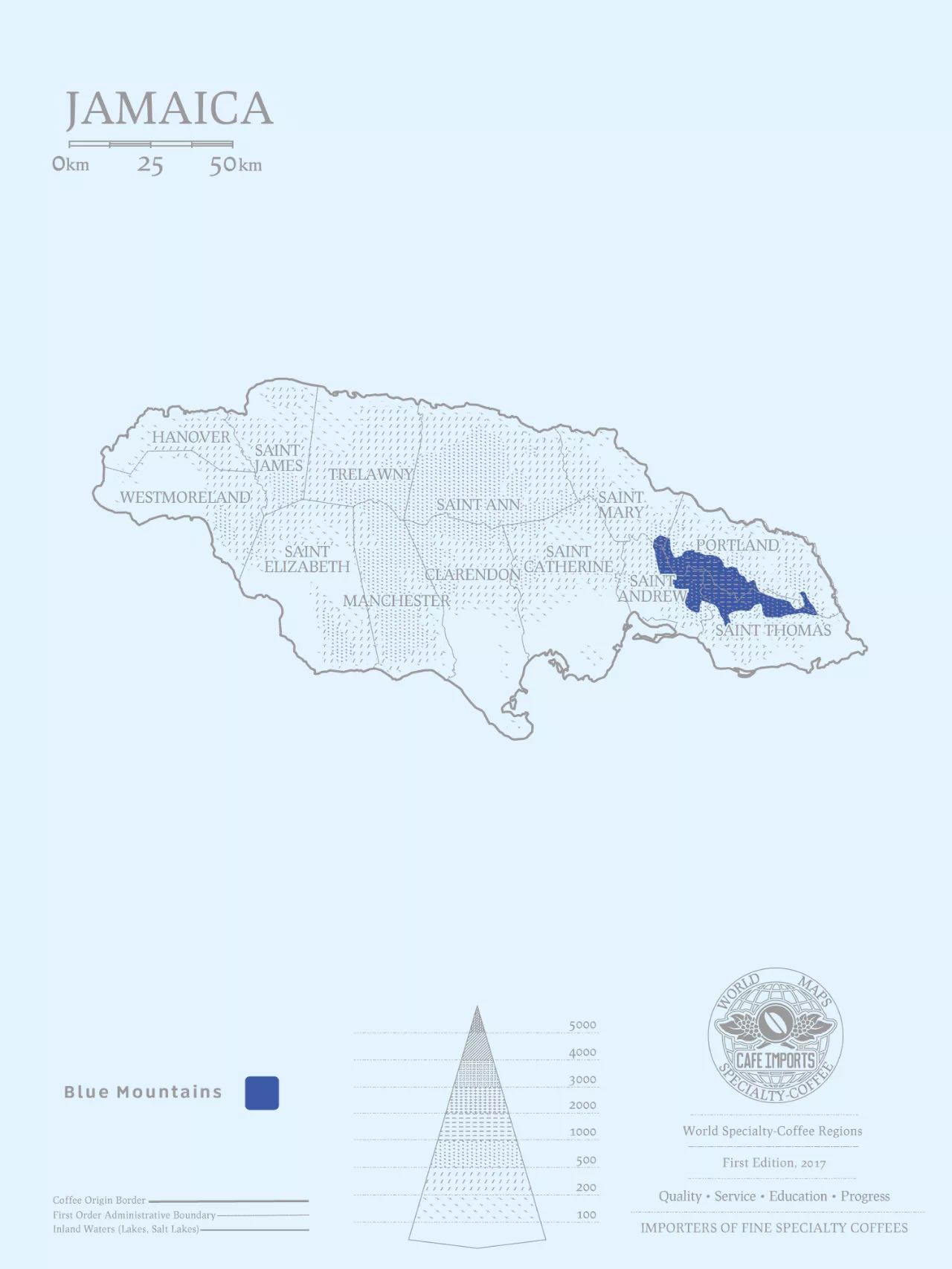
According to Front Street's understanding, Jamaica is the only country in the world with a government-level coffee management agency, namely the Jamaica Coffee Industry Board (abbreviated as CIB). CIB's functions cover planting technology guidance, processing training, fair trade, quality supervision, and a series of matters related to Jamaica Blue Mountain quality and brand. CIB's board members are all estate owners in Jamaica with plantations above a certain scale (due to industrial transfer, newly certified Jamaican Blue Mountain estates now require an area of over 50 hectares). CIB stipulates that only Blue Mountain coffee beans produced from areas above 2,200 feet in Jamaica's Blue Mountains can bear the name Jamaican Blue Mountain. This is exactly why authentic Blue Mountain Coffee is expensive—things are precious when they are rare, and even with money, one may not be able to drink 100% pure Blue Mountain Coffee.
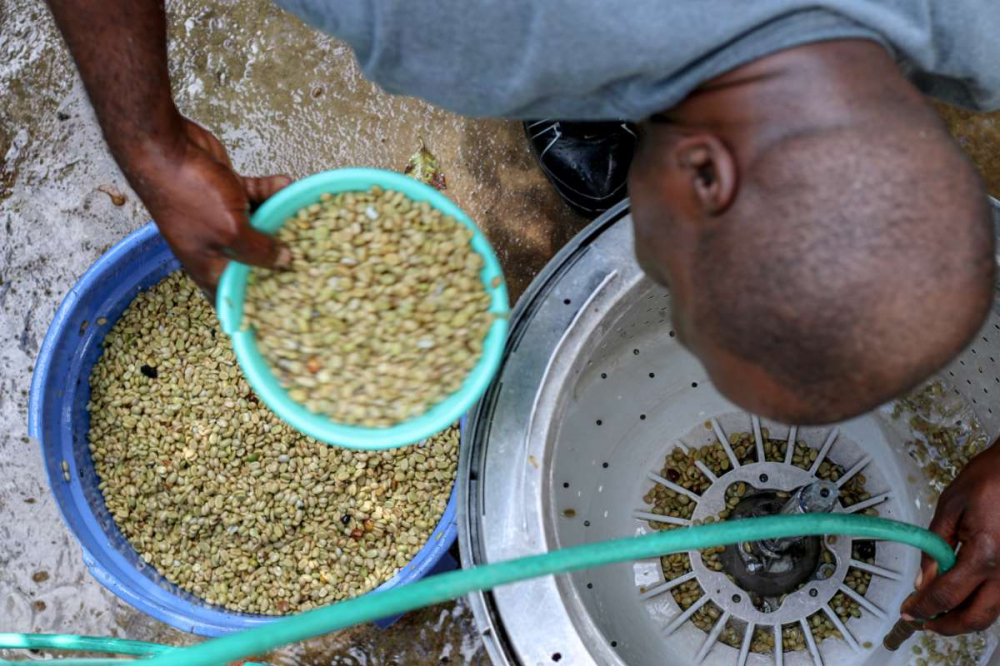
Real and Fake Blue Mountain Coffee
As Front Street stated above, drinking authentic Blue Mountain Coffee is by no means easy. Many unscrupulous merchants, seeing the fame of Blue Mountain Coffee, blend coffee beans from other regions with similar flavors to pass them off as Blue Mountain Coffee. This so-called Blue Mountain Coffee made from blended beans actually does not contain even a single Blue Mountain coffee bean. So how can coffee enthusiasts identify authentic Blue Mountain coffee beans? Next, Front Street will explain this to everyone.
How to Identify Authentic Jamaican Blue Mountain Coffee Beans
According to Front Street's understanding, CIB stipulates that only Blue Mountain coffee beans produced from areas above 2,200 feet in Jamaica's Blue Mountains can be called Jamaican Blue Mountain, and their grades are divided by bean size into NO.1, NO.2, NO.3, and hand-selected PB. Among them, the basic standards for NO.1 Blue Mountain green beans are: beans above 17 mesh, defect rate below 3%, moisture content around 13%, etc. Currently on the market, the Jamaica Coffee Board can issue certificates for all exported Blue Mountain Coffee.
Front Street has learned that the earliest "Jamaican Blue Mountain" referred to coffee produced by "Wallenford Estate" and "Silver Hill Estate," among which the Blue Mountain Coffee produced by Wallenford Estate was of the best quality; today's Jamaican Blue Mountain refers to coffee beans grown in the Blue Mountain area east of Jamaica's capital "Kingston" (at altitudes exceeding 1,000 meters). Currently, Mavis Bank is the largest estate, and its barrels are printed with M.B.C.F. Jamaica Blue Mountain has very strict quality control, with certification work carried out by the government's "Coffee Industry Committee."
Currently, there are six marks that can represent the origin of Blue Mountain Coffee, such as Mavis Bank Central Factory (M.B.C.E), Blue Mountain Coffee Cooperative Factory (M.H.C.C.T.), Portland Blue Mountain Coffee Cooperative Factory (P.X.X.S.H.), Coffee Industry Association (Wallenford), Coffee Industry Association (St. John's Peak), and Blue Ridge (J.A.S), etc. In addition, some estate-level marks will be separately noted on the barrels.
Blue Mountain Coffee is also the only coffee region to date that uses wooden barrels to load green beans, while all other coffee exports use burlap sacks.
Based on the content mentioned above by Front Street, the authenticity of Blue Mountain Coffee can be identified through the following three standards:
(1) Quality certificate issued by the Jamaica Coffee Board
(2) Authorized sales certificate issued by the Blue Mountain Coffee producer. (Blue Mountain Coffee is distributed by 4 Jamaican government-licensed processors and exported by 16 licensed exporters)
(3) Certificate of Origin for Jamaican Blue Mountain Coffee
Secondly, as Front Street mentioned above, in Jamaica only coffee beans grown above 910 meters can be called Blue Mountain Coffee, and the grading of Blue Mountain coffee beans is based on bean size and quality. Different grades naturally correspond to different prices. Next, Front Street will introduce the grading standards for Jamaican Blue Mountain coffee beans to all coffee enthusiasts.
Grading of Jamaican Blue Mountain Coffee
Blue Mountain Coffee is divided by quality into four grades, from highest to lowest: NO.1, NO.2, NO.3, and PB, with PB being peaberry. Front Street Coffee (FrontStreet Coffee)'s Blue Mountain coffee beans are precisely Blue Mountain No.1, which is also hailed as the finest among Blue Mountain coffees and therefore the highest-priced among Blue Mountain coffee types. Blue Mountain No.1 is produced in the mountainous area of Jamaica's Blue Mountains at an altitude of approximately 910-1,700 meters. Because the coffee trees grow on steep hillsides, the yield is scarce, the beans are large, the quality is excellent, and the flavor is balanced, simultaneously possessing appropriate acidity, bitterness, aroma, body, and sweetness. It is universally recognized by coffee enthusiasts worldwide as the finest, and the price of Blue Mountain No.1 naturally becomes the highest among all Blue Mountain coffees.
Blue Mountain Coffee Bean Grading
Blue Mountain No.1 Beans: 96% of coffee beans must be screen size 17/18, with no more than 2% defective beans.
Blue Mountain No.2 Beans: 96% of coffee beans must be screen size 16, with no more than 2% defective beans.
Blue Mountain No.3 Beans: 96% of coffee beans must be screen size 15, with no more than 2% defective beans. Blue Mountain Peaberry: 96% of coffee beans must be screen size 10 single round peaberries, with no more than 2% defective beans. Blue Mountain Blend: A mixture of Blue Mountain No.1, 2, and 3 beans, with a small amount of minor defective beans, but does not affect the cup quality of the coffee.
Blue Mountain Fine Beans: Coffee beans below screen size 15, with no more than 2% defective beans. This portion of beans is sold only as samples, with prices determined by demand conditions.
Blue Mountain Mixed Peaberry: Mixed Blue Mountain peaberries, with a small amount of minor defects, but very good cup quality, with no more than 4% defective beans.
The above is the relevant information about Blue Mountain Coffee compiled by Front Street. Before Front Street lists each new bean for coffee enthusiasts to taste, it conducts extensive roasting cupping and brewing data tests in order to derive the most delicious roasting and brewing plan, allowing coffee enthusiasts to taste the best flavor of the coffee. Next, Front Street will share the brewing data for washed Blue Mountain and natural Blue Mountain with all coffee enthusiasts.
Front Street Brewing Data Sharing
Front Street uses the KONO dripper when brewing Blue Mountain Coffee. The KONO dripper can bring out a rounder and fuller mouthfeel, and the flavor expression is more direct. However, the KONO dripper's exhaust effect is relatively poor because its ribs are straight, with a depth of only one quarter of the dripper. Except for the position above this quarter, the rest fits tightly against the cup wall, forming a sealed state. The KONO dripper was chosen because the only exhaust part of this dripper is at that quarter of the ribs. When the water level exceeds the rib area, the water volume inside the dripper continuously rises, increasing pressure through the weight of the water. Since the outlet is relatively small, it can extend the contact time between coffee particles and water. As the water flow drives it, soluble substances can be extracted more effectively, generally achieving the high body effect expected by customers.
Coffee powder amount: 15g Powder-to-water ratio: 1:15 Water temperature: 88-89 degrees Celsius Grind size: Medium-coarse grind (75% passing rate on No. 20 standard sieve)
Front Street's segmented brewing method: Brewing method: 30 grams of water for blooming for 30 seconds, then slowly pour 100 grams of water in a small stream in a circular motion from the center outward, that is, the electronic scale shows 130 grams. Then wait for the powder bed to drop to the 1/2 point and pour 65 grams of water in a large stream, reaching a total water volume of 195 grams. After all the coffee liquid in the dripper has flowed into the server, remove the dripper and end the extraction. Total brewing time is 1 minute 50 seconds.
Brewing Flavor Comparison
[Natural Blue Mountain] Brown sugar sweetness with berry acidity on the entry, nutty cocoa flavors in the mid-to-late palate, creamy mouthfeel, rich and distinct layers, with walnut aroma in the finish.
[Washed Blue Mountain] Dark chocolate and nutty flavors on the entry, high cleanliness, very bright, good body, balanced acidity, sweetness, and bitterness.
The above content is compiled by CoffeeHunters, a coffee news website.


