







Where does the coffee tree origin story begin for these varieties?
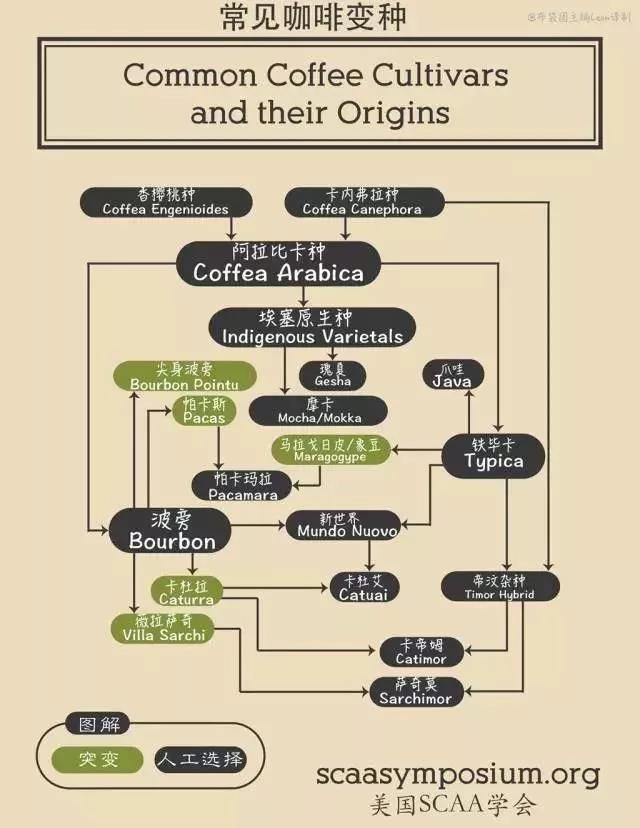
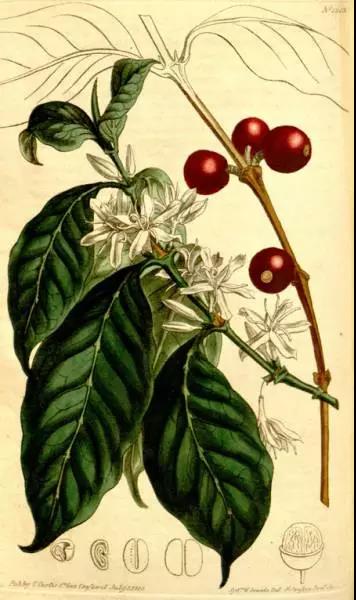
Coffee varieties trace back to two main species, Arabica and Robusta, plus the lesser-known Liberica and Excelsa. Typica, Bourbon, Maragogype, Caturra, Mundo Novo and Geisha all sit inside the Arabica family, and each carries its own growing history and cup profile. Arabica dominates specialty coffee, while Robusta's coffee tree originated in the Congo region of Africa.
Arabica beans hold roughly 0.9 to 1.2 percent caffeine, about 60 percent more fat and twice the sugar of Robusta, which is why the cup reads sweet and mild with plum-like acidity. Lower chlorogenic acid, around 5.5 to 8 percent, also makes the Arabica bean weaker against pests, so it prefers higher altitudes and slower ripening.
In the world of coffee, the two major camps of Arabica and Robusta support the daily cup for the vast majority of people, but what truly makes flavors endlessly varied are those ancient names hidden within the variety genealogy: Typica, Bourbon, Maragogype, Caturra, Mundo Novo... They either originate from the primitive forests of Ethiopia or were born from hybrid breeding in laboratories, and each one carries a unique origin story and flavor imprint. This article systematically sorts out 11 of the most common coffee bean varieties, from botanical classification to cupping performance, from the elegance of Typica to the sweetness of Bourbon, from the huge size of Maragogype to the floral and fruity aromas of Geisha, dissecting their characteristics, producing regions, and representative beans one by one. Whether you are a pour-over enthusiast or an espresso player, this is a variety guide worth keeping.
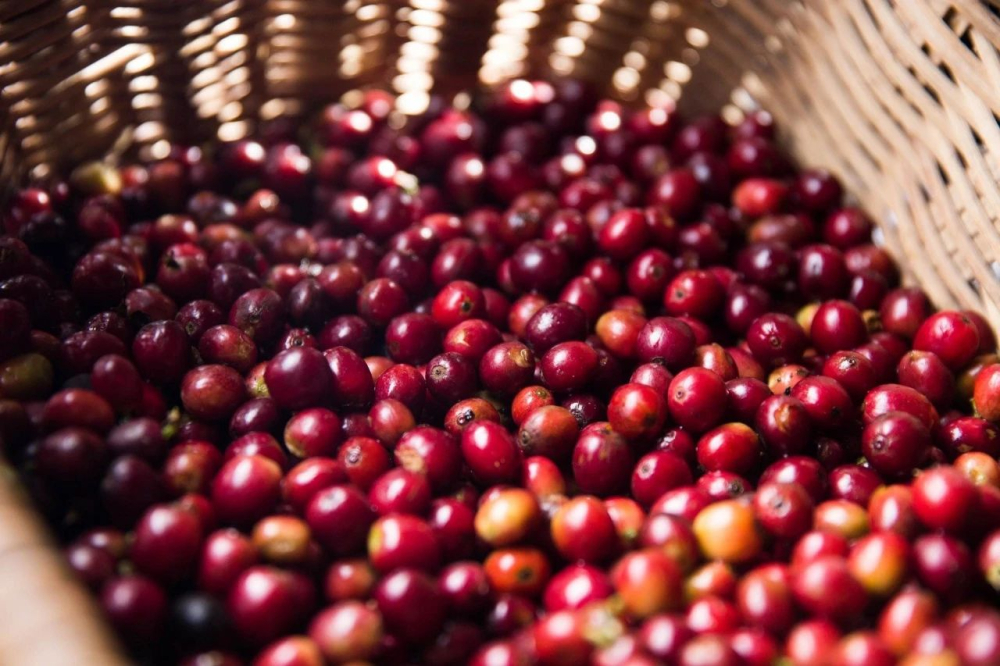
In the coffee family, the Arabica species occupies an absolutely dominant position. Famous coffees such as Blue Mountain and Mocha basically all belong to this variety. Another major force alongside it is the Robusta species, whose coffee tree originated in the Congo region of Africa. Different varieties of coffee beans each have their own strengths in flavor, and even the same coffee tree will produce fruits with very different flavors due to environmental differences such as soil and climate. In addition, there are two less frequently mentioned species: Liberica and Excelsa.
Arabica: high status, smooth taste, relatively low caffeine content
Coffee advertisements often boast of being "100% Arabica," and this is not without reason. Judging by price alone, Arabica is usually about twice as expensive as Robusta, indeed making it seem more premium. From a compositional analysis, Arabica has lower caffeine content (0.9-1.2%), yet its fat content is 60% higher than that of Robusta, and its sugar content is also twice that of the latter, so the overall flavor tends to be sweet and mild, with a hint of plum-like acidity. In addition, Arabica's chlorogenic acid content is slightly lower (5.5-8%), and chlorogenic acid is both an antioxidant and an important component for resisting pests, which leads to Arabica's weaker resistance to pests, diseases, and climate change. It usually has to be planted at higher altitudes, bears fewer fruits, and matures slowly. The fruit shape is elliptical. Currently, Brazil is the largest Arabica-growing country, while Colombia produces only Arabica.
Robusta: affordable, bitter and intense, higher in caffeine. By contrast, Robusta has higher caffeine content (1.6-2.4%), but less fat and sugar, so it tastes more bitter and stronger, and some even bluntly describe it as having a rubbery taste. Robusta has higher chlorogenic acid content (7-10%), is less susceptible to pests and climate, and is usually planted at lower altitudes, bearing more fruit and doing so quickly. The fruit is round.
Currently Vietnam is the largest Robusta-growing country, and Africa and India also produce it.
From a biological classification perspective, coffee varieties can be divided into Arabica, Robusta, and Liberica. The varieties mainly consumed globally are concentrated in Arabica and Robusta, while Liberica is often ignored due to scarce production or unsatisfactory quality.
Generally speaking, Arabica is mostly used for single-origin or specialty coffee, while Robusta is often made into instant coffee. Although by convention Arabica is classified as premium and Robusta as secondary, this is not absolute, and it is more reasonable to distinguish by personal flavor preference. In terms of taste preference, the United States and Japan more often drink light coffee brewed from Arabica, while Europe prefers espresso made from a blend of Arabica and Robusta.
Arabica: premium coffee beans with excellent flavor and aroma
Arabica originated in Ethiopia and is also grown in South Africa, Africa, Asia, and other places, accounting for 70%~75% of global coffee production. Because of its weak resistance to pests and diseases, Arabica is more suitable for cultivation in highlands, especially in producing regions above 1,500 meters above sea level, where the coffee beans produced are of the best quality.
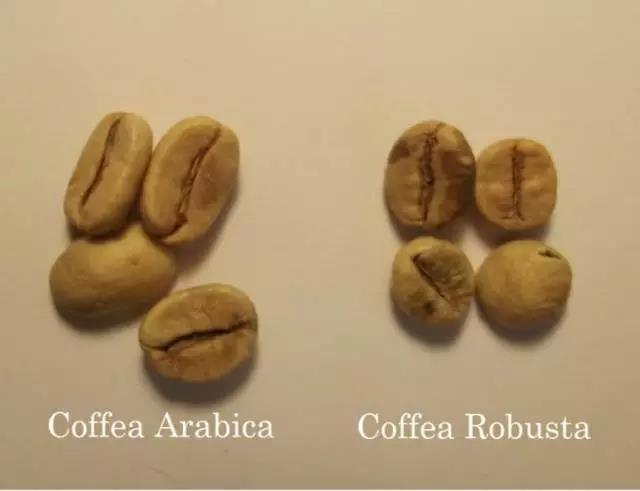
Only high-quality Arabica carefully cultivated, with balanced flavor and excellent taste and aroma, can be certified as premium coffee beans, mainly used for single-origin or specialty coffee. The three famous coffees—Hawaiian Kona, Jamaican Blue Mountain, and Yemeni Mocha—all belong to Arabica. Arabica green beans are dark, narrow, and elongated in appearance, and highland Arabica is hailed as the highest quality, characterized by rich layers of sweetness, acidity, and aroma.
Robusta: strong acidity, intense taste
Recommended tasting: Front Street Classic Espresso Blend
Robusta originated in the Congo, Africa, and accounts for 30% of global coffee production. The word "Robusta" means "robust." In fact, this coffee tree not only has strong resistance to pests and diseases and can survive in any soil, but can even grow in the wild. Therefore, it can be planted in high-temperature areas, grows quickly, is easy to cultivate, and is also low in price. It is mainly used for blending or as the main raw material for instant coffee. Some Robusta produced in India, Africa, Brazil, and other places has strong acidity, high caffeine content, and an intense taste.
In recent years, a variety called Arabusta, hybridized with Arabica, has also appeared, with even better aroma and taste.
Robusta has a plump oval appearance, and the green beans are light brown or yellowish brown with grass-green and yellow luster. Compared with Arabica, the taste is more aromatic but on the lighter side, with less pronounced acidity and a heavier bitterness.
Coffee variety Excelsa
Excelsa is a variety discovered only in 1904. It originated in the Chari River basin of Africa. Its fruit is small, its yield per plant is high, and it is especially drought-resistant. The product has a strong aroma with a slight bitterness, and it is rarely cultivated.
Coffee variety Typica
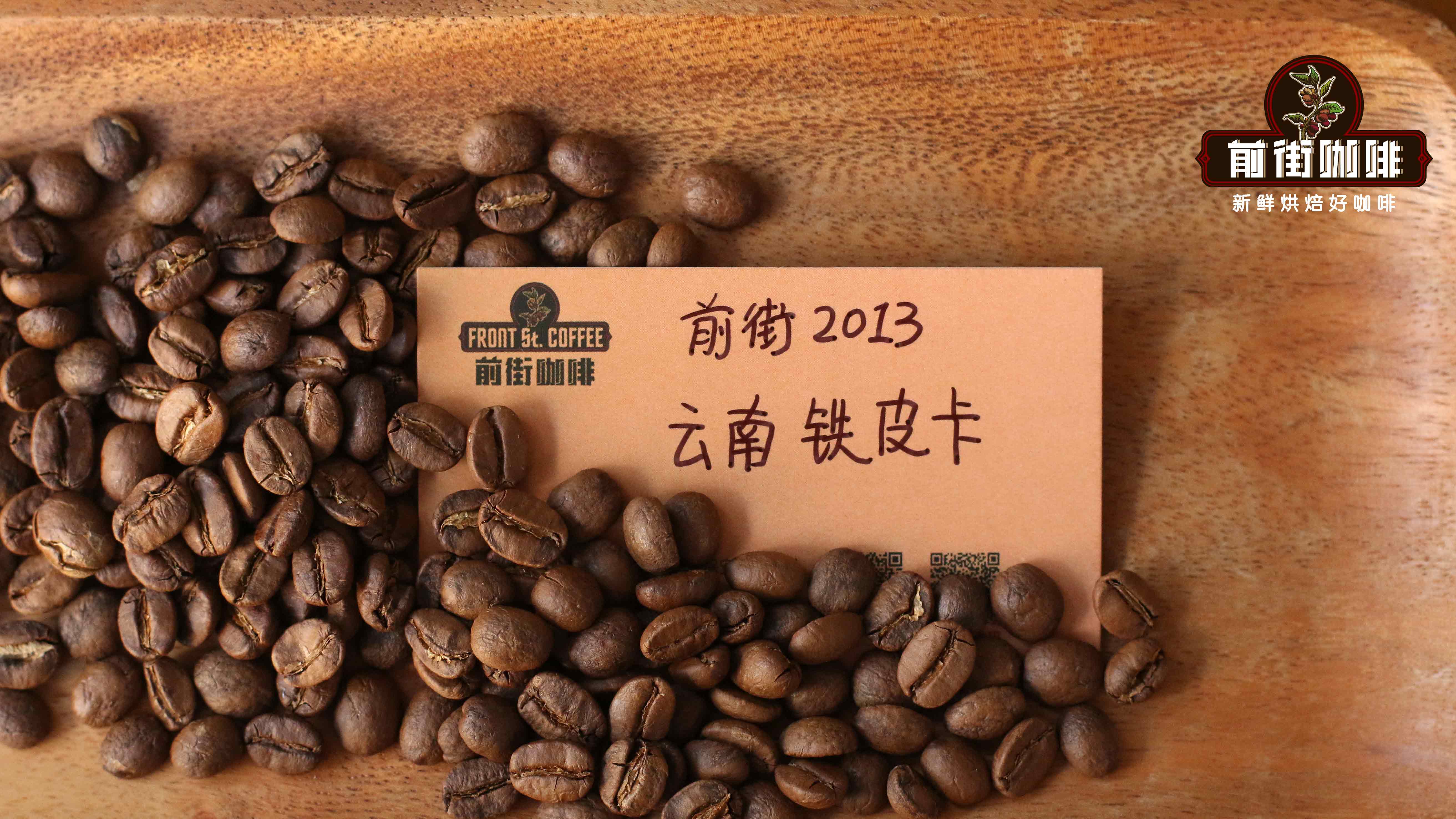
Recommended tasting: Front Street 2013 Yunnan Typica
Typica: the oldest native variety in Ethiopia, and all Arabica varieties are derived from Typica. Typica's top leaves are bronze-colored, and the beans are oval or slender and pointed; the flavor is elegant, but the tree is weak, has poor disease resistance, and produces little fruit. Excellent estate beans such as Jamaican Blue Mountain, Sumatra Mandheling, and Hawaiian Kona all belong to Typica. Bronze-colored top leaves are one of the characteristics of Typica.
Typica green beans have both ends slightly upturned and an oval shape. Seen from the side, the bean body is flat and thin. Even if the cultivation altitude differs, the thickness of the side of the green bean will not vary much.
TimTim
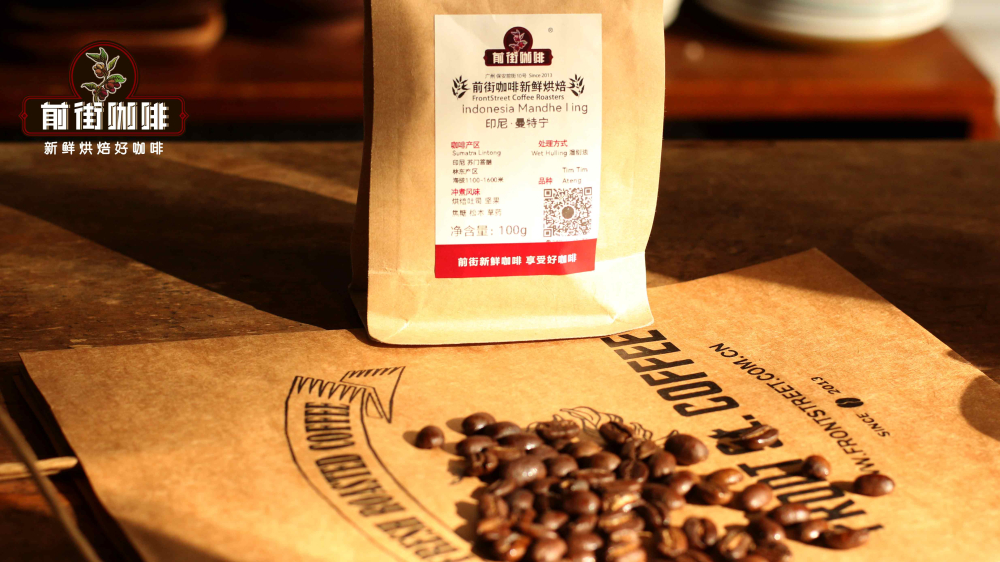
Recommended tasting: Front Street Indonesia Mandheling
That is, Timor Hybrid, which translates to the East Timor hybrid, a cross between Arabica and Robusta. The Catimor we are familiar with was obtained by crossing it again.
Tim Tim----horse-face Mandheling longberry
Tim Tim is a bean from Indonesia. Because of its long strip shape, many people call it horse-face bean, and some also call it long-strip Mandheling. In fact, Tim Tim is not a pure variety, but a natural hybrid of Arabica coffee trees and Robusta coffee trees. It was discovered on the island of Timor in the 1940s and was cultivated because of its natural disease resistance. In the Americas, this variety is called Hybrido de Timor, abbreviated as Tim Tim, and in Indonesia it is also called Bor Bor.
Typica variant Blue Mountain
Recommended tasting: Front Street Jamaica Blue Mountain No.1
Blue Mountain: the globally popular and hard-to-find Blue Mountain comes from the large Typica family.
The history of Jamaican coffee can be traced back to the 18th century, when the British introduced coffee tree seeds to Jamaica and planted coffee in the Blue Mountain range. It is divided into high-altitude Jamaica Blue Mountain Coffee, Jamaica High Mountain Coffee, and Jamaica Coffee, with different grades determining different prices.
Jamaica Blue Mountain Coffee
(Jamaica Blue Mountain Coffee), among which Blue Mountain Coffee and High Mountain Coffee are each further divided into four grades. In terms of quality, from top to bottom, they are: NO.1, NO.2, NO.3, and PB, where PB means peaberry. According to CIB standards, only coffee grown above 666 meters above sea level can be called Jamaica Blue Mountain Coffee;
Typica variant Hawaiian Kona
Kona: although planted at an altitude of only a few hundred meters, Kona from the Big Island of Hawaii, with gentle sea breezes and fertile volcanic soil, possesses incredibly clean acidity and sweetness. Compared with the higher-altitude Blue Mountain, it is arguably even better.
Typica variant Maragogype
Maragogype, a mutant of Typica, has very large, long, slightly twisted fruits, and the plant has long internodes and large leaves. Its yield is relatively low.
It was first discovered in 1870 in the Maragogype bean-producing area of Bahia state in northeastern Brazil. Its beans are at least three times larger than ordinary Arabica, hence the name. Maragogype has poor flavor at low altitudes, but at high altitudes it has better flavor, mild acidity, and pleasant sweet aroma. (The left side of the picture shows Maragogype.)
Typica variant Pacamara
Pacamara: a hybrid of Pacas and Maragogype. Its beans are huge, second only to Maragogype. It is an excellent variety bred in El Salvador in the 1950s, and its cupping results have been good in recent years.
Typica variant Kent
Kent: a Typica hybrid variety found in India, with high yield and strong disease resistance, but it has never achieved good cupping results.
Bourbon coffee Bourbon variety
Bourbon: a variant after Typica was transplanted to Yemen in the early period (pre-coffee history), with the bean shape changing from slender and pointed to round. In 1715, France transplanted round beans of Yemeni Mocha to Bourbon Island off the east coast of Africa (renamed Reunion Island after the French Revolution), and only then did it get the name Bourbon. Bourbon round beans were transmitted to Brazil and Central and South America in 1727, and in 1732 Britain transplanted Yemeni Mocha to Saint Helena Island (later the place where Napoleon was imprisoned), which was also Bourbon round beans. Bourbon is a frequent winner in American specialty coffee cupping.
The Bourbon variety is a secondary species produced by a mutation of Typica. Together with Typica, it is one of the oldest existing coffee varieties, and its green fruits turn bright red when ripe.
[Gene mutation species—Bourbon variants]
Recommended tasting: Front Street Brazil Cerrado Red Bourbon
Bourbon coffee Red Bourbon
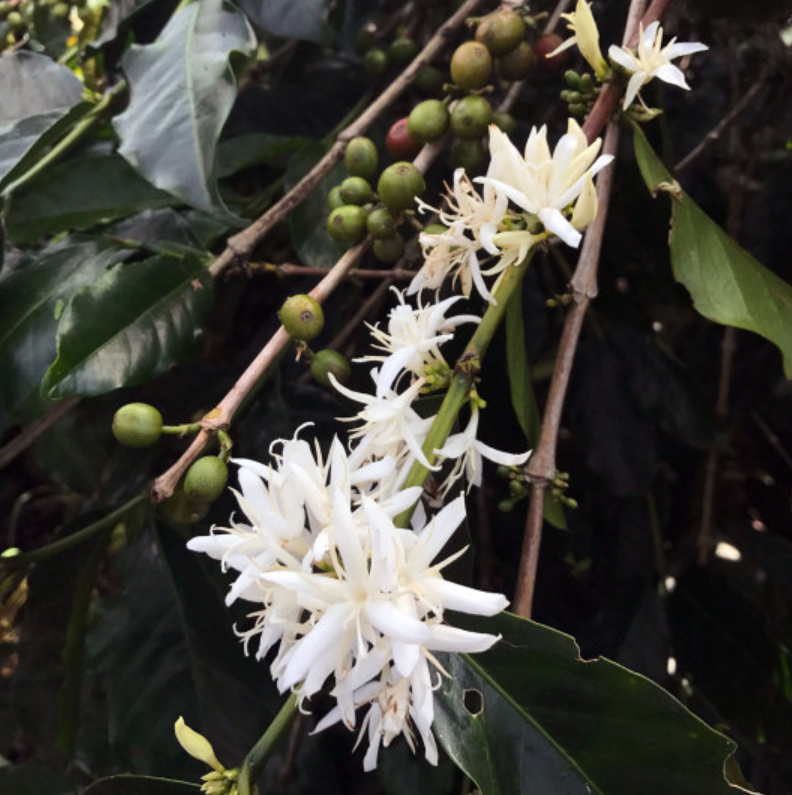
After the average Red Bourbon coffee tree flowers and bears fruit, the color of the coffee fruit changes as follows: green > slightly yellow > slightly orange > ripe red > darker red as it becomes more mature. Therefore, some also call it [Red Bourbon variety]. In fact, Red Bourbon is what we generally call the Bourbon variety. Bourbon grown at high altitudes usually has better aroma, while its acidity is brighter, and it even tastes somewhat like red wine.
To put it more plainly, the Bourbon variety is a coffee tree species belonging to a branch of the Arabica species. It generally bears red fruit, called Red Bourbon. Besides that, there are also Yellow Bourbon and Orange Bourbon. Yellow Bourbon has relatively lower yield, but better quality.
Bourbon coffee Yellow Bourbon
Recommended tasting: Front Street Brazil Queen's Estate
The Yellow Bourbon variety was produced by crossing Bourbon with other varieties. Because of its lower yield and relatively poor resistance to wind and rain, it has not been widely planted. However, when grown in high-altitude areas, it shows excellent flavor and has become more common in recent years. Yellow Bourbon, as the name suggests, has yellow fruit when ripe. It was first discovered in Brazil and is currently mainly grown in Brazil. It is generally believed that it may have originated from a mutation after crossing red-fruited Bourbon with a yellow-fruited Typica variant called "Amerelo de Botocatu."
Taste characteristics: sweet and smooth fruit sweetness, obvious nutty flavor, balanced and gentle acidity, weak and clean bitterness, rich chocolate aroma and nutty flavor, bright and refreshing taste.
Bourbon coffee Pink Bourbon
Pink Bourbon, as the name suggests, has romantic pink coffee cherries when ripe. It is a very rare new variety, bred by crossing Red Bourbon and Yellow Bourbon. The reason Pink Bourbon is said to be a rare variety is mainly that maintaining this beautiful pink color is very, very difficult. Sometimes some orange Bourbon is harvested, because the final color of the coffee fruit is determined by recessive genes in the pollen grains. Among the pollen grains selected for crossing, there are both yellow genes tending toward Yellow Bourbon and red genes tending toward Red Bourbon, and these are all recessive genes that easily interfere with each other.
At present, Pink Bourbon can be seen in Colombia and Guatemala. Taking this batch of Pink Bourbon coffee as an example, there are about 1,800 coffee trees, and in one production season each tree yields about 1.8 kg of fresh fruit. After pulping and mucilage removal, about 0.36 kg of coffee beans is obtained. In a normal production season, the output of this batch of coffee is less than 650 kg.
Taste characteristics: sweet orange, sugarcane sweetness, pleasant juicy feel, cherry tomato
Bourbon variant Bourbon Pointu
Bourbon Pointu: discovered on Bourbon Island in 1810, with the bean body changing from round to pointed, and only half the caffeine content; however, its quantity is small and the plant is weak, making it extremely precious (mostly cultivated in laboratories).
Bourbon Pointu also has two other names, Laurina and Leroy, but neither is as well known as Bourbon Pointu. It is called Bourbon Pointu because the bean shape is narrow and long with pointed ends, while the original Bourbon (sometimes called round Bourbon) has a shorter bean body with a slightly oval outline.
Because of its good flavor and low caffeine content (not much affecting sleep), Bourbon Pointu was already loved by the world as early as the 18th century. Many famous people, such as King Louis XV of France and the novelist Balzac, were its "fans." During the two hundred years from the 18th to the 19th century, Bourbon Pointu was once planted on a large scale on Bourbon Island, and in 1800 it even reached a peak annual output of 4,000 metric tons. But afterward, a series of disasters such as hurricanes, fire ants, and leaf rust followed one after another, causing cultivation to gradually decline. Finally, in 1942, the last batch of Bourbon Pointu shipped back to France amounted to only a pitiful 200 kilograms, and since then, Bourbon Pointu disappeared without a trace, and even official documents no longer mentioned it. After the 1950s, no one on Reunion Island planted coffee anymore, and the island's agriculture completely shifted to other crops such as sugarcane. Coffee no longer had any connection with Reunion Island, and Bourbon Pointu was recognized by the coffee world as "already extinct."
Given that this bean disappeared for half a century and only reappeared eight years ago, in the international market, Bourbon Pointu produced in its place of origin, La Reunion Island, sells for more than 500 yuan per 100 grams. After that, Colombia also began to grow this bean, and only Camilo Merizalde, the source of beans for multiple WBC champions, dared to take on the transplanting of this bean. Therefore, this coffee bean, with a global annual output of only a few tons, is extremely valuable.
Flavor description in the archive: bright acidity, notes of blueberry and vanilla, velvety smoothness
Bourbon variants SL28, SL34
Recommended tasting: Front Street Kenya Cherry Tomato
Kenya SL28 and SL34: direct Bourbon lines selected and cultivated in Kenya in the early twentieth century by French and British missionaries and researchers. Over the past century, they have adapted to Kenya's high-concentration phosphoric acid soil and bred Kenya's characteristic acidic aroma. Top Kenyan coffees all come from these two varieties, but when transplanted elsewhere, they immediately lose their flavor.
Kenyan coffee is graded into seven levels according to bean size, and according to taste it is divided from top to bottom into six grade specifications. Kenya's best coffee grade is Peaberry (PB), followed by AA++, AA+, AA, AB, and so on in order. Top-grade coffee is bright and glossy, delicious and palatable, with a slight winey aroma. In terms of taste, "Kenya AA" is especially highly praised.
Graded according to bean size:
The best Kenyan coffee grade is Peaberry (PB), followed by AA, AB, and so on in order.
PB (PeaBerry): This is the grading for small round beans. It refers to coffee fruit that develops only one bean inside rather than the usual two.
AA: This is a relatively common grade. The coffee beans are larger in size, with bean size above screen 18 or 7.22 mm. This type of bean can usually obtain the highest price.
AB: This grade combines A (screen size 16 or 6.80 mm) and B (screen size 15 or 6.20 mm); it accounts for about 30% of Kenya's annual coffee production.
Bourbon variant Caturra
Recommended tasting: Front Street Colombia Huila
Caturra: a single-gene Bourbon variant discovered in Brazil in the 1950s. Its productivity and disease resistance are both better than Bourbon. The tree is shorter, making harvesting easier. Unfortunately, it encountered the same problem as Bourbon—bearing fruit one year and resting the next. Its flavor is comparable to or slightly worse than Bourbon beans. However, it has stronger adaptability, can be planted at high density, does not need shade trees, and can thrive even when directly exposed to the sun, so it is also called Sun Coffee. Caturra is suitable for low altitudes of 700 meters up to high altitudes of 1,700 meters, but the higher the altitude, the better the flavor, and the bean yield relatively decreases. There is also a yellow Caturra variant in Central and South America, but its reputation is not as good as Yellow Bourbon.
Bourbon variant Catuai
Recommended tasting: Front Street Panama Elida Estate Catuai
Catuai: Catuai is a cross between Mundo Novo and Caturra, making it a second-generation hybrid. It inherits Caturra's advantage of a low tree height and also compensates for Arabica's weakness of fragile fruit. The fruit is firm and not easy to drop when strong winds blow. The greatest regret is that its overall flavor is slightly more monotonous than Caturra.
Catuai also has red-fruit and yellow-fruit types. Compared with yellow fruit, red fruit more often wins awards. Catuai, Caturra, Mundo Novo, and Bourbon are together listed as Brazil's four major coffee varieties.
Bourbon variant Pacas
Pacas: a Bourbon variant discovered in El Salvador. In 1935, Salvadoran coffee farmer "Don Alberto Pacas" selected high-yield San Ramon Bourbon plants and moved them to his farm for cultivation. In 1956, his coffee trees bore more fruit than coffee trees of the same type. Dr. William Cogwill, a professor at the University of Florida, confirmed that this was a gene mutation in Bourbon and named it "Pacas."
Pacas has high yield and good quality, and is quite popular in Central America. At present, 68% of El Salvador's coffee is Bourbon varieties, of which Pacas accounts for 29%. It is similar to Brazil's Caturra and Costa Rica's Villa Sarchi. Today Pacas already makes up about 25% of El Salvador's coffee production. It has high yield and has always been very popular. The coffee it produces has high sweetness, similar to Bourbon, but its acidity is brighter than Bourbon.
Bourbon variant Villa Sarchi
Villa Sarchi: a Bourbon variant first discovered in Costa Rica in the 1960s. In recent years it has often appeared on excellent cupping lists, making it a dark horse with promising prospects. It is a rare variety bred through hybridization of Red Bourbon trees. It resists strong winds, prefers high-altitude environments, and has excellent acidity along with various layered fruit notes. It is high in sweetness, with bright and delicate citrus acidity as well as lower-toned raisin and nut aromas, with considerable complexity and full balance.
It is also a dwarf Bourbon, discovered in Sarchi village in the western valley of Costa Rica. It is suitable for high-altitude organic cultivation, with lively fruit acidity and obvious caramel notes.
Hybrid variant Mundo Novo
Mundo Novo: a natural hybrid of Bourbon and Sumatra Typica, first discovered in Brazil. It has high yield and resistance to pests and diseases. It was widely planted in Brazil in the 1950s and was hailed as the new hope of Brazil's coffee industry; however, the tree is taller and not easy to harvest.
Hybrid variant Nicaragua Java
That is, the Java variety from Nicaragua, a long-bean variety that is now uncommon even in Java. It was first successfully sown in Nicaragua by Limoncillo Estate. The Java variety originates from the Typica lineage. Java's Typica once suffered a severe leaf rust outbreak, causing Java's Typica to nearly disappear. Limoncillo Estate accidentally obtained a bag of seeds, sowed and raised seedlings, and then brought the young plants to experts for identification, only then learning that they were Java variety. In 2007, Limoncillo entered this variety in COE for the first time, and as a result won second place in that year's Nicaragua COE, with the bidding price even surpassing that year's champion.
Hybrid variant Maracaturra
A hybrid variety developed in Guatemala from Maragogype and Caturra (Maragogype×Caturra). After winning the championship in the 2009 Nicaragua COE, it received even greater recognition. It combines Maragogype's rich fruity notes with Caturra's elegant acidity, has high body, full floral aroma, and high sweetness.
Arabica species Geisha
Geisha: a derivative variety belonging to the Typica family. It was exported from Geisha Mountain in southern Ethiopia in 1931 (Geisha sounds the same as the Japanese word for "geisha") and remained unknown after passing through many countries. It was transplanted to Panama in the 1960s, and only in 2005 did it begin to win frequently in cupping competitions.
| Geisha, also called Yirgacheffe? No—also known as geisha
Geisha is pronounced the same as the Japanese word for geisha, so it is also nicknamed geisha coffee; because the tree is taller than ordinary coffee trees, it was originally planted in a small area within that estate and used as a windbreak.
| Geisha is a variety
First, the Geisha variety was discovered in 1931 in the Geisha forest of Ethiopia, and was later sent to the coffee research institute in Kenya. It was introduced to Uganda and Tanzania in 1936; Costa Rica introduced it in 1953.
| Red label, green label, blue label
Only Hacienda La Esmeralda's Geisha has the [red label, green label, blue label] distinctions:
Red label (Special-Geisha): a collection of Hacienda La Esmeralda's top lots, all grown at altitudes above 1,600 meters (even above 1,900 meters), with cupping scores all above 90 points;
Green label (Private Collection-Geisha): Geisha from different plots within Hacienda La Esmeralda's estates, grown at altitudes of 1,600-1,800 meters;
Blue label (Geisha 1500): Geisha from Hacienda La Esmeralda's estates, grown at altitudes above 1,500 meters;
| Geisha, unique floral and fruity aroma
Among the many coffees, floral aroma and the intense sweetness of tropical fruit are the consistent characteristics of Geisha.
Image source: aroma
Arabica and Robusta bean hybridization (Interspecific Hybrid)
Hybrid variant Timor
Timor: a natural hybrid variety discovered in East Timor, an island country at the eastern end of the Lesser Sunda Islands. It has 44 chromosomes and is relatively close to Arabica; however, its flavor is unremarkable. Timor has low acidity and lacks distinctive features. In Taiwan it is often used as a blending bean to lower costs. But East Timor also has high-altitude washed pure Typica. Before buying, be sure to clarify whether it is a hybrid or washed pure Typica, because the quality of the two differs greatly: the former is unremarkable, while the latter is stunning.
Hybrid variant Catimor
Catimor: In 1959, the Portuguese crossed Brazil's Caturra with Timor to breed the second-generation hybrid Catimor, which had extremely strong disease resistance and productivity. However, its flavor is also relatively poor, and it is currently an important commercial bean variety. In order to improve Catimor's poor cupping reputation, in recent years botanists in various countries have again turned back to cross Arabica with Catimor repeatedly, attempting to reduce its Robusta lineage.
Hybrid variant Icatu

Icatu: a variety improved through multiple generations of hybridization in Brazil, and it once entered the top ten of Brazil's "Cup of Excellence." In the past, Arabusta, a hybrid of Arabica and Robusta, although increasing yield and disease resistance, always had poor coffee flavor. Scientists then crossed Arabusta with Arabica varieties such as Caturra, Mundo Novo, and Bourbon over multiple generations, gradually reducing the undesirable flavors of Robusta and improving the aroma and richness of Arabica beans, thus giving rise to the excellent multi-generation hybrid variety—Icatu.
Hybrid variant Ruiru 11
Ruiru 11: a hybrid variety developed in Kenya in 1985 that emphasized yield over quality. It is a cross between Arabica and Robusta, and so far none of these hybrids can be considered specialty coffee; therefore, many suppliers specializing in fresh-roasted specialty coffee, such as Fresh, do not carry these types. However, many suppliers, even of imported famous coffees, mix this hybrid bean into blends to reduce costs. From the above gene mutation varieties (whether natural or laboratory-created), their flavors are greatly related to specific regional conditions.
The above content is compiled by CoffeeHunters, a coffee news website.


