







What Is SOE Coffee and How Does It Differ from a Blend?
SOE stands for Single Origin Espresso: espresso pulled from beans of one production region rather than a blend. Because those beans carry the character of a single lot, the shot can show strong, individual notes, such as the citrus in a Yirgacheffe or the cherry tomato in a Kenya, amplified by the machine's high pressure and often more prominent than in pour-over.
The trade-off is consistency. Coffee beans vary with climate, growing conditions and roast batch, so the same SOE may taste different from one delivery to the next. Soe espresso also tends to be roasted lighter to protect those distinct flavors, which makes dialing in the grind and dose more demanding. Blends exist to smooth out that variation and keep daily output stable.
SOE (Single Origin Espresso) refers to espresso made from coffee beans of a single origin, and it has attracted considerable attention in the specialty coffee circle in recent years. Many coffee enthusiasts are curious: what exactly is the difference between SOE and espresso blends? Which one is more suitable for daily output? Starting from the practice of Front Street Coffee, this article systematically sorts out the flavor characteristics of SOE, the key points of extraction, and the advantages of blended beans in stability and flavor creation. At the same time, combining two products—Front Street Brazil Queen's Estate Yellow Bourbon SOE and Front Street Sunflower Warm Sun Espresso Blend—it explains the extraction parameters and blending logic in detail, helping readers understand the scenarios and selection approaches for which each type of coffee bean is suited.
Many guests who come to Front Street Coffee (FrontStreet Coffee) will ask Front Street's baristas the same question: what exactly is SOE coffee? Why do so many specialty coffee shops now include SOE on their menus, while Front Street Coffee (FrontStreet Coffee) has still never put it into its regular supply list? The reason is that SOE is espresso extracted from coffee beans of a single origin, and coffee beans are affected by multiple factors such as climate, growing conditions, and the roasting stage. Even for the same coffee bean, different batches may show flavor fluctuations, which makes it difficult to fully guarantee the stability of the taste of each cup of espresso. What is SOE coffee? Single-origin espresso, that is, espresso from a single production region—SOE, short for "Single Origin Espresso." It should be noted that although SOE literally means single-origin espresso, it does not automatically equal specialty coffee. If single-origin beans with high flavor distinctiveness are chosen to make SOE, it is possible to present a highly individual espresso. For example, the citrus notes in Front Street Yirgacheffe and the cherry tomato flavor in Front Street Kenya, under the high-pressure extraction of an espresso machine, the coffee's taste will be significantly amplified, so the flavor performance is often more prominent than with pour-over.
What should be noted when making SOE? The coffee beans selected for SOE are usually not roasted too dark in order to highlight the characteristics of the origin itself. Compared with traditional dark-roasted espresso beans, the flavor substances in this type of bean are more difficult to extract. Front Street believes that, on the one hand, extraction parameters need to be adjusted to increase the extraction yield, such as extending the extraction time, making the grind finer, and increasing the dose.
On the other hand, when producing espresso drinks based on SOE coffee beans, it is also necessary to rebalance the ratio of espresso to milk or water. Appropriately reducing the amount of milk or water makes the coffee's own taste more prominent and prevents the entire drink from becoming too weak. In addition, there are quite strict requirements for the coffee beans chosen to make SOE—although SOE is highly expressive, precisely because it comes from a single origin, its defects are also easily magnified, so factors such as roast level and particle size will have a noticeable impact on the final flavor.
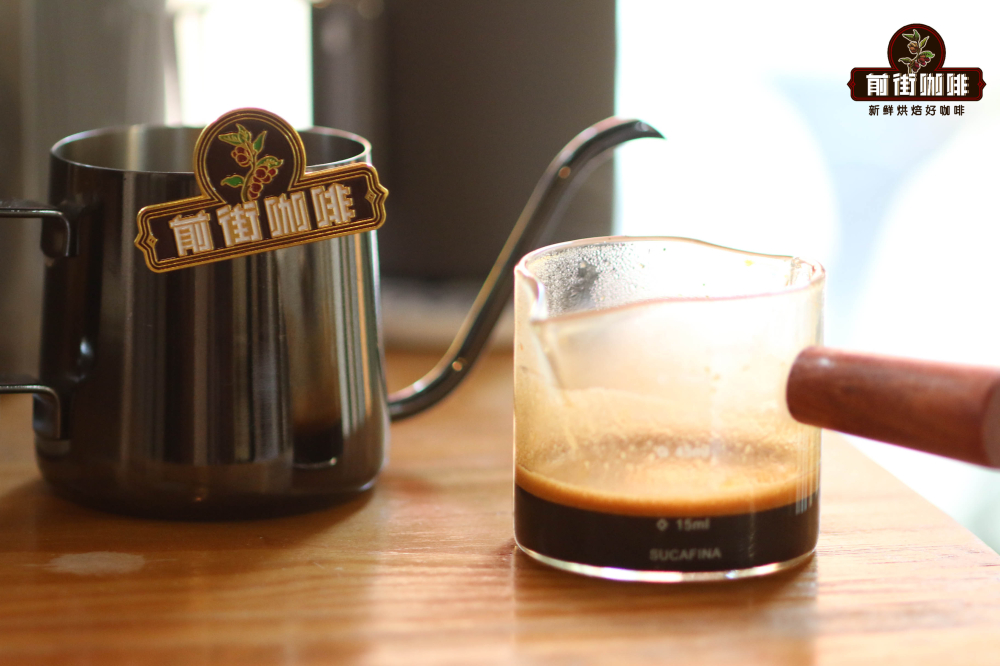
How does Front Street use Front Street Brazil Queen's Estate Yellow Bourbon coffee beans to extract SOE? Coffee dose 20g Espresso yield 40ml Extraction time 27 seconds Grind size Galileo Q18 2.0 setting SOE flavor description: citrus, berries, fermented aroma, syrupy, medium bitterness, medium-high acidity, bright and lively acidity. Front Street hopes that every guest who visits Front Street Coffee (FrontStreet Coffee) can drink an espresso or milk coffee with stable flavor and distinctive characteristics every time. Therefore, in its daily espresso output, it uses a Front Street Sunflower Warm Sun Espresso Blend coffee bean blended from Front Street Ethiopia Yirgacheffe Natural Red Cherry and Front Street Honduras Whiskey Barrel Sherry.
The purpose of Front Street Coffee (FrontStreet Coffee) blending coffee beans: 1. To create long-term stable flavor The same production region may produce different tastes in different harvest seasons, or even in different batches of the same year. This is exactly where the shortcoming of a single origin lies—it is hard to be certain that next year you will still be able to drink the single-origin coffee that satisfied you this year (except for beans whose flavor is dominated by processing method; at the same time, other variables from origin to coffee shop may also cause the beans you buy to differ in taste from before). Therefore, one purpose of blending is to create a product that can be supplied over the long term while maintaining a stable flavor. When a certain coffee bean fails to meet quality standards or changes in a new harvest season, beans of a similar style can be found to replace it, thereby maintaining stability.
2. To create flavors that a single coffee bean cannot produce Sometimes, coffee beans from a single origin are like a person, with both strengths and weaknesses; blending is like forming a team, allowing each bean to make up for the others' shortcomings and achieve a complementary effect. For example, using a sweeter bean to pair with a more acidic bean to achieve a balance of sweetness and acidity; or adding some Brazil beans to the recipe to enhance the overall body—these are all goals that blending aims to achieve. 3. Then Front Street determines the target flavor of the blend When Front Street Coffee (FrontStreet Coffee) first blended Front Street Sunflower Warm Sun Espresso Blend coffee beans, the goal was very clear—to blend a coffee bean with wine aroma. Therefore, Front Street Honduras Sherry Barrel, Front Street Honduras Lychee Orchid, and Front Street Colombia San Jose, these three barrel-fermented beans with prominent wine-aroma flavors, were quickly included in the candidate list. After repeated trials and considering factors such as cost-effectiveness, it was finally determined to use Front Street Honduras Sherry Barrel as the main tone of Front Street Sunflower Warm Sun Blend coffee beans. 4. Finally, Front Street determines the blending type The advantage of pre-roast blending is that the same roast level can be used, making the coffee more stable and uniform, while also reducing the number of roasts and completing it in one roast, improving efficiency. But the limitations of pre-roast blending are also obvious. Generally, it is more recommended to pre-roast blend several beans with similar density. If a bean suitable for light roasting and a bean suitable for dark roasting are mixed together and roasted to the same level, it is easy for 1+1<1的情况。\n\n
The advantage of post-roast blending is that each bean can be handled separately according to its most suitable roast level, maximizing each one's characteristics. But the shortcoming of post-roast blending is that daily quality control and management are more difficult. Inconsistent roast dates mean more resting periods need to be tracked. Just imagine using four or five beans for post-roast blending—this one product would require tracking four or five roast dates. When roasting Front Street Sunflower Warm Sun Blend, Front Street Coffee (FrontStreet Coffee) adopted the post-roast blending method, separately roasting the Front Street Honduras Sherry Barrel coffee beans and the Front Street Natural Yirgacheffe Red Cherry Project, maximizing the wine aroma of Front Street Sherry Barrel coffee beans while preserving as much as possible the fruity acidity and citrus-berry aroma of the other Front Street Natural Yirgacheffe. When Front Street Coffee (FrontStreet Coffee) selects blended beans and formulates a blending plan, it first needs to clarify the coffee characteristics it wants to present, including the expression of sweetness, acidity, and bitterness, the expected body, the coffee flavor, and whether the main output is milk coffee or Americano, or espresso. These are all factors that need to be considered when selecting green beans, determining the roasting method, and determining the recipe. Moreover, before the recipe is finalized, it will undergo multiple tests, adjustments, retests, and further adjustments...
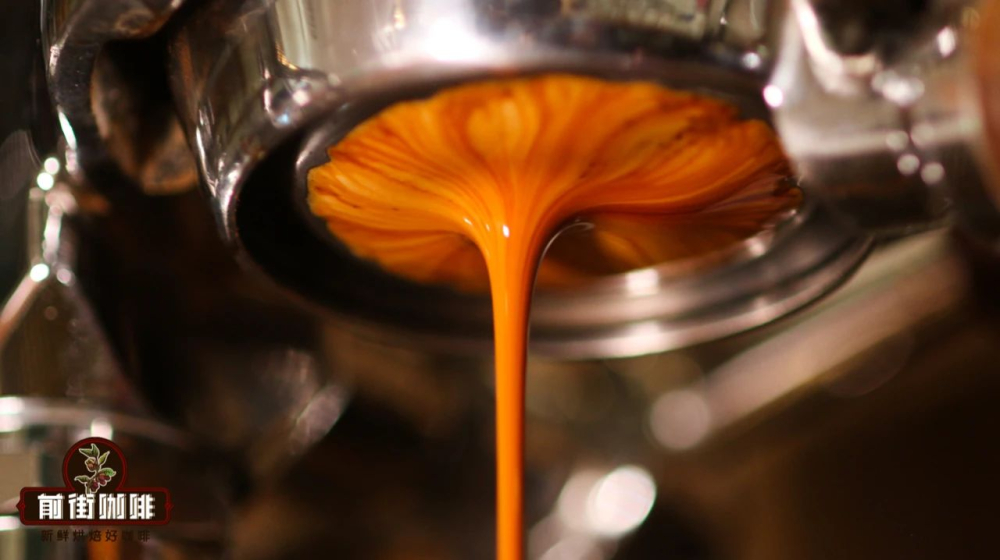
Front Street uses a Lelit V3 espresso machine, and the extraction parameters are as follows: Pressure: 9 bar Temperature: 90.5~96°C Time: 20~30 sec Coffee-to-water ratio: 1:1.7~1:2 Dose: 12g (single espresso) 20g (double espresso) Espresso yield: 20ml (single) 40ml (double)
This Front Street Sunflower Warm Sun Espresso Blend coffee bean, extracted under pressure by an espresso machine, has obvious fruity acidity in flavor, with a faint berry aroma lingering, rich wine aroma and chocolate flavor, and a comfortable sweet aftertaste. For professional coffee knowledge exchange and more coffee bean information, please follow Coffee Workshop (WeChat public account cafe_style) For more specialty coffee beans, please add the private WeChat of Front Street Coffee (FrontStreet Coffee), WeChat ID: kaixinguoguo0925
The above content is compiled by CoffeeHunters, a coffee news website.


