







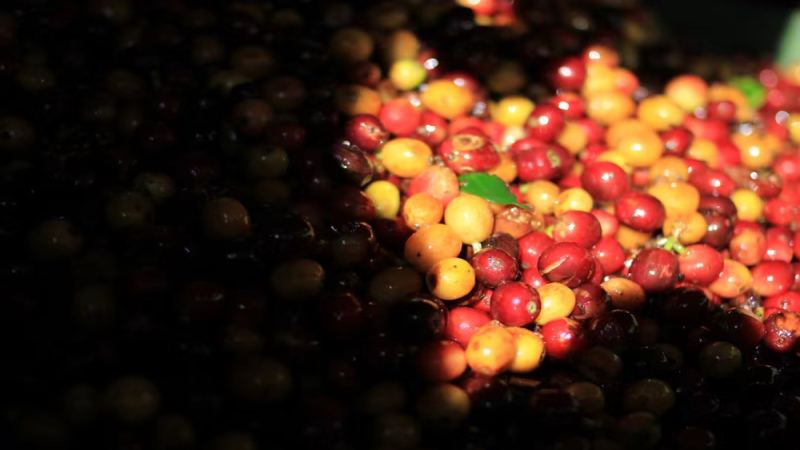
How Do Region and Coffee Process Shape Costa Rican Flavor?
Costa Rican coffee flavor comes from three things working together: growing conditions, variety and processing. The Central Plateau, at 1,200 to 1,600 meters with volcanic soil around Irazu, Barva and Poas, provides fertile, well-drained ground and a harvest from November to March. Washed, natural, honey, anaerobic and raisin honey methods all appear locally, and each changes the cup.
The honey system is a good example of how the coffee bean process steers sweetness and body, because some mucilage is left on the seed during drying. Tarrazu is a key region to watch for that style. Even with good beans, home pour-over often falls short of a cafe, usually through grind size, water temperature or pouring rhythm, so matching the recipe to the specific lot matters more than the method alone.
Costa Rica is a key representative of specialty coffee in Latin America, where washed, natural, honey, and even anaerobic and raisin honey processes flourish. Many coffee lovers buy Costa Rican beans and brew them at home with pour-over, yet often feel there is a gap compared with what cafés produce. Is the problem with the beans themselves or the brewing method? Front Street Coffee approaches this from three dimensions—geographic growing conditions, main varieties, and processing methods—to sort out the logic behind the formation of Costa Rican coffee flavors, with a focus on the Tarrazu region and the honey processing system, and uses two beans from the Canet Musician Series, Bach and Mozart, as examples to provide complete pour-over parameters and staged extraction steps to help readers brew their ideal flavor.
Costa Rica is a highly important origin in the specialty coffee landscape of Latin America, and its coffee processing system is also quite mature. The three classic methods—washed, natural, and honey—need no elaboration, and newer processes such as anaerobic fermentation and raisin honey processing can also be found locally. Because of this, many enthusiasts buy their favorite Costa Rican beans and brew pour-over at home, but the result always seems different from what they drink in cafés—is it poor bean quality, or a problem with technique? Next, Front Street Coffee will guide everyone through the flavor characteristics of Costa Rican coffee beans and explain the specific pour-over method.
Costa Rica Coffee Growing Conditions
Coffee beans are ultimately an agricultural crop, so their flavor is inevitably influenced by geography, soil, and climate, while variety and processing method also shape the final cup. Below, Front Street Coffee explains from these three aspects how the flavor of Costa Rican coffee beans is formed.
According to Front Street Coffee, Costa Rica was the first country in Central America where coffee was introduced and cultivated, with a very long history. The local volcanic soil is fertile and well-drained, with the Central Plateau particularly prominent, at an altitude of 1,200 to 1,600 meters, and the harvest period runs from November to March of the following year, covering three sub-regions: San José, Heredia, and Alajuela. Around the region are three high-altitude volcanoes—Irazu, Barva, and Poas—continuously supplying nutrients to the coffee trees. The excellent microclimate combined with fertile volcanic soil gives the beans in this area outstanding quality, often showing chocolate and cocoa notes, bright fruit acidity, and elegant aroma.
Costa Rica mainly has eight coffee regions: Valle Central Occidental, Valle Central, Tarrazu, Tres Rios, Orosi, Brunca, and Turrialba. Among them, most specialty coffee comes from the Tarrazu region, and Front Street Coffee also selects beans from this region as its Costa Rican daily coffee for everyone to understand and taste.
What exactly makes the Tarrazu region special? According to Front Street Coffee, Tarrazu is located south of the capital San Jose, at an altitude of about 1,200 to 1,700 meters, with the season from December to March of the following year. The coffee produced here has soft yet bright acidity, hard and plump beans, and a rich aroma. It is a world-renowned region, and its core advantage is precisely the full mouthfeel created by high altitude.
Tarrazu is renowned in the specialty coffee world and is one of the world's major coffee origins. According to Front Street Coffee, among the 23 winning beans in the 2014 COE competition, 17 came from the Tarrazu region, showing just how strong its capability is.
This is inseparable from the local soil and terrain. Tarrazu is located in Central America's fertile volcanic zone, with a humid climate, volcanic rock soil rich in nutrients, abundant rainfall year-round, high altitude, and dense forests providing natural shade, creating uniquely favorable conditions for coffee growth, and no pesticides or artificial fertilizers are used during cultivation. It is clear that Costa Rican coffee farmers place great importance on growing quality, so it is no surprise that the area is rich in high-quality coffee beans.
Main Costa Rican Coffee Varieties
The varieties grown in Costa Rica are similar to those in other Latin American countries, mainly Bourbon, Caturra, and Catuai, with the difference that the country also has local varieties such as Villa Sarchi and Villalobos. Below, Front Street Coffee introduces the characteristics of these varieties one by one.
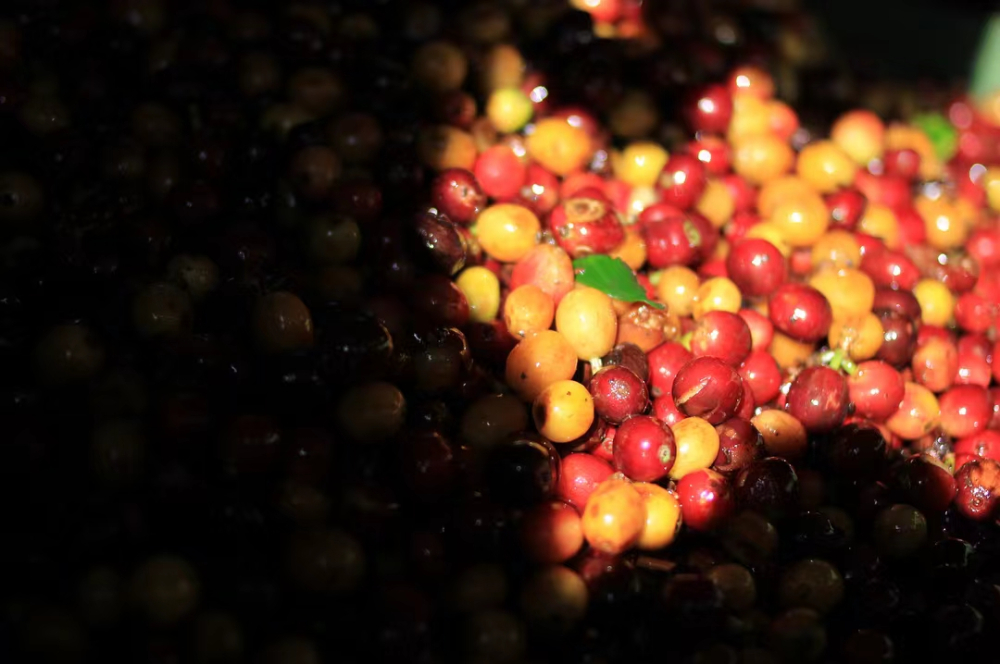
Bourbon
Bourbon is a mutation produced after Typica was early transplanted to Yemen, with the bean shape changing from narrow and pointed to round. In 1715, the French brought round-bodied beans from Yemen Mocha to Bourbon Island off the east coast of Africa (renamed Reunion Island after the French Revolution), and the name Bourbon comes from this. In 1727 the round-bodied beans made their way to Brazil and Central and South America, and in 1732 the British transplanted Yemen Mocha to St. Helena Island (later the place where Napoleon was imprisoned), also Bourbon round-bodied beans. In American specialty coffee cupping, Bourbon can be called an ever-victorious general.
Caturra
Caturra is a natural mutation of the Arabica Bourbon variety, discovered in Brazil in 1937. Its tree is not as tall as Bourbon and is shorter; because it inherits Bourbon blood, its disease resistance is relatively weak, but its yield is higher than Bourbon. Although discovered in Brazil, Caturra does not adapt well to Brazil's environment, so it was not planted on a large scale locally; instead, it became widespread in Central and South America, with large-scale cultivation in Colombia, Costa Rica, and Nicaragua.
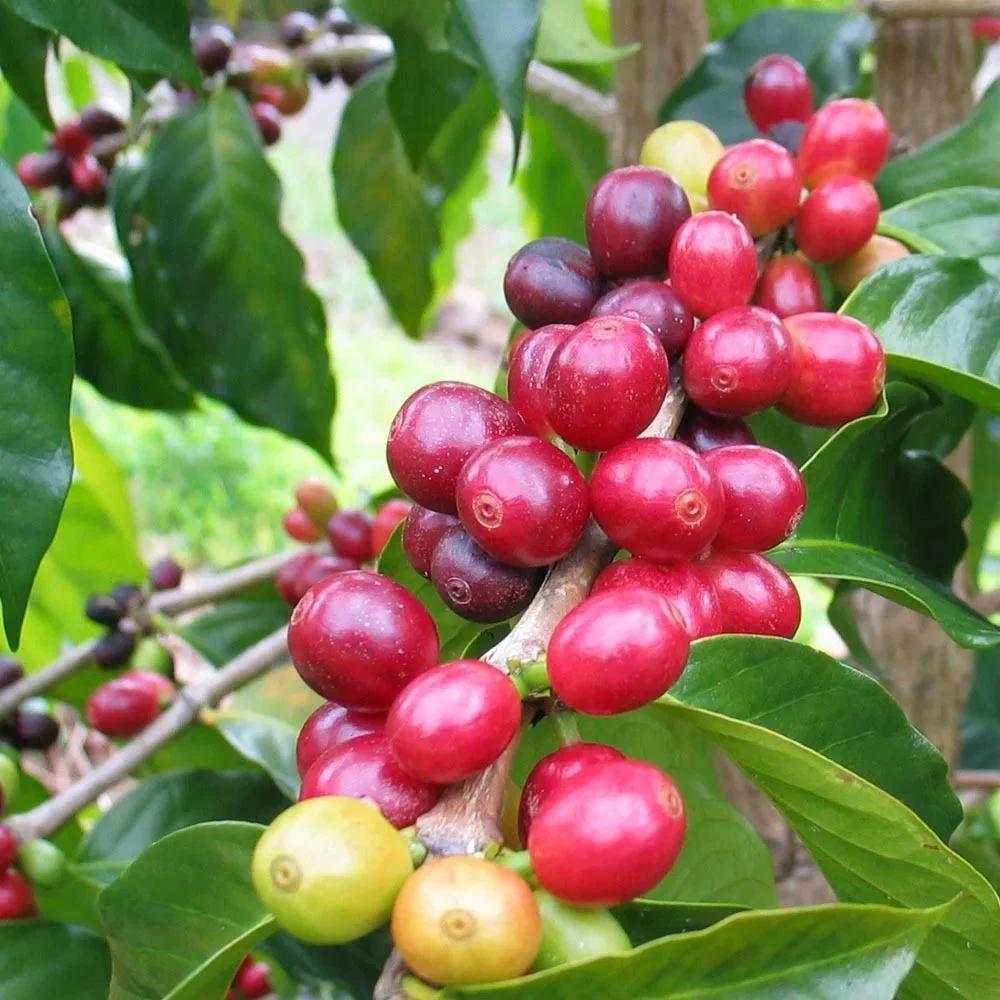
Catuai
Catuai is a cross between Mundo Novo and Caturra, and can be called a "second-generation hybrid." It inherits Caturra's advantage of a low tree height while making up for Caturra's weakness of fragile fruit; the fruit sets firmly and does not easily fall even in strong winds. The greatest regret is that its overall flavor is slightly more monotonous than Caturra. Catuai comes in red and yellow fruit types, and the red fruit has the better flavor.
Villa Sarchi
Villa Sarchi is a Bourbon mutation. This green-tipped dwarf natural mutant variety was discovered in Costa Rica in 1950 and subsequently underwent pedigree selection (selecting individual plants over several consecutive generations). However, this variety was not widely planted in Costa Rica, and in 1974 it was introduced to Honduras by the Honduran Coffee Institute (IHCAFE). Its aroma complexity is quite high, and it is suitable for medium-dark roasting. The dry aroma after grinding carries notes of perfume, floral nectar, and cherry, mixed with a sweet spice aroma similar to cinnamon.
Costa Rican Coffee Bean Processing Methods
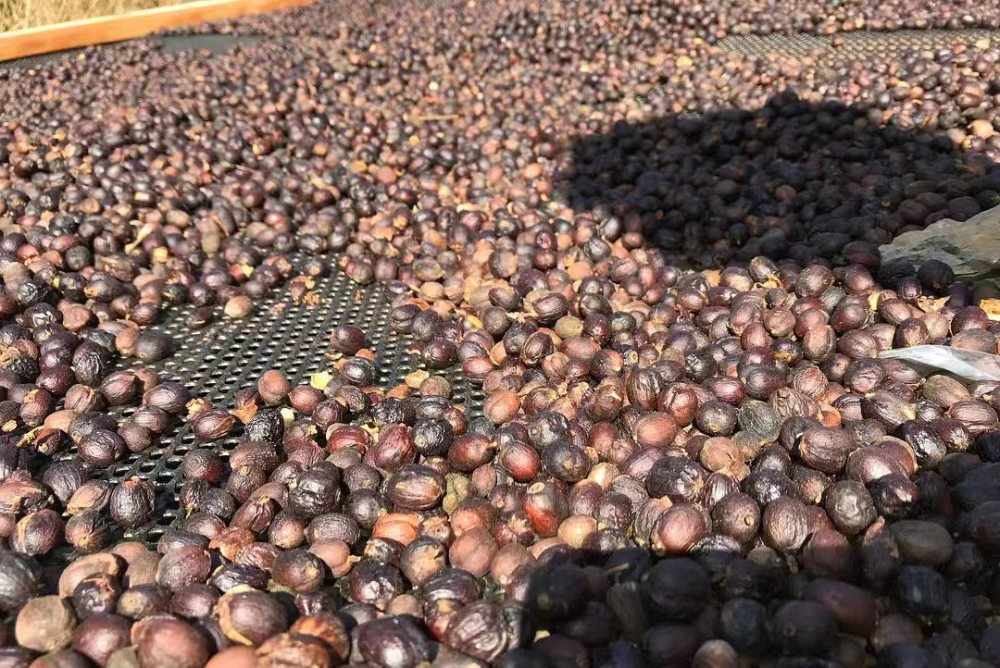
The most widely used processing method in Costa Rican producing regions is honey processing. So-called honey processing is the green bean production process of retaining mucilage (that is, pectin) for sun drying. After the outer fruit pulp of coffee beans is removed, a sticky gelatinous pectin layer remains on the surface. The traditional washed method uses clean water to wash it off, but some high-altitude origins are limited by water resources, so the method of directly drying was born.
Costa Rican honey-processed coffee beans retain the cleanliness of washed coffee; although brightness decreases somewhat, sweetness and a caramel-like mouthfeel are added. Depending on the degree of honey processing, local honey-processed beans are further divided into yellow honey, red honey, and black honey.
A simple summary is as follows:
Sweetness: black honey > red honey > yellow honey
Cleanliness: yellow honey > red honey > black honey
Balance: red honey = yellow honey > black honey
The above are the three major factors in the formation of Costa Rican coffee bean flavor compiled by Front Street Coffee, and we hope they help enthusiasts understand where the flavor comes from. Next, Front Street Coffee will use the commonly seen honey-processed coffee beans as an example to demonstrate the pour-over process.
Front Street Costa Rica Canet Musician Series Coffee Bean Bach Coffee
Country: Costa Rica
Region: Tarrazu
Altitude: 1950m
Processing method: raisin honey processing
Grade: SHB
Variety: H1
Front Street Costa Rica Canet Musician Series Mozart Coffee
Country: Costa Rica
Region: Tarrazu
Altitude: 1,800m
Processing method: raisin honey processing
Grade: SHB
Variety: H1
Front Street Coffee Costa Rican Coffee Bean Brewing Recommendations
Dripper: Hario V60#01
Dose: 15g
Coffee-to-water ratio: 1:15
Water temperature: 90°C
Grind size: medium-fine grind (80% passing through a Chinese standard No. 20 sieve)
Front Street Coffee brewing method: staged extraction.
First, use 30g of water to fully wet the coffee bed so that it rises into a "hamburger" shape. After 30 seconds of blooming, begin the second pour. For the second stage, Front Street uses a steady medium-fine stream of water poured in circles, and when the timer reaches 55 seconds, pour to 125g, then stop. Wait until the water level drops to two-thirds of the coffee bed before pouring the third stage. For the third stage, Front Street continues with a steady pour, finishing at 1 minute 55 seconds.
Front Street Bach Coffee Bean Brewed Flavor:
At high temperature it presents grape-like sweet acidity and a wine-like fermented feel; as the temperature gradually drops, it shifts to the juicy feel of red berries and the aroma of roses, with a caramel-like sweetness in the finish.
Front Street Mozart Coffee Bean Brewed Flavor:
It has berry and fermented aromas, with flavors of raisins and sweet orange on the palate. As the temperature changes, the fermented wine aroma and osmanthus aroma become more and more obvious.
The above are the pour-over Costa Rican coffee bean brewing parameters shared by Front Street Coffee, and we hope they help all enthusiasts brew the correct coffee flavor in future pour-over practice.
For more specialty coffee beans, please add the private WeChat Front Street Coffee, WeChat ID: kaixinguoguo0925
The above content is compiled by CoffeeHunters, a coffee news website.


