







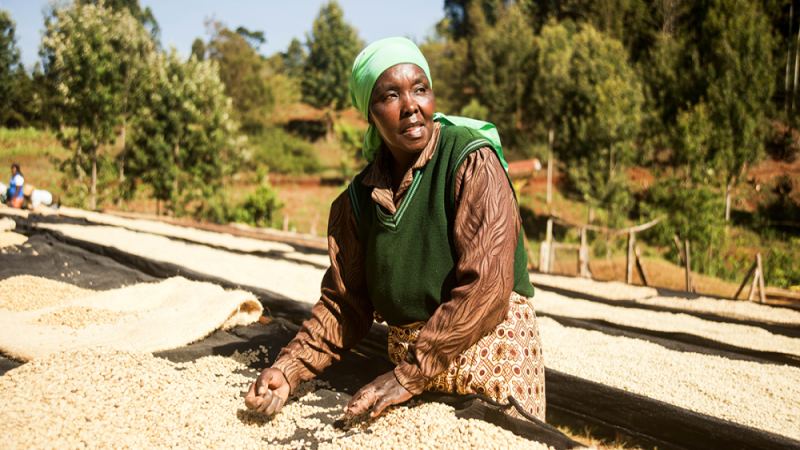
Why Is Kenya Coffee So Sour and How Can It Be Tamed?
Kenya coffee is known for bright acidity, and AA-grade beans can taste sharply sour to anyone used to milder cups. That acidity is variety-driven: SL28 and SL34, bred at the Scott Agricultural Laboratories after coffee arrived from Reunion Island in 1883, carry it naturally. A 72-hour washed process and careful roasting shape how much of it reaches the cup.
Terroir also matters. The core coffee producing regions of Nyeri, Muranga and Kirinyaga sit at high altitude on volcanic soil, and the grading and auction system sorts lots by bean size and cup quality. When a pour-over tastes too sour, raising water temperature slightly, grinding a touch finer, or slowing the pour can bring out sweetness and balance the acidity.
Kenyan coffee is famous for its bright acidity, but many enthusiasts who pick up AA-grade pour-over beans are often troubled by that powerful sourness. From the perspective of Front Street Coffee, this article systematically sorts out the development thread of Kenyan coffee—the refined management brought during the British colonial period, the breeding of SL28 and SL34, the unique grading and auction system, and the iconic 72-hour washed processing method. It also explains in detail the terroir differences of core producing regions such as Nyeri, Muranga, and Kirinyaga, and includes the roasting curves and pour-over brewing parameters of two Front Street Kenyan beans, helping you understand where the acidity comes from and how to make peace with it during brewing.
When it comes to African specialty beans, most people first think of Ethiopia and Kenya, the two major origins known for their acidity. This time Front Street Coffee focuses its attention on Kenya. Although it is right next to Ethiopia and also stands out for its acidity, the two present completely different directions in acidity. Front Street Coffee has always believed that Kenyan coffee could not have reached its current position without the history of British colonial rule. For local farmers, the colonial period indeed meant difficult living conditions, but at the same time it also left behind a set of refined industrial management methods, setting the direction for the later path of Kenyan coffee.
Kenyan Coffee
Located in eastern Africa, Kenya borders Ethiopia, the birthplace of coffee. It introduced coffee very late, not beginning cultivation until close to the 20th century, meaning coffee had almost traveled all the way around the world before returning to Africa. However, what Front Street Coffee sees is that although it started late, Kenya developed quite quickly. During the British colonial period, both the variety breeding system and the establishment of the grading system allowed Kenyan coffee to step by step enter the specialty market. Today Kenyan specialty coffee enjoys a global reputation, and Front Street Coffee attributes this to the following aspects:
1. Establishment of the breeding mechanism. In 1883, the British brought coffee into Kenya from Reunion Island; in 1922, Kenya established the Scott Agricultural Laboratories (Scott Labs, from which the names SL28 and SL34 come), specifically for coffee cultivation research. In the more than ten years after the laboratory was founded, SL28 and SL34, suitable for cultivation in local producing regions, were selected from 42 coffee varieties, giving the industry a good start.
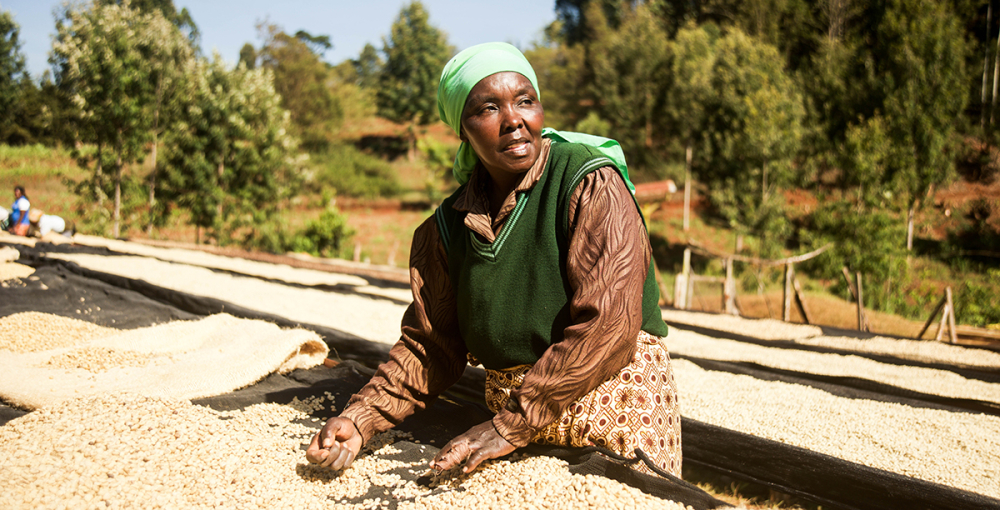
2. Government attention. In 1931, the Kenya Farmers' Cooperative Union and the Kenya National Coffee Board were established one after another, providing guidance for the coffee industry from both civil and official levels. In 1937, the Nairobi Coffee Exchange was established, and the auction system was launched along with it. Good beans could fetch good prices, and the price baseline was thus set. This year Kenya's Ministry of Agriculture also launched a 1.5 billion shilling coffee revitalization plan.
3. Determination of the grading system. Kenya classifies grades according to coffee bean size and cup performance. Based on bean size, shape, and hardness, from high to low they are AA or AA+, AB, PB, C, E, TT, T. For AA-grade and AB-grade green beans, exporters also add a special grading based on cupping results (not officially recognized by Kenya), from high to low TOP, PLUS (+), FAQ.
AA Plus (AA+): AA grade with particularly outstanding cup quality (flavor, mouthfeel).
AA beans: size (Screen Size) 17-18 mesh.
AB beans: size (Screen Size) 15-16 mesh, accounting for most of production.
C beans: those smaller than AB in size (Screen Size).
TT: light beans blown out from AA and AB grade beans using an airflow sorter.
T: light beans blown out from C grade beans using an airflow sorter.
E Elephant Bean: large mutated beans formed by two beans joined together, also called elephant ear beans.
PB Peaberry: classified by appearance, unrelated to flavor and weight.
For AA-grade and AB-grade green beans, exporters also added a special grading based on cupping results (not officially recognized by the Kenyan state), from high to low TOP, PLUS (+), FAQ. The Kenyan Asali flavor level on Front Street Coffee's bean list has reached the TOP grade. But as mentioned earlier, this is not official recognition, and not every Kenyan producing-region bean Front Street Coffee purchases carries a flavor grade, so there is no need to dwell too much on this point. Generally speaking, reaching AA grade and AB grade already means the flavor is tacitly regarded as quite high quality.
4. K72 processing method. The unique acidity of Kenyan specialty coffee is inseparable from its excellent processing method. Conventional washing selects highly mature fruit, removes the skin and pulp, then soaks it in a water tank to ferment and remove the mucilage; this process usually does not exceed 36 hours, while Kenya's fermentation time reaches 72 hours. After that it is dried until the moisture content drops to 12%. Front Street believes that Kenya's unique washing method allows the beans to show brighter acidity and a fuller juicy feel.
Kenyan Coffee Producing Regions
Kenya's coffee producing regions are mainly distributed in the central and western areas. The main central producing regions include Kiambu, Nyeri, Kirinyaga, Muranga, Embu, Machakos, Ruiru, and Thika; in the west there are Kisii and the Bungoma region located on Mt. Elgon.
Front Street Coffee regularly updates the coffee producing regions on its bean list, and Kenya is naturally among them. Last month Front Street Coffee purchased a batch of Kenyan beans from different producing regions. After roasting, cupping, pour-over, and other stages of tasting, it was clear that each producing region has its own character. The specialty producing regions mainly come from the following: Nyeri, Kirinyaga, Murang'a.
Nyeri
The Nyeri producing region is located in central Kenya and is home to the extinct volcano Mount Kenya. The red soil here nurtures Kenya's finest coffee. Agriculture holds an extremely high status in the area, and coffee is its most important crop. In the Nyeri producing region, cooperative unions made up of smallholder farmers are more common than large estates.
Altitude: 1,200 to 2,300 meters
Harvest period: October to December (main crop), June to August (secondary crop)
Varieties: SL-28, SL-34, Ruriu11, Batian.
Muranga
The Muranga producing region belongs to Central Province and has about 100,000 coffee farmers. This inland producing region was one of the first places missionaries chose to settle, because the Portuguese prohibited them from living in the coastal areas. It also benefits from volcanic soil, and the number of smallholder coffee farmers is greater than that of estates.
Altitude: 1,350 to 1,950 meters
Harvest period: October to December (main crop), June to August (secondary crop)
Varieties: SL-28, SL-34, Ruiru11, Batian
Kirinyaga
The Kirinyaga producing region sits on the slopes of Mount Kenya and is adjacent to the Nyeri producing region. It is world-famous for coffee with strong flavor, rich layers, and a solid mouthfeel, and together with the Nyeri producing region it is recognized as one of Kenya's two best producing regions at present. Producers in this region are mostly smallholder coffee farmers who join cooperatives, and the cooperatives play an integrating role, providing washed processing plants; the coffee farmers send the fruit to the cooperatives' processing plants for processing.
"Kirinyaga" originally referred to Mount Kenya itself, but when the British colonized, they found the name hard to remember, so they changed the mountain's name to "Mt Kenya" and no longer called it "Kirinyaga." Mount Kenya is Africa's second-highest peak. Although it is located in the tropics, its summit is covered in snow year-round, and the original meaning of Kirinyaga is precisely "white peak." Mount Kenya is not only a United Nations protected area; the surrounding foothills and grasslands also attract groups of wild animals foraging, and it is one of tourists' favorite scenic spots. "Kirinyaga" comes from the Kikuyu people and means "white mountains," regarded as the place where the god of heaven resides. The Kikuyu are Kenya's largest ethnic group, accounting for one-fifth of the total population.
Altitude: 1,300 to 1,900 meters
Harvest period: October to December (main crop), June to August (secondary crop)
Varieties: SL-28, SL-34, Ruiru11, Batian.
Kenyan Auction System
As Front Street Coffee mentioned earlier, during colonial rule local farmers actually did not gain much from coffee, which can be considered a dark moment in the history of Kenyan coffee cultivation. In 1931, in order to help coffee farmers obtain better prices and income and no longer be constrained by distant traders, the government established the Kenya Farmers' Cooperative Union and the Kenya National Coffee Board, and set up an auction mechanism. In 1937, the Nairobi Coffee Exchange was established. By this time the auction trading system had become more widespread and received broad support.
Most coffee beans are uniformly graded and inspected by the Kenya Coffee Board and then sold at auction. The public auction system can be traced back to before 1934. The auction adopted an agent system, and Kenya had 50 licensed agents who sent sample beans to their respective clients for cupping; whichever coffee the client favored would be bid on at auction by the agent. But this method seemed to encourage middlemen agents and instead eroded farmers' incomes. So in 2006 Kenya opened up 32 independent sales agents who could directly contact foreign coffee buyers without going through the auction.
Of course, all of this must meet the Kenya Coffee Board's standards for quality, storage, bank guarantees, and so on. The two systems operated in parallel, and after years of development they formed an extremely transparent auction distribution system—the better the quality of the coffee, the better the price it can obtain through cupping, which also encourages more cooperatives and estates to participate. Front Street Coffee also pays close attention to the coffee auction market, because this not only helps understand changes in the local coffee market, but the improvement of the auction mechanism ultimately benefits not only coffee farmers but also buyers from all over the world.
Coffee beans in Kenya mainly have two trading models:
① Nairobi Coffee Exchange auction (central auction system), through which about 85% of coffee beans are traded. Since the establishment of the auction system in the 1930s, the vast majority of Kenyan coffee has been sold in this way. Coffee auctions are held every Tuesday during the harvest season. It evolved from an "open outcry" auction system, in which each trader bids by pressing an electric trigger. Through this system, because agents compete with one another, prices for high-quality, highly popular coffee soar.
② Direct trade (usually called the "second window"), through which only about 15% of coffee beans are traded. After 2006, the Kenyan government allowed farmers and foreign buyers (such as roasters or importers) to trade directly, and they could discuss and determine a price different from the auction before or during the harvest. Some exporters also buy coffee directly from the relevant marketing agents or factories, using the previous week's auction prices for specific grades as a reference for negotiation. Direct trade can allow farmers producing high-quality coffee to earn more income. When direct trade is not feasible, they return to the exchange to sell at auction.
Kenyan Coffee Cultivation Models
Kenyan coffee consists of two main cultivation sectors: large plantations, with more than 3,000 large farms, accounting for about 25% of Kenya's coffee-growing land; the other 75% is agricultural cooperatives, totaling 270 cooperatives made up of about 700,000 smallholder farmers.
In the 1960s, smallholder cooperatives began developing and building shared processing plants, enabling them to carry out coffee harvest processing like large plantations. Front Street Coffee believes this model allows coffee farmers to focus more on coffee cultivation and production. Ethiopia's main coffee cultivation model is also smallholder cooperatives. A batch of Front Street Yirgacheffe Konga Cooperative coffee beans that Front Street Coffee purchased some time ago also showed outstanding flavor.
After several rounds of tasting, Front Street Coffee ultimately selected only two or three from the more than ten different producing-region beans at the beginning to be listed. It is not that the other beans are bad. Front Street Coffee's original intention is not to sell, but in this process to understand each coffee producing region, different varieties in the same producing region, different processing methods for the same variety, and to build a corresponding database, as well as comparisons between different producing regions. Front Street Coffee hopes to let more coffee lovers understand the world of coffee.
Front Street Kenya Little Tomato Coffee Beans
Producing region: Thika, Kenya
Processing plant: Asali Honey Processing Plant
Altitude: 1,550-1,750 meters
Grade: AA TOP
Varieties: SL28, SL34
Processing method: Kenyan 72-hour washed
Front Street Coffee Roasting Record
These Front Street Kenya Little Tomato beans are plump and round. In order for Front Street Coffee to fully express their bright, mellow acidity, the roast level used is light roast. Yangjia 800N semi-direct fire, charge amount 480g: charge at a drum temperature of 160°C, air damper set to 3, heat power 120. Turning point: 1'28". When the temperature rises to 130°C, set the air damper to 4. Roast until 6'00'', temperature 154.6°C, the bean surface turns yellow, the grassy smell completely disappears, and dehydration is complete.
When ugly wrinkles and dark streaks appear on the bean surface, and the toast aroma clearly turns into coffee aroma, this can be defined as the prelude to first crack. At this time, listen clearly for the sound of the first crack. At 9'28'' first crack begins, the air damper remains unchanged, first crack development time is 2'20'', and the beans are dropped at 193.8°C.
Front Street Coffee Cupping Report
Front Street Coffee Brewing Suggestions
Dripper: Hario V60
Water temperature: 90°C
Dose: 15 grams
Coffee-to-water ratio: 1:15
Grind size: EK43s setting 10 (80% passing through China standard No. 20 sieve)
Front Street Coffee brewing method: use 30 grams of water for a 30-second bloom, pour in a small stream in circles until 125 grams, then pause in stages; when the water level is about to expose the coffee bed, continue pouring until 225 grams and stop; when the water level is about to expose the coffee bed again, remove the dripper. (Timing starts at the beginning of the bloom.) Extraction time is 2'00".
[Front Street Kenya Little Tomato] Flavor description: wet aroma has ripe tomato and floral notes; on the palate, cherry tomato and smoked plum flavors, bright acidity, clean and rich mouthfeel, prominent sweetness in the mid-palate, juicy feel, finish of berry aroma and brown sugar sweetness, with green tea aroma.
Front Street Kenya Gathaithi Cooperative AB Coffee Beans
Producing region: Gathaithi Cooperative, Nyeri, Kenya
Processing plant: Gathaithi Processing Plant
Altitude: 1825m
Varieties: SL28&SL34
Processing method: K72 washed
Front Street Coffee Roasting Suggestions
The Front Street roaster uses Yangjia 800N semi-direct fire, charge amount 480g: charge at a drum temperature of 160°C, air damper set to 3, heat power 120. Turning point: 1'28". When the temperature rises to 130°C, set the air damper to 4. Roast until 6'00'', temperature 154.6°C, the bean surface turns yellow, the grassy smell completely disappears, and dehydration is complete.
When ugly wrinkles and dark streaks appear on the bean surface, and the toast aroma clearly turns into coffee aroma, this can be defined as the prelude to first crack. At this time, listen clearly for the sound of the first crack. At 9'28'' first crack begins, the air damper remains unchanged, first crack development time is 2'20'', and the beans are dropped at 193.8°C.
Front Street Coffee Cupping Report
Front Street Coffee Brewing Suggestions
Dripper: Hario V60
Water temperature: 90°C
Dose: 15 grams
Coffee-to-water ratio: 1:15
Grind size: EK43s setting 10 (80% passing through China standard No. 20 sieve)
Front Street Coffee staged extraction: use 30 grams of water for a 30-second bloom, pour in a small stream in circles until 125 grams, then pause in stages; when the water level is about to expose the coffee bed, continue pouring until 225 grams and stop; when the water level is about to expose the coffee bed again, remove the dripper. (Timing starts at the beginning of the bloom.) Extraction time is 2'02".
[Front Street Kenya Gathaithi Coffee] Flavor description: obvious smoked plum and cherry tomato, almond in the mid-palate, honey in the finish, juice-like mouthfeel, bright acidity.
For more specialty coffee beans, please add the private WeChat Front Street Coffee, WeChat ID: kaixinguoguo0925
The above content is compiled by CoffeeHunters, a coffee news website.


