








A Closer Look at 90+ Candle Light Coffee
90+ Candle Light Coffee is a notable offering from Ninety Plus Coffee, a US specialty coffee supplier founded in 2006. This particular coffee is produced in the Sidama region of Ethiopia and is known for its distinct flavor profile, which includes notes of nectarine, mango, and cream. The name 'Candle Light' suggests a bright and delicate character that many coffee enthusiasts appreciate.
The production of 90+ Candle Light Coffee involves a raised-bed natural process, which contributes to its complex flavor. The green coffee beans are carefully selected and processed to highlight the unique terroir of the Sidama region. Roasting suggestions often aim to preserve the fruity and creamy notes, making it a favorite among those who enjoy specialty coffee with a rich and layered taste.
90+ Drima Zede is a legendary bean in the specialty coffee world, from the American company Ninety Plus Coffee, produced in the Sidama region of Ethiopia. Front Street Coffee has carried this bean for many years and knows well its alluring flavors of nectarine, mango, and cream. This article will start with the background of the 90+ brand, then cover the meaning of the name Drima Zede, the terroir of its origin, the raised-bed natural process, green bean characteristics, roasting suggestions, cupping report, and Front Street's brewing insights, presenting a complete profile of Drima Zede for coffee lovers.
For more specialty coffee knowledge, please follow: Front Street Coffee (Frontsteet Coffee)
There is a company in the United States that is renowned in the specialty coffee field. Front Street believes that almost any coffee shop of a certain scale can be seen offering beans they produce, and at quite high prices—this is Ninety Plus Coffee, translated into Chinese as 90+. Every product from this company can be called the cream of the crop, and Drima Zede coffee beans are probably one of its most well-known representative works. Front Street has sold this bean for many years and knows its characteristics inside out. Front Street decided to carry this 90+ Drima Zede Sidama coffee bean because it presents a unique mouthfeel of nectarine, mango, and cream. Front Street Coffee (FrontStreet Coffee) currently offers more than 50 coffee beans. Why maintain such a rich variety? On one hand, Front Street has a thorough understanding of these beans and knows their unique qualities; on the other hand, they all carry clear regional flavors, and as a member of the world's coffee origins, Front Street feels a responsibility to let more people know them. Now let's follow Front Street Coffee (FrontStreet Coffee) into this 90+ Drima Zede coffee bean.
What is 90+ Ninety Plus?
Ninety Plus Coffee is a specialty coffee supplier from the United States, founded in 2006. In the ten years after its founding, 90+ impressed coffee professionals worldwide with its unique charm and sparked an unprecedented wave of specialty coffee enthusiasm. Since launching its first coffee in 2007, it has been the preferred treasure of coffee industry experts and competition contestants. Today, Ninety Plus has become synonymous with the world's top specialty coffee, with taste and quality far surpassing other famous luxury coffees. "90+" does not mean all coffees scoring above 90 points. Front Street Coffee (FrontStreet Coffee) believes that good coffee output is not stable, sometimes appearing at different estates and each possessing different flavor characteristics. "90+" actually represents a top-tier coffee series containing 13 flavors, and these coffees come only from the American specialty coffee creator Ninety Plus Coffee.
Ninety Plus's green beans all come from Ethiopian native varieties, including the Gesha from Panama estates, which was also transplanted from Ethiopia's Heirloom original species. Processing is Ninety Plus's strength. They separate coffees one by one according to variety, microclimate, and harvest timing, cupping each one, and design special processing plans for each flavor to achieve specific flavor characteristics—like a major designer pouring heart and soul into completing a work that is almost a piece of art. Natural products undergo extensive refinement and improvement, ultimately presented to everyone in their most beautiful form.
The Story of 90+ Drima Zede Coffee Beans Name origin: Drima Zede (Drima Zede, the name of Front Street's Sidama coffee bean) means "Best Approach" in the local dialect. According to materials provided by the original producer, this Yirgacheffe is a specially developed product series that 90+ developed through years of experience. The ancient natural process makes it difficult to obtain pure flavors, but with 90+'s technical support, Drima Zede hand-selects only the most mature coffee cherries, uses raised-bed natural drying, and during the drying process tirelessly turns and stirs to ensure uniformity. The final product has a very transparent and pure mouthfeel, with a wide range of changes from hot to cold, and the aromas of fruit, floral notes, and oak barrel are very charming.
Front Street Coffee (FrontStreet Coffee)—Sidama Ninety Plus Drima Zede
Country: Ethiopia
Region: 90+SNNP, Sidama
Altitude: 1750-2000 meters
Processing Method: Natural Process
Variety: Ethiopian Heirloom
Drima Zede Coffee Beans Sidama Region Sidama is located on the highlands at the southernmost tip of Ethiopia, at an altitude between 4,600-7,200 feet (Sidamo Province). It is a famous specialty coffee region in southern Ethiopia, bordering Kenya, located southeast of Jima and directly south of the capital. Coffee from this region usually has prominent sweetness and is loved by most people, with an annual output of about 225,000 bags/60kg.
The coffee flavors of Sidama are very diverse. Different soil types, microclimates, and countless native coffee varieties, plus the towering mountains, highlands, plateaus, valleys, and plains within the region, create a rich and varied terrain. The geology here belongs to fertile, well-drained volcanic soil, with soil depth close to two meters, and the surface soil is dark brown or brown. The greatest advantage here is that soil fertility is maintained through organic matter cycling, with fallen leaves from surrounding trees or plant residues serving as fertilizer.
Raised-Bed Natural Process During harvesting, 90+ picks only fully ripe dark red coffee cherries. Before sun-drying, the beans first undergo defect screening at the processing station to make size and ripeness appear more uniform. Then they are sun-dried using raised wooden frames or entire raised beds, which prevents the beans from touching the ground and absorbing off-flavors. During the sun-drying process, careful attention is needed to let the coffee beans lose moisture evenly; every three to five days, workers manually remove moldy and defective beans. Therefore, by the time sun-drying is complete and the beans enter the stage of removing peel and pulp, a sheet of brilliantly deep-red sun-dried coffee cherries has already reached a grade with very few defects. Front Street believes that raised-bed sun-dried coffee beans are less likely than traditional ground-dried beans to develop earthy and other off-flavors.
Front Street Coffee (FrontStreet Coffee) Sidama Drima Zede Green Coffee Bean Analysis
Sidama green coffee beans are slightly gray, coarse in some places and small in others, with both soft and intense acidity, moderate body, and sweet spicy aroma. It is one of the garden coffees of the southern Ethiopian highlands. Unlike general African coffees, Sidama has clear fruity acidity, a smooth mouthfeel, and delicate floral and herbal aromas.

Front Street Coffee (FrontStreet Coffee) Sidama Drima Zede Coffee Roasting Suggestions
The Front Street Coffee (FrontStreet Coffee) barista uses a fast-roasting profile. The drum temperature is raised to 200°C before charging, airflow set to 3. After 30 seconds, adjust heat to 150°C, airflow unchanged, turning point at 1'32", 103.7°C, dehydration time at 5'21", when the bean surface turns yellow and the grassy smell completely disappears; adjust heat once at 150°C, dehydration complete, adjust heat to 100°C, airflow to 4;
At 8 minutes 45 seconds, ugly wrinkles and dark streaks appear on the bean surface, and the toast aroma clearly turns into coffee aroma, which can be defined as the prelude to first crack. First crack begins at 9'00. At this point, listen clearly to the sound of first crack, reduce heat to 80°C, open airflow fully to 5 (adjust heat very carefully, not so low that there is no cracking sound). 1 minute 55 seconds after first crack, drop at 195°C. Front Street Coffee (FrontStreet Coffee) Sidama Drima Zede Coffee Cupping Report Front Street Coffee (FrontStreet Coffee) conducts cupping within 8-24 hours after sample coffee beans are roasted. The cupping bowls generally used by Front Street Coffee (FrontStreet Coffee) baristas are 200ml ceramic bowls. The water temperature used for cupping is 94°. The grind size is controlled so that the pass rate through a No. 20 standard sieve (0.85 mm) is 70%-75%. The ratio is 11 grams of coffee powder to 200 ml of hot water, i.e., 1:18.18, so that the extracted concentration falls exactly within the golden cup range of 1.15%-1.35%, with a steeping time of 4 minutes.
Dry aroma: citrus Wet aroma: nectarine Flavor: nectarine, tropical fruit, cream, mango, citrus Front Street Coffee (FrontStreet Coffee) Sidama Drima Zede Coffee Brewing Insights
Dripper: V60 #01
Water temperature: 90-91°C
Dose: 15 grams
Coffee-to-water ratio: 1:15
Grind size: fine granulated sugar/BG#6S
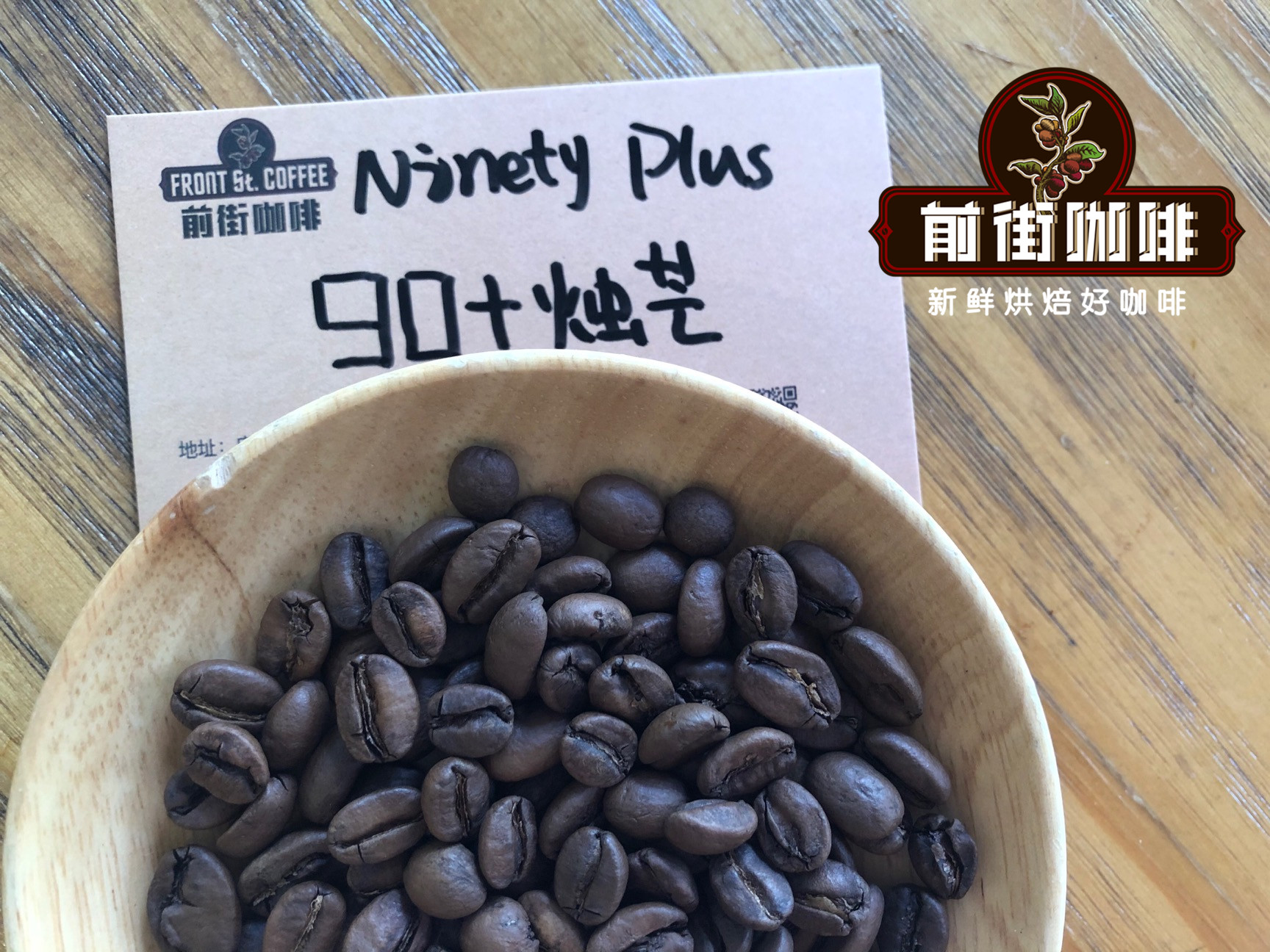
Front Street Coffee (FrontStreet Coffee) brewing method: use 30 grams of water for blooming, blooming time about 30 seconds, pour in a small stream in circles around the center to 125 grams in stages, then when the water level drops and is about to expose the coffee bed, continue pouring to 225 grams to finish; when the water level drops and is about to expose the coffee bed, remove the dripper. (Start timing at the beginning of blooming.) Extraction time is 2'00". Brewing flavor: obvious berry and berries, nectarine, cream, smooth, balanced acidity and sweetness, tropical fruit, medium-high acidity, medium sweetness, moderate finish.
The above content is compiled by CoffeeHunters, a coffee news website.


