







Why Does Coffee Beans Origin Change Your Pour-Over Recipe?
Four origin representatives shape most single-origin pour-over advice: Ethiopian Yirgacheffe, Indonesian Mandheling, Kenya, and Brazil. Each needs its own freshness, grind size, water temperature, and coffee-to-water ratio. Beans rest three to four days after roasting, then sit in their optimal window up to about 15 days; using them within 30 days of the roast date keeps flavor intact.
Grind size can be calibrated with a standard sieve, and coffee-to-water ratios follow SCA Golden Cup extraction theory, which explains the taste shifts between stronger and weaker brews. Yirgacheffe and other washed lots reward finer adjustments, while Mandheling's fuller body tolerates coarser grinds and slightly lower temperatures.
Yirgacheffe, Mandheling, Kenya, and Brazil are the four major origins most familiar to coffee lovers, and each has its own brewing approach. In this article, Front Street will explain the four key elements of pour-over—freshness, grind size, water temperature, and coffee-to-water ratio—and then give specific brewing parameters and techniques for representative beans from each of the four origins. The article will also explain the principle of bean resting and degassing, how to calibrate grind size with a standard sieve, and the taste differences brought by different coffee-to-water ratios under the SCA Golden Cup extraction theory, helping you brew these four common single-origin coffees better.
Ethiopian Yirgacheffe, Indonesian Mandheling, Kenya, and Brazil—these four types of single-origin coffee beans are among the origin representatives we discuss most often in daily life. To brew each of them excellently actually requires different considerations. Front Street will now discuss the brewing methods for these four major origin coffee beans one by one.
Before formally getting into brewing, Front Street will first sort out the four core elements of pour-over: freshness, grind size, coffee-to-water ratio, and brewing water temperature.
|Coffee Bean Freshness
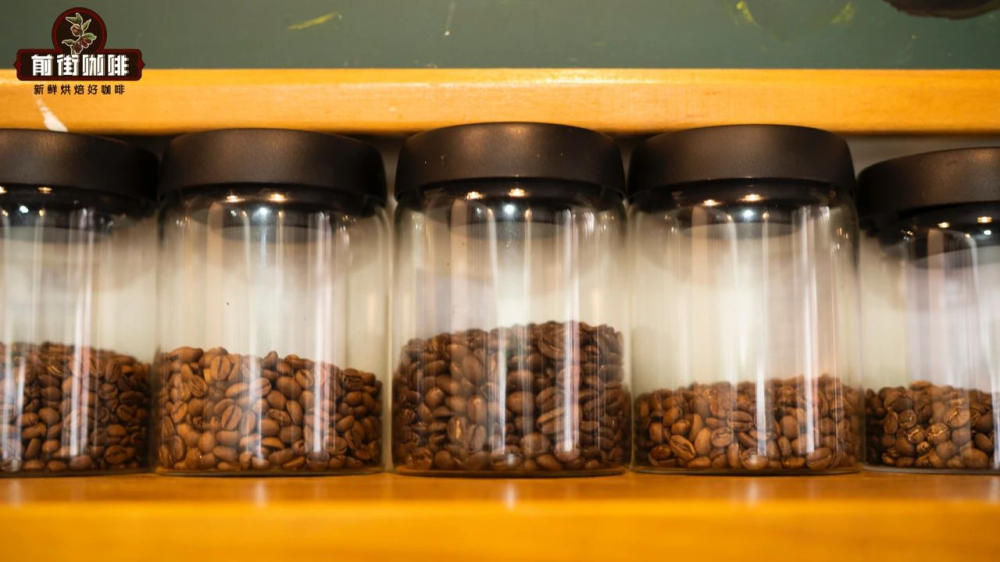
Are coffee beans better the fresher they are? The answer is no, but beans that are not fresh enough definitely will not do. Front Street Coffee often emphasizes that the most critical prerequisite for brewing a cup of coffee is the freshness of the beans. Freshness here refers to the optimal flavor period after the coffee beans finish roasting and undergo 3–4 days of resting, up to within 15 days after roasting is completed. Although the shelf life of coffee beans is often labeled as one year, let alone storing them for a year, even storing them for only one month means much of the flavor inside has already been lost. Therefore, after the beans arrive, they should be used up within 30 days as much as possible; longer storage is not more ideal.
What is bean resting?
Freshly roasted coffee beans from Front Street Coffee release a large amount of aromatic components and carbon dioxide. These gases escape through the small pores formed by cracking during roasting. If carbon dioxide is allowed to escape during grinding, then during brewing it will hinder contact between the coffee grounds and water, causing under-extraction. As time passes, the carbon dioxide layer gradually becomes thinner and less abundant, the contact area between water and coffee grounds increases, and the coffee's flavor becomes more and more complete. Therefore, many people do not call it bean resting, but prefer to call it the process of releasing gas or degassing.
|Coffee Bean Grind Size
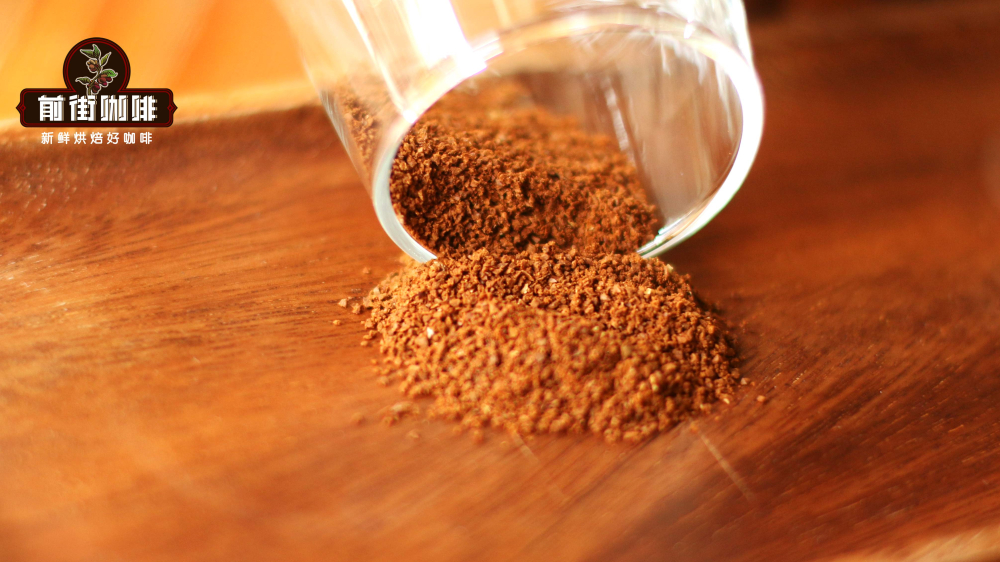
Grind size is the root cause of many pour-over brewing problems. A shop may give you a grind size reference or comparison object, but everyone uses a different grinder, and you also need to pay attention to whether your own grinder grinds evenly, whether there are many fines, and what the particle shape is like. Even with the same grinder model, the ground powder state can differ (different usage durations cause grinding deviations), let alone the fact that you and the merchant are not using the same machine.
The way to solve this problem is to unify the standard. For example, Front Street uses a national standard No. 20 (850-micron) standard sieve for sieving calibration. According to SCAA cupping standards, cupping grind size requires a No. 20 standard sieve pass-through rate of 70–75%. So when Front Street Coffee brews light-roasted pour-over coffee, the grind size is generally controlled within the 75–80% range.
|Coffee Bean Brewing Water Temperature
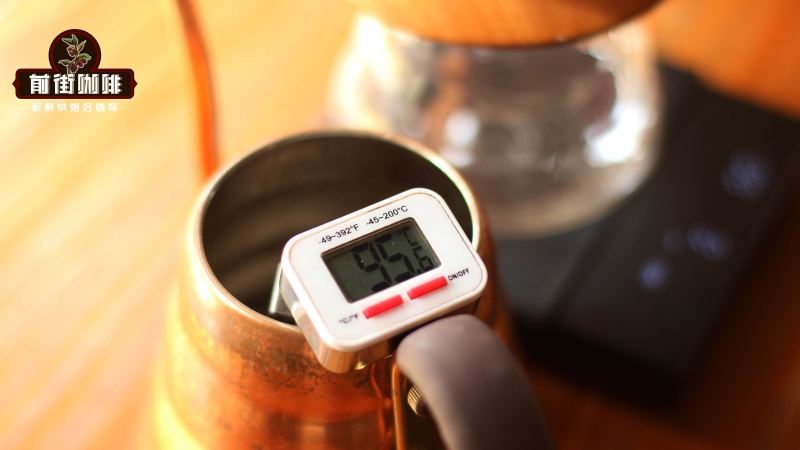
The water temperature for pour-over coffee is usually recommended to be between 86 and 93°C. Lighter-roasted beans (such as Front Street Ethiopia Yirgacheffe Gedingding coffee beans) are suitable for 90 to 91°C; darker-roasted beans (such as Front Street Coffee's Front Street PWN Golden Mandheling) use a lower water temperature, about 88 to 89°C. In other words, the darker the roast, the water temperature is controlled between 86 and 89°C; the lighter the roast, the water temperature falls between 90 and 93°C.
|Brewing Coffee-to-Water Ratio
According to the SCA Golden Cup extraction theory, different pour-over water-to-coffee ratios bring taste differences:
[Strong flavor] 1:10–1:11, i.e. 1:12.5–1:13.5 under the Golden Cup standard
[Moderate flavor] 1:12–1:13, i.e. 1:14.5–1:15.5 under the Golden Cup standard
[Light and refreshing] 1:14–1:16, i.e. 1:16.5–1:18.5 under the Golden Cup standard
This is also why Front Street has always recommended a 1:15 coffee-to-water ratio. Combining the extraction parameters given by the SCA above, Front Street summarizes several points:
1. The larger the coffee-to-water ratio, the lighter the coffee taste; the smaller the coffee-to-water ratio, the stronger the coffee taste.
2. Increasing the amount of water to widen the coffee-to-water ratio brings more flavor-contributing substances into play, but the taste is lighter; reducing the amount of water to narrow the coffee-to-water ratio means fewer flavor substances, but the taste is richer.
3. Increasing the coffee dose to narrow the coffee-to-water ratio reduces the extraction of large-molecule substances in the final stage of the coffee while making the taste stronger; reducing the coffee dose to widen the coffee-to-water ratio can extract more complete flavor substances before reaching the limit, while lowering the intensity.
Now that the four elements have been explained, let's specifically discuss how to brew these four single-origin coffee beans: Front Street Yirgacheffe, Front Street Indonesian Mandheling, Front Street Kenya, and Front Street Brazil.
| Front Street Yirgacheffe Coffee Beans
Through cupping coffee beans from the Yirgacheffe origin, Front Street Coffee believes that the beans from this origin are bright and clear, full of fruit aroma, with elevated acidity, giving a light and refreshing drinking experience. Therefore, when roasting Front Street Yirgacheffe coffee beans, Front Street's roaster uses a medium-light roast to highlight the floral and fruity flavor characteristics of this origin.
Front Street Ethiopia Yirgacheffe Gedingding Coffee Beans
Origin: Yirgacheffe Gedeo Zone
Producer: Gedingding Cooperative
Altitude: 1900-2300m
Variety: Local heirloom
Processing method: Natural processing
Grade: G1
Front Street Yirgacheffe Origin Coffee Bean Brewing Parameters & Brewing Technique
Dripper: V60
Coffee dose: 15g
Coffee-to-water ratio: 1:15
Water temperature: 90°C
Grind size: Medium-fine grind (Chinese standard No. 20 sieve pass-through rate 78%)
Front Street brewing technique: Three-stage extraction. First use 30g water to bloom for 30 seconds, then pour in a small stream in circles until 125g and pause, wait for the water level to drop and almost expose the coffee bed, then continue pouring until 225g and stop, and when the water level drops again and is about to expose the coffee bed, remove the dripper. (Timing starts from the beginning of blooming) Extraction time is 1'55".
Brewing flavor: Citrus and black tea on the entry, with cream, caramel, and almond in the aftertaste as the temperature changes, obvious sweet finish, clean and sweet mouthfeel.
|Front Street Indonesian Mandheling Coffee Beans
Through cupping Indonesian Mandheling coffee beans, Front Street Coffee found that Front Street Indonesian Mandheling's herbal spice aroma lingers in the nasal cavity for a long time, and the coffee has high body and low acidity. Therefore, Front Street's roaster uses a medium-dark roast for Front Street Mandheling coffee beans from the Indonesian origin to present the rich flavor of this origin.
Front Street Front Street PWN Golden Mandheling Coffee Beans
Origin: Gayo Mountain, Aceh, Sumatra
Altitude: 1100-1600 meters
Variety: Ateng
Grade: G1, triple hand-sorted
Processing method: Wet-hulled
Front Street Indonesian Origin Coffee Bean Brewing Parameters & Brewing Technique
Dripper: Kono dripper
Water temperature: 88°C
Coffee dose: 15 grams
Coffee-to-water ratio: 1:15 coffee-to-water ratio
Grind size: Medium-fine grind (Chinese standard No. 20 sieve pass-through rate 73%)
Front Street Coffee uses staged extraction, also called three-stage brewing: use 30g water to bloom for 30 seconds, pour in a small stream in circles until 125g and pause, when the water level drops and is about to expose the coffee bed continue pouring until 225g and stop, when the water level drops and is about to expose the coffee bed remove the dripper. (Timing starts from the beginning of blooming) Extraction time is 2'15".
Brewing flavor: Layered and varied, rich and clean, highly balanced, intense nut and caramel aroma, with chocolate notes, lasting finish.
|Front Street Kenya Coffee Beans
Through cupping Front Street Kenya coffee beans, Front Street Coffee believes that its berry juice sensation can bring a full mouthfeel. The most special thing about Kenyan coffee is that while the acidity is bright, it can also maintain fullness in the mouth, which is also where it differs from coffee beans from the Ethiopian origin.
Front Street Kenya Asalia Coffee Beans
Origin: Thika, Kenya
Processing station: Asali Honey Processing Station
Altitude: 1550-1750 meters
Grade: AA TOP
Variety: SL28, SL34
Processing method: Kenyan 72-hour washed
Front Street Kenya Origin Coffee Bean Brewing Parameters & Brewing Technique
Dripper: Hario V60
Coffee dose: 15g
Coffee-to-water ratio: 1:15
Water temperature: 91°C
Grind size: Medium-fine grind (Chinese standard No. 20 sieve pass-through rate 77%)
Front Street Coffee uses staged extraction: in the first stage, pour 30g water to bloom for 30 seconds, then pour 95g (electronic scale shows about 125g), finishing in about 1 minute; when the water level drops to 2/3 of the coffee bed, pour the remaining 100g (electronic scale shows about 225g), finishing in about 1 minute 40 seconds. Drip filtration is completed at 2'00", remove the dripper, and extraction ends.
Brewing flavor: Dark plum and cherry tomato on the entry, with strong and full-bodied acidity, prominent mid-palate sweetness, juicy sensation, and an aftertaste of berry aroma and yellow sugar sweetness accompanied by green tea aroma.
|Front Street Brazil Coffee Beans
Through cupping Front Street Brazil coffee beans, Front Street Coffee found that their nut and cocoa aromas are very enticing, and the coffee has high body, low acidity, and obvious sweetness. Therefore, Front Street's roaster uses a medium-dark roast for coffee beans from the Brazilian origin to present the rich and distinctly sweet flavor of this origin.
Front Street Brazil Queen's Farm Yellow Bourbon Coffee Beans
Origin: São Paulo State, Brazil
Farm: Queen's Farm
Altitude: 1400-1950m
Variety: Yellow Bourbon
Processing method: Semi-washed/natural
Front Street Brazil Origin Coffee Bean Brewing Parameters & Brewing Technique
Dripper: Kono dripper
Water temperature: 88°C
Coffee dose: 15 grams
Coffee-to-water ratio: 1:15 coffee-to-water ratio
Grind size: Medium-fine grind (Chinese standard No. 20 sieve pass-through rate 75%)
Front Street Coffee uses staged extraction, also called three-stage brewing: use 30g water to bloom for 30 seconds, pour in a small stream in circles until 125g and pause, when the water level drops and is about to expose the coffee bed continue pouring until 225g and stop, when the water level drops and is about to expose the coffee bed remove the dripper. (Timing starts from the beginning of blooming) Extraction time is 2'05".
Brewing flavor: Fresh sweetness like sugarcane juice, black tea, smooth fruit sweetness, obvious nutty flavor, balanced and gentle acidity, weak and clean bitterness, containing rich chocolate aroma and nutty flavor, bright and refreshing mouthfeel, smooth and delicate.
For more specialty coffee beans, please add the private WeChat Front Street Coffee, WeChat ID: kaixinguoguo0925
The above content is compiled by CoffeeHunters, a coffee news website.


