







Why Did Panama Geisha Coffee Become So Famous?
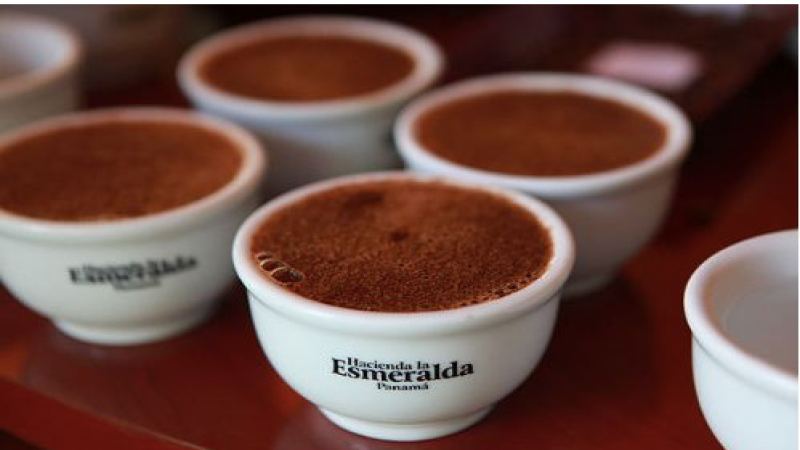
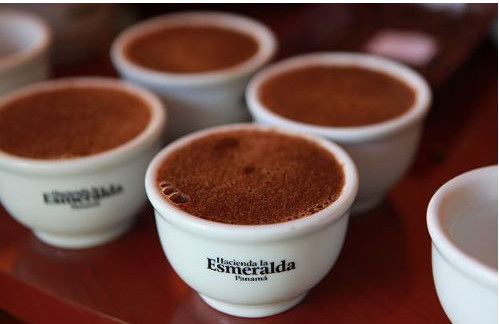
Panama Geisha coffee is the variety Ethiopia's Geisha forest gave the world in 1931, later carried to Kenya, Uganda, Tanzania, Costa Rica and finally Panama in 1970. La Esmeralda Estate identified it through cupping in 2001, separated it from other lots, and won the BOP championship in 2004, which pushed the variety onto the specialty coffee stage.
The name comes from the Geisha region of Ethiopia; the similar-sounding Japanese word gave it the alias Geisha coffee. Panama geisha coffee beans differ in variety and flavor from Ethiopian Geisha, because the elegant profile depends on high altitude, cloud cover or shade trees, and fertile soil. La Esmeralda grades its lots with Red, Green and Blue labels.
Geisha coffee's journey from the wild forests of Ethiopia to the world specialty coffee stage owes much to the discovery and promotion by Panama's La Esmeralda Estate. This article will trace the spread of the Geisha variety, compare the flavor differences between Geisha from Panama and Ethiopia, detail La Esmeralda's Red, Green, and Blue label grading system and their characteristics, and introduce the flavor profiles and brewing suggestions for several Geisha coffee beans sourced by Front Street Coffee, helping coffee enthusiasts gain a comprehensive understanding of this legendary variety.
For specialty coffee knowledge, please follow our WeChat public account: FrontStreet Coffee
In 2001, Panama's La Esmeralda Estate identified Geisha coffee through cupping results within their own farm, also known as Gesha coffee. It is called Geisha because it is presumed to originate from the Geisha region of Ethiopia. Since "Geisha" sounds the same as the Japanese word for "geisha," Geisha coffee gained the alias "Geisha coffee."
Geisha coffee originally grew in Ethiopia, which is both the birthplace of coffee and a genetic treasure trove of the coffee kingdom, with extremely rich varieties within its borders. As a result, many Ethiopian coffee beans are simply labeled as "heirloom varieties" in the variety column. The Geisha variety was discovered in 1931 in the Geisha forest of Ethiopia. Initially, it received little attention locally and was even used as a windbreak until the emergence of Panama's La Esmeralda Estate changed its fate. Afterwards, Geisha was sent to the Coffee Research Institute in Kenya, introduced to Uganda and Tanzania in 1936, to Costa Rica in 1953, and to Panama in 1970. Eventually, Panama's La Esmeralda Estate separated it from other varieties and sent it to competition, winning the BOP championship in 2004, skyrocketing to fame and bringing Geisha into the public eye as a leader among specialty coffees.
Although Panama Geisha coffee beans were introduced from Ethiopia, there are still differences in variety and flavor compared to Ethiopian Geisha. While the Geisha variety's flavor is exquisite, this elegant flavor cannot be achieved without a specific growing environment. Geisha is quite particular about its growing conditions, requiring cultivation in areas with high altitude, cloud cover or abundant shade trees, and fertile soil. High-altitude Geisha coffee features distinct floral aromas and refined, elegant fruit acidity. Therefore, Panama's growing environment is also an important reason for Geisha coffee's fame and one of the factors behind its global popularity.
Since Panama Geisha coffee became popular, countries around the world have begun researching and cultivating the Geisha variety, including many estates in Panama itself. The Geisha coffee beans sourced by Front Street include not only those from Panama's La Esmeralda Estate, but also from Colombia and Costa Rica, and of course Ethiopia. Front Street carries over a dozen Ethiopian single-origin coffee beans, and in addition, Front Street offers more than 50 single-origin beans from around the world.
Below, Front Street introduces the characteristics of these Geisha coffee beans:
Colombia Geisha Coffee
The Hanami coffee sourced by Front Street this time is a blend of Geisha, Caturra, and Catuai. Initially, the estate grew Caturra and Catuai varieties. In 2016, the estate owner and team introduced the Geisha variety from Panama, and it was not until 2020 that harvests began, with mass production starting in 2021. So this coffee bean can be considered Monteblanco Estate's first Geisha coffee bean sold to the market.
The Herrera family of Colombia's "Finca La Esperanza" introduced Geisha coffee from Panama's La Esmeralda Estate in 2007. Although they encountered failures initially, after years of trial cultivation, in April 2011 they won first place in the "Coffees of the Year" (COTY) competition held by the Specialty Coffee Association of America in Houston.
Front Street Colombia Hanami flavor profile: red pepper, chamomile, tangerine, honey, almond
Costa Rica Geisha
Costa Rica Geisha coffee is also quite famous. Geisha was introduced to Costa Rica in 1953, earlier than Panama. Panama began growing Geisha coffee in the 1970s after Mr. Francisco Serrano of Hacienda La Esmeralda received seeds from CATIE in Costa Rica. Because of its extremely low yield and participation in auctions, this bean is truly hard to come by.
Costa Rica's coffee-growing regions benefit from fertile volcanic ash soil, mild and suitable temperatures, and stable abundant rainfall brought by the volcanic terrain—all important factors for Costa Rica's excellent coffee production. Costa Rica has been growing coffee for nearly two hundred years. As an important economic crop, the coffee industry is very mature, and today there are many newly established estates, most of which have the resources and willingness to grow the Geisha variety. This Mirazu Geisha blend, as the name suggests, primarily contains 50% Geisha variety, and in addition to Geisha, it also includes ET47, SL28, and MAICO.
The Geisha variety coffee beans in Front Street's Mirazu Geisha blend provide jasmine aroma, while the other varieties enrich the strawberry berry flavors. Combined with the raisin honey processing method, this enhances the coffee's sweetness.
Costa Rica Mirazu coffee flavor profile: jasmine aroma, raisin sweetness on the palate, strawberry gummy sweetness, nutty creamy mouthfeel.
Ethiopia Geisha Coffee
Ethiopia is the birthplace of coffee. The Geisha variety was discovered in 1931 and subsequently spread to the Americas and other countries, making Ethiopia one of the most noteworthy Geisha coffee-producing countries outside of Panama. However, unlike Panama and other American countries, Ethiopia has a vast number of varieties and is dominated by smallholder farming, making it nearly impossible to distinguish whether a coffee is Geisha. Most are exported under the name "heirloom varieties." Gesha Village owners Adam and Rachel began searching in 2008, and after three years, finally found an environment suitable for coffee growing at 1900-2100 meters altitude, with tropical rainforest, suitable climate, fertile forest soil, and historic woodland. With the guidance and help of Mr. Willem Boot, the "godfather of Geisha," Gesha Village's coffee has repeatedly achieved outstanding results in world competitions.
Gesha Village is completely different from the vast majority of Ethiopian farms—it is not a small farm but a large farm of over 400 hectares, with its own washing station and laboratory, located in the southwest near the Sudan border. Gesha Village divides the farm into 8 blocks with 3 main Geisha varieties. The Geisha selections come from a native coffee forest 20 kilometers from the estate, which is precisely the source of Panama's Geisha variety.
The flavor expression of Gesha Village's Geisha coffee differs from that of Panama's La Esmeralda Estate. Panama La Esmeralda's washed Geisha coffee is mostly characterized by refined floral aromas, tea-like notes, and almond nutty tones; while natural Geisha is mostly characterized by rich fruit tones and slight floral notes, reminiscent of ginger flower and citrus when cooled. Gesha Village's coffee is mostly based on yellow stone fruit flavors, reminiscent of yellow peach, with medium-high sweetness, and the better batches even show toffee flavors.
La Esmeralda Estate
In 1964, American banker Rudolph Peterson retired and moved to Panama, purchasing La Esmeralda Estate in Boquete, initially focusing on dairy. Later, his son Price resigned from his medical practice to help his father run the farm, introducing Caturra and Catuai coffee varieties in 1987, and establishing a washing processing plant in 1994, thus having their own coffee processing facility. In 1996, they purchased the nearby Jaramillo Estate with superior geographical conditions and original coffee varieties of good flavor, merging it into La Esmeralda Estate.
Jaramillo was favored by the Petersons precisely because its originally grown coffee beans had pleasant orange and floral-fruity aromas, different from the original taste of Panama coffee. After cupping coffee beans from different areas of the estate, they discovered an unnamed coffee tree growing at the highest point of the estate. Due to its low yield, the previous owner had merely used it as a windbreak, but the Petersons unearthed it and decided to cultivate and propagate the coffee trees in that area separately. Starting with winning the Panama BOP green bean competition in 2004, it achieved astonishing results all the way, and later expert appraisal revealed that this coffee bean was the Ethiopian Geisha variety. Afterwards, the Peterson family devoted most of their energy to developing infrastructure to support excellent lot separation and meticulous processing.
La Esmeralda Geisha Grades
After years of experimentation, La Esmeralda found that only Geisha grown above 1400 meters altitude can display its proper exquisite flavor. Therefore, La Esmeralda divides the Geisha coffee grown on the estate into three grades based primarily on growing altitude, supplemented by actual cupping results: Red Label, Green Label, and Blue Label. However, in the first half of that year, La Esmeralda announced the discontinuation of the Blue Label brand. In the second half of the year, Front Street discovered a Geisha coffee called "Las Rocas" on the market. After rigorous investigation and cupping, it was found that Las Rocas indeed came from La Esmeralda Estate, and its flavor was highly similar to the previous Blue Label.
[Red Label Geisha]
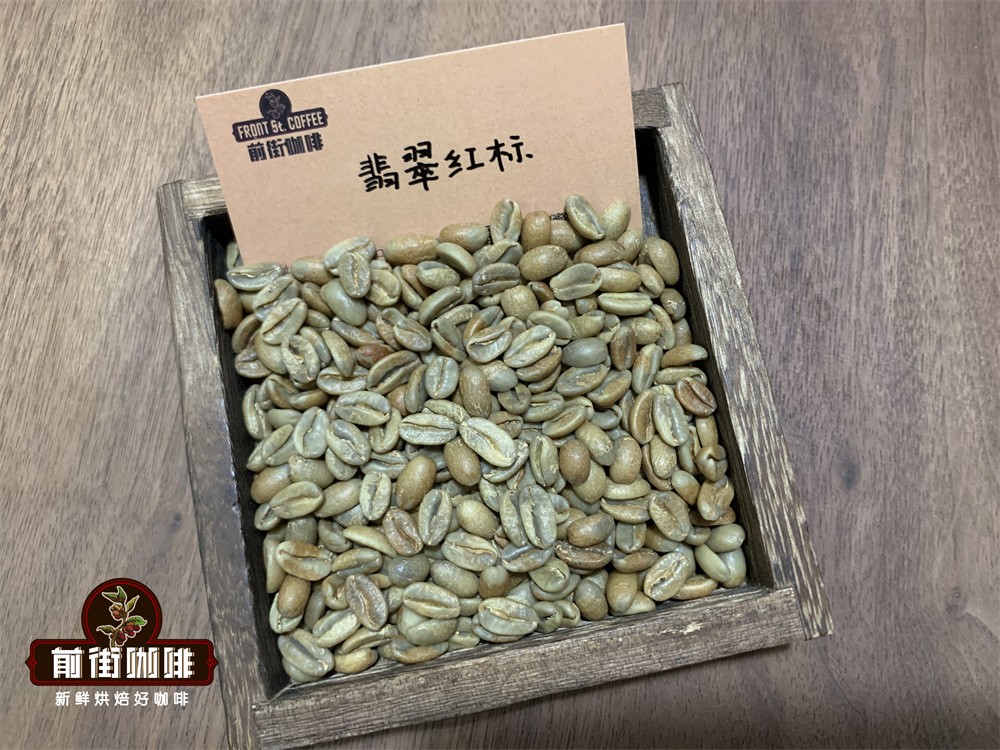
The Geisha from La Esmeralda's private selection is what is commonly called Red Label. It is selected from Geisha coffee beans grown at 1600-1800 meters altitude with cupping scores above 90, from the Jaramillo and Canas Verdes production areas. Only the Geisha lots that La Esmeralda puts up for bidding in its own independent auction, selected from designated plots, are the auction Red Label. However, there are now non-auction Red Labels on the market, which are actually Geisha selected from the same plots that were not entered into the auction and then circulated to the market. The variety quality is consistent, with only differences in pricing.
FrontStreet Coffee sourced a natural-process Red Label Geisha from the Jaramillo plot. This grade of Geisha uses either natural or washed processing, with flavors featuring special, bright floral aromas and citrus notes. The natural-process Geisha coffee beans have more complex aromas and more outstanding sweet-tart balance. If you want to pay a premium to enjoy the top-tier Geisha coffee flavor, La Esmeralda's natural-process Red Label Geisha is more classic. Natural processing makes the Geisha flavor more intense, leaving a lingering fragrance after drinking that is endlessly memorable. The La Esmeralda Red Label on Front Street's bean shelf comes from the same Jaramillo farm as the Geisha coffee beans that won the 2004 BOP competition.
[Green Label Geisha]
Private Collection, commonly known as Green Label, is not an independently competed lot. It is Geisha grown but not entered into competition, yet still of excellent quality. It is selected from micro-lots blended from different plots including Jaramillo and Canas Verdes at 1600-1800 meters altitude. Although Green Label is not as high-grade as Red Label, it still carries the classic Geisha flavors: floral, fruity, citrus-lemon acidity, and a thick, juicy mouthfeel. Green Label Geisha is also available in both washed and natural processing.
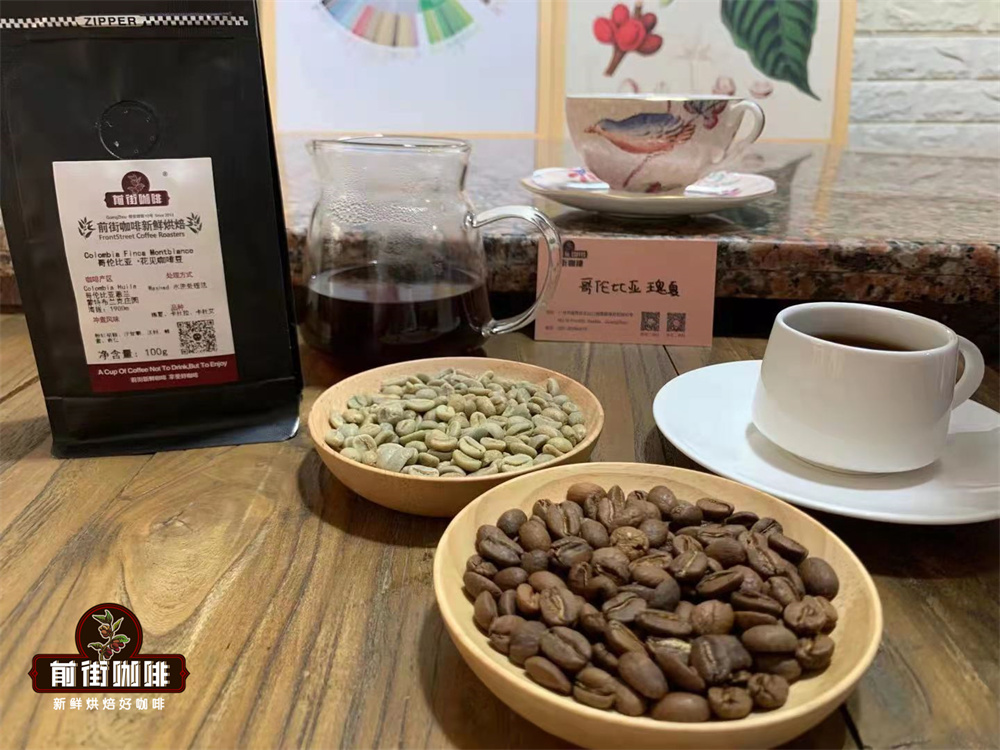
Compared to Front Street's natural Red Label, Front Street's washed Green Label is the epitome of fresh and light. The typical Geisha flavor is clearly identifiable, and the overall cup is very refreshing, like drinking oolong tea. It is also the value-for-money choice among La Esmeralda Geisha.
[Blue Label Geisha]
Blue Label Geisha is selected from a blend of beans from three different plots—Jaramillo, Canas Verdes, and El Velo—at 1400-1500 meters altitude. The flavor has slight floral notes, fruit acidity, and sweetness, with a less thick mouthfeel. In previous years, Blue Label Geisha was only washed processed, but the 2020 Blue Label batch added natural processing. In 2021, La Esmeralda discontinued the Blue Label grade. A few months later, a Geisha coffee called "Las Rocas" appeared. After cupping comparison, Front Street's baristas found that this "Las Rocas" was very similar in flavor to the previous Blue Label.
FrontStreet Coffee's washed Blue Label Geisha has slight floral notes, fruit acidity, and sweetness, with a less thick mouthfeel, while the natural-process Blue Label has slight floral notes, obvious fermentation, berry juice-like mouthfeel, and high sweetness. Front Street believes that La Esmeralda's introduction of natural processing for the Blue Label in the new season is undoubtedly a boon for consumers. Previously, if you wanted to drink natural-process La Esmeralda Geisha, you often had to purchase the expensive Red/Green Label. The natural Blue Label allows consumers to purchase a La Esmeralda natural Geisha at a low price and high value.
FrontStreet Coffee Brewing Suggestions
For coffee brewing, Front Street recommends using freshly roasted coffee beans to maximize the rich flavors of the coffee. FrontStreet Coffee ships coffee beans within 5 days of roasting because Front Street deeply understands the significant impact of coffee bean freshness on flavor. Front Street's roasting philosophy is "Freshly Roasted Good Coffee," ensuring every customer receives the freshest coffee when they order. Coffee beans need about 4-7 days of resting, so by the time customers receive them, they are at their optimal flavor. Of course, some customers need Front Street to grind the beans for them, which is also fine, but Front Street reminds that once coffee beans are pre-ground, they need to be brewed promptly, because ground coffee oxidizes quickly upon contact with air. This means the coffee's flavor will dissipate relatively quickly, and the coffee won't taste as good. Therefore, Front Street recommends grinding fresh and brewing immediately to better enjoy the coffee's flavor.
Panama La Esmeralda Geisha Coffee Bean Brewing:
Dripper: Hario V60 Water temperature: 90°C Dose: 15g Coffee-to-water ratio: 1:15 Grind size: medium-fine (BG#6S) (80% passing through Chinese standard No. 20 sieve)
FrontStreet Coffee brewing method: Three-stage extraction
Bloom with 30g of water for 30 seconds, then pour in a slow circular motion until reaching 125g for the first stage. When the water level is about to expose the coffee bed, continue pouring until reaching 225g and stop. After the coffee finishes extracting, remove the dripper. Start timing from the beginning of pouring; the total extraction time is 2'00". Then pick up the entire cup of coffee and swirl to mix evenly before pouring into cups for tasting.
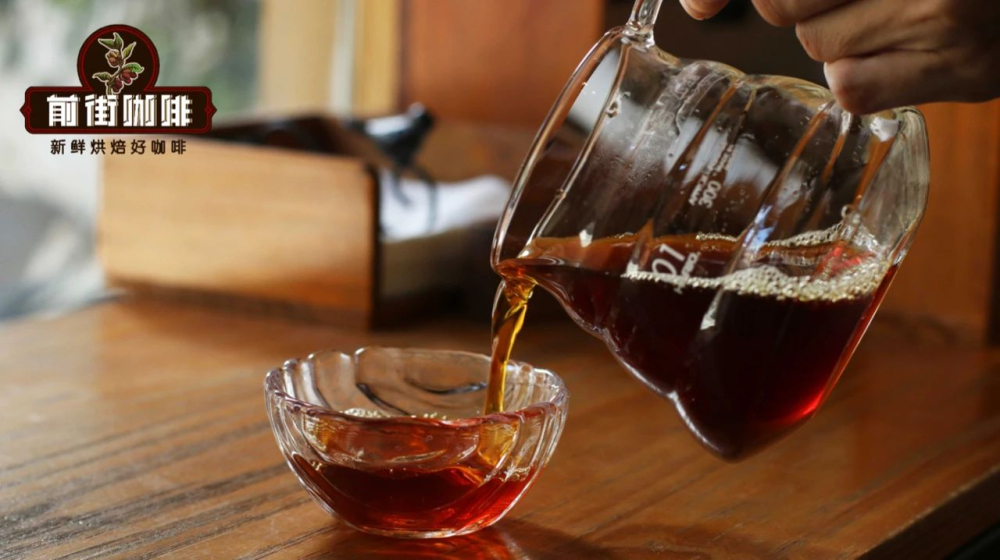
FrontStreet Coffee Hand-Brewed Panama La Esmeralda Geisha Flavor Description
[Natural Red Label] Bright rose and citrus aromas, genmaicha, berries, apricot, complex fruits, honey, with a thick juicy mouthfeel, rich flavor layers, and pronounced sweetness.
[Washed Green Label] Intense jasmine aroma on the palate, high sweetness, citrus, berries, juicy mouthfeel, cream, green tea, orange peel, cantaloupe. Overall rich flavor layers with lingering floral and citrus finish.
[Washed Blue Label] Soft lemon and grapefruit acidity on the palate; as it cools slightly, oolong tea, honey, and sugarcane sweet finish emerge. The mouthfeel is relatively clean and bright.
[Natural Blue Label] Fermented aromas and fruity sweetness on the nose; tastes of melon and tropical fruit sweetness, with a juice-like mouthfeel and very high overall sweetness.
The above content is compiled by CoffeeHunters, a coffee news website.


