







What Sets Panamanian Geisha Coffee Apart?
Panamanian Geisha coffee is the varietal that put Panama on the specialty coffee map, and Hacienda La Esmeralda leads the group with a grading system split into Red, Green, and Blue Labels. The labels differ by altitude, plot, and processing method, so each one carries a distinct flavor profile rather than a single house style.
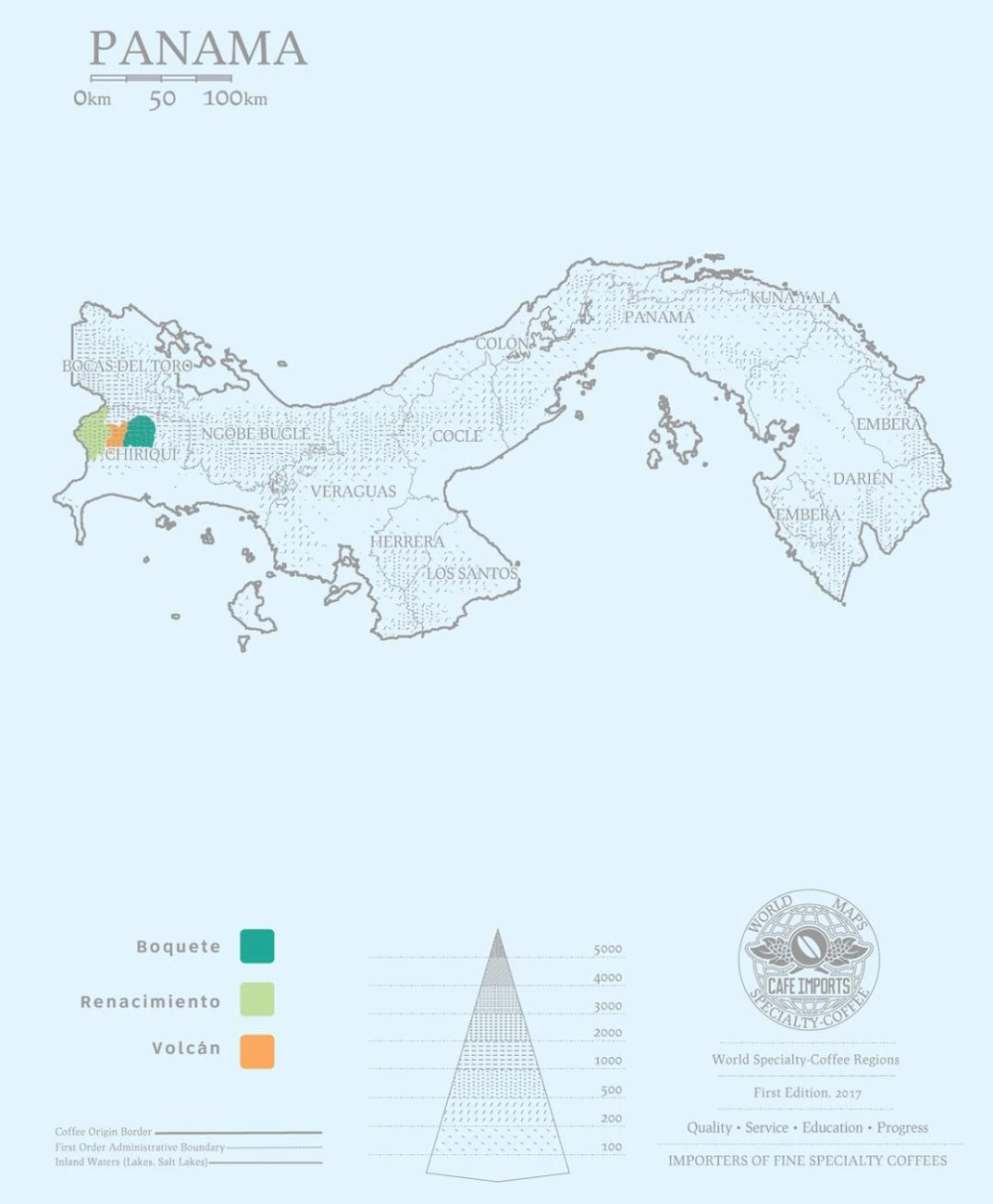
Panama's four main growing regions are Boquete, Volcan, Santa Clara, and Candela. Hacienda La Esmeralda began as a dairy farm before turning to coffee, and estates such as Elida and Janson also express Panamanian Geisha in their own ways. Comparing labels side by side shows how plot and process shape the cup.
Panama is a shining pearl on the coffee map of Central America, having sparked a wave in the international specialty coffee scene with the Geisha coffee beans from Hacienda La Esmeralda. From the perspective of Front Street Coffee, this article systematically reviews the geographical characteristics and flavor trends of Panama's four major producing regions, delves into Hacienda La Esmeralda's transformation from a dairy farm to a Geisha legend, and breaks down the criteria distinguishing Red Label, Green Label, and Blue Label Geisha in terms of altitude, plot, and processing method, while also including the Geisha flavor expressions of Elida Estate and Janson Estate. Whether you are a beginner just encountering Geisha or a seasoned enthusiast seeking brewing inspiration, you will gain clear flavor coordinates and practical brewing references.
The Geisha coffee beans produced in Panama enjoy an extremely high reputation in the international market. This country has been almost swept up in the Geisha craze, and the Geisha produced by Hacienda La Esmeralda stands out as the finest among them. Panamanian Geisha coffee beans follow a strict grading system, which is where terms like Blue Label and Red Label come from. Today, Front Street Coffee will take you deeper into this top player in the specialty coffee world—Panama coffee.
Front Street Panama Coffee
Panama is located in Central America and serves as a bridge connecting North America and South America, bordering Costa Rica and Colombia. Looking back at Panama's coffee development history, it can be said that it has enjoyed exceptional conditions from the very beginning.
The Panama Canal was built by the United States, and after its completion it was managed solely by the U.S. for a considerable period. The canal project attracted a large number of American elites southward in the late twentieth century, coming both for work and to seek investment opportunities. Many of Panama's well-known coffee estates were founded by these people. For example, the owner of Hacienda La Esmeralda was originally a banker, while the owner of Hartmann Estate came from an engineering background. These operators insisted on standardized and refined practices when managing coffee farms, from allocating coffee tree varieties according to plot altitude to form grades, to manual picking and meticulous processing—all of these were key to Panamanian coffee earning its global reputation.
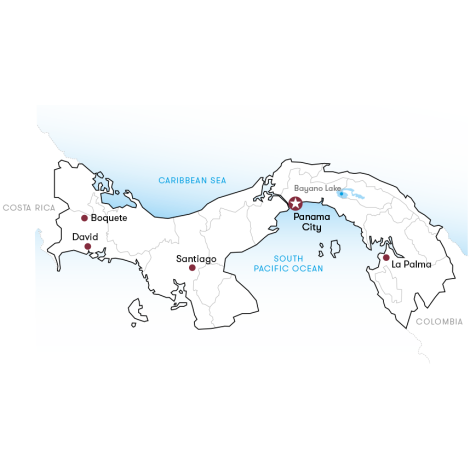
Front Street Panama Coffee Producing Regions
Panama has four main coffee producing regions: Boquete, Volcan, Santa Clara, and Candela. The Boquete region has an average altitude of about 1,450 meters and is Panama's highest-yielding and highest-quality coffee area. The Volcan region has an average altitude of 2,000 meters, and its coffee is known for a mild and balanced style. The Santa Clara region has an average altitude of about 1,500 meters and, because it is adjacent to the Panama Canal, is extremely convenient for coffee transportation. The Candela region has an average altitude of about 1,200 meters and is an area that has gradually attracted industry attention in recent years, considered to have potential for developing high-quality specialty coffee.
Front Street Panama Hacienda La Esmeralda Geisha Coffee Beans
Hacienda La Esmeralda is located in the Boquete producing region. It was purchased in 1964 by retired American banker Rudolph Peterson and was initially mainly a dairy operation. Later, his son Price gave up his career as a doctor to help his father manage the farm. In 1987, the Caturra and Catuai varieties were introduced, in 1994 a wet processing plant was built, and in 1996 Jaramillo Estate was acquired and incorporated into Hacienda La Esmeralda.
The Geisha coffee beans originated from Jaramillo Estate. At first, people did not know it was the Geisha variety; they simply noticed that the coffee beans from a certain plot on the estate had an exceptionally outstanding flavor, completely different from the typical Panamanian coffee style. After repeated cupping verification, the Peterson family decided to plant the variety from this plot separately. In 2004, this lot participated in the Best of Panama (BOP) green bean competition and won first place. After that, its results remained outstanding and attracted widespread attention. Later, expert identification confirmed that this variety was indeed Geisha from Ethiopia. Afterward, the Peterson family devoted a great deal of effort to infrastructure construction to support excellent lot separation and meticulous processing.
Front Street Hacienda La Esmeralda Coffee Plot Divisions
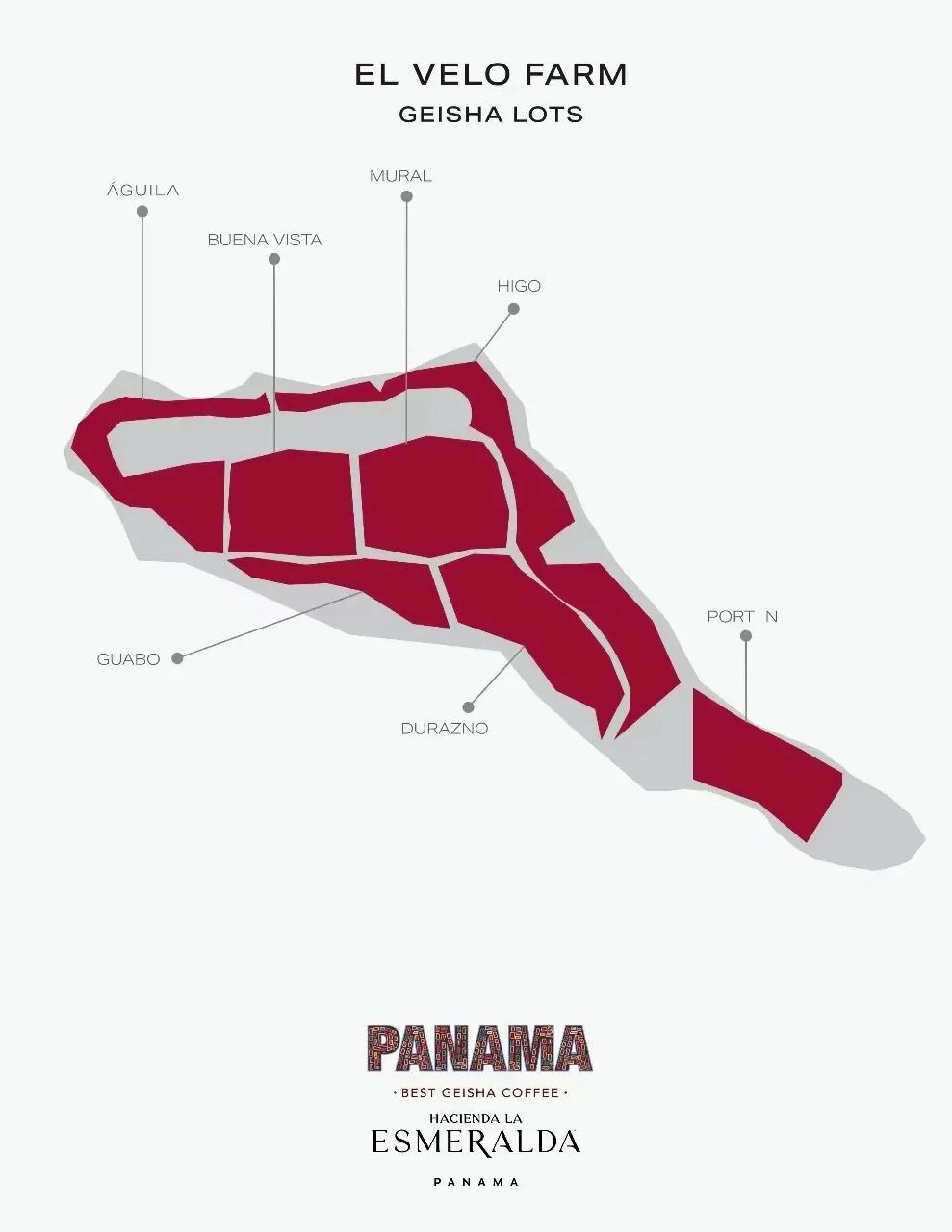
The reason Hacienda La Esmeralda's Geisha coffee is so outstanding is inseparable from its grading system. The estate divides plots by altitude, mainly into three: Jaramillo, Canas Verdes, and El Velo. Under each plot, smaller plots are further subdivided, and the altitude of each plot is marked to ensure traceability of the Geisha coffee beans.
High-quality Geisha mainly comes from the two plots Jaramillo and Canas Verdes. Jaramillo has annual rainfall of about 4,000 ml, average daytime temperatures of 19-25°C, average nighttime temperatures of 11-15°C, and an average altitude of 1,600-1,700 meters. Canas Verdes has annual rainfall of about 3,500 ml, average daytime temperatures of 16-23°C, average nighttime temperatures of 10-15°C, and an average altitude of 1,600-1,800 meters.
El Velo is the newest plot purchased by Hacienda La Esmeralda, with an average altitude of 1,700-1,900 meters. In addition to growing Geisha and Catuai, this plot also has a small number of other exotic varieties, such as Bourbon Pointu, Pacamara, Mocha, and SL28.
Front Street Hacienda La Esmeralda Coffee Bean Grading
Hacienda La Esmeralda divides its products into five major brands based on cupping performance as well as planted varieties and plots. Among them, the Geisha variety accounts for three brands: Esmeralda Special, Private Collection, and Geisha1500, with grades from high to low being Esmeralda Special, Private Collection, and Geisha1500. The Catuai variety has two brands: Diamond Mountain grows and Palmyra.
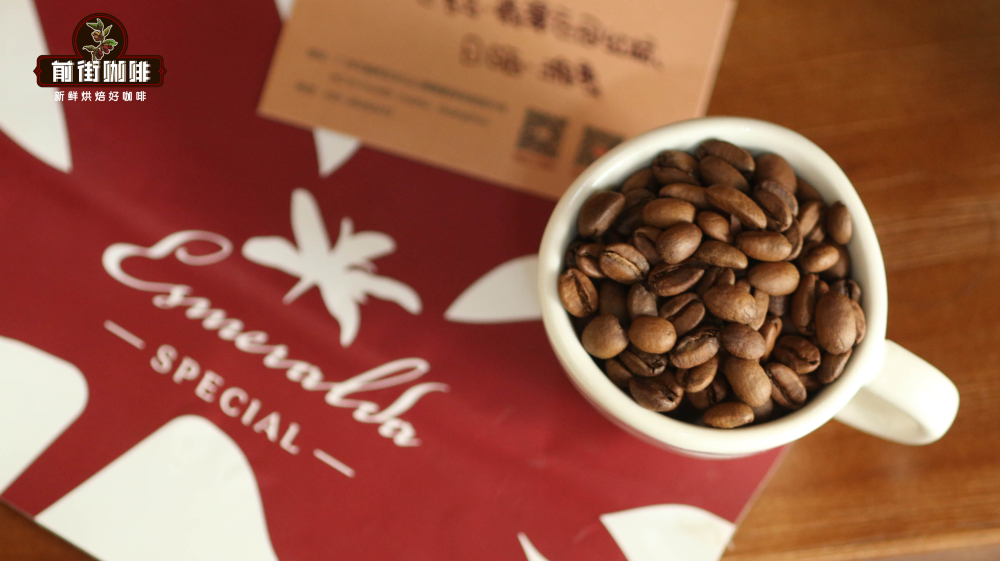
【Front Street Panama Hacienda La Esmeralda Red Label Geisha Coffee】
The Geisha produced under Esmeralda Special is what everyone commonly calls Red Label. It uses Geisha beans grown at altitudes of 1,600-1,800 meters, must score 90 points or above in cupping, and comes from the two producing areas Jaramillo and Canas Verdes.
In Hacienda La Esmeralda's own independent auction, only the Geisha lots selected from the divided plots to participate in the auction belong to auction Red Label. However, there are also non-auction Red Label products on the market. In fact, these are Geisha selected from the same plots that did not participate in the auction and flowed into the market. The variety and quality are the same, and the only difference is the selling price.
Geisha of this grade uses natural or washed processing, with flavor expressions of unique and bright floral aromas and citrus notes.
Front Street Panama Hacienda La Esmeralda Red Label Geisha Region: Boquete, Panama Estate: Hacienda La Esmeralda Canas Verdes
Altitude: 1,600-1,800 meters Variety: Geisha Processing Method: Natural
【Front Street Panama Hacienda La Esmeralda Green Label Geisha Coffee】
Private Collection is Green Label Geisha. It does not belong to an independent competition lot, but is a Geisha variety that did not participate in the auction yet still has excellent quality. It uses Geisha grown at altitudes of 1,600-1,800 meters, and is a blend of micro-lots from different plots such as Jaramillo and Canas Verdes.
Because it uses a blended-bean model and does not provide detailed labeling of specific plots, Green Label Geisha can sometimes be very similar in flavor to Red Label, but the next release may differ again.
Although Front Street Green Label Geisha is not as high-graded as Red Label, it still retains the classic flavors of Geisha—floral aroma, fruity notes, citrus-like acidity, and a full, juicy body. Green Label Geisha also has two processing methods: washed or natural.
Front Street Panama Hacienda La Esmeralda Green Label Geisha Region: Boquete, Panama Estate: Hacienda La Esmeralda Altitude: 1,600-1,800 meters Variety: Geisha Processing Method: Washed or Natural
【Front Street Panama Hacienda La Esmeralda Blue Label Geisha Coffee】
Geisha1500 is Blue Label Geisha. It uses Geisha grown at altitudes of 1,400-1,500 meters, and is a blend of beans from three different plots: Jaramillo, Canas Verdes, and El Velo. The flavor has slight floral notes, fruity acidity, and sweetness, with a relatively light body. Originally, Blue Label Geisha was only washed, but in 2020 Hacienda La Esmeralda also launched Front Street Blue Label Geisha Coffee with natural processing.
Overall, the most notable differences among Red Label, Green Label, and Blue Label Geisha lie in cultivation altitude and whether a blended-bean model is used. Simply put, Geisha grown at higher altitude (1,600-1,800 meters) with clear plot information is Red Label Geisha; Geisha at the same altitude as Red Label but blended from multiple plots is Green Label Geisha; and Geisha at lower altitude (1,400-1,500 meters) is Blue Label Geisha.
Front Street Panama Hacienda La Esmeralda Blue Label Geisha Region: Boquete, Panama Estate: Hacienda La Esmeralda Altitude: 1,500 meters Variety: Geisha Processing Method: Washed or Natural
Front Street Coffee Brewing Suggestions
The brewing parameters recommended by Front Street Coffee are uniformly: water temperature 90°C, coffee-to-water ratio 1:15, coffee powder weight 15 g, grind size referencing fine granulated sugar (80% passing through Chinese standard No. 20 sieve).
Front Street takes into consideration that these Panama Hacienda La Esmeralda Geisha coffee beans are all light roasts. The extraction rate of coffee substances in light-roasted beans is lower than in dark-roasted beans, so in order to fully extract the flavors of Geisha, a higher water temperature is used together with a finer grind size. Some fans have noticed that Front Street consistently recommends a coffee-to-water ratio of 1:15, while for Hacienda La Esmeralda Geisha it uses 1:16. This is because slightly widening the coffee-to-water ratio helps better perceive Geisha's layering and flavor expression.
Front Street Coffee uses staged extraction, also called three-stage brewing: first bloom with 30 grams of water for 30 seconds, then pour in a small stream in circles until 125 grams for the first stage, and when the water level drops and is about to expose the coffee bed, continue pouring until 225 grams and stop. When the water level drops again and is about to expose the coffee bed, remove the dripper. Timing starts from the beginning of the bloom, and the extraction time is 2'00"–2'05".
【Front Street Panama Hacienda La Esmeralda Red Label Geisha】 Has bright rose and citrus aromas, along with notes of brown rice, berries, apricot, mixed fruits, and honey. It has a full juicy mouthfeel, rich flavor layers, and prominent sweetness.
【Front Street Panama Hacienda La Esmeralda Green Label Geisha】 Rich jasmine floral aroma, high sweetness, accompanied by notes of citrus, berries, juicy mouthfeel, cream, green tea, orange peel, and cantaloupe. The overall flavor is richly layered, with floral and citrus notes lingering in the finish.
【Front Street Panama Hacienda La Esmeralda Blue Label Geisha】 Has floral notes. On entry, it shows soft acidity of lemon and grapefruit, a honey-like sweetness in the middle, and oolong tea notes and brown sugar sweetness in the tail. The mouthfeel is clean and bright.
Front Street Elida Estate
The heavenly land where Elida Estate is located lies on the southern slopes of Baru Volcano in Panama, above the town of Portrerillos, at an altitude of 1,700-1,800 meters. From Elida Estate, the Atlantic Ocean can be seen in the distance. The estate is very small, only 5 hectares, making it truly a micro-estate.
Although the estate is not large in scale, its soil and growing environment are extremely superior. The hillsides were originally covered with primary forest, and the tall trees provided the best shade-growing environment for coffee. In some places, the trees were even so dense that sunlight could not penetrate, affecting coffee growth, and in the past two years the overly dense thickets had to be cleared so the Geisha trees could fully grow. Because it is close to Baru Volcano, the volcanic ash formed after its eruption in 1550 created high-quality volcanic soil. Front Street believes that in addition to being rich in potassium and phosphorus, volcanic soil also has an extremely high organic matter content, and the Geisha coffee grown from it is therefore especially rich and layered in flavor.
Elida Estate was founded by Amado Boutet, the maternal grandfather of Mr. Wilford Lamastus, the current heir of the Lamastus family. When global coffee market prices were depressed, his grandfather's family had to sell off large coffee estates. Mr. Wilford and his younger brother Patrick Lamastus could not bear to see the family estate sold off, so they bought Elida Estate and continued to operate it. Although the process was very difficult, and they even had to take other jobs to supplement their income, Mr. Wilford never gave up on this estate. Persistence eventually paid off: since 2015, Elida Estate's coffee beans have repeatedly achieved excellent results in the BOP competition.
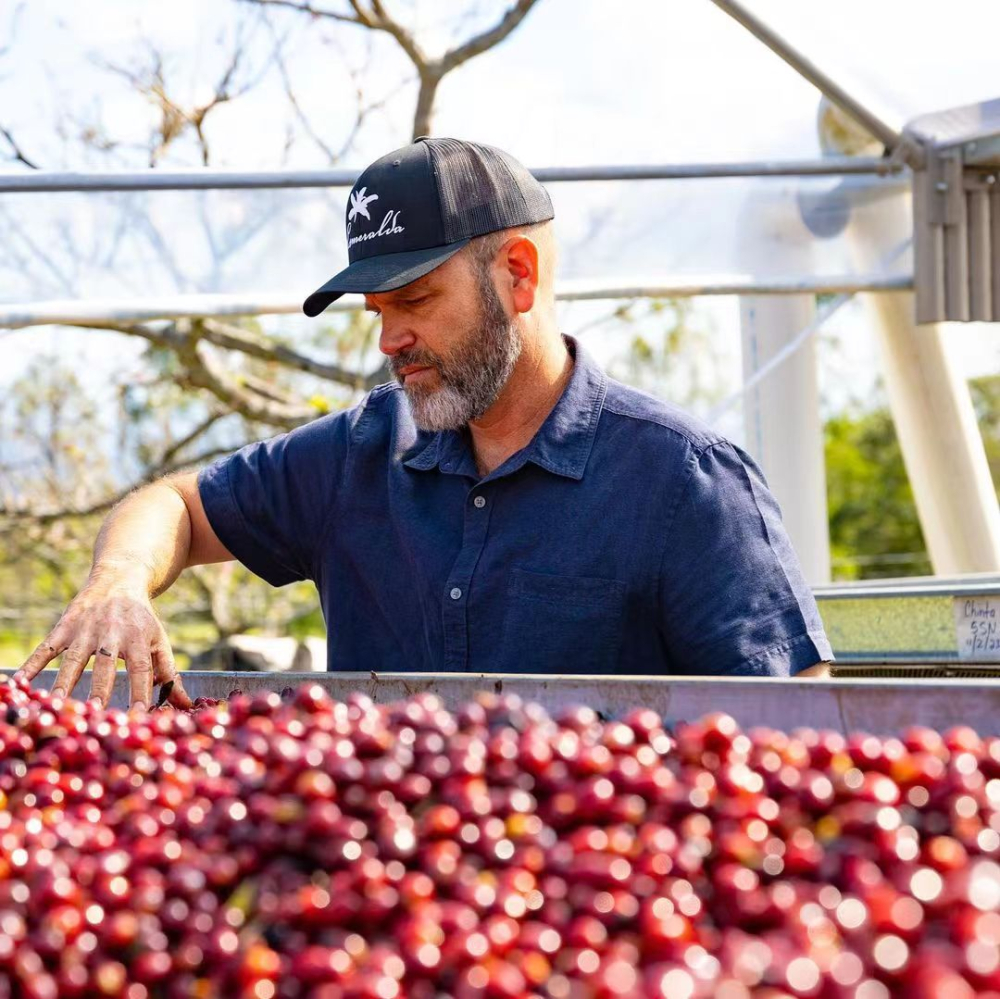
Front Street Elida Estate Coffee Bean Processing Methods
After picking the fruit, the estate sorts it and places it on raised beds in the sun to dry. The coffee fruit is dried by sunlight, changing color from red to dark brown, with a total drying time of 18-30 days. After drying is completed, it is stored until the coffee beans are ready for shipment, at which point all dried skin, pulp, and parchment layer are removed to take out the beans. Then unripe beans, overripe beans, and fermented beans are picked out to prepare for shipment.
Front Street believes that the advantage of this natural method is that it can completely isolate off-flavors caused by contact with soil. On the other hand, it can also improve the drying efficiency of coffee fruit and more completely present coffee's original fruit flavors. This kind of work improves overall cupping quality and post-roast consistency.
Front Street Coffee Roasting Record
Front Street's roaster uses a Yangjia 800N semi-direct-fire roaster with a bean charge of 300 g. The beans are charged when the drum temperature reaches 160°C, the damper is set to 3, and the gas setting is 130; the turning point is at 1'40". When the drum temperature is 140°C, adjust the gas setting to 110 and open the damper to 4; at this point the bean surface turns yellow, the grassy smell completely disappears, and the dehydration stage begins. When the drum temperature reaches 166°C, adjust the gas setting to 80 and keep the damper unchanged; at 176°C, lower it again to 50 and keep the damper unchanged.
At 6'50", the bean surface shows ugly wrinkles and dark streaks, and the toast aroma clearly turns into coffee aroma. This can be defined as the prelude to first crack. At this time, you need to listen clearly to the sound of the first crack. First crack begins at 7'37". Reduce the gas setting to 50 and adjust the damper to 5 (adjusting the gas must be done very carefully, and it must not be so low that there is no crackling sound). After first crack, develop for 1'30" and discharge at 190°C.
Front Street Coffee Cupping Report
Front Street Coffee conducts cupping within 8-24 hours after the sample coffee beans are roasted. The cupping bowl generally used by Front Street Coffee baristas has a capacity of 200 ml and is a ceramic bowl. The water temperature used for cupping is 94°C. The grind size is controlled to 70%-75% passing through a standard No. 20 sieve (0.85 mm). The ratio is 11.1 grams of coffee powder plus 200 milliliters of hot water, that is, 1:18.18. In this way, the extracted concentration falls exactly within the golden cup range of 1.15%-1.35%, and the steeping time is 4 minutes.
Dry aroma: fermented wine aroma Wet aroma: sweet orange Flavor: fermented wine aroma, sweet orange, honey, berries, pineapple, cream, fruit tea, green apple
Front Street Coffee Brewing Sharing
Dripper: V60#01 Water temperature: 91°C Coffee-to-water ratio: 1:15 Grind size: medium-coarse grind (80% passing through Chinese standard No. 20 sieve)
Brewing method: three-stage extraction. Use 30 grams of water for a 30-second bloom, pour in a small stream in circles until 125 grams for the first stage, and when the water level drops and is about to expose the coffee bed, continue pouring until 225 grams and stop. When the water level drops and is about to expose the coffee bed, remove the dripper. (Timing starts from the beginning of the bloom.) The extraction time is 2'02".
Brewing flavor: It smells of ginger flower. On entry there are flavors of citrus, honey, berries, and fermented wine aroma. As the temperature drops, a pineapple-like sweetness gradually emerges, and the tail carries the sweet-and-sour note of sweet orange.
Front Street Panama Janson Estate Natural Geisha
Region: Volcan producing region Estate: Janson Estate Altitude: 1750 m Variety: Geisha Grade: SHG Processing Method: Natural
Janson Estate
Among the Panama Coffee Awards presented by the Specialty Coffee Association of Panama in 2013, a new entrant appeared—Carl Janson's Janson Estate Janson Geisha. The estate owner, Mr. Carl Janson, is Swiss. When he came to Panama, he deeply fell in love with Volcan in the Volcan region, a place surrounded by mountains similar to his homeland Switzerland. After marrying his wife Margaret, he bought the estate in 1940. The Janson family has now passed it down to the third generation.
Janson Estate has an average altitude of about 1,700 meters, annual rainfall of about 3,000 mm, and an average annual temperature of 20°C. The estate is covered with nutrient-rich volcanic soil. Under the combined effects of high altitude, fertile volcanic soil, abundant rainfall, and suitable temperature, Janson Estate gradually became the second-largest Geisha-producing estate in Panama, with 50% of the estate planted with Geisha variety coffee trees.
The operators of Janson Estate focus on maintaining the balance of the natural environment, adopt 100% sustainable cultivation methods, and use enzyme microorganisms to maintain soil nutrient balance. The estate also engages in animal husbandry and coffee cultivation at the same time, and has specially built a processing plant to process coffee cherries and then use them as farm fertilizer. Only 2,000 Geisha trees are planted per hectare to ensure sufficient soil space between plants. Half of the estate is planted with Geisha, ranking second in Panama for Geisha production. Every batch of green beans has a highly recognizable batch number, enabling 100% traceability.
Processing Method
This Front Street Janson Estate Geisha uses the natural processing method.
The natural processing method is the oldest and most primitive way of processing coffee beans. The harvested coffee cherries are placed on patios, and some are even dried directly by the roadside, receiving direct sunlight (about 27-30 days), drying the moisture content from 60% down to only about 12% to complete. Beans processed by the natural method have the lowest acidity, obvious sweetness, high body, but slightly lower cleanliness. In addition to the natural processing method, Janson Estate also uses other processing methods, such as washed processing using mountain spring water.
Taking 【Front Street Coffee Brewing Suggestions】 as an example
Dripper: Hario V60 Water temperature: 90°C Dose: 15 grams Coffee-to-water ratio: 1:15 Grind size: medium-fine grind
Brewing Method
Staged Extraction
Use 30 grams of water for a 30-second bloom, pour in a small stream in circles until 125 grams for the first stage, and when the water level drops and is about to expose the coffee bed, continue pouring until 225 grams and stop. When the water level drops and is about to expose the coffee bed, remove the dripper. (Timing starts from the beginning of the bloom.) The extraction time is 2'00".
Flavor Description
Dry aroma: jasmine floral aroma, berries, citrus, banana, peach, mango Wet aroma: ginger lily, cantaloupe, lemon, grape, juicy mouthfeel, blackcurrant On entry: the perfect flavor of classic Geisha coffee, delicate and gentle acidity, light body, floral notes and honey intertwining into an unforgettable and marvelous finish.
The above content is compiled by CoffeeHunters, a coffee news website.


