







How Do Honey Coffee Bean Grades Differ in Flavor?
Costa Rican honey processing is graded by how much pectin stays on the parchment: black honey, red honey, yellow honey, and white honey. Black honey keeps nearly all the pectin and is the top specification, giving a pronounced sweet-and-sour sensation, a slight fermented wine aroma, and a thick, nutty, creamy body.
The process began when Brazil's semi-washed pulped natural method spread to Costa Rica and El Salvador and was adapted locally. Ripe red cherries are pulped, then the sticky parchment is spread on raised African drying beds and turned every few hours. Yellow and white honey remove more pectin and dry faster, producing lighter, cleaner cups.
Honey processing is the signature processing method of Costa Rican coffee, but many people don't know that, depending on the degree of pectin retention, honey processing is actually divided into several grades: black honey, red honey, yellow honey, and white honey. Each grade has its own particularities in terms of the amount of pectin removed, drying time, and turning frequency, and the resulting flavors are completely different. This article uses Front Street Costa Rica Diamond Series Black Honey as an example to break down in detail the processing characteristics and flavor tendencies of each grade of honey processing, while also introducing the raisin honey processing method that has become popular in recent years, along with Front Street Coffee's roasting curve, cupping report, and brewing parameters, to give you a comprehensive understanding of the charm of Costa Rican honey processing.
Honey processing occupies a mainstream position in the Costa Rican coffee industry, but many people are not clear that honey processing is also graded according to the amount of pectin remaining on the surface of the coffee beans. Here we use Front Street Costa Rica Diamond Series Black Honey as a case study to illustrate. Black honey has the highest pectin retention rate in the entire honey processing system, with essentially no removal, making it the top-tier specification of honey processing. Through Front Street's repeated testing, this Diamond Series Black Honey coffee bean, compared with other honey processing grades, has a more pronounced sweet-and-sour sensation, with a slight fermented wine aroma, and on the palate also presents a relatively thick, nutty and creamy viscous texture. Below we'll share the principles of honey processing and Front Street Diamond Black Honey's brewing plan—the content is packed with useful information, so don't miss it.
The Origin of the Honey Processing Method
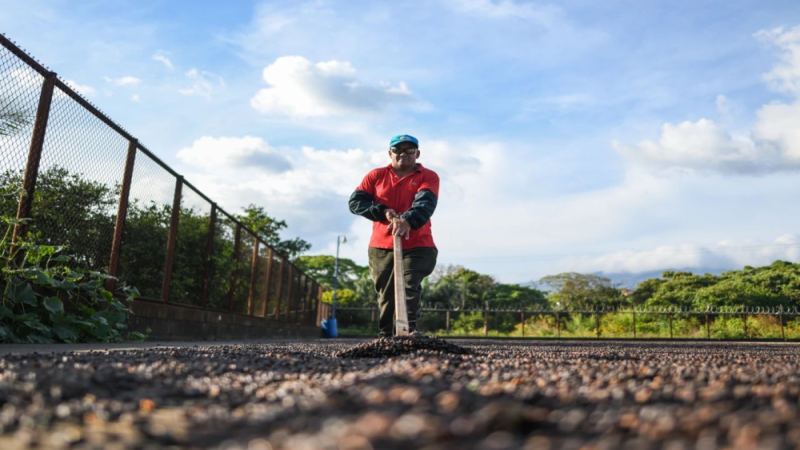
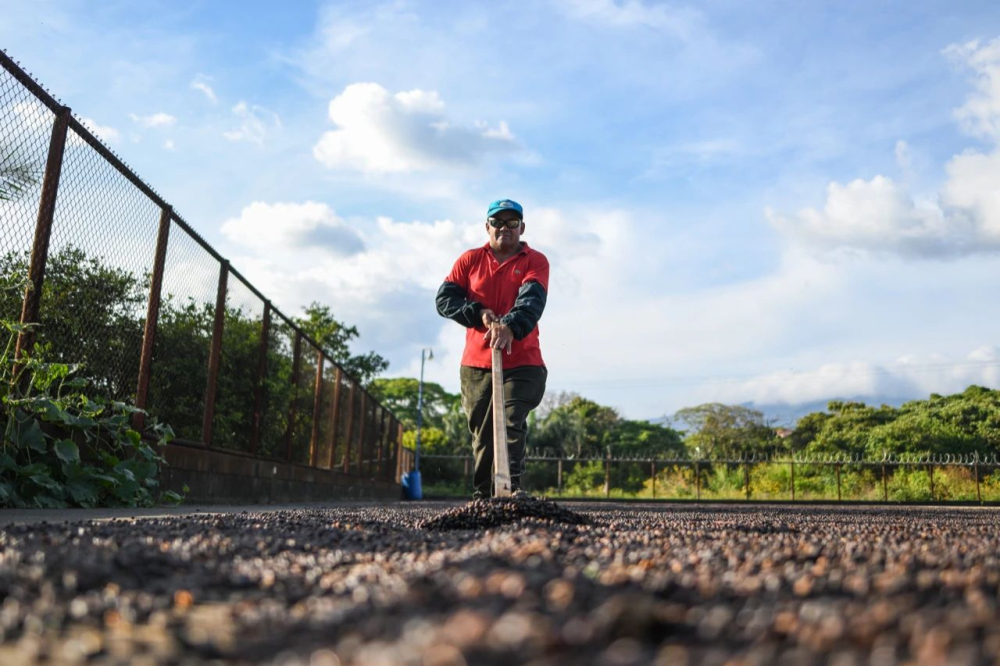
After Brazil's semi-washed method (pulped natural) spread to Central American countries such as Costa Rica and El Salvador, it was improved locally to form honey processing. The specific operation process is: after harvesting ripe red cherries, the skin and part of the pectin are first removed, then the still sticky parchment beans are spread directly on African raised drying beds with excellent drainage and breathability, and turned once every few hours to ensure the coffee beans dry evenly. Because pectin itself contains sugar and is sticky on the surface, it easily reminds people of thick honey, hence the name honey processing.
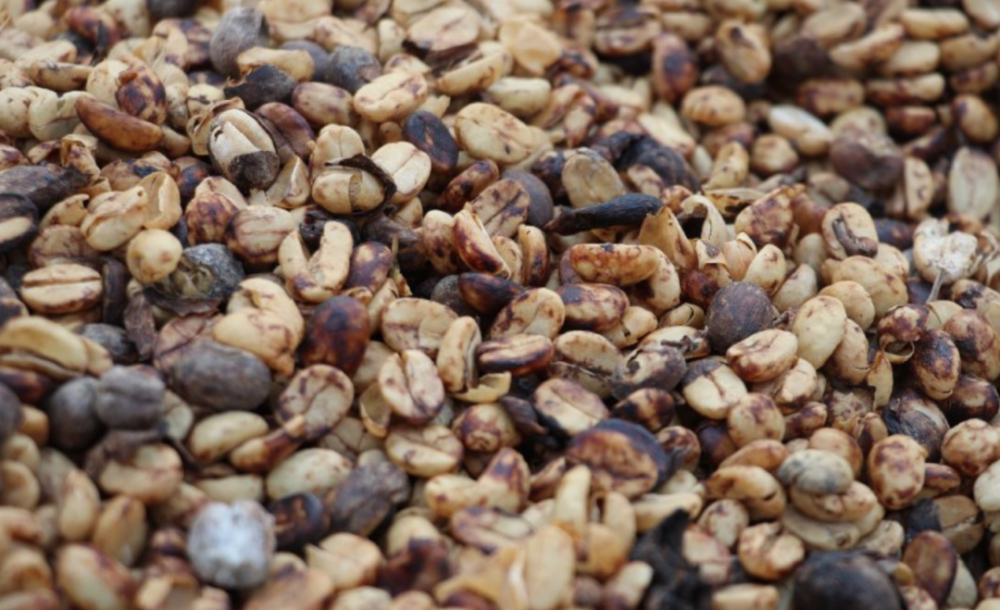
Whether dried on a patio or on raised drying beds, honey processing requires regular turning to ensure even drying, and at the same time to allow the overall flavor to better display the sweet fragrance and fruity notes brought by the pectin, similar to the aromas of mango, longan, honey, and hazelnut, with a mellow mouthfeel but low and soft acidity. Depending on factors such as the thickness of pectin scraping, the length of sun-drying time (or the thickness of the spread), and the turning frequency during drying, honey processing is further subdivided into black honey, red honey, yellow honey, and white honey.
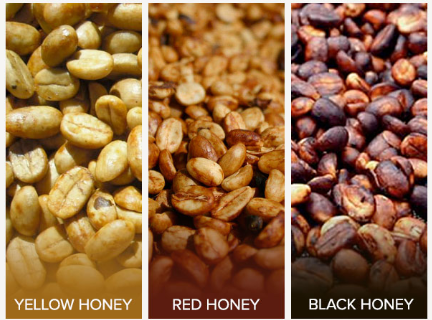
Distinguished according to pectin removal ratio, coffee sugar content, and fermentation state:
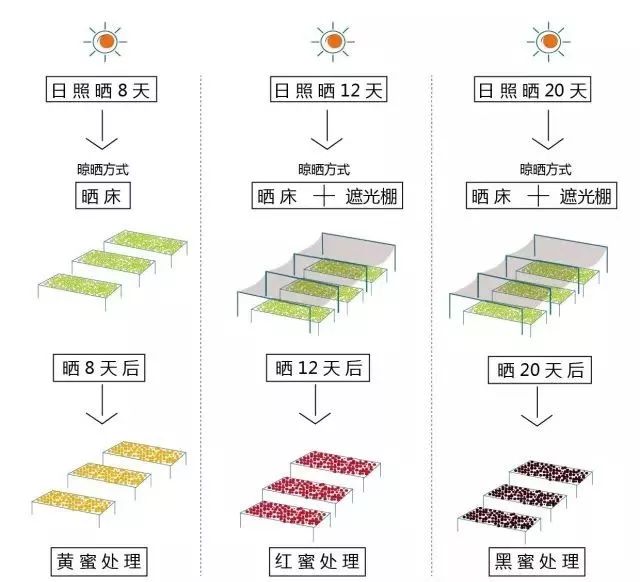
Black honey: pectin is almost completely retained, so drying takes the longest, requiring more than 14 continuous days. During the process, to prevent drying too quickly, covers are used to block overly strong sunlight, allowing the sugar transformation to be more complete, and the final product can display richer fruit flavors. Coffee processed as black honey often tends toward a wild flavor profile, with intense sweetness and high body, sometimes even with a mouthfeel similar to red wine.
Red honey: about 25% of the pectin is removed (practices vary slightly among different estates), sun-drying lasts about 12 days, and shade covers may also be used during the process, with the coffee turned several times a day, but not as frequently as yellow honey. Red honey processing sits in the middle ground between washed and natural processes, and is also the most common honey processing method.
Yellow honey: 40% of the pectin is removed, receiving the most sunlight for drying, lasting about 8 days, with the coffee placed on raised beds and turned once every hour.
White honey: 40% to 60% of the pectin is retained, with the shortest fermentation time, making it the processing method closest to washed processing.
Raisin honey processing:
In addition to the several common honey processing types above, in recent years an innovative method called raisin honey processing has gradually become popular. The operational steps of raisin honey processing are: before the coffee cherries are depulped, they are first dried on raised beds for at least three days, allowing the fruit to dehydrate and shrivel to a state similar to "raisins," and then they are depulped and the subsequent honey processing flow is continued.
The characteristic of the raisin honey processing method lies in "retaining 100% pectin" and "zero water treatment," which also significantly increases the difficulty of this processing method. According to Front Street's understanding and analysis, this processing method has extremely strict requirements for timing control, with difficulty even exceeding black honey processing. The green beans first go through the drying stage, allowing the aromatic flavors of the fruit pulp to penetrate into the interior of the green beans under the warming effect of sunlight, so coffee using raisin honey processing not only has rich floral fragrance and fruity sweetness, but also possesses a clear sweet-and-sour flavor spectrum. Two coffees on Front Street's daily bean list from Costa Rica use raisin honey processing: Front Street Bach coffee from the Canet Estate Musician Series and Front Street Strawberry Candy Geisha Blend coffee from the Mirazu Estate.
[Front Street Coffee Roasting Curve]
Bean drop temperature: 180°C; turning point: 5'45", 152°C; first crack: 9'25", 184.5°C; development after first crack 1'50", discharged at 197.4°C.
[Front Street Coffee Cupping Report]
Nuts, fermented wine aroma, cream, caramel, citrus
[Front Street Coffee Brewing Parameters]
Dripper: Hario V60
Water temperature: 88-90°C
Dose: 15 grams
Coffee-to-water ratio: 1:15
Grind size: BG 6S
[Front Street Coffee Brewing Method] : Use 30 grams of water for a 30-second bloom, pour in a small stream in circles until 124 grams for a staged pour, and when the water level drops and is about to expose the coffee bed, continue pouring until 225 grams and stop pouring. When the water level drops and is about to expose the coffee bed, remove the dripper. (Timing starts from the beginning of the bloom.) Total extraction time is 2'01".
[Flavor Description] : When hot, sipping reveals citrus acidity and fermented wine aroma; as the temperature changes there is a creamy aroma, with a caramel sweetness in the aftertaste; the mouthfeel is relatively clean and balanced.
For professional coffee knowledge exchange and more coffee bean information, please follow Coffee Workshop (WeChat public account: cafe_style).
For more specialty coffee beans, please add the private WeChat of Front Street Coffee: qjcoffeex.
The above content is compiled by CoffeeHunters, a coffee news website.


