







What makes Yunnan Typica coffee different from Catimor?
Yunnan Typica is an heirloom variety with roots in Ethiopia and southeastern Sudan, and it is one of the oldest members of the Arabica family. Most coffee planted in Yunnan today is Catimor, roughly 99 percent of the planted area, so the two are often confused even though they are distinct.
Typica shows a conical shape with a vertical trunk reaching about 5 meters, wider branch spacing, and bronze young leaves. Its flavor is elegant, but the tree is weak, disease-prone, and low-yielding. A 2013 natural Typica from a Lincang plantation traces variety, processing, roasting curve, and cupping notes.
In discussions of Yunnan coffee varieties, Typica and Catimor are often conflated. In reality, the vast majority of coffee currently grown in Yunnan is Catimor, while Typica is a long-established heirloom variety. This article begins with Typica's origins and botanical characteristics, outlines its flavor advantages and cultivation challenges, and, by drawing on Front Street Coffee's Front Street 2013 Natural Typica from its plantation in Lincang, Yunnan, presents a complete picture from variety selection, processing method, and roasting curve to cupping notes and pour-over recommendations, helping readers clarify the varietal lineage of Yunnan small-bean coffee.
The roots of Typica can be traced to Ethiopia and southeastern Sudan, and it is one of the oldest varieties in the Arabica family. Its growing tip has a reddish-copper hue, which is why it is called red-tip coffee, and some also call it heirloom small-bean coffee. Front Street Coffee currently has two Yunnan beans; the one labeled Front Street Yunnan Small Bean actually belongs to Catimor, because 99% of Yunnan's planted area is given over to Catimor, while Front Street 2013 Typica uses the traditional heirloom Typica of Yunnan. In Front Street's plantation in Yunnan, both Typica and a small amount of Bourbon are planted.
Typica: Ethiopia's oldest native variety, and the bloodline of all Arabica can be traced back to it. Typica's young leaves are bronze-colored, and its beans are somewhat oval or slender and pointed; the flavor is elegant, but the tree is rather weak, has poor disease resistance, and produces little fruit. Ethiopia is the birthplace of Arabica, and Typica naturally emerged from there as well. Around the 7th century AD, Yemen had already begun cultivating coffee, and those trees all had copper tips and produced oval beans with one flat side—this was the Typica variety. Of course, the name Typica was later summarized by people based on these characteristics.
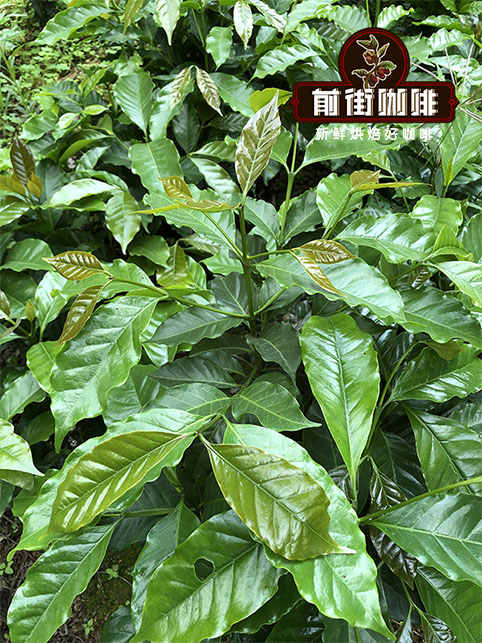
Typica's botanical characteristics. Typica is highly recognizable and may be one of the easiest varieties to identify. The plant is conical in shape, with a vertical main trunk that can grow up to 5 meters tall. Because of this height, the spacing between Typica's branches and the internodal distance on the same branch are wider than in other varieties.
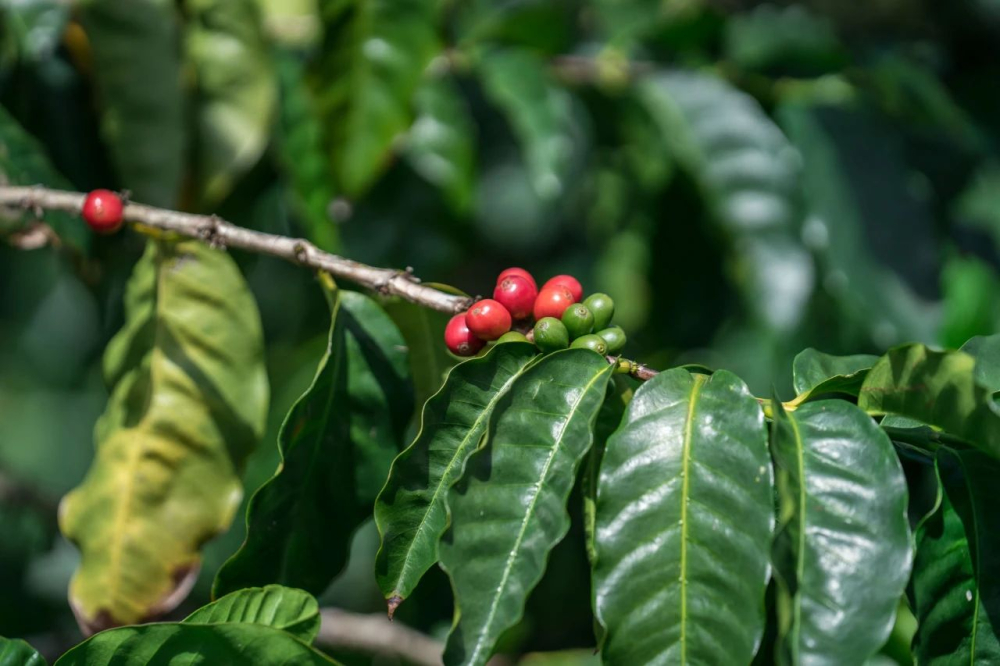
The angle formed by the side branches and the main trunk is between 50 and 70 degrees. Neither the trunk nor the branches are especially thick, and the leaves, fruit, and green beans are usually rather slender, with young leaf tips being bronze-colored. Compared with other Arabica varieties, Typica has smoother leaf surfaces and fewer wavy edges. Typica fruit is bright red when ripe.
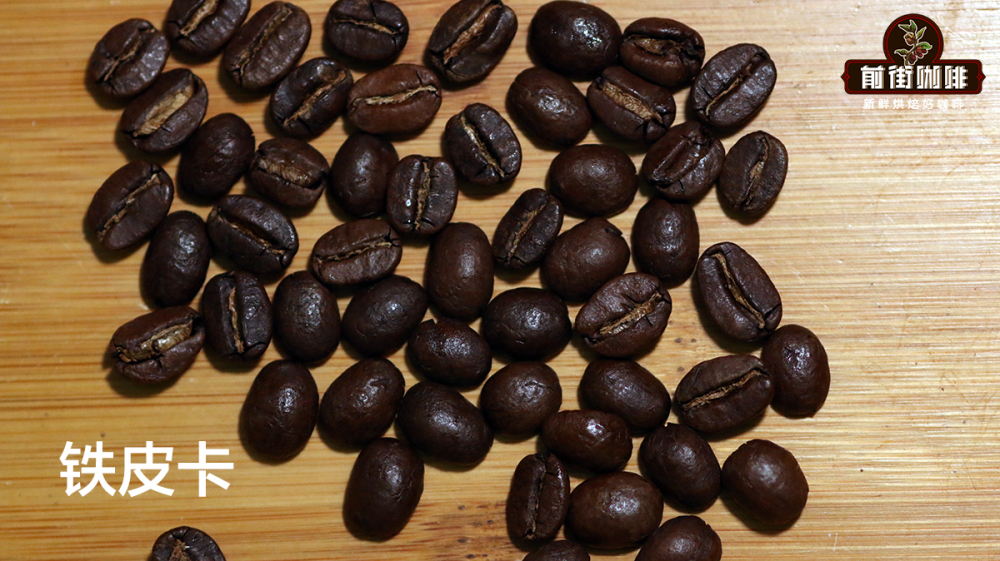
Typica's bronze-colored young leaves are a signature feature, and its beans are somewhat large, pointed-oval, or slender and pointed, which is why some also call it red-tip coffee. Typica's flavor is clear, clean, and elegant, with good balance and a high degree of cleanliness in the cup; its shortcomings are insufficient yield, a requirement for altitude, susceptibility to leaf rust, and weak resistance to pests and diseases. Typica has had many highlight moments: in 1958 it was rated a first-class product at the London International Coffee Tasting; in 1980 at the National Coffee Conference it was praised by Chinese and foreign experts as the "crown of Chinese coffee"; and in 1993 at the Brussels World Coffee Competition it won the "Eureka" gold award. Typica originated in Ethiopia and southeastern Sudan and is one of the oldest varieties in Arabica; its young leaves are reddish-copper, hence the name red-tip coffee, also called heirloom small-bean coffee. Because of low yield and difficult cultivation, its price is considerably higher than ordinary small-bean coffee, but its flavor performance is excellent, making it a recognized specialty coffee variety.
Common Typica varieties include Indonesia's Sumatra Typica, Jamaica's Blue Mountain, Yunnan's old tree type, and India's Kent. These are in fact all Typica that adapted to local environments and were given different names by local people, but they are still essentially Typica.
[Front Street Coffee · Yunnan Front Street 2013 Natural Typica] Region: China, Lincang
Estate: Front Street Coffee plantation
Variety: Typica
Altitude: 1300m
Processing method: Natural
In 2013, Front Street Coffee's Guangzhou Dongshankou store opened, and it was also the first year Front Street began coffee cultivation. Starting as agricultural novices, Front Street learned through trial and error all the way, and ultimately chose to begin growing coffee in a semi-primitive forest on the China-Myanmar border in Lincang, Yunnan. The altitude there is suitable for Arabica growth, and the climatic conditions are also good. As for variety, Front Street chose Typica, because Yunnan had already planted Typica more than a hundred years earlier, and predecessors had already proven that Yunnan could produce high-quality Typica. In 2013, what was commonly grown in Yunnan was high-yield Catimor, but in terms of flavor, Typica is superior to Catimor.
From seedling raising and transplanting to mature trees and fruiting, it took Front Street a full five years before the trees began to bear fruit. By 2020, the seventh year, production finally stabilized. Front Street named this bean "Front Street 2013."
Roasting recommendation: Front Street Yunnan Typica uses natural processing, picking only ripe, bright red coffee cherries and then using raised drying beds for refined natural processing to preserve the coffee's sweeter flavors.
Front Street's roaster believes that a medium slow roast best expresses the rounded, smooth character of Front Street Natural Typica without losing its rich floral and fruity aromas.
Roaster: Yangjia 500g semi-direct fire
When the drum temperature rises to 200°C, charge the beans, set the damper to 3, and after 30 seconds adjust the heat to 160°C with the damper unchanged. The turning point is at 1 minute 33 seconds. At 168°C, adjust the heat once; at this point the bean surface turns yellow, the grassy smell disappears completely, dehydration is complete, adjust the heat to 130°C, and set the damper to 4.
At 8 minutes 45 seconds, ugly wrinkles and dark streaks appear on the bean surface, and the toast aroma clearly shifts to coffee aroma, which can be defined as the prelude to first crack; at this point you must listen clearly for the sound of the first crack. At 9 minutes 07 seconds, first crack begins; reduce the heat to 80°C and open the damper fully to 5 (adjusting the heat must be done very carefully, not so low that there is no cracking sound). Three minutes after first crack, drop the beans at 198°C.
Cupping report: Within 8 to 12 hours after roasting, Front Street conducted a cupping. The cupping flavors of Front Street 2013 Yunnan Typica are as follows:
Aroma: nuts, caramel, toast
Flavor: plum, cream, sucrose, soft fruit acidity
Aftertaste: caramel, black tea
Front Street pour-over recommendation:
Dripper: V60 Water temperature: 90°C Grind size: 75% passing a No. 20 sieve, EK43s setting 10.5
Coffee-to-water ratio: 1:15
Brewing method: three-stage pouring
First stage: pour 30ml water and bloom for 30 seconds;
Second stage: pour 120ml water in small circles; when the liquid surface is about to expose the coffee bed,
Third stage: pour 75ml water in small circles.
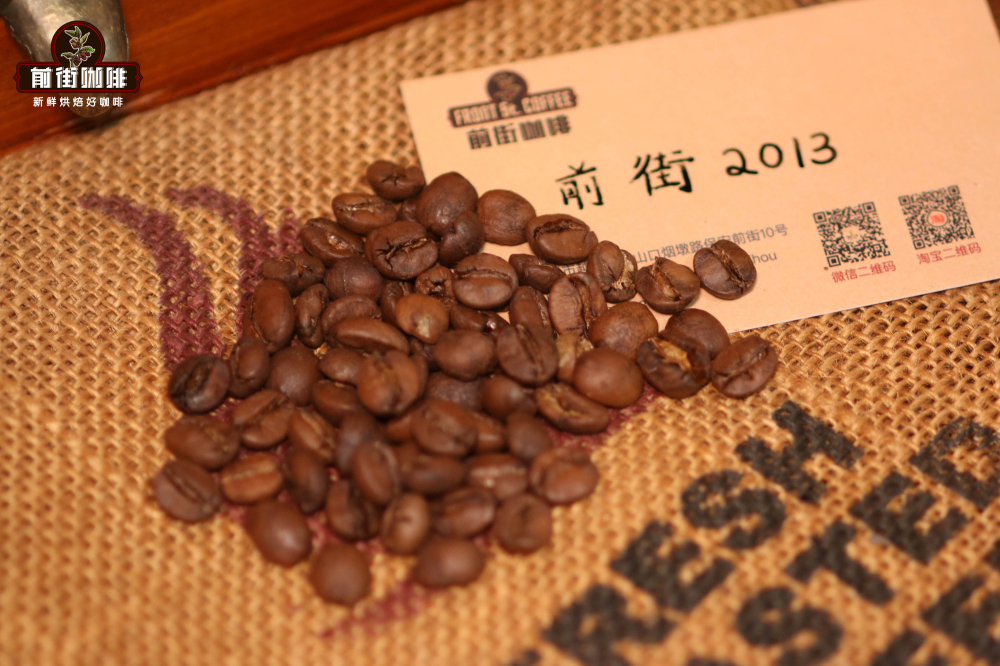
[Front Street Yunnan Front Street 2013 Natural Typica] Flavor: toast-like sweetness, nutty sweetness, and the sweet-and-sour sensation brought by slight fruit acidity form a good layering, with fruit-like aromas, and the spicy sweetness in the aftertaste is quite distinctive; the mouthfeel is rich and balanced.
For more specialty coffee beans, please add the private WeChat of Front Street Coffee, WeChat ID: kaixinguoguo0925
The above content is compiled by CoffeeHunters, a coffee news website.


