







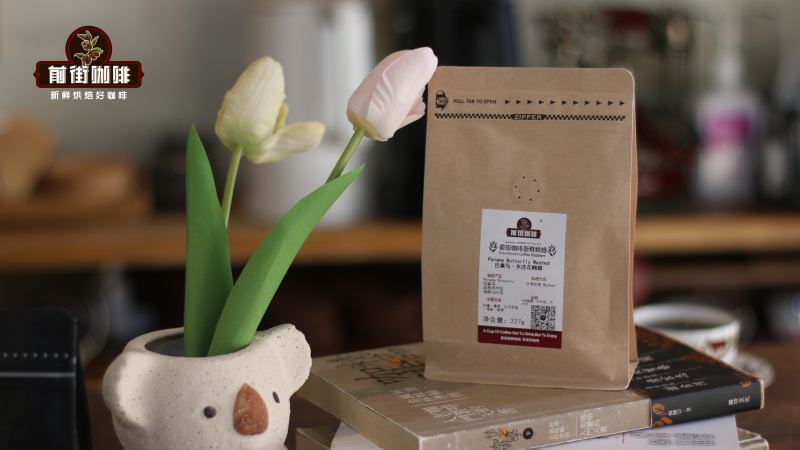
How does a Boquete coffee farm shape Butterfly beans?
Panama Boquete Butterfly is a blend of 70 percent geisha with Caturra and Catuai, grown at about 1,600 meters on the slopes of Volcan Baru. Front Street Coffee roasts it medium-light and brews it with a three-stage V60 pour-over to draw out tea, honey, berry, lemon and white floral notes at an accessible price.
The coffee farm setting matters here. Boquete sits in Chiriqui Province beside Volcan Baru, where volcanic ash soil and a cool highland microclimate support dense, slow-ripening cherries. Neighboring estates such as Hacienda La Esmeralda and Elida share those conditions. The coffee process combines natural and washed lots, and the medium-light roast keeps the floral and citrus character intact.
The Boquete region of Panama has become famous for Geisha, yet it is also home to a bean that combines Geisha lineage with an accessible price—Butterfly. It is composed of 70% Geisha blended with Caturra and Catuai, grown at 1,600 meters on the slopes of Volcán Barú. Front Street Coffee uses a medium-light roast and a three-stage V60 pour-over to fully release its floral, honey, berry, and citrus notes. This article will provide a comprehensive analysis of this high-value specialty bean, from terroir and variety origins to fine washing processing and brewing parameters.
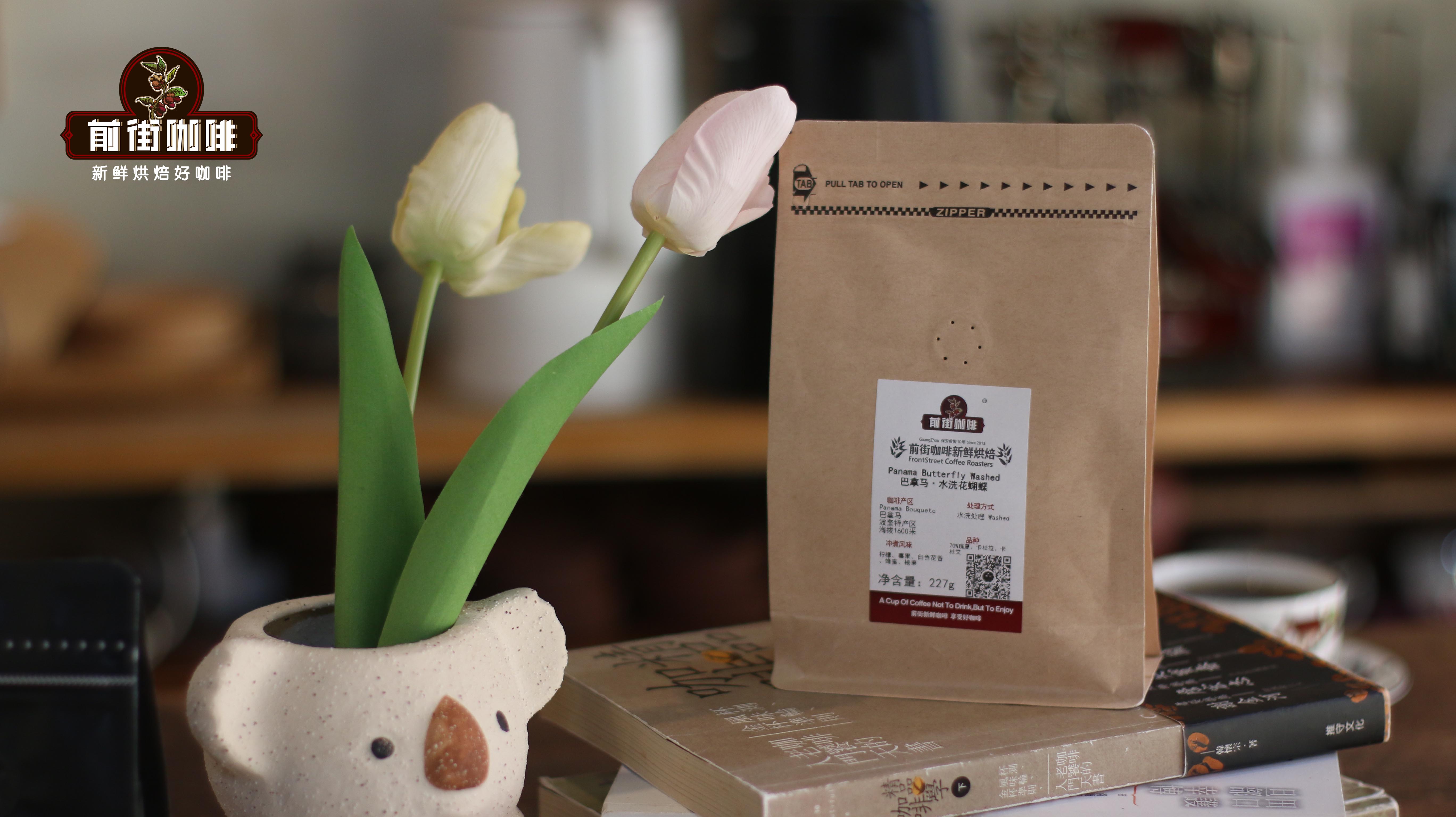
Front Street Coffee: Panama · Butterfly Coffee Beans Panama Boquete Butterfly
Country: Panama
Grade: SHB
Region: Boquet
Roast Level: Medium-Light Roast
Processing Method: Natural\Washed
Variety: 70% Geisha, Caturra, Catuai
Flavor: Tea, Honey, Berry, Lemon, White Floral
Panama is located in Central America, bordered by Costa Rica to the west and Colombia to the east. Anyone with even a passing interest in specialty coffee likely knows that Panama gained fame in the coffee world thanks to Hacienda La Esmeralda's Geisha. This country's pursuit of coffee quality is almost obsessive, and its high-quality coffees are too numerous to count.
Panama coffee is world-renowned for Hacienda La Esmeralda's Geisha, and the region that nurtured this legendary bean is equally famous—Boquete in Chiriqui Province. Boquete is a small town under Chiriqui Province, located near the border between Panama and Costa Rica, beside the famous Volcán Barú, with beautiful scenery, fertile soil, and climate and terroir conditions extremely suitable for growing high-quality coffee.
The Boquete region is home to many famous estates. In addition to the renowned Hacienda La Esmeralda, there are also Elida Estate, Acaba Estate, and others equally famous, all producing high-quality specialty coffee. This is thanks not only to Boquete's superior ecological conditions and the fertile volcanic ash soil of Volcán Barú, but also to a key factor—the unique microclimate of the Boquete highlands, which is an irreplaceable core resource for specialty coffee in this region. Panama's east-to-west topography causes cold air to converge along the central mountain range above 6,500 feet, creating diverse microclimates in the Boquete area. Temperature and rainfall are both very suitable for plant growth, so the coffee trees here grow exceptionally well.
In such a uniquely favorable growing environment as Boquete, there would certainly not be only the Esmeralda Geisha—that "king of coffees" with both exceptional flavor and value. However, drinking Geisha every day is ultimately too luxurious; even if there were no financial burden, it would be like eating shark fin and bear paw every day—monotonous. The same goes for coffee: only by exploring widely can one fully enjoy the pleasure of coffee tasting.
In Boquete, there is a bean with outstanding value for money, and its name is extremely beautiful: Butterfly. Panama Butterfly coffee beans have 40% superior Geisha lineage, composed of three varieties—Geisha, Caturra, and Catuai—planted in the Volcán Barú area of Boquete at about 1,600 meters above sea level. The processing plant uses fine washing. The special microclimate of the Panama local area gives this region abundant rainfall, large temperature differences between day and night, and together with the volcanic rock soil unique to volcanic areas, as well as careful harvesting and fine processing, this coffee is quite outstanding in body, acidity, and floral expression.
What is even more delightful is that on the basis of such excellent quality, its price is very accessible, with truly explosive value for money. What makes this bean special is that it is composed of three varieties, 40% of which is Geisha, giving it distinct Geisha flavors. According to records, due to the estate's historical reasons, in the early days, in order to pursue yield, Geisha trees were interplanted with Caturra and Catuai coffee trees. For ease of harvesting, the coffee farmers did not reclassify them but directly mixed and processed the three varieties together. Later, when Geisha became famous and its price soared, the processing plant began to carry out refined washing processing on this coffee bean.
Today there are many ways to do washed processing, but the general process is: after the coffee cherries are harvested, remove floating beans, depulp, then soak the coffee beans in fermentation tanks. Enzymes in the water soften the mucilage attached to the parchment, and natural yeasts break down the sugars in the mucilage. This process is fermentation. After fermentation is complete, move the beans to a drying yard to dry, during which they must be constantly turned to ensure even drying. Finally, store them in parchment for warehousing, and after the green bean buyer places an order, hull and bag them. Coffee processed this way has a clean mouthfeel, highlighting bright and lively fruit acidity, as well as lifted fruit flavors and floral notes.
It can thus be seen that Butterfly's superiority in variety, combined with fine processing, and if a medium-light roast is then used to determine this bean's final flavor direction, you will certainly give great affirmation to this Butterfly, which has the distinctive Geisha floral aroma, tropical fruit, and berry-type flavors, along with honey sweetness and smoothness, and a very persistent aroma and finish.
Cupping:
Fragrance (dry aroma): jasmine, citrus, tea, honey
Aroma (wet aroma): berry, floral, oily, vanilla, citrus
Flavor (slurping): juicy sweetness, refined acidity without sharpness, good cleanliness, bergamot, honey, citrus, spice, floral, berry, tea, cherry, delicate finish, lingering aroma, classic Hacienda La Esmeralda Geisha flavor.
Mouthfeel description: jasmine, citrus, tea, honey, berry, vanilla, bright acidity! Butterfly, which contains the Geisha variety, is a specialty coffee bean with extremely high value for money.
As is well known, Geisha coffee is world-famous for its rich floral aroma and complex fruit notes. The roasters at Front Street hope this washed Butterfly can retain more of Geisha's excellent acidity, so they choose a medium-light roast. This roast level does not overly change the high hardness of high-altitude beans, so brewing requires increasing the extraction rate somewhat in order to present fuller flavor layers. Front Street uses a higher water temperature and a slightly finer grind to stimulate more aromatic substances; at the same time, to make the floral and fruity notes clearer, Front Street widens the coffee-to-water ratio a little, using 1:16.
To improve extraction, avoid over-extraction, and highlight the sweet-and-sour flavor layers, the baristas at Front Street Coffee use a V60 dripper. The V60 dripper's body has spiral ribs connecting the top and bottom and a large central hole, which speeds up the flow of water; the spiral-shaped vent design extends the water path, increasing the contact time between coffee grounds and hot water. Each stream of water converges along the grooves toward the center of the dripper, concentrating the pressure on the coffee grounds and extracting coffee with richer layers.
Dripper: V60 Water Temperature: 91-92°C Dose: 15g Coffee-to-Water Ratio: 1:15 Grind Size: fine sugar size (80% passing a No. 20 sieve)
Three-stage extraction: In the first stage, use 30g of water to bloom for 30 seconds, pouring evenly in circles to form a dome; in the second stage, pour 95g of hot water, and when the coffee bed has dropped halfway, begin pouring the third stage of 100g, until all the coffee has finished dripping. Note to start pouring from the center point, using a gentle small stream in circles throughout, to avoid uneven extraction. Finally, after the coffee liquid has finished dripping, gently swirl to even it out, and then you can begin tasting Butterfly coffee's flavor starting from high temperature.
The above content is compiled by CoffeeHunters, a coffee news website.


