







How Does Geisha Coffee Flavor Change by Producing Region?
Geisha coffee is known for a floral aroma, but that signature profile comes mainly from Panama. Panama geisha from Hacienda La Esmeralda established the floral definition, with Red, Green, and Blue Label lots each showing their own character. Beans grown elsewhere often carry only faint floral notes by comparison.
Ethiopia is the birthplace of the variety, yet Geisha Village beans there share little genetic connection with Panama Geisha, and they split into Gori Gesha, Illubabor Forest 1974, and Gesha 1931. Costa Rica's El Mago Estate, helped by a unique microclimate, produces a clean and elegant Geisha cup, so origin changes the flavor a buyer can expect.
Geisha coffee is famous for its captivating floral aroma, but this signature flavor actually comes mainly from the Panama region. When Geisha is introduced to Ethiopia, Costa Rica, and other places, the flavor expression shows noticeable differences. This article starts with three Geisha coffees from Front Street Coffee—Panama, Costa Rica, and Ethiopia—and compares the variety background, estate information, and cupping flavors of each region one by one. Ethiopia, as the birthplace of Geisha, has a Geisha Village variety whose genetic connection to Panama Geisha is minimal; Panama's Hacienda La Esmeralda, on the other hand, established the floral definition of Geisha, with Red Label, Green Label, and Blue Label each having their own characteristics; Costa Rica's El Mago Estate, thanks to its unique microclimate, also produces a clean and elegant Geisha flavor. Through this article, you will gain a comprehensive understanding of the characteristics and main flavor descriptions of Geisha coffee from different origins.
For more specialty coffee knowledge, please follow the WeChat public account: FrontStreet Coffee
When people mention Front Street Geisha coffee, most first think of that rich and captivating floral aroma. However, this iconic floral aroma actually mainly appears in Panama Geisha coffee. Although Geisha grown in other regions also carries floral notes, they are often not prominent enough, or are only faintly discernible. Ever since Geisha rose to fame at Panama's Hacienda La Esmeralda, more and more major coffee-producing countries have begun to introduce Geisha, but the flavor expression varies greatly. Next, Front Street will compare the differences among three beans: Front Street Panama Geisha coffee, Front Street Costa Rica Geisha coffee, and Front Street Ethiopia Geisha coffee.
Front Street Ethiopia Geisha Coffee
Ethiopia is the birthplace of Geisha coffee, but the Geisha coffee beans currently grown in Ethiopia's Geisha Village have little genetic connection to the Panama Geisha coffee beans we know well.
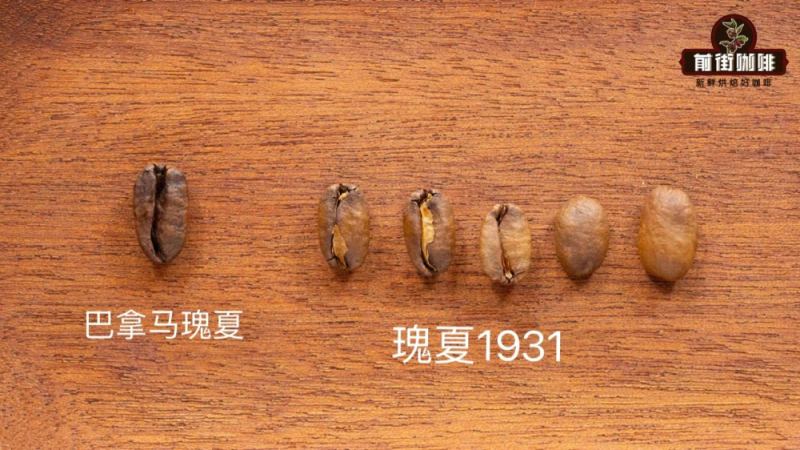
Ethiopian Geisha coffee can be subdivided into three varieties: Gori Gesha (GG), which replicates the genetic diversity within the Gori Gesha coffee forest; Illubabor Forest 1974 (IF), discovered in 1974 during a survey in the Illubabor forest and later bred by the Ethiopian research center into a disease-resistant variety; and Gesha 1931 (G31), which combines multiple forest varieties and is extremely similar to Panama Geisha, selected by observing plant morphology, bean shape and appearance, screen size, and cupping flavor.
The first two Front Street Geisha coffee beans are genetically completely different from Panama Geisha coffee, while Gesha 1931, according to official descriptions, is the closest to Panama Geisha in both plant shape and cupping performance, but the actual degree of genetic consistency is very small. Therefore, the flavors of Ethiopian Geisha and Panama Geisha can be said to be completely different.
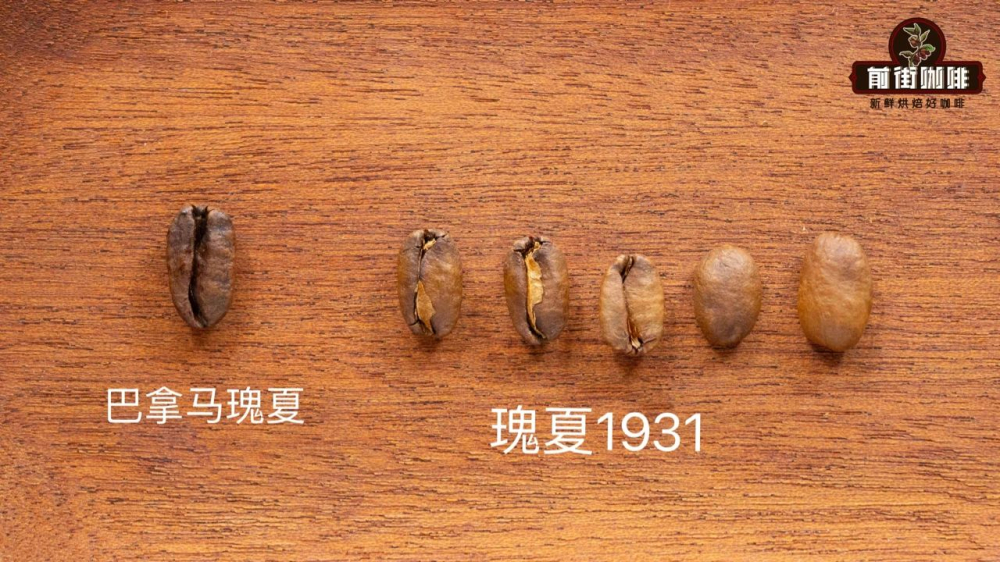
Front Street Geisha Village Olma Lot 059 Coffee Beans
Grade: Rarities (Gold) label
Processing method: Natural (32 days)
Variety: Gesha 1931
Country: Ethiopia
Region: Bench Maji
Altitude: 1,931-2,040m Front Street Ethiopia Geisha Village Gold Label Geisha coffee bean brewing flavor: noticeable fermented note on entry, accompanied by citrus aroma, floral notes, and berry-like sweet-tartness, creamy and smooth, soft acidity, medium sweetness, moderate finish.
Front Street Panama Geisha Coffee
Panama Geisha coffee is the starting point of Geisha coffee in the public perception. The impression that "Geisha coffee has a captivating floral aroma and berry-like sweet-tartness" originates precisely from the Geisha coffee of Panama's Hacienda La Esmeralda. In 1931, Geisha was discovered in Ethiopia's Geisha forest, then sent to the Kenya Coffee Research Institute, introduced to Uganda and Tanzania in 1936, spread to Costa Rica in 1953, and introduced to Panama around 1960. In 2004, Hacienda La Esmeralda's Geisha became famous overnight at the BOP competition, establishing the estate's position in the specialty coffee world ever since.
Hacienda La Esmeralda's Front Street Geisha coffee is divided into three types: Red Label lots are grown at altitudes of 1,600-1,800 meters, with cupping scores above 90 points, mainly from the Jaramillo and Canas Verdes regions. The Front Street Red Label Geisha coffee that Front Street sourced comes from Canas Verdes, uses natural processing, and has a distinct rose aroma with berry-like sweet-tartness.
Green Label lots do not participate in auctions, but their quality is still excellent. Green Label Geisha is grown at altitudes of 1,600-1,800 meters, mainly blended from lots from different plots such as Jaramillo and Canas Verdes. The Front Street Green Label Geisha coffee on Front Street's bean list is divided into natural and washed processing; the washed one has floral, fruity, and citrus acidity, with a fresh and clean mouthfeel; the natural processing adds a rich and juicy mouthfeel on top of the washed base.
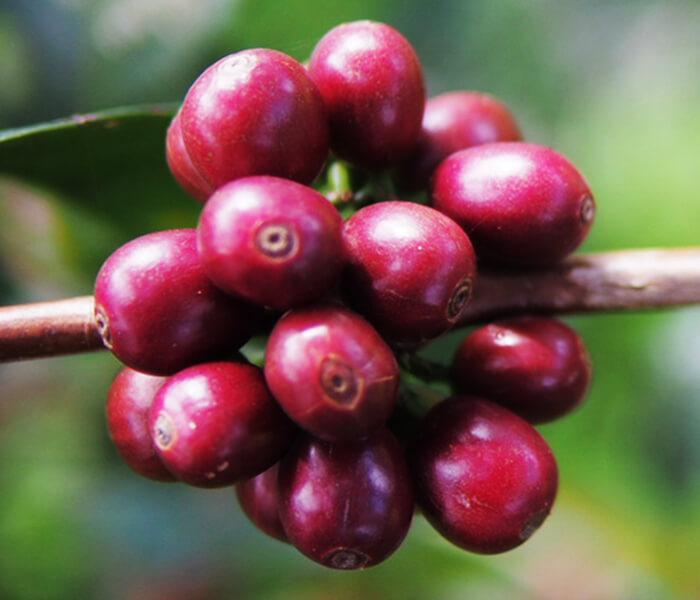
Front Street Blue Label is grown at altitudes of 1,400-1,500 meters. Blue Label blends Geisha coffee beans from three different plots: Jaramillo, Canas Verdes, and El Velo. In previous years, Blue Label Geisha was only available in washed processing, but in 2020 the Blue Label lots added natural processing. The Front Street Blue Label Geisha coffees that Front Street sourced include both natural and washed processing; the washed Blue Label has light floral notes and bright acidity, while the natural Blue Label has a slight floral aroma and a full juicy feel.
Front Street Hacienda La Esmeralda Red Label Geisha Coffee Beans
Region: Boquete, Panama
Estate: Hacienda La Esmeralda
Plot: Canas Verdes, Mario plot
Altitude: 1700m+
Processing method: Natural processing Front Street Panama Hacienda La Esmeralda Red Label Geisha coffee brewing flavor: bright rose and citrus aromas, along with notes of genmai, berries, apricot, mixed fruits, and honey, with a rich juicy feel, layered flavors, and noticeable sweetness.
Front Street Costa Rica Geisha Coffee
As mentioned earlier when introducing Panama Geisha coffee, Panama's coffee was introduced from Costa Rica. Costa Rica has a history of growing coffee for nearly two hundred years. As an important economic crop for the country, the coffee industry is very mature, and today there are also many newly built estates. These estates mostly have resources and the willingness to grow the Geisha variety, the most famous of which is El Mago Estate's Geisha coffee beans.
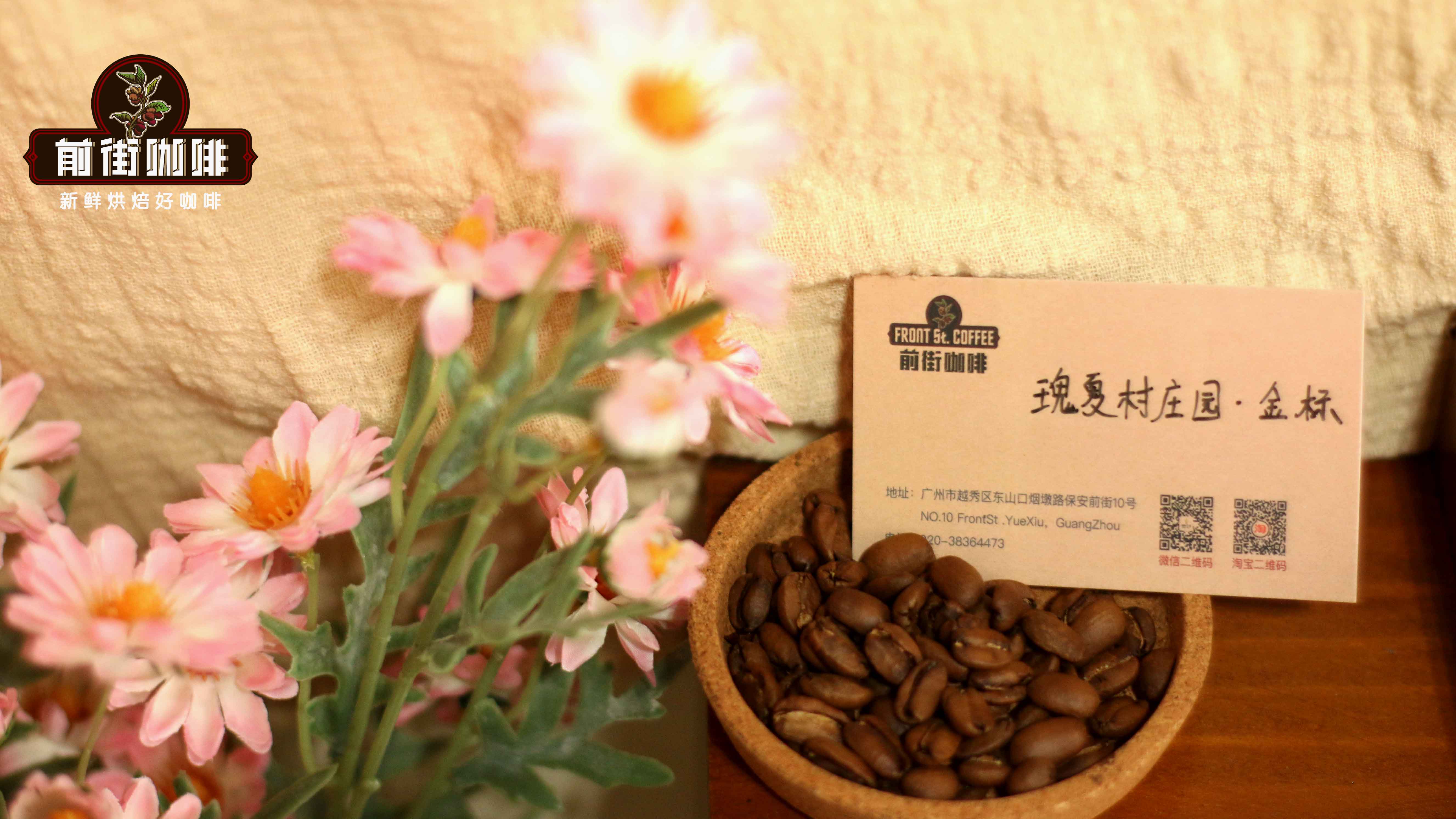
El Mago Estate's microclimate is very favorable for coffee growth. In the dry season, early in the morning, the estate temperature can drop to as low as 9 degrees Celsius, rise to 35 degrees Celsius at noon, and drop back to 9 degrees Celsius by dusk. Such a huge temperature difference between day and night helps the coffee fruit accumulate more nutrients, thereby producing more refined flavors.
Front Street Costa Rica El Mago Estate Geisha Coffee Beans
Region: Tarrazu, Costa Rica
Estate: El Mago Estate
Variety: Geisha variety
Processing method: Washed processing
Altitude: 1750m
Front Street Costa Rica Geisha coffee brewing flavor: jasmine floral aroma on the nose, noticeable lemon acidity on entry, high cleanliness, juicy mouthfeel, honey sweetness emerging in the middle, and a green tea finish.
The above content is compiled by CoffeeHunters, a coffee news website.


