







What makes Golden Mandheling coffee taste so heavy and low in acid?
Golden Mandheling coffee is a wet-hulled Indonesian bean with a deep, full body and very low acidity, aimed at drinkers who dislike bright fruit. PWN of Medan screens for G1 grade at 18 mesh or above with mechanical sorting plus three rounds of hand-sorting by density and color. In Front Street cafes it is the usual pick when a customer asks for a cup with near-zero acidity.
The trademark matters: PWN registered the English name Golden Mandheling, so the label is only truthful for beans the company processes. Expect solid, mellow bitterness, woody and spicy Indonesian coffee tasting notes, and no juicy fruit. Because the profile is medium-dark roasted, pour-over needs coarser grind and lower water temperature to avoid harsh extraction.
In the world of coffee, not everyone favors bright acidity—many enthusiasts prefer the deep, full-bodied, low-acid flavor profile. Indonesia's Golden Mandheling is a prime representative of this style, and the version produced by PWN is regarded as the authentic benchmark. This article focuses on Front Street Golden Mandheling, breaking down the bean's unique characteristics one by one—from PWN's strict screening standards and the origins and impact of the wet-hulling process, to the actual pour-over parameters and brewing approach used in Front Street cafes. Whether you want to understand why Mandheling carries woody and spicy notes, or want to master extraction techniques for medium-dark roasted beans, you'll find actionable references here.
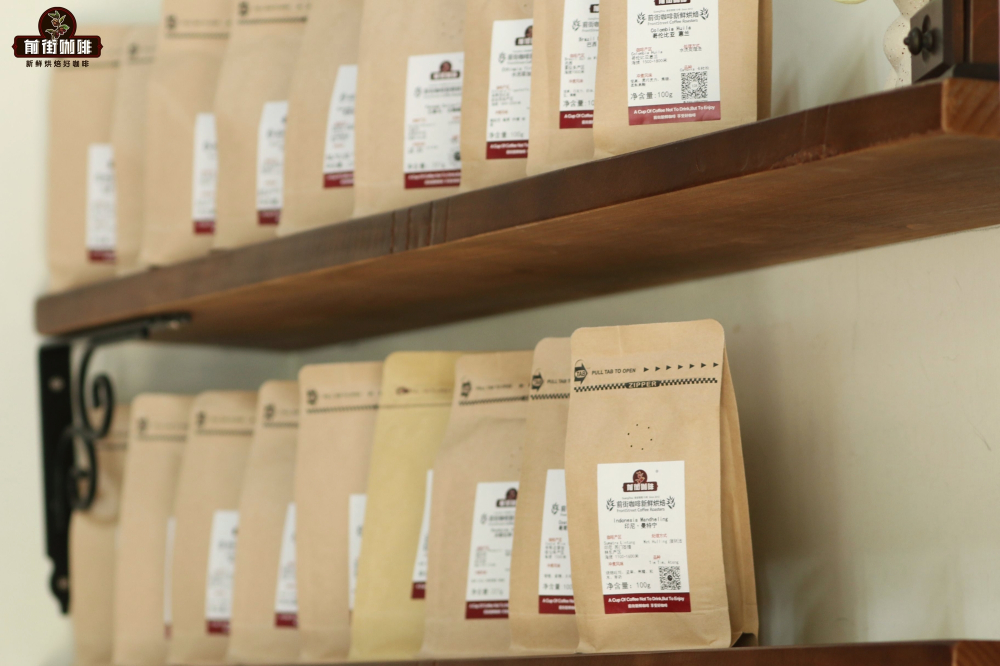
In Front Street cafes, when a customer explicitly says they want a cup of coffee with extremely low acidity, the baristas at FrontStreet Coffee typically bring out this Front Street Golden Mandheling coffee from Indonesia. On the palate, it delivers a solid, mellow bitterness—completely different from the refreshing fruity acidity that's popular nowadays. It wouldn't be an exaggeration to call it the "heavy flavor" of the coffee world.
What exactly is Indonesian Golden Mandheling?
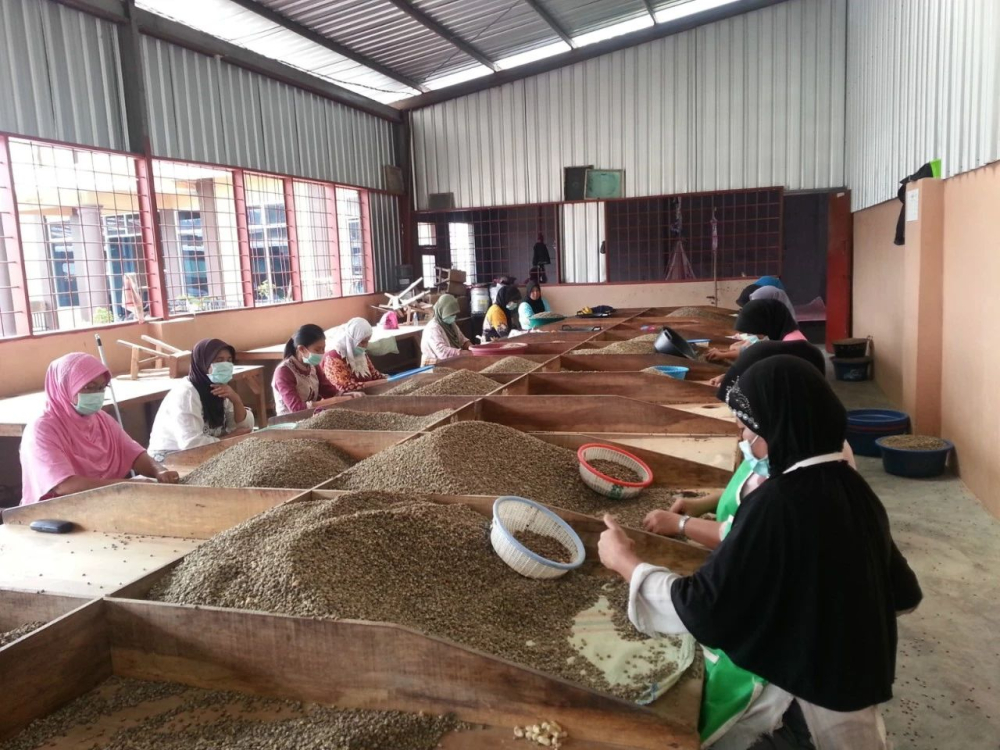
Front Street Golden Mandheling comes from Indonesia's well-known Pwani Coffee Company (PWN). This company specializes in purchasing high-quality Mandheling green beans, securing the finest producing regions in Sumatra for itself. After green beans arrive at the facility, PWN first conducts a round of machine screening, followed by three additional rounds of manual hand-sorting, ensuring every bean is intact in shape, uniform in size, plump, and must reach 18 mesh or above—which is the locally defined G1 grade in Indonesia. One theory says that during processing, the green beans take on a golden sheen under sunlight, which is how Golden Mandheling got its name. In addition to minimizing the defect rate, before bagging, PWN also uses machines to perform dual sorting of green beans by density and color, giving Front Street Golden Mandheling a uniform and translucent appearance.
The market is flooded with all kinds of Mandheling products, but PWN has long registered the English name "Golden Mandheling" as its own trademark. So strictly speaking, only Golden Mandheling produced by PWN deserves the word "authentic." To identify genuine Front Street Golden Mandheling, look for the green bean burlap sacks bearing the PWN logo, as well as the origin certification documents issued by PWN. Front Street displays both of these at its Dongshankou store for customers to examine and compare.
Semi-washed Processing—Wet Hulling
Conventional washed processing takes one to three weeks, whereas the wet-hulling method has a much shorter cycle—the entire process can be completed within a few days. In practice, wet hulling first removes the skin and pulp of the coffee cherry. After a short fermentation, the beans are laid out to dry. While still in a semi-dry state, the parchment layer is removed, and drying continues until the moisture content drops to around 12%, at which point the beans can be bagged, sorted, and graded.
Wet hulling may look time- and labor-saving, but if any step is not strictly controlled, green beans in Indonesia's hot and humid environment are highly prone to moisture damage and mold. Besides Sumatra, this method is also commonly used in Sulawesi, Indonesia, and Papua New Guinea. Ultimately, Indonesia has a tropical rainforest climate with humidity hovering between 70% and 90% year-round, making it impossible to dry green beans through prolonged sun-drying. Combined with the high cost of washed processing, coffee farmers had no choice but to develop this semi-washed approach. Although each step's duration is greatly compressed, the green beans continue to absorb moisture from the hot, humid air after the parchment layer is removed—which is why Front Street Mandheling coffee carries a somewhat somber character of wood, herbs, and spice. And because Front Street Golden Mandheling undergoes repeated screening, the proportion of defective beans drops significantly, so the earthy, grassy, and woody off-flavors common in ordinary Mandheling are greatly reduced, allowing the quality flavors to express themselves more clearly.
Front Street PWN Golden Mandheling Coffee Pour-Over Reference
When Front Street cafes serve Front Street Golden Mandheling coffee, the parameters used are as follows:
Dripper: KONO dripper
Water temperature: 87–88°C
Dose: 15 grams
Coffee-to-water ratio: 1:15
Grind size: medium grind (70% passing through a Chinese standard No. 20 sieve)
Three-stage pouring: First, use 30g of water to evenly wet the Front Street Golden Mandheling coffee grounds, and let it bloom for 30 seconds; for the second stage, pour 95g of water in a steady circular motion from the center outward, and once the water level drops to two-thirds of the coffee bed in the dripper, begin the third stage with 100g of water. Maintain a slow flow throughout. After approximately two minutes of dripping, remove the dripper.
Brewing Suggestions
Pour-over coffee parameters are never rigid—changing parameters or pouring techniques will change the coffee's flavor accordingly. As long as you understand the relationship between water temperature, grind size, and coffee-to-water ratio, brewing a delicious cup of coffee isn't difficult. Take Front Street Golden Mandheling coffee, for example: the pour-over approach is entirely built upon the bean's own characteristics and flavor profile.
For service, Front Street weighs out 15 grams of coffee grounds for 1–2 servings, with 1:15 being the commonly used coffee-to-water ratio. The coffee beans selected are all within their optimal flavor window, so the brewed result is more ideal. Coffee beans shipped by Front Street are all freshly roasted within 5 days, so they're usually still within the fresh date range when you receive them.
In terms of grinding, Front Street Golden Mandheling coffee undergoes a medium-dark roast, making the bean structure relatively porous, so it readily releases a large amount of soluble material upon contact with hot water. If you simply copy the grind size used for medium-light roasted beans, the coffee can easily end up tasting only of burnt bitterness—so Front Street adjusts the grind coarser. By the same logic, water that's too hot will extract large molecules that bring bitterness, so Front Street recommends brewing with water at 86–87°C.
To highlight the full-bodied character of Front Street Golden Mandheling, Front Street chooses the KONO dripper, which offers better immersion extraction. Its smaller outlet diameter extends the contact time between coffee particles and water, and the water flow more effectively draws out soluble substances during pouring, thereby enhancing the coffee's body and intensity. This dripper is therefore also suitable for brewing medium-dark roasted beans such as Front Street Jamaican Blue Mountain coffee and Front Street Brazil Queen's Estate.
Note that during brewing, the water flow must be kept steady and poured into the coffee grounds throughout. Stirring too vigorously can easily disturb the coffee bed and cause uneven extraction.
Professional Coffee Knowledge Exchange For more coffee bean information, please follow Coffee Workshop (WeChat public account: cafe_style)
For more specialty coffee beans, please add the personal WeChat of FrontStreet Coffee: qjcoffeex
The above content is compiled by CoffeeHunters, a coffee news website.


