







How Did Yunnan Coffee Grow From One Village to Four Regions?
Yunnan coffee began in 1902, when a French missionary carried seeds from Vietnam to Zhukula Village in Binchuan County, Dali, and planted the first coffee tree there; more than thirty of those plants still bloom and bear fruit. Large-scale trial planting followed in 1952, when the Yunnan Academy of Agricultural Sciences gave farmers in Lujiangba, Baoshan, 80 kilograms of seed.
Production is now concentrated in four regions: Baoshan, Pu'er, Dehong, and Lincang. Varieties run from the old Typica type to the widely planted Catimor, and Baoshan arabica coffee is often treated as the most representative expression of the local profile. Yunnan coffee still trails Ethiopian Yirgacheffe or Panama Geisha in fame, but it draws attention for value and terroir.
Yunnan coffee is gradually emerging in China's specialty coffee scene. Although its fame is not yet on par with Ethiopian Yirgacheffe or Panama Geisha, it is winning the favor of more and more coffee lovers with its excellent value for money and unique terroir flavors. This article starts from the century-long cultivation history of Yunnan coffee, tracing the first coffee tree in Zhukula Village, the large-scale trial planting in Lujiangba, Baoshan, to the current distribution pattern of four major production regions (Baoshan, Pu'er, Dehong, and Lincang), and provides an in-depth analysis of the variety composition of Yunnan arabica coffee—from the ancient Typica to the widely planted Catimor today. The article also records in detail Front Street's experience of establishing its own estate in Lincang to grow Typica, as well as the flavor performance and brewing parameters of Front Street 2013 coffee beans and Baoshan Catimor everyday beans, helping readers gain a comprehensive understanding of Yunnan coffee's past and present.
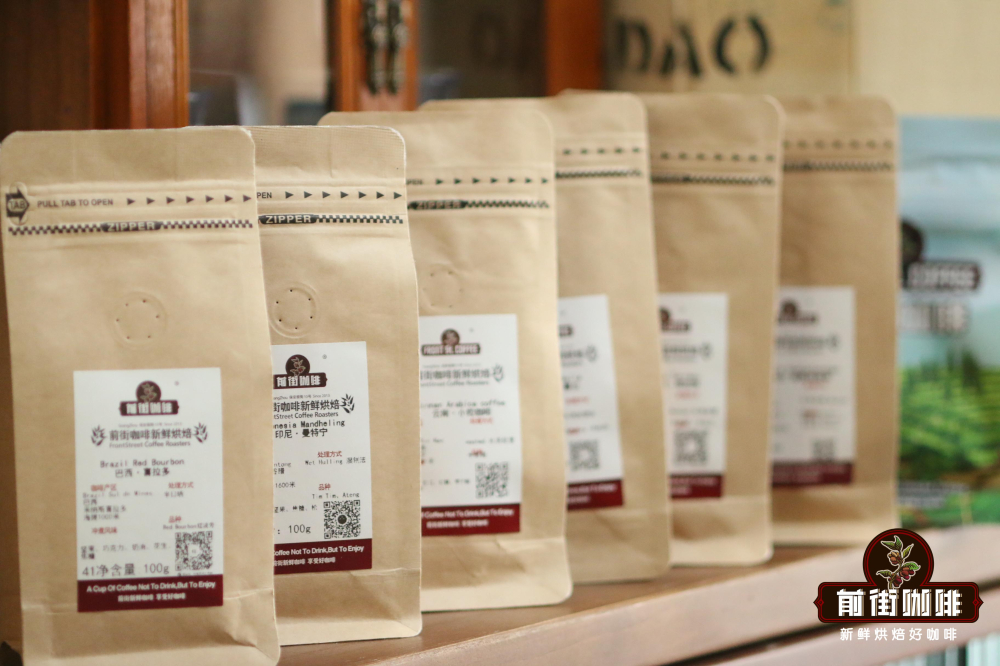
In recent years, domestic coffee consumption has continued to rise, and Front Street has noticed that Yunnan coffee is gradually drawing more attention from coffee enthusiasts. Although compared with famous, high-priced beans such as Ethiopian Yirgacheffe, Indonesian Mandheling, and Panama Geisha, Yunnan coffee still lags in reputation, when it comes to value for money, Front Street believes it is absolutely worth trying. For this reason, Front Street has specially listed seven everyday beans to help friends who are new to coffee quickly build an understanding of various production regions. Among Yunnan origins, Front Street believes Baoshan arabica coffee is the most representative and can well showcase the flavor profile of Yunnan coffee.
The Cultivation History of Yunnan Coffee
After consulting a great deal of material, Front Street learned that in 1902, a French missionary named Tian Deneng brought coffee seeds from Vietnam to Zhukula Village, Binchuan County, Dali, Yunnan, and planted the first coffee tree there. The coffee plants propagated from these seeds still number more than thirty in Binchuan County, where they continue to bloom and bear fruit.
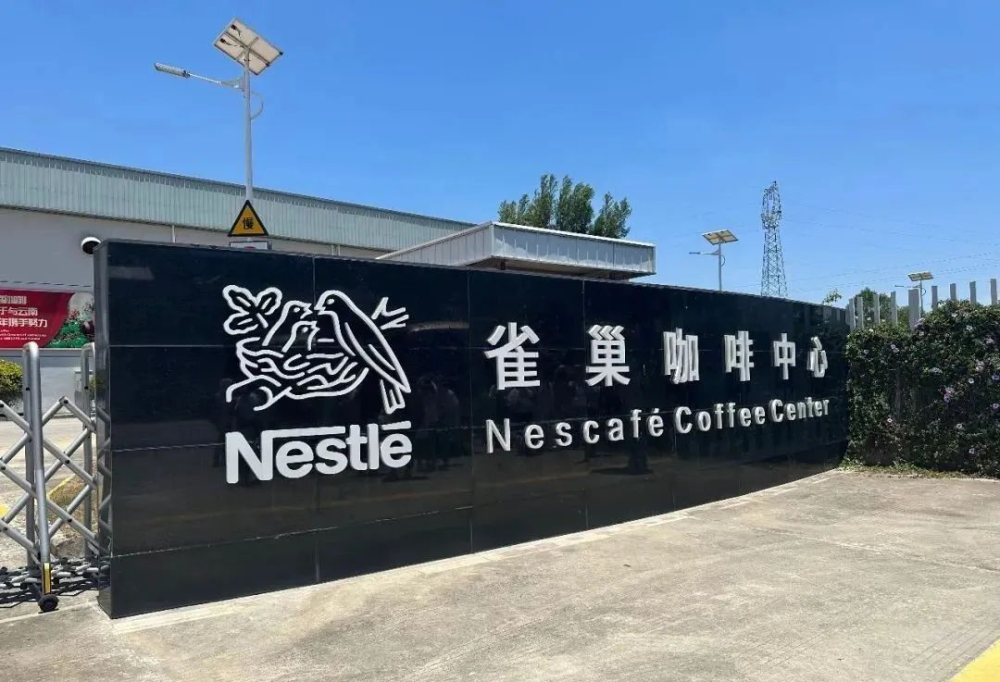
After the founding of New China, in the spring of 1952, researchers from the Yunnan Academy of Agricultural Sciences distributed 80 kilograms of coffee seeds to farmers in Lujiangba, Baoshan, for trial planting. The results showed good adaptability and excellent quality, and the scale of Yunnan coffee cultivation gradually expanded. By 1988, Nestlé established a joint venture in China and set up a coffee agronomy service department specifically to cultivate coffee seeds suited to local soil and climate conditions, provide technical guidance to coffee farmers, improve the yield and quality of Yunnan coffee beans, and purchase coffee beans with reference to U.S. spot market prices. This series of actions drove the first rise of Yunnan coffee.
With development up to the present, Yunnan has become China's largest coffee-growing province, with output accounting for more than 98% of the national total. From 2019 to 2021, Yunnan's coffee planting area was 1.57 million mu, 1.5 million mu, and 1.39 million mu respectively, and green bean output was 145,000 tons, 135,100 tons, and 140,300 tons respectively, fully demonstrating Yunnan's important weight in the domestic coffee market. By the end of 2024, Yunnan Province's coffee planting area was 1.193 million mu, with output reaching 150,000 tons, ranking 13th globally. In 2024, Yunnan exported 32,500 tons of coffee, a year-on-year increase of 358%. In addition to Nestlé, well-known coffee chain brands such as Starbucks and Maxwell also began positioning themselves in the Yunnan coffee market.
The Production Region Distribution of Yunnan Coffee
Western and southern Yunnan are located in the tropical zone between 15 degrees north latitude and the Tropic of Cancer. Most areas are between 1,000 and 2,000 meters above sea level, with terrain mainly consisting of mountains and slopes and obvious undulation. In addition, fertile soil, abundant sunshine, ample rainfall, and a significant temperature difference between day and night give Yunnan arabica coffee a special taste: strong but not bitter, fragrant but not harsh, with a slight fruity note.
Yunnan's coffee-growing areas are mainly concentrated in four production regions: Baoshan, Pu'er, Dehong, and Lincang 4 , whose combined planting area and output account for more than 85% of the province. At the same time, these areas are also the main distribution zones for Yunnan arabica varieties.
Dehong
In 1951, the Luxi County Cotton Experiment Station in Dehong Prefecture introduced coffee seeds from the China-Myanmar border for the first time and carried out productive coffee cultivation on 6 mu of land, thus opening the prelude to large-scale coffee planting. Dehong therefore earned the reputation of "Home of Chinese Coffee." Dehong's natural conditions are very favorable, and it is also one of the earliest coffee-growing areas in Yunnan Province. In addition, Dehong is home to China's largest coffee seed gene bank—the Ministry of Agriculture Ruili Coffee Germplasm Repository, which is one of the first nine tropical crop germplasm repositories authorized by the Ministry of Agriculture.
Baoshan
Coffee cultivation in Baoshan began in the mid-1950s, and the first coffee seedling was introduced from Southeast Asia by the late patriotic overseas Chinese Mr. Liang Jinshan. In 2010, Baoshan arabica coffee was recognized by the General Administration of Quality Supervision, Inspection and Quarantine as a National Geographical Indication Protected Product.
Baoshan has an average annual temperature of about 21.3 degrees Celsius, with an extreme maximum temperature of up to 40.4 degrees Celsius, and almost no frost throughout the year. It is widely recognized as the best production area for growing arabica coffee. With the expansion of international trade, arabica coffee from Lujiangba, Baoshan, has won recognition from domestic and foreign coffee experts, who once commented on Baoshan arabica as follows: "Strong but not bitter, fragrant but not harsh, with a mellow aroma; rich in oils, with pronounced fruity acidity and a lasting sweet aftertaste; this is a premium coffee."
Lincang
Lincang is named for being near the Lancang River. It is located in southwestern Yunnan and borders Myanmar to the west. The terrain here is complex, with an altitude above 1,000 meters and an average annual temperature of 17.3 degrees Celsius. There are no clearly distinct spring, summer, autumn, and winter; there are only a dry season and a rainy season. The rainy season begins in June each year and lasts three to four months. The temperature difference between day and night is large, making it very suitable for the growth of high-altitude tropical plants such as coffee.
It was precisely because it favored this "treasure land" of Lincang that Front Street established its own coffee estate here, planted the Typica variety, and in 2020 produced its first batch of self-produced Yunnan coffee beans—what everyone now knows as Front Street 2013 coffee beans.
FrontStreet Coffee: Front Street 2013 Coffee Beans
Production Region: Lincang, Yunnan
Estate: FrontStreet Coffee Estate
Altitude: 1,300 meters
Variety: Typica
Processing Method: Natural Process
Varieties of Arabica Coffee
FrontStreet Coffee believes that friends with even a little knowledge of coffee bean varieties are familiar with the Arabica species. Among the three major species (Arabica, Robusta, and Liberica), Arabica coffee beans are the smallest, so what we usually call arabica coffee refers to the Arabica species. Yunnan coffee was initially known for growing the Typica variety, and Typica is also the oldest coffee variety in Yunnan. However, Typica has relatively weak disease resistance and is difficult to produce in large quantities, so the region began introducing other varieties with higher yields and stronger disease resistance—Catimor. Yunnan early introduced the leaf-rust-resistant S288, and later introduced the higher-yielding Catimor, a hybrid of Timor and Caturra. At present, the vast majority of coffee trees grown in Yunnan are Catimor, with Typica accounting for only a small minority.
Because Catimor carries one quarter Robusta genes, it has a larger fruit yield and is easier to grow. Its early cupping performance was relatively ordinary, with a rather monotonous flavor, not possessing the pure aroma of the ancient Typica variety. But in recent years, with advances in cultivation management and green bean processing technology, Yunnan Catimor has performed increasingly well in the international coffee market, and its aromas of nuts and black tea as well as plum-like sweet acidity have gradually gained public favor. As a representative of Yunnan coffee flavor, Front Street selected Baoshan Catimor so that everyone can taste nutty aroma, brown sugar sweetness, soft plum acidity, and a black tea aftertaste at the lowest price. This bean uses washed processing, because Front Street believes washing better showcases the flavor characteristics of the Yunnan production region.
FrontStreet Coffee: Yunnan Arabica Coffee
Production Region: Baoshan, China
Altitude: 1200m
Variety: Catimor
Processing Method: Washed Process
Brewing Suggestions
So how should this Yunnan arabica coffee bean be brewed to taste good? The flavor of Yunnan coffee is not known for prominent acidity; overall it is dominated by nutty notes. Therefore, this Front Street coffee uses a medium roast to preserve the herbal aroma and soft acidity of Yunnan beans. To avoid over-extraction, it is recommended to use a water temperature of 91 degrees Celsius with a V60 dripper.
Dripper: V60
Water Temperature: 91 degrees Celsius
Grind Size: 80% passing through a No. 20 standard sieve
Coffee-to-Water Ratio: 1:15
Coffee Dose: 15 grams
Front Street has noticed that some friends do not have a grinder at home, and that is fine—Front Street offers a grinding service. However, once coffee beans are ground into powder, the aroma is more easily lost and the tasting window is correspondingly shortened. So if you want to drink coffee with a better flavor, Front Street still recommends keeping a set of grinding tools at home and grinding fresh just before brewing. (The tasting window refers to the period after coffee roasting is completed, following 3 to 7 days of degassing and resting, when it reaches its optimal flavor state, after which it gradually fades over time. The optimal tasting window is usually 4 to 30 days after roasting. The coffee beans sold by Front Street are generally freshly roasted within 5 days, so they are basically within the optimal tasting window when received.)
Pour the ground coffee into the dripper; at this point you can smell the herbal and nutty aromas. First bloom with 30 grams of water for 30 seconds, then pour 95 grams of water in a circular motion from the center outward, maintaining a thin stream throughout. When the coffee bed drops to half the height of the dripper, continue pouring 100 grams of water in a circular motion until all the coffee liquid has drained. The total time should be about 2 minutes (within 10 seconds of variation).
After brewing, this Yunnan arabica everyday bean presents nutty and brown sugar sweetness on entry; as the temperature drops, plum acidity can be felt, and the finish carries a black tea aftertaste. The overall performance is soft.
For professional coffee knowledge exchange and more coffee bean information, please follow Coffee Workshop (WeChat public account: cafe_style)
For more specialty coffee beans, please add the private WeChat of FrontStreet Coffee: qjcoffeex
The above content is compiled by CoffeeHunters, a coffee news website.


