







What Separates Golden Mandheling Coffee From Lintong?
Mandheling is Sumatra's signature Indonesian coffee, named after an ethnic group and known for a full-bodied, earthy profile. Within northern Sumatra's Arabica output, the highest-quality lots reach the market as Lintong or Mandheling. Golden Mandheling comes from the same region and is sorted separately by bean quality and defect count.
The distinct cup comes largely from the Ateng variety and wet-hulling, a local process in which parchment is removed while the bean is still moist. That step deepens body and lowers acidity. Mandheling grades such as DP Grade 1 carry a long, wild aftertaste. Roughly 90% of Indonesian coffee overall is Robusta, so certified Arabica Mandheling lots stand apart.
Mandheling is the iconic representative of Indonesian coffee, famous for its full-bodied, masculine taste. Front Street Coffee's everyday-drink Mandheling and Golden Mandheling are deeply favored by enthusiasts. This article systematically sorts out the differences between Lintong Mandheling and Golden Mandheling from production area distribution, origin of the name, variety characteristics to processing methods, explains in detail how the Ateng variety and wet-hulling shape the flavor, and includes Front Street Coffee's brewing parameters and flavor descriptions, helping readers fully understand what grade this coffee named after an ethnic group actually belongs to, and which brand's flavor performance is more worth trying.
Mandheling coffee is often regarded as one of the fullest-bodied coffees in the world. It is named after an ethnic group and is the signature representative of Indonesian coffee. At Front Street Coffee,
both the everyday-drink Mandheling and Golden Mandheling have many fans, with Golden Mandheling being especially prominent. Some enthusiasts say that one sip of Golden Mandheling is enough to feel completely satisfied, which shows just how full-bodied it is.
Indonesia's territory is made up of more than 17,000 islands, distributed near the volcanic belt along the equator and spanning both sides of the equator. It has a hot and humid tropical rainforest climate with abundant rainfall, plus fertile volcanic soil rich in nutrients. Asia's most famous coffee-producing areas are the islands of the Malay Archipelago: Sumatra, Java, and Kalimantan. Among them, Mandheling coffee produced on Sumatra is the most famous, with two well-known names—Sumatra Mandheling DP Grade 1 and Reserve Sumatra Mandheling. DP Grade 1 has a long aftertaste with a wild mountain aroma, the earthy fragrance unique to primeval forests. The fullness of Mandheling actually presents a very masculine character.
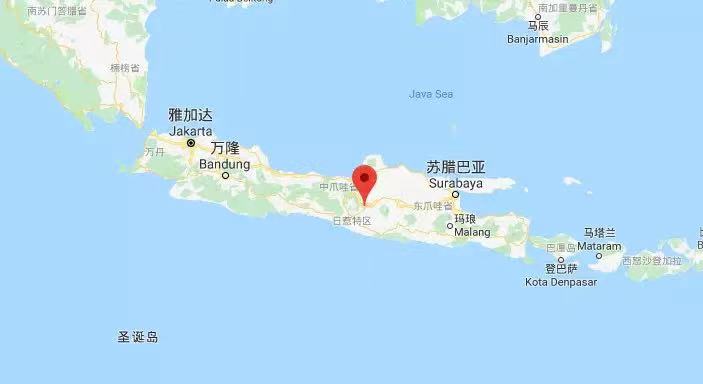
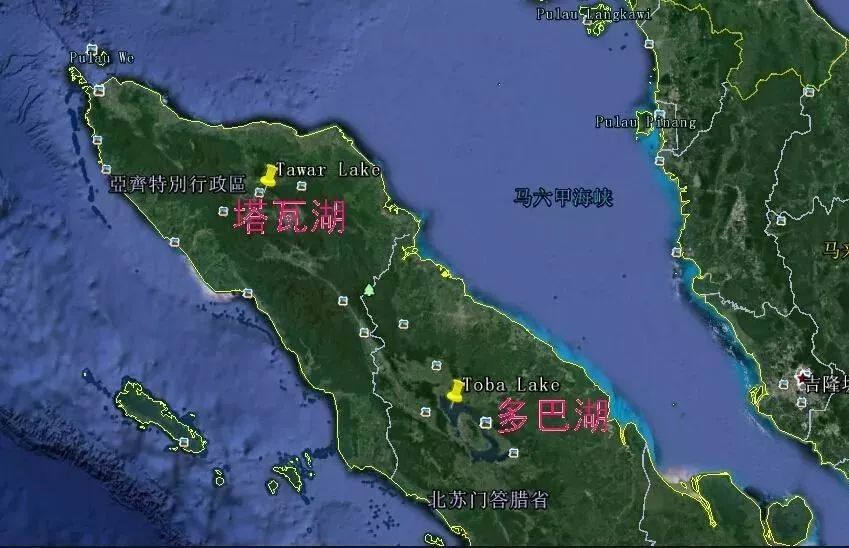
Mandheling coffee is produced in Sumatra, Indonesia, in Asia, and is also called "Sumatra coffee." The main production areas include Java, Sulawesi, and Sumatra, of which about 90% is Robusta. The "Mandheling" produced on Sumatra is the most famous. Among the refined traditional Arabica coffees produced in northern Sumatra, the best quality ones enter the market under the names Lintong and Mandheling. Strictly speaking, Lintong refers to coffee grown in a small area on the southwest side of Lake Toba in the Lintong administrative region. The coffee-growing areas are scattered across high-altitude, undulating clay plateaus covered with ferns. Lintong coffee is not shade-grown and does not use chemicals, and is almost entirely held by small private owners. Mandheling is a broader term, covering Lintong coffee as well as coffee grown under similar conditions in Diari (capital Sidikalang) and the northern Lake Toba production area.
Origin of the Name Mandheling Coffee
Mandheling is neither a production area name, a place name, a port name, nor a coffee variety name. So where exactly did its name come from?
In fact, it is a transliteration of the Indonesian Mandheling ethnic group.
During World War II, when Japan occupied Indonesia, a Japanese soldier drank a richly aromatic coffee in a cafe and asked the owner for the name of the coffee. The owner mistakenly thought he was asking "Where are you from?" and answered: Mandheling. After the war, the soldier recalled the "Mandheling" he had drunk in Indonesia and asked an Indonesian coffee merchant to ship 15 tons to Japan, where it became very popular. The name Mandheling spread in this way, and that coffee merchant was the famous Pwani Coffee Company (PWN). The well-known Mandheling is produced around Lake Toba in northern Sumatra, and the finished product carries a unique herbal and woody fragrance. Some people think Mandheling coffee beans look ugly, but the flavor is actually better, fuller, and smoother.
Lintong Mandheling Coffee
Lintong Mandheling comes from the Lintong highlands in north-central Sumatra, right next to Lake Toba. Lintong Mandheling is the specialty Mandheling produced in the Lintong region, that is, the regular version of Mandheling, representing the flavor direction of conventional Mandheling, with larger beans and a harder texture. If you are trying Mandheling for the first time, it is a good idea to start with Lintong Mandheling. Front Street Coffee's everyday-drink Indonesian Mandheling comes precisely from Lintong.
Golden Mandheling Coffee
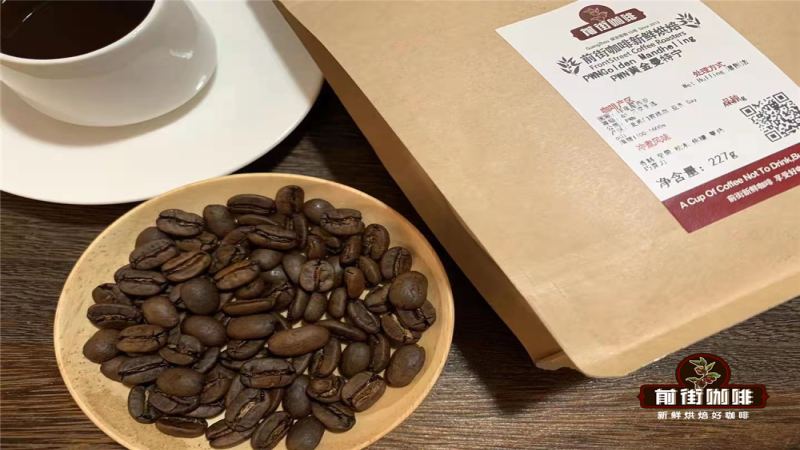
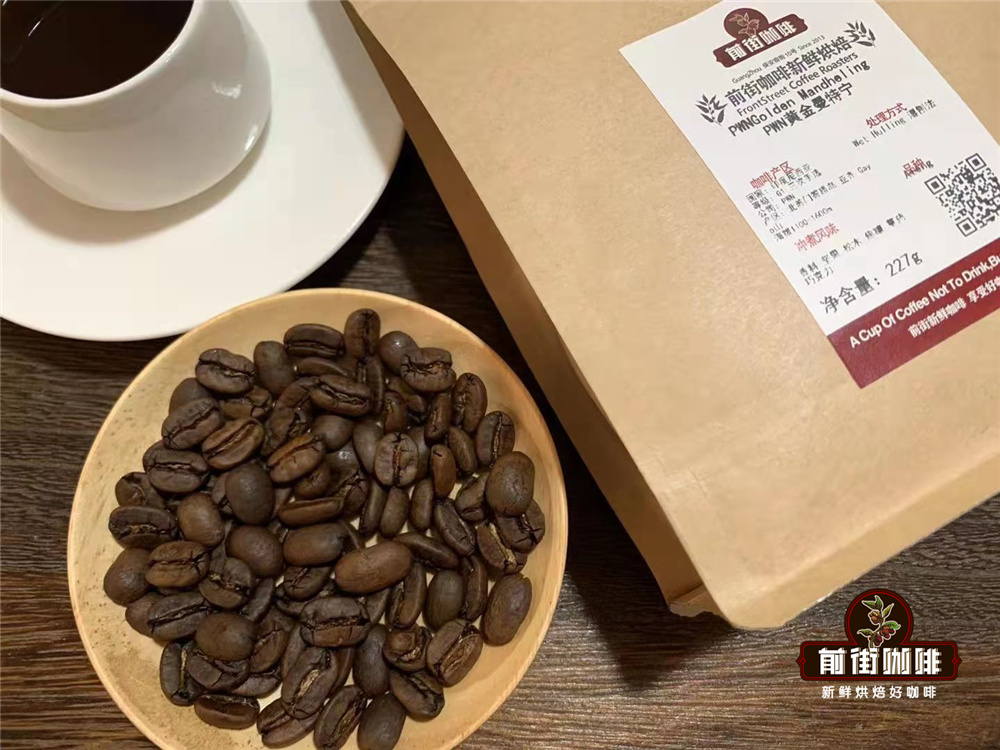
Golden Mandheling coffee beans are produced at Lake Tawar on Mount Gayo in northwestern Sumatra. From PWN Company's Golden Mandheling coffee beans . Golden Mandheling has even stricter quality requirements. First, the coffee beans must reach screen size 19 and be plump and uniform, belonging to the highest grade G1. PWN's beans are darker green in color and regular flat beans in shape. After that, they must go through one machine sorting and three hand sortings to ensure that defective green beans number fewer than 3 (in a 300g green bean sample). This ensures that Mandheling coffee beans are consistent in color, shape, and size, making the finished cup cleaner and the flavor brighter. Golden Mandheling is essentially an upgraded version of Mandheling, and there is also an entry-level version—Lintong Mandheling coffee beans. After strict screening, Front Street Coffee (FrontStreet Coffee) found that Golden Mandheling not only removes the earthy off-flavors unique to ordinary Mandheling, but also drinks cleaner and more transparent, with stronger sweetness.
Ateng Variety
Ateng sounds like a very unfamiliar coffee bean variety, but observant people have long seen Ateng on the label of Front Street Coffee's Golden Mandheling packaging. Front Street Coffee's (FrontStreet Coffee) new-crop Golden Mandheling bean variety in 2020 was "Ateng."
Actually, Ateng is also called Catimor. Only Catimor grown in Sumatra and Indonesia's home islands can be called Ateng. Catimor is not the pure Arabica we usually talk about, but a cross between Timor from the Robusta species and the Bourbon variety mutation Caturra. It was first developed in 1959 and promoted in Brazil in the 1970s and 1980s. Thanks to disease resistance and high yield, it earned a place among Central and South American coffee varieties. The recurring coffee leaf rust crises in Central and South America also drove the application of Catimor coffee beans. Its characteristics are high yield and short plants that can be densely planted, with new leaves showing a reddish-brown color, making it very suitable for cultivation and flavor development in the Aceh region. However, because it matures quickly and yields heavily, it must be guaranteed sufficient fertilizer and shade. According to Front Street Coffee's understanding, its lifespan is quite short, averaging only ten years.
In the 17th century, the Dutch introduced Arabica seedlings to Ceylon (present-day Sri Lanka) and Indonesia. In 1877, a large-scale disaster swept across the Indonesian islands, and coffee rust destroyed almost all coffee trees. People had to abandon the Arabica they had cultivated for many years and instead introduce disease-resistant Robusta coffee trees from Africa. Today Indonesia is a major coffee-producing country, with production mainly in Java, Sumatra, and Sulawesi, and Robusta accounting for 90% of total output. Sumatra Mandheling, however, is a rare Arabica type. These trees are planted on hillsides between 750 and 1,500 meters above sea level. Mysterious and unique Sumatra gives Mandheling its rich aroma, full body, and strong taste.
Mandheling Coffee Processing Method
Mandheling's unique wet-hulling method, also called Wet Hulling, is known locally as Giling Basah and is a traditional Indonesian coffee processing method. Judging by the name alone, wet hulling seems very similar to wet processing (washed processing), yet the cup profiles of the two are completely different. Coffee processed by wet hulling is usually full-bodied and intense, with a very distinct character.
The local weather is mostly rainy, with constant typhoons, a lack of long sunshine hours, year-round high temperatures and humidity, and humidity as high as 70-90% year-round, so it is impossible to rely solely on sun-drying. Local economic conditions are also limited, making it impossible to use the more expensive washed method. In the end, the highly local wet-hulling method emerged. After the earlier washed-processing steps, the coffee beans with parchment are placed under the sun to dry for 1-2 days until the moisture content reaches 30-50%, and then the parchment is removed and sun-drying continues. This speeds up the drying of the coffee beans and greatly shortens the drying time.
The characteristics of wet-hulling are repeated, rapid drying during the process and drying after removing the parchment. Teacher Han Huaizong described it as "This is also a rare processing method in the world, accidentally creating Mandheling's special low acidity, thick body, and muffled aroma."
Advantages of the Wet-Hulling Method
1. It creates its characteristics of low acidity and high body.
2. Unique bean appearance. When using wet hulling, because the half-hard, half-soft wet green beans are easily crushed when the mucilage parchment layer is removed, the beans are damaged and split open like a goat's hoof, commonly known as goat-hoof beans. Front Street Coffee (FrontStreet Coffee) considers this a very prominent characteristic of Mandheling and not a defective bean.
Observant friends may notice the characteristic "goat-hoof shape" of Mandheling coffee beans. Front Street Coffee has also noticed that they share this common bean appearance feature, the "goat-hoof shape." This is because when the half-hard, half-soft wet green beans are machine-hulled to remove the mucilage parchment layer, they are easily crushed, and the damaged beans split open like a goat's hoof, commonly called goat-hoof beans. The "goat-hoof shape" is a very prominent characteristic of Mandheling coffee beans, so it is not considered a defective bean.
Front Street Coffee's parameters for brewing Mandheling coffee:
Front Street Coffee uses the KONO dripper to brew Mandheling coffee. KONO's ribs stop before reaching half the height of the dripper. This design is actually intended to ensure that after wetting, the filter paper clings tightly to the dripper wall and restricts airflow. This increases the water absorption time of the coffee grounds, so the extracted coffee is more uniform overall and the full-bodied mouthfeel is enhanced.
KONO dripper, 88°C water temperature, 1:15 coffee-to-water ratio, 15g coffee grounds, grind size (75% passing a No. 20 standard sieve), three-stage extraction.
Use staged extraction, blooming with 2 times the amount of water as coffee grounds, that is, 30 grams of water for a 30-second bloom. The reason a blooming process is needed is to allow the coffee grounds to release internal carbon dioxide gas, thereby making the later extraction stages more stable. Pour in a small stream in circles until 125 grams, then pause, continue pouring until 225 grams and stop. After the water in the dripper has dripped through, remove the dripper. Start timing from the beginning of pouring; the extraction time is 2'00". Next, pick up the whole cup of coffee and swirl it to mix evenly, then pour it into a cup for tasting.
[Lintong Mandheling Coffee Flavor Characteristics ] Herbal, chocolate, caramel, overall relatively balanced.
[Golden Mandheling Coffee Flavor Characteristics] Nuts, spices, herbs, licorice, chocolate, caramel.
Front Street Coffee's Brewing Suggestions:
To brew a delicious cup of coffee, Front Street Coffee believes that any brewing method requires fresh coffee beans. Front Street Coffee has always believed that the freshness of coffee beans is greatly related to coffee flavor, so all coffee beans shipped by Front Street Coffee (FrontStreet Coffee) are within 5 days of roasting. Front Street Coffee's roasting philosophy is "freshly roasted good coffee," so that every customer who places an order receives the freshest coffee. The resting period for coffee is about 4-7 days, so when customers receive it, it is at its best flavor.
For friends who need ground coffee, Front Street Coffee offers a warm reminder: once coffee beans have been ground in advance, there is no need for further resting, because during transport the pressure from carbon dioxide inside the packaging can also make the coffee flavor rounder, so you can brew a cup immediately after receiving the ground coffee. However, ground coffee needs to be brewed promptly, because after contact with air it oxidizes relatively quickly, meaning the coffee flavor disperses relatively quickly and the coffee does not taste as good. Therefore, Front Street Coffee recommends buying whole beans and grinding fresh before brewing, so you can better taste the coffee's flavor.
Coffee flavors from different countries and production areas are naturally different. Front Street Coffee has nearly fifty single-origin coffees from different production areas, offering a wide range of flavor choices: some acidic, some bitter, and some neither acidic nor bitter. If you really are not sure what kind of coffee you like, you can first try Front Street Coffee's everyday-drink beans. Front Street Coffee's everyday-drink beans are representative coffees from various producing countries, the most representative coffees. For example: Ethiopia's washed Yirgacheffe coffee, Colombia's Huila coffee, Brazil coffee, China Yunnan small-holder coffee, Panama's Geisha coffee, and so on.
For professional coffee knowledge exchange and more coffee bean information, please follow Coffee Workshop (WeChat public account cafe_style)
For more specialty coffee beans, please add the private WeChat of Front Street Coffee (FrontStreet Coffee), WeChat ID: qjcoffeex
The above content is compiled by CoffeeHunters, a coffee news website.


