








What Do Costa Rican Coffee Grades Say About Honey Processing?
Costa Rica's honey processed coffee beans are named for the mucilage layer, not added honey. During processing the fruit skin is removed but some sticky mucilage stays on the bean while it dries, and the amount left determines whether a lot is classed as yellow, red or black honey, with darker classifications giving deeper sweetness.
Most Costa Rican coffee comes from private estates, a pattern set after an 1832 rule granting land ownership to anyone who planted coffee on vacant land. The country's coffee grades reflect both altitude and processing care. Front Street's sourcing notes describe a clean mouthfeel typical of the region, plus sweetness supported by volcanic soil and rainfall from the Pacific and Caribbean.
Costa Rican coffee is renowned for its honey processing, and its sweetness is truly impressive. Drawing on Front Street's bean-sourcing experience, this article systematically reviews Costa Rica's coffee-producing regions, main varieties, and honey processing classifications, while comparing the flavor differences among yellow honey, red honey, and black honey processing methods. The article also includes Front Street's cupping notes and specific brewing parameters for Costa Rican coffee beans, helping coffee enthusiasts gain a comprehensive understanding of this Central American origin's sweet style.
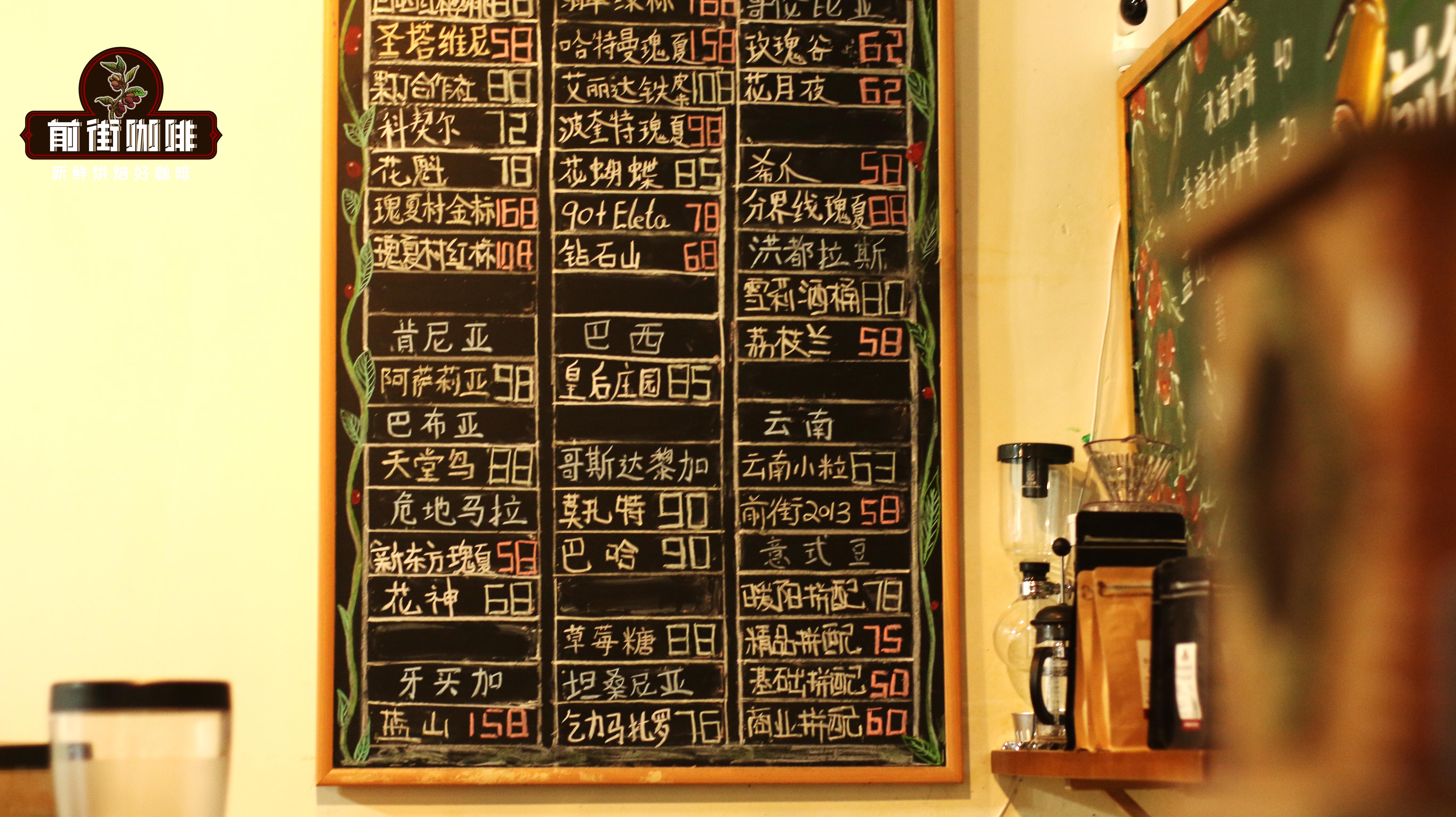
Among the many specialty coffees Front Street has encountered, if sweetness were to be the signature flavor of a particular origin, Costa Rica's honey-processed coffee beans would certainly be among them. Honey processing is the most commonly adopted method in Costa Rica. Because the name contains the word "honey," many people mistakenly believe that honey is added during processing. In reality, it refers to the coffee bean's own mucilage layer—honey processing is simply a theoretical umbrella term.
Costa Rica is a highly representative Central American country. In 1949, the nation abolished all military forces, retaining only a police force to maintain public order, and declared neutrality. Over more than seventy years, Costa Rica has achieved vigorous development. At the same time, as an important country in Central America, coffee occupies a key position in Costa Rica's agricultural structure.
Since 1832, the local government enacted a regulation: any coffee grower who planted coffee on vacant and unoccupied land could directly obtain ownership of that land. This policy greatly incentivized people to engage in coffee cultivation, driving the progress of the coffee industry. It is precisely for this reason that most Costa Rican coffee today comes from private estates.
In the process of selecting Costa Rican coffee beans, Front Street noticed that while this country's coffee continues the pure mouthfeel and cleanliness of American coffees, it also displays admirable sweetness.
Front Street believes this benefits from the local superior natural conditions—the extension of the Andes Mountains, abundant rainfall brought by the Pacific and Caribbean sea breezes, and fertile volcanic soil all lay a solid foundation for producing high-quality coffee. As for Costa Rican coffee's honey-like sweetness, Front Street believes it is closely linked to its unique processing method. Costa Rica uses honey processing to prepare coffee: after removing the fruit skin, the beans are spread on drying beds, allowing the coffee to fully absorb the sugars from the mucilage, thereby making the beans' sweetness more pronounced.
Costa Rican Coffee-Producing Regions
Costa Rica has eight major coffee-producing regions: Valley Central Occidental, Valley Central, Tarrazu, Tres Rios, Orosi, Brunca, and Turrialba.
Among them, the more well-known are the Tarrazu region and the Central Valley region. Front Street's Costa Rican daily coffee comes from the Tarrazu region.
Main Costa Rican Coffee Varieties
Like many Latin American countries, Costa Rica cultivates Bourbon-lineage coffee varieties, such as Bourbon, Caturra, and Catuai. It also grows the famous Geisha variety. However, based on Front Street's repeated bean-sourcing experience, although Costa Rica and Panama are geographically close neighbors, Costa Rican Geisha performs differently from Panamanian Geisha. Costa Rica also has locally discovered endemic varieties—Villa Sarchi and Villalobos.
Villa Sarchi is a Bourbon variant. This Bourbon green-tip dwarf natural mutation was discovered in Costa Rica in 1950 and subsequently underwent pedigree selection (i.e., propagation through selecting individual plants over successive generations). However, this variety was not widely planted in Costa Rica; instead, it was introduced to Honduras in 1974 by the Honduran Coffee Institute (IHCAFE). Aromatically, this is a coffee of considerable complexity, suitable for medium-dark roasting. The dry fragrance after grinding carries notes of perfumed nectar and cherry, interwoven with a sweet spice reminiscent of cinnamon. Villalobos also originated in Costa Rica and is a Typica variant. Like Typica, the angle between the branches and trunk is 60 degrees, and the leaves are bronze-colored. This variety grows exceptionally well at high altitudes and has strong wind resistance, surviving even in poor soil; it grows best under shade trees. Its most prominent flavor characteristics are excellent sweetness and pleasant acidity.
Costa Rican Coffee Grades Are Classified by Altitude
SHB: Strictly Hard Bean, grown at 1,500 meters
GHB: Good Hard Bean, grown at 1,100–1,200 meters
HB: Hard Bean, grown at 1,000 meters
High-quality Costa Rican coffee is called "Strictly Hard Bean" (SHB), and such coffee can grow in areas above 1,500 meters in altitude. Generally, the higher the altitude, the better the coffee bean quality. This is not only because high altitude helps enhance the beans' acidity and thus enrich the flavor, but also because lower nighttime temperatures at high altitudes slow tree growth, making the coffee beans' flavor more intense.
Basically, most Costa Rican single-origin coffee beans available domestically belong to the SHB grade.
Costa Rican Honey-Processed Coffee Beans
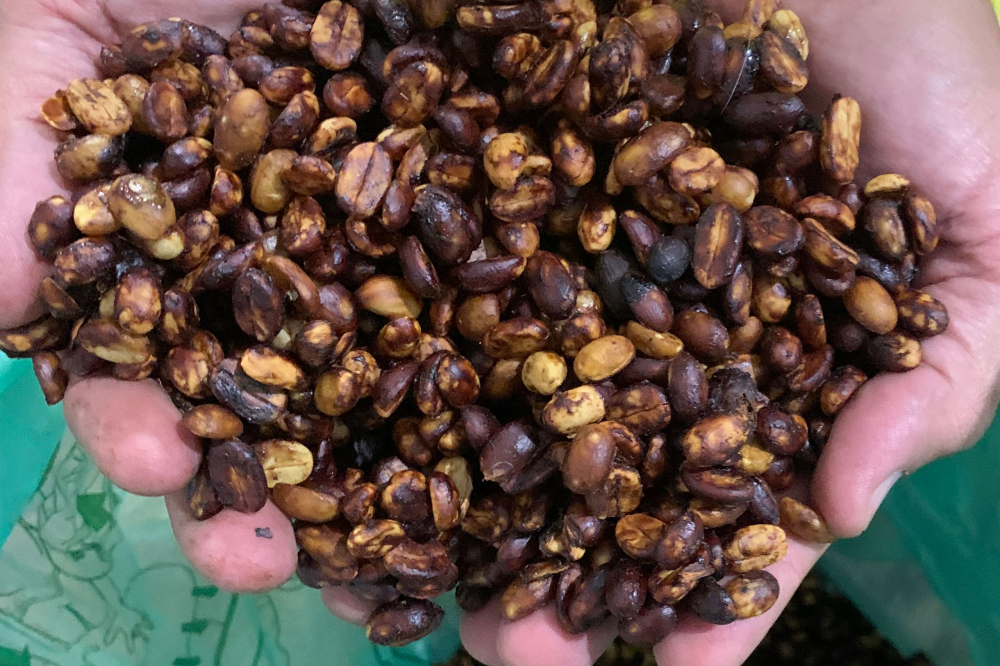
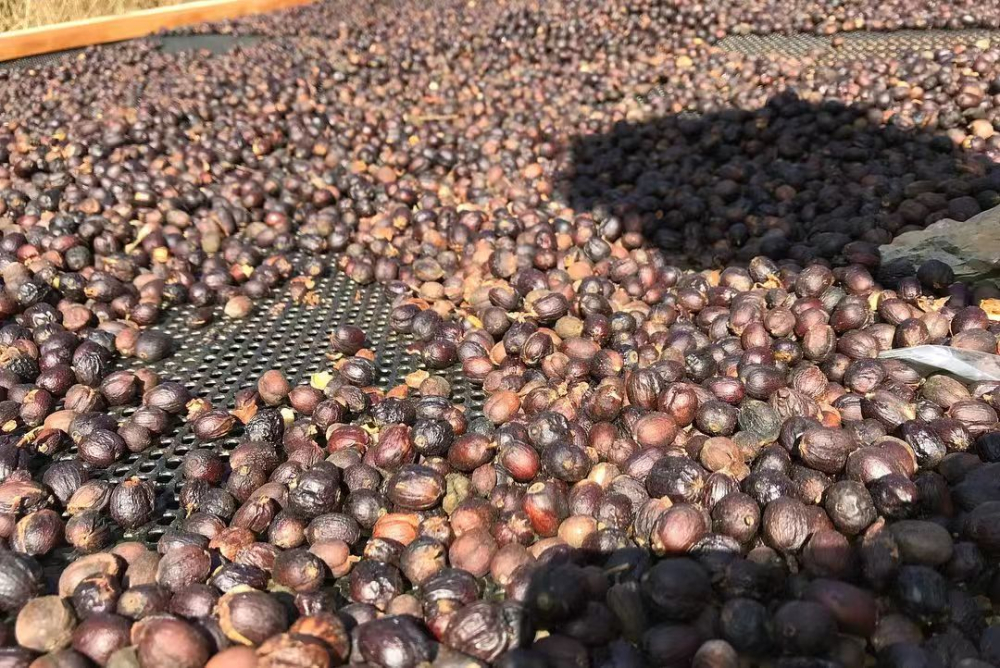
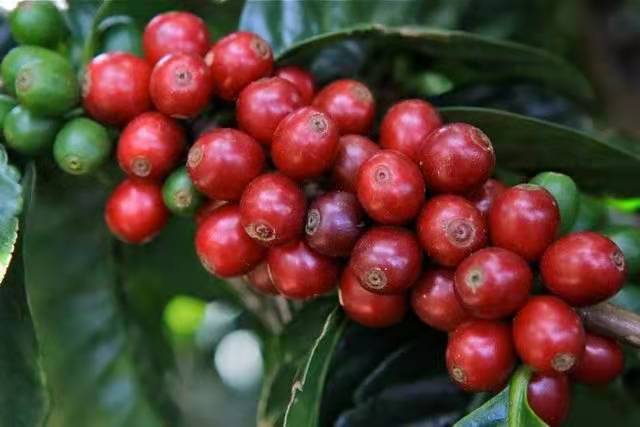
The honey processing method, known in English as Honey Process or Miel Process, with the product called Honey Coffee, is adopted by coffee farms in countries such as Costa Rica, Panama, and Guatemala. Costa Rican honey-processed coffee beans are especially well known. So-called honey processing refers to the green bean processing procedure of sun-drying with the mucilage (also called pectin) still attached. After the outer fruit pulp is removed, a sticky gelatinous substance (pectin) remains on the surface of the coffee beans. Traditional washed processing uses clean water to wash it off, but because some high-altitude origins face water resource constraints, this direct sun-drying method emerged.
The mouthfeel difference between honey processing and washed processing: compared to washed, honey-processed coffee has higher sweetness, greater sugar content, and relatively more pronounced body.
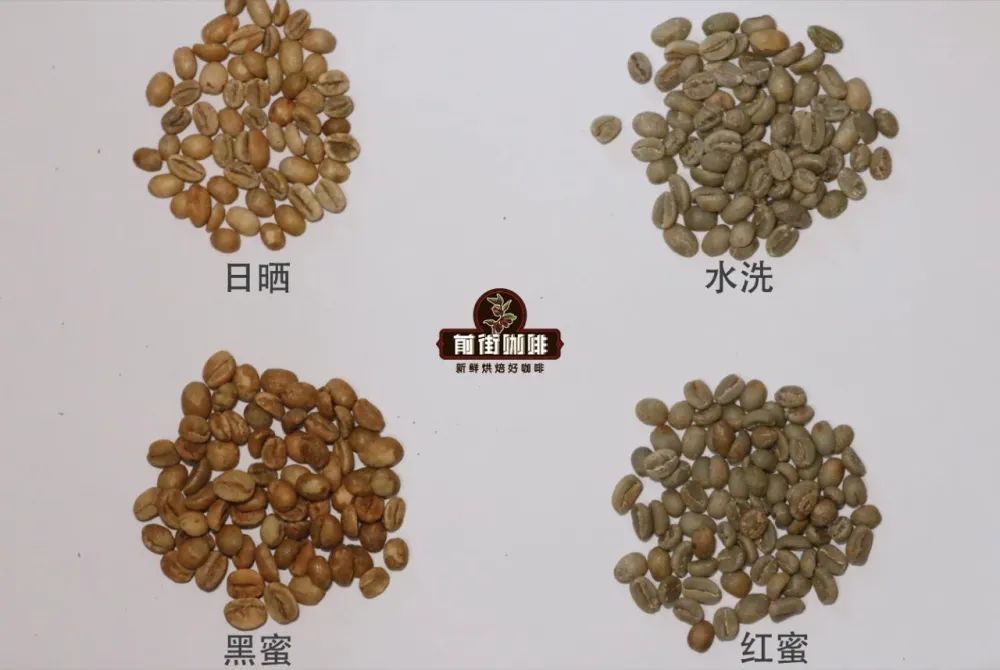
Costa Rican honey-processed coffee beans retain the clean characteristics of washed processing. Although the coffee's brightness is somewhat reduced, the sweetness and caramel mouthfeel are enhanced. Depending on the degree of honey processing, Costa Rican honey-processed coffee beans can be further divided into yellow honey, red honey, and black honey.
Yellow Honey: about 40% of the mucilage is removed; the drying method requires the most direct heat absorption and receives the most sunlight for drying, lasting about 8 days to reach a stable moisture content.
Red Honey: about 25% of the mucilage is removed; compared to yellow honey, the drying time is longer, and direct sunlight exposure is reduced, sometimes using shade covers, lasting about 12 days.
Black Honey: nearly 80% of the mucilage is retained; drying takes the longest, at least 2 weeks, using covers to avoid overly intense sunlight and prevent drying too quickly, allowing sugar conversion to be more complete.
The advantage of honey processing is that it preserves to the greatest extent the original sweet flavor of ripe coffee fruit, giving the coffee a delicate brown sugar flavor and stone fruit sweetness, while berry flavors can also stimulate red-wine-toned aromas. It is considered a very elegant product.
The biggest difference between honey processing and Brazilian semi-washed is that the former never touches water throughout the process, because flawless red cherries must be selected for the mucilage to be sweet. The mucilage removal machine required for honey processing is also more demanding, requiring precise control of the thickness of mucilage removed, much like a grinder.
But failed honey-processed coffee produces a strong defective sun-dried flavor, similar to rough sun-dried notes of onion, durian, fermented tofu, and in more severe cases, even an alcoholic medicinal taste. Properly honey-processed coffee has soft acidity; if the acidity on entry makes you pucker, it is not a good product either.
Simple summary:
Sweetness: Black Honey > Red Honey > Yellow Honey
Cleanliness: Yellow Honey > Red Honey > Black Honey
Balance: Red Honey = Yellow Honey > Black Honey
Flavor Comparison Front Street cupped 8 hours after roasting, weighing 11.3 grams of grounds, with a grind size of 70–75% passing through a Chinese standard No. 20 sieve, water temperature of 94°C, pouring 200ml of water, and after four minutes breaking the crust and skimming.
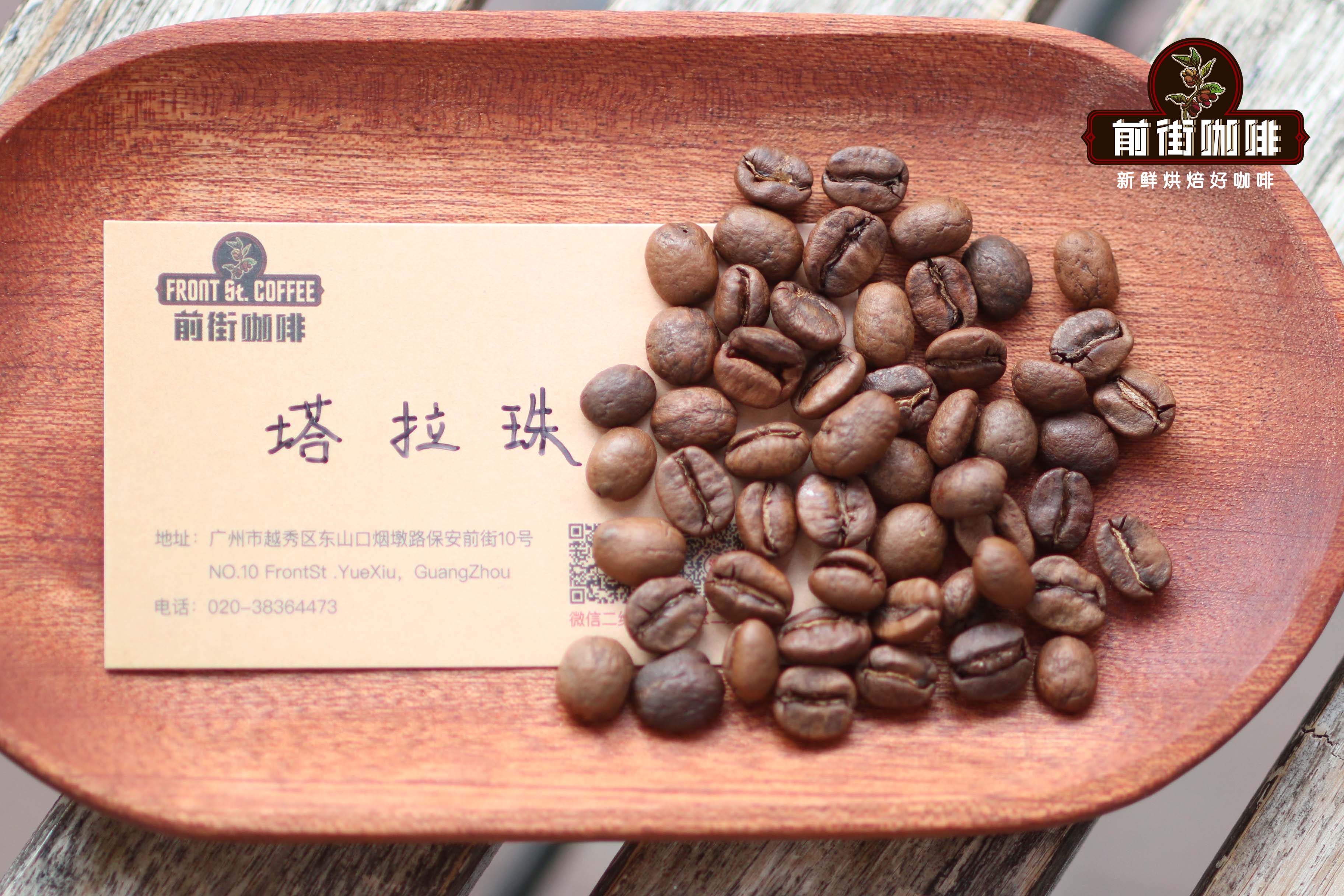
[Front Street Costa Rica Yellow Honey-Processed Coffee Beans] It smells of faint fermented fruit, and on sipping there are flavors of citrus, cocoa, nuts, honey, and caramel. The overall flavor is relatively light. [Front Street Costa Rica Red Honey-Processed Coffee Beans] It smells of rich fermented red wine, and on sipping there are flavors of pineapple, sweet orange, nectarine, grapes, cream, raisins, and maple syrup. [Front Street Costa Rica Black Honey-Processed Coffee Beans] It smells of rich jackfruit, raisins, and fermented wine, and on sipping there are flavors of plum, citrus, raisins, caramel, and spices. Comparing these three honey-processed beans, Front Street can clearly perceive that the [Black Honey] processed one has a rich fermented aroma and is more complex in aroma, the [Red Honey] processed one is slightly weaker in aroma, while the [Yellow Honey] processed one smells of relatively light fermented fruit aroma. In terms of flavor, the [Black Honey] processed one has pronounced sweet-tartness with a somewhat juicy quality, the [Red Honey] processed one is more balanced with a clear grape flavor, and the [Yellow Honey] processed one is cleaner, with less pronounced fermented notes, leaning toward citrus-type flavors.
How Front Street Brews Front Street Costa Rican Coffee Beans
Front Street believes that to understand a coffee-producing country's beans, one must start with its washed coffee beans. For this reason, Front Street specially launched the Front Street daily coffee series, aiming to help more friends who want to learn about coffee beans better understand coffee flavors. For Costa Rica's representative coffee bean, Front Street chose a washed coffee bean from the Tarrazu region.
Front Street advocates freshly roasted coffee beans. Some coffee shops tout freshly ground coffee as a gimmick, and many people think that means fresh—but that is not the case. Freshly roasted coffee beans still need a 4–5 day resting period, so that the coffee's flavors can be fully released during brewing. Of course, if customers do not have grinding tools at home, Front Street will grind the coffee beans according to their needs (pour-over or espresso), but it should be consumed as soon as possible, as ground coffee loses its flavor quickly.
Recommended parameters for brewing this Front Street Costa Rica Tarrazu coffee bean
Front Street brewing parameters: V60 dripper, 15g grounds (one serving), water temperature 90°C, 1:15 coffee-to-water ratio, grind size (80% passing through a No. 20 standard sieve)
Front Street uses a staged extraction method, commonly known as the three-stage pouring technique: 30g of water for blooming for 30 seconds, the second stage pouring in circles to 125g, and the third stage pouring in circles to 225g, with a total extraction time (including blooming time) of 2'00".
The above content is compiled by CoffeeHunters, a coffee news website.


