







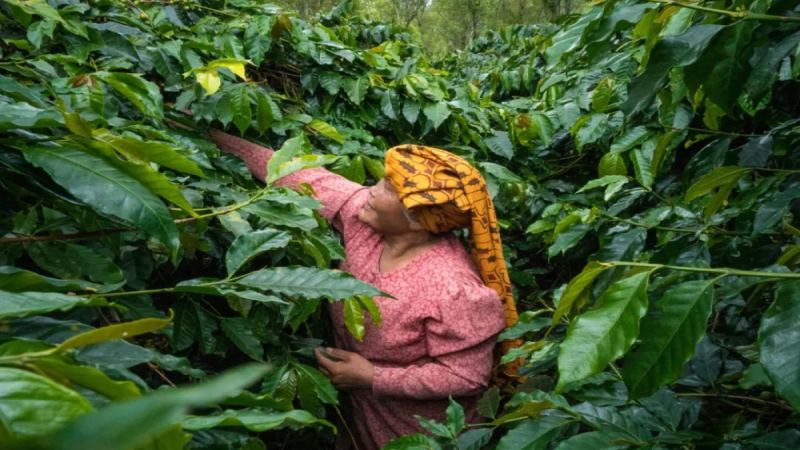
Why is Golden Mandheling coffee a mark of quality?
Mandheling is neither a region nor a variety but a name that grew from a linguistic misunderstanding during the Second World War. It spread through a Japanese soldier and an Indonesian merchant, later linked to the Pwani Coffee Company. Strictly speaking, only Arabica beans from North Sumatra qualify to carry the Mandheling name.
North Sumatra has two core premium growing areas, Lintong and Aceh. The coffee bean origin rule excludes Robusta from southern Sumatra and beans from Java and Sulawesi. Golden Mandheling has become a marker of high quality, so buyers should check the stated origin, grade and sorting details rather than relying on the label alone.
Mandheling is the most recognizable name in Indonesian coffee, yet it is neither a region nor a variety, but a legend born from a linguistic misunderstanding. This article will trace the origin of this name, take you into the two core producing regions of North Sumatra—Lintong and Aceh—to understand the local unique variety names and growing conditions, and analyze why Golden Mandheling has become synonymous with high quality and how consumers can distinguish the authentic from the fake. At the same time, Front Street Coffee's Indonesian daily beans also come from Lintong, offering you the classic flavors of Mandheling—full-bodied, with chocolate, nutty, and herbal notes.
Anyone with even a slight exposure to coffee has probably heard of the name Mandheling.
This coffee comes from Indonesia, known as the "Country of a Thousand Islands."
Even today, Indonesian Mandheling remains distinctly styled, firmly attracting wave after wave of coffee lovers.
The Origin of the Name Mandheling Coffee
The origin of the name Mandheling is quite interesting—it is neither a place name nor a variety name, but the result of a double misunderstanding. The version Front Street Coffee has learned is as follows: During World War II, when Japan occupied Indonesia, a Japanese soldier drank an extremely aromatic cup of coffee in a café and asked the owner what the coffee was called. The owner mistakenly thought he was being asked where he was from, so he answered "Mandailing." The soldier misheard it and remembered it as "Mandheling." After the war ended, this Japanese soldier recalled the aromatic "Mandheling" he had drunk in Indonesia and decided to start a coffee business in Japan, so he asked an Indonesian coffee merchant to ship 15 tons over, and it was a huge hit in the market. The name Mandheling spread from there, and that coffee merchant was none other than the founder of the later-famous Pwani Coffee Company (PWN).
It was this twist of fate that made the name Mandheling known throughout the world. The definition of Mandheling coffee bean origin is also quite interesting: strictly speaking, only Arabica coffee beans produced in North Sumatra qualify to be called Mandheling. In other words, Robusta from southern Sumatra, as well as coffee from Java and Sulawesi, cannot bear the name Mandheling.
Mandheling Coffee Producing Regions
In North Sumatra, there are two main premium growing areas for Mandheling: one is the Lintong region centered on Lake Toba, and the other is the Aceh region centered on Lake Tawar.
Lintong Producing Region
Lintong is a long-established producing region with a long history, with high mountain elevations between 1,000 and 1,500 meters. Several volcanoes are distributed in the area, and the volcanic soil is rich in nutrients. Lintong Mandheling has always been a sought-after high-quality source. Front Street Coffee's Indonesian daily beans come from Mandheling coffee beans in the Lintong producing region. Through Front Street Coffee's evaluation of multiple Mandheling coffee beans, Lintong Mandheling is full-bodied on the palate, with prominent chocolate and nutty notes, and also carries the region's distinctive herbal aroma, fully representing the typical flavor of Mandheling coffee.
Aceh Gayo Mountain Producing Region
Aceh experienced outbreaks of independence movements in its early years, and the situation was once turbulent. Even if the coffee quality was excellent, few coffee merchants were willing to risk going deep into the area to collect beans. It was not until the situation eased in 2005 that the Aceh producing region returned to the view of coffee buyers.
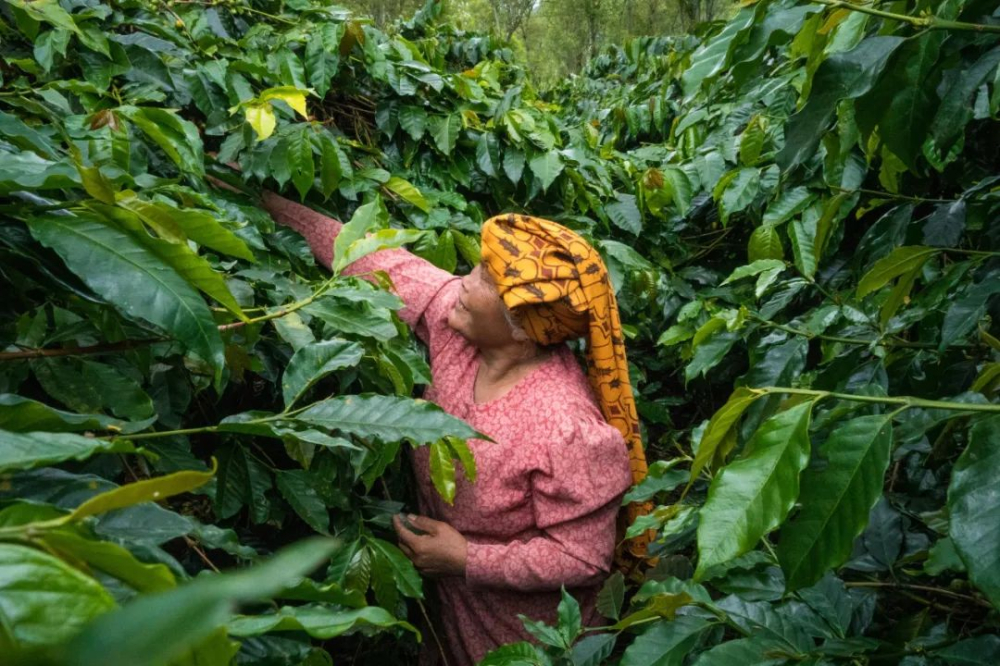
Aceh Gayo Mountain is located at the northernmost tip of Sumatra Island. Coffee cultivation is mainly distributed in the town of Takegon and the hillside areas around Lake Tawar, with an average elevation of about 1,100 to 1,600 meters. The famous Golden Mandheling produced by PWN comes from this producing region. From this, it is not hard to see that the coffee bean quality of the Aceh producing region is superior to that of the Lintong producing region.
The coffee variety grown here is called "Ateng," which sounds very unfamiliar. In fact, Indonesia has its own set of local names for coffee varieties. For example, what Indonesia calls Tim Tim is what we commonly call Timor; and Ateng is the localized Indonesian name for Catimor. The Ateng variety is very well adapted to the growing conditions of the Aceh region, and its flavor can also develop very well.
PWN's Golden Mandheling coffee beans are known for their extremely high green bean quality. One reason the quality is guaranteed is that after processing is completed, they still undergo three rounds of manual sorting to reduce the defect rate of green beans as much as possible and ensure plump, uniformly sized beans. In the sunlight, every bean is plump and large, shining with a golden luster.
For this reason, the price of Golden Mandheling is usually higher than other Mandheling coffee beans. Some unscrupulous merchants also pass off Mandheling G1 as Golden Mandheling. So how can consumers verify whether what they bought is truly Golden Mandheling? The most direct way is to ask the merchant to show the coffee jute bag of Golden Mandheling, as well as the PWN certificate with a number matching that bag.
How to Brew Mandheling Coffee?
Professional coffee knowledge exchange. For more coffee bean information, please follow Coffee Workshop (WeChat public account: cafe_style). For more specialty coffee beans, please add the private WeChat of Front Street Coffee (FrontStreet Coffee), WeChat ID: qjcoffeex
The above content is compiled by CoffeeHunters, a coffee news website.


