







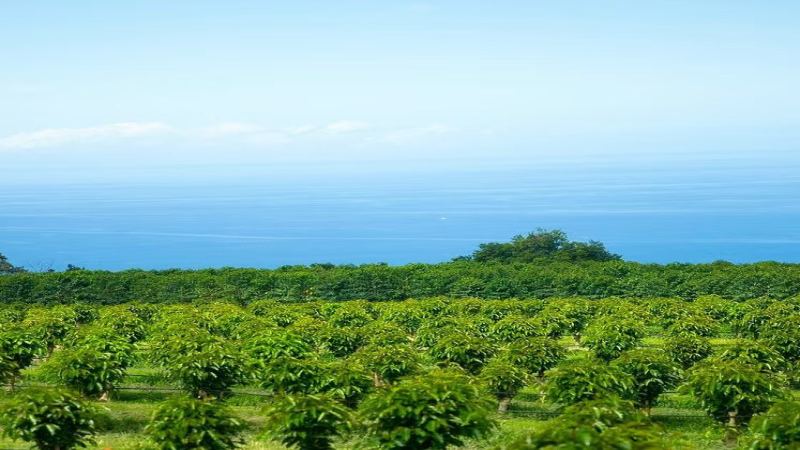
Why does Kona coffee taste so balanced at low altitude?
Kona coffee proves that high altitude is not the only route to quality. Grown in Hawaii, the only coffee-producing region inside a developed country, the beans are plump with balanced, moderate acidity, a cinnamon spice and fruit aroma, a smooth mouthfeel and a long finish. Island climate, volcanic soil and careful field management carry the cup.
The Typica variety supplies the plant material, and washed processing plus the Kona grading system sort the crop by bean size and quality. Roasting and brewing parameters are then tuned to the lot: a medium roast and a steady pour keep the spice and fruit notes readable instead of flattening them into bitterness.
In the world of specialty coffee, high altitude is often seen as synonymous with superior flavor, but Hawaiian Kona coffee breaks this convention. As the only coffee-producing region in a developed country, Hawaii—with its unique island climate, fertile volcanic soil, and meticulous field management—has cultivated Kona coffee, hailed as "the world's most perfect coffee bean." Its beans are plump, with balanced acidity, a mixed aroma of cinnamon spice and fruit, a smooth mouthfeel, and a long-lasting finish. This article will systematically review the cultivation history of Hawaiian coffee, the characteristics of each producing region, the traits of the Typica variety, the washed processing method, the Kona bean grading system, and the roasting and brewing parameters for Queen Farm Kona beans recommended by Front Street Coffee, guiding you through a comprehensive understanding of the unique charm of this low-altitude coffee queen.
For more specialty coffee knowledge, please follow: Frontsteet Coffee
FrontStreet Coffee often mentions that high-quality single-origin coffee has certain requirements for growing altitude, and many enthusiasts have thus formed the perception that "high altitude is inevitably superior to low altitude." But there are exceptions to everything, and coffee from Hawaii is a typical example: despite its altitude disadvantage, it can still produce coffee beans with outstanding flavor. Kona coffee beans are exceptionally plump, carry a cinnamon spice note, and have balanced, moderate acidity, earning it the title of the world's most perfect coffee bean. In this article, Front Street will discuss the birthplace of the low-altitude coffee queen—Hawaiian Kona coffee.
Hawaii's Coffee-Growing History
When Hawaii is mentioned, many people picture blue skies, white clouds, beaches, and ukuleles. But for specialty coffee lovers, the first thing that comes to mind is Hawaiian Kona coffee. Hawaii is the only coffee-producing region located in a developed country. Although its altitude is not high, the special island climate makes the coffee produced here a quality not to be underestimated.
Hawaiian coffee can be traced back to the era of King Kamehameha. The first Spanish advisor, Don Francisco de Paula Marin, introduced coffee to Hawaii in 1817, but the planting was not successful at that time. It was not until 1825 that Oahu mayor Chie Boki introduced coffee from Brazil and successfully planted it in Manoa Valley, after which cultivation began to spread across the islands. Around 1828, Bourbon coffee was introduced to the Big Island; in 1836, Kauai began large-scale cultivation. However, in 1858, pests and diseases wiped out the entire crop, and in the end only the KONA region on the Big Island survived.
Island Climate
Hawaii has an island-type climate, with little temperature variation throughout the year but a marked difference between day and night, and abundant cloud and mist that can shield coffee trees from strong light. Although the average altitude of the producing regions is not high, the special island climate combined with fertile volcanic soil still allows the coffee produced here to be of exceptional quality. The regional taste of island coffee is defined as soft, fragrant, and elegant, with a slightly thinner body. It is not as full-bodied as Indonesian Mandheling, nor does it have the varied acidity of Kenyan coffee, yet island beans are extremely expensive. On the list of the world's ten most expensive coffees, island coffees occupy half the spots, including Jamaican Blue Mountain, Hawaiian Kona and Kau, Bourbon Island's half-decaf coffee, and St. Helena.
The Hawaiian Islands, brushed by trade winds, are the only U.S. state that produces coffee and are a perfect coffee-growing region. The Kona coffee beans produced here are renowned internationally and hailed as one of the best coffees in the world. Volcanic soil and a tropical climate, supplemented by mild humidity and regular afternoon showers, create an idyllic and ideal growing environment, and also add delicate and uniquely distinctive flavor characteristics to the coffee beans here.
Hawaii's Growing Environment
The reason Kona coffee is so widely popular stems from Hawaii's special climate. The Kona region is at an altitude of about 600 meters, but because it has a maritime climate, its climatic conditions are similar to those of areas at 1,200 meters in Central America. The mountainous areas are rainy and cooler than the lowlands. Although Hawaii is often affected by hurricanes, its climatic conditions are indeed very suitable for the coffee-growing industry. In addition, Hawaii has sufficient rainfall and sunlight, and there is no risk of frost damage.
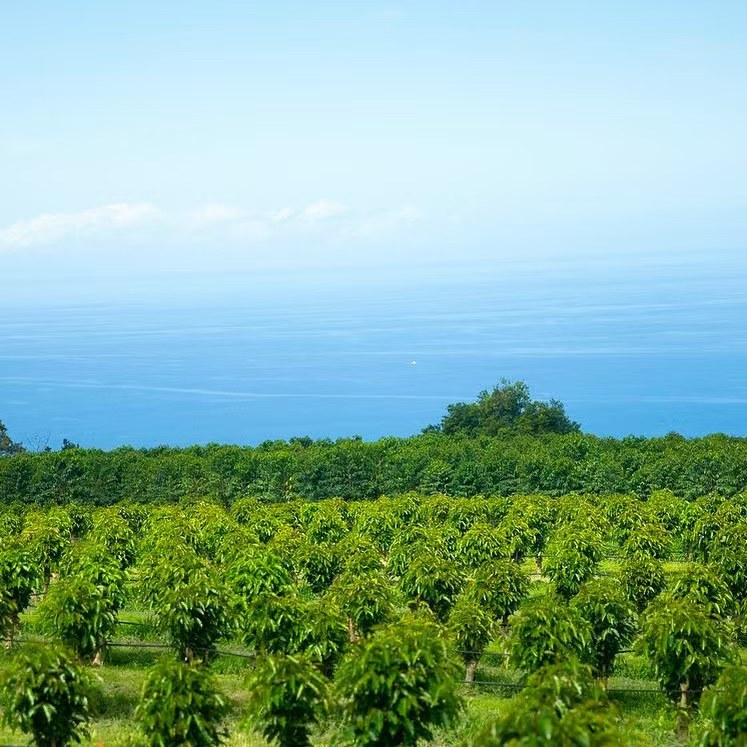
The climatic conditions are very suitable. In the early morning, sunlight gently filters through the moisture-laden air; in the afternoon, the mountains become more humid and foggy, and the white clouds surging in the sky become a natural sunshade for the coffee trees; at night, it becomes clear and cool again. Suitable natural conditions give Kona coffee a very high average yield, reaching 2,240 kilograms per hectare. Combined with fertile land and farmers' meticulous management, this makes Kona coffee a specialty on the market.
Hawaiian Coffee-Producing Regions
MAUI ISLAND
Maui (MAUI) has a large coffee estate, Ka’anapali, which is divided into many small plots, but the coffee is produced centrally. The estate was a sugarcane plantation from 1860 to 1988 before later transitioning to a coffee estate.
Producing region altitude: 100-550 meters
Coffee bean harvest period: September-January of the following year
Cultivated varieties: Catuai, Caturra, Typica, Mocha
WAIKAPU,MAUI ISLAND
This producing region is relatively young among Hawaii's coffee regions. The only coffee estate in the area is owned by a company located on the neighboring island of MOLOKAI.
Producing region altitude: 500-750 meters
Coffee bean harvest period: September-January of the following year
Cultivated varieties: Typica, Catuai
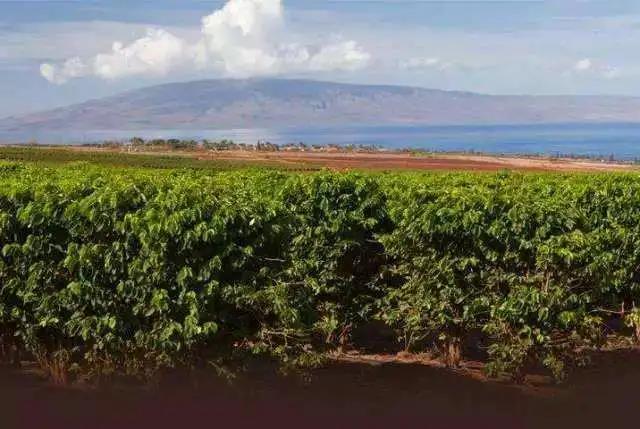
KAU, BIG ISLAND (coffee bean processing plant)
Coffee was not planted here until after the sugarcane processing plant closed in 1996. Before 2010, the coffee cherries produced here all had to be transported to neighboring areas such as PUNA or KONA for post-processing. Today, a processing plant has been established locally, so people no longer need to send coffee cherries elsewhere for post-processing.
HAMAKUA, BIG ISLAND
Coffee cultivation here began in 1852, and there were originally 8 plantations. Like other Hawaiian producing regions, the coffee industry declined because of the prosperity of the sugar industry, but since the mid-1990s, coffee has been planted here again.
Producing region altitude: 100-600 meters
Coffee bean harvest period: August-January of the following year
Cultivated varieties: Typica, Catuai
KONA, BIG ISLAND
The fame of Hawaiian coffee mainly comes from this producing region. Unlike other producing regions, coffee cultivation here is more diverse. There are more than 630 coffee plantations locally, most of them less than 2 hectares in size, usually operated by different families.
This area is located in the southwestern part of the Big Island, 20 miles long and 2 miles wide, covering the slopes of Hualalai and Mauna Loa. At an altitude between 800 and 1,100 meters, it is the most suitable growing environment for coffee trees. Therefore, the slopes of Hualalai and Mauna Loa are covered with coffee trees. Only coffee beans grown within this area and meeting the strictest certification standards can be sold under the Kona trademark name.
The uniquely favorable natural environment of the KONA region nurtures Arabica coffee, making it the plantation with the world's highest coffee yield. Not only is quality guaranteed, but the distinctive growing environment and climate also give the coffee a richer aroma.
Every November, the Kona region of Hawaii's Big Island holds the grand "Kona Coffee Cultural Festival" to celebrate the harvest of Kona coffee beans and to commemorate the 180-year historical tradition of Hawaiian coffee beans. During the nearly 10-day event, more than 40 coffee culture and competition activities are held on Hawaii's Big Island and Oahu, popularizing knowledge about Kona coffee and giving tourists from around the world a chance to get up close to Hawaiian Kona coffee beans.
Hawaiian Coffee Varieties
Typica is the oldest native variety in Ethiopia, and almost all Arabica varieties today are derived from Typica. Typica has an elegant flavor, but it is physically weak, has low disease resistance, is susceptible to coffee leaf rust, and has low yield, making it difficult to achieve economic viability. In recent years, Typica in Central and South America has gradually been replaced by Caturra and Catuai, and Typica is becoming increasingly rare. Although Typica has an elegant flavor, it is less widespread than Bourbon.
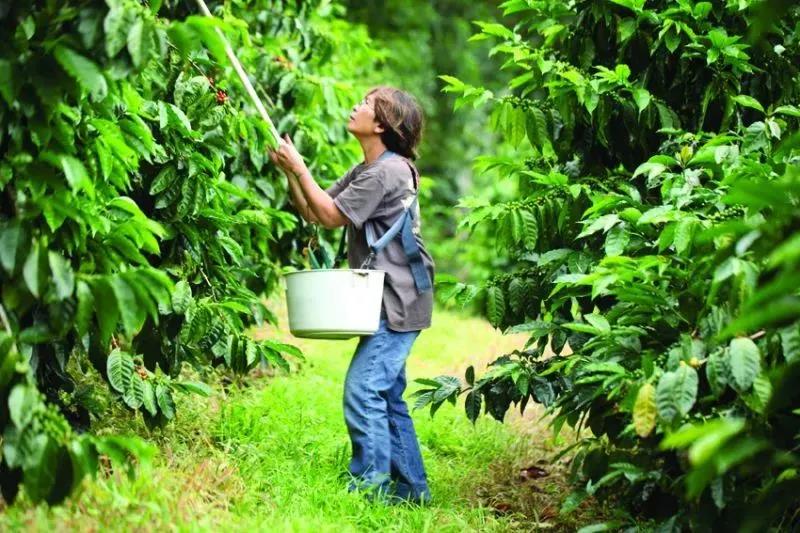
FrontStreet Coffee believes that the most distinctive feature of the Typica coffee tree is its bronze-colored young leaves, which is why some people also call it "red-top coffee." As the environment has changed, Typica has genetically evolved into many mutant varieties that are better adapted to their surroundings and exhibit new characteristics, and they are usually considered new varieties. Well-known coffees such as Mandheling, Blue Mountain, Kona, and Yunnan small-batch coffee are all mutant varieties of Typica.
Typica beans are relatively large, either pointed-oval or slender-tipped, unlike the round-bodied beans of the Bourbon variety. Typica coffee has a distinctive, clear, and clean flavor, as well as balanced characteristics and a high degree of cup cleanliness.
Characteristics of Hawaiian Coffee Beans
The Kona coffee beans produced in Hawaii are the most perfect coffee beans in the world. The beans are exceptionally plump, carry a cinnamon spice flavor, and have balanced, moderate acidity. Kona beans are bright and glossy, with a uniformly neat bean shape. When drunk, the flavor is rich and aromatic, neither bitter nor astringent, with no burnt taste, no calories, and a strong acidity and sweetness, with a rich, smooth, and mellow mouthfeel. True Kona coffee is indeed a rare treasure in the world, not easy to find, and is the highest-quality coffee. Because it grows on volcanoes, Hawaii's unique volcanic climate creates Kona's distinctive aroma. Combined with highly manual cultivation techniques, every bean can be called a pampered lady of a distinguished family—elegant, plump, and with skin as delicate and radiant as a baby's.
Hawaiian Coffee Processing Methods
Hawaii mainly uses the washed method. The biggest difference from the natural method is the use of fermentation to remove the mucilage layer. After fermentation is completed and the mucilage is removed, because fermentation bacteria and impurities remain on the coffee beans, the beans are washed again. To wash them clean, this step consumes a large amount of clean water, after which the fruit is dried and hulled. Hawaii's clean, sweet mountain spring water provides ideal conditions for the washed method, and this method creates the bright, clear appearance and pure, refreshing taste of Kona coffee beans. The washed coffee beans are placed on huge drying tables and naturally sun-dried.
Aroma Characteristics of Kona Coffee
Kona coffee's sweet, rich aroma and clear texture make it even more outstanding. It tastes fresh, refreshing, and richly fragrant, with a fairly smooth mouthfeel, excellent body and acidity, and a rich aroma, with the finish lingering in the mouth for a long time after tasting. Most rare of all, Kona coffee has a mixed aroma of fruit, wine, and spice. As a premium product, Kona coffee has long been familiar in Japan. Its characteristics lie in a fresh sweetness reminiscent of grass or trees, along with a citrus-fruit-like acidity and richness. It combines various characteristics in one and has not the slightest turbid texture, making it especially outstanding.
Coffee Bean Grading System
KONA coffee beans are mostly graded by bean size and can be divided into four levels: the highest grade Extra Fancy, Fancy, Prime, and Gr. No.1. They are also divided into Type1 and Type2.
Type1 refers to standard coffee beans, including the largest-sized Kona Extra Fancy, followed by grading from large to small: Kona Fancy, Kona Select, and Kona Prime.
Type2 refers exclusively to small round peaberries and includes two grades: Kona Number 1 Peaberry and the smaller Kona Peaberry Prime.
Producing region: Hawaii Kona
Farm: Queen Farm
Altitude: 1,100 meters
Variety: Typica
Processing method: Washed process
Queen Farm
FrontStreet Coffee's Kona comes from Queen Farm. In the 2009 and 2011 Gevalia (Hawaii KONA cupping competition) Cup competitions, the estate won the runner-up title. Seventy percent of the harvest there can be called top-grade specialty beans, making it a farm known for high quality. Even the specialty beans one grade lower than those are not inferior to top-grade specialty beans in aroma, and people in the roasting industry marvel at and praise them endlessly.
Roasting Recommendations
Kona coffee beans are exceptionally plump, round in shape, and bright in color, truly deserving the title of "the most beautiful coffee beans in the world." In order not to damage their beautiful appearance and to highlight their layered floral-nectar sweet aroma, Front Street's roaster decided to use a medium roast for this bean.
Machine: Yangjia 800N, green bean charge 550g. Charge temperature: 200°C. Turning point: 5'35", 150.1°C. First crack: 9'30", 187°C. Development after first crack 1'50'', discharged at 193.4°C.
Cupping Report
Front Street Brewing Recommendations
In order to fully extract the sweetness of Kona coffee, Front Street uses a higher water temperature and a finer grind for extraction. However, to avoid over-extraction caused by high temperature, it uses a faster-flow dripper, such as the V60. The V60 dripper is 60-degree cone-shaped, and the conical angle allows the coffee grounds to gather together; when pouring, the water flow also automatically converges toward the center of the dripper, ensuring sufficient contact time between water and coffee grounds, thereby extracting a suitable cup of coffee. In addition, the ribs on the inner wall of the V60 extend in a clockwise spiral from the bottom to the top, leaving enough space between the filter paper and the dripper for good water flow. Combined with the large hole at the bottom, the flow rate is relatively faster than that of many drippers.
Front Street recommended parameters : V60 dripper, water temperature 90°C, water-to-coffee ratio 1:15, coffee dose 15g, grind size BG#6m (fine granulated sugar size)
FrontStreet Coffee uses staged extraction. The amount of water for blooming is twice the weight of the coffee grounds, that is, 30 grams of water for a 30-second bloom. Then pour in a small stream in a circular motion up to 125 grams and pause. When the water level drops and is about to expose the coffee bed, continue pouring to 225 grams and stop. The total extraction time is 2 minutes.
Brewed flavor: balanced, warm osmanthus honey sweetness with an elegant, full yet not heavy mouthfeel. The brewed coffee gives off a mulberry aroma that makes one feel sweetly happy. The finish has a soft malt flavor, and when cooled it tastes like a cup of mulberry tea.
The above content is compiled by CoffeeHunters, a coffee news website.


