








What is the Catuai coffee species and how should it be brewed?
Catuai is a cross of Mundo Novo and Yellow Caturra, bred by the Sao Paulo State Agricultural Institute in Brazil under the original designation H-2077. It inherited high yield, disease resistance and good acidity from Mundo Novo, plus small stature and sun-drying suitability from Caturra. The compact tree allows double-density planting and easier pest control.
The name means very good in Guarani, but early H-2077 cups were ordinary, so the institute ran pedigree selection over several generations before wide release. The variety spread across Central and South America, and naturally processed lots such as Panama Elida Estate show how the coffee bean process shapes flavor in the cup.
Catuai is an excellent variety in the coffee world that combines both yield and quality. It was created by crossing Mundo Novo and Yellow Caturra, and was developed under the cultivation of the São Paulo State Agricultural Institute in Brazil. It inherited its parents' high yield, disease resistance, and excellent acidity, and because its small stature makes dense planting and management easier, it has taken root widely across Central and South America. This article will begin with Catuai's breeding history, variety characteristics, and spread in Central America, and combine that with the naturally processed Catuai from Panama's Elida Estate listed by Front Street Coffee to show in detail its flavor performance and pour-over brewing parameters, providing coffee lovers with a complete variety overview and tasting reference.

What exactly is the Catuai coffee species?
From the name alone, one can see that Catuai has a close blood relationship with Caturra. This variety is the result of artificial hybridization by the São Paulo State Agricultural Institute (IAC) in Campinas, Brazil, of Mundo Novo and Yellow Caturra, and its original designation was "H-2077." Mundo Novo itself is a natural hybrid of Bourbon and Typica, first discovered in 1943 in Tietê, São Paulo, Brazil.
From Mundo Novo, Catuai inherited high yield, strong disease resistance, and excellent cup quality, while from Caturra it gained a small stature, excellent acidity, and suitability for sun-drying. For this reason, Catuai performs outstandingly in resisting natural disasters, especially wind and rain. Because the tree is smaller, it can be planted at double density, and since the plant is short, pest and disease control operations are also relatively convenient. Catuai grows vigorously and is short in height, but it is susceptible to leaf rust.
This variety performed so excellently that it was named Catuai, which means "very good" in Guarani. However, the variety originally called "H-2077" did not show satisfactory performance in the cup; its advantages were mainly reflected in disease resistance, pest resistance, yield, and adaptability to the growing environment.
Therefore, the São Paulo State Agricultural Institute carried out pedigree selection on "H-2077," that is, continuous screening of individual plants over multiple generations, and ultimately began widespread promotion of planting in Brazil in 1972. Catuai's high-yield characteristics also attracted the attention of Central American countries, which introduced and cultivated it, but later research found that Catuai transplanted to Central America seemed to decline in productivity.
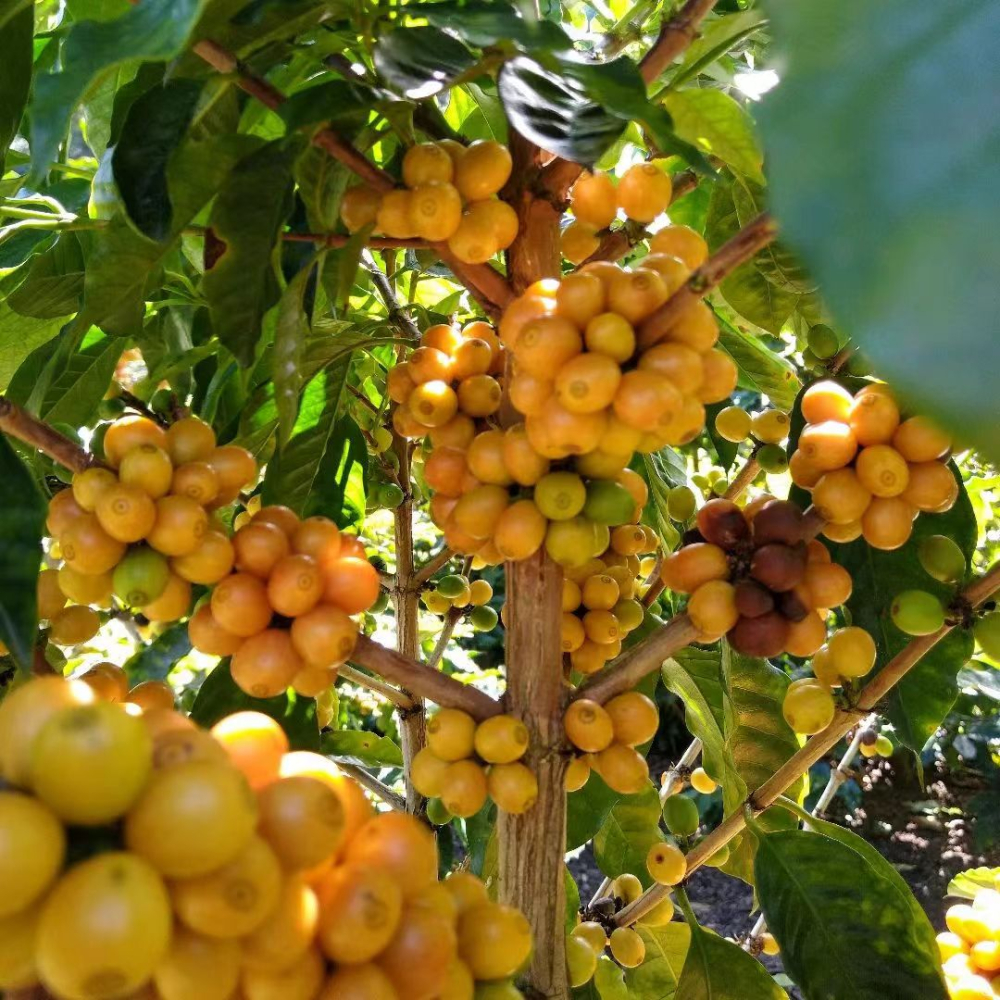
Catuai performs quite well in the cup and has two types, red fruit and yellow fruit, which are planted in different countries according to their respective characteristics. For example, Costa Rica introduced yellow-fruited Catuai in 1985. A Costa Rica Musician Series Beethoven listed by FrontStreet Coffee is a coffee bean product made entirely of the Yellow Catuai variety. It has excellent acidity and a clean mouthfeel, and more importantly, it carries fruity aromatics.
Why do Caturra and Catuai often appear together in the same coffee?
In research conducted by the Honduran Coffee Institute (IHCAF) in Honduras and Costa Rica, it was found that after selecting two lines for planting, no significant productivity difference was observed between Caturra and Catuai. In coffee estates in Central America, where Caturra had already been planted to replace Bourbon, when Catuai was introduced for localized planting, because Catuai itself contains Caturra genetics, the biological habits of the two gradually became similar. This meant that secondary classification within the same coffee-growing area would increase labor costs. Therefore, today when we buy estate-level coffee beans from Latin America, we often see names such as Caturra and Catuai in the variety description.
At present, Catuai is widely planted in Brazil, Costa Rica, Honduras, and other Central American regions. For example, the Costa Rica Musician Series Bach and Mozart (Caturra, Catuai) listed by FrontStreet Coffee, the naturally processed Catuai from Panama's Elida Estate, the Catuai from Honduras' Sweet Orange Estate, and Panama's Butterfly (70% Geisha, Caturra, Catuai), among others.
How does Catuai perform in flavor?
FrontStreet Coffee demonstrates with the naturally processed Catuai from Elida Estate:

FrontStreet Coffee: Panama Elida Estate Catuai Region: Boquete, Panama Estate: Elida Estate Altitude: 1,850 meters Variety: Catuai Processing Method: Natural
As a century-old established estate, Elida Estate was founded in 1918, when Robert Lamastus established it near the Baru Volcano in Boquete, Panama. The estate's name is always repeatedly mentioned in introductions because Mr. Robert named it after his wife.
After the estate was founded, Mr. Robert focused on the production and cultivation of high-quality coffee. His love for coffee seemed engraved in his blood and continued through the generations. Today, Elida Estate has passed into the hands of the fourth generation of the Lamastus family, and each generation has expressed its passion for and emphasis on coffee in different ways. In recent years, the Lamastus family also purchased a brand-new high-altitude estate, Trompo Estate, which is the fifth estate under the family.
Although the Lamastus family owns five estates in Panama, only three currently produce coffee. Each of these three estates is a highly renowned Panamanian name. In addition to the main subject of this article, Elida Estate, there are also El Burro Estate and Luito Estate. Because the areas where the three estates are located differ greatly, there are also certain differences in the terroir environment for coffee cultivation, and it is precisely these differences that give the coffee produced by each estate its own distinctive character.
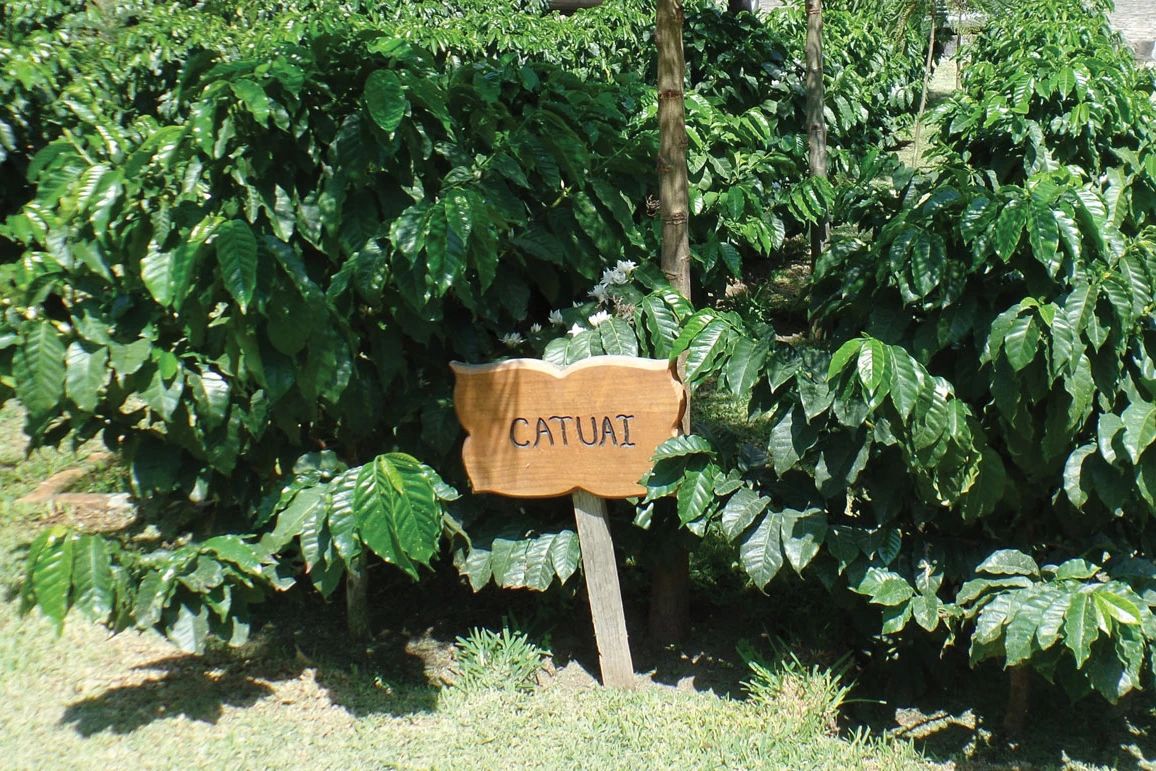
Returning to Elida Estate itself, it is the largest and highest-altitude farm among the three estates, covering as much as 65 hectares. Although the area is large, the area actually used for coffee cultivation is not that much. This is because more than half of Elida Estate lies within the boundaries of Baru Volcano National Park, where all trees are strictly prohibited from being cut down and which is a nationally protected natural environment. As a result, only 30 of the 65 hectares can be planted with coffee. Even so, the excellent growing environment (microclimate, volcanic soil, pristine ecology) and high altitude have laid a solid foundation for the deliciousness of Elida coffee. Of course, this is inseparable from the Lamastus family's strict control and careful attention to every stage of coffee harvesting and processing. It is precisely for this reason that the coffee produced by Elida Estate is so memorable and endlessly satisfying.
Over the years, Elida Estate has mainly grown three varieties: the old variety Typica, the newer generation Catuai, and today's coffee king, Geisha. Elida Estate was also one of those amazed by the Geisha that Hacienda La Esmeralda showcased brilliantly at BOP in 2004, so third-generation estate owner Wilford Lamastus, like other estate owners, embarked on the journey of growing Geisha. The following year, in 2005, Elida Estate and El Burro Estate began planting Geisha.
How should Elida Natural Catuai be brewed?
In brewing, in order to highlight this coffee's sweet orange aroma and pleasant acidity, a fine grind is used, similar in degree to fine granulated sugar, with a pass rate of 80% using a standard 850-micron sieve. For water temperature, a relatively high 92°C is chosen; high temperature can bring out the coffee's aroma and sweetness. A V60 is selected as the dripper. This through-flow dripper can better highlight a certain flavor of the coffee, and this brewing aims to emphasize a peach-like sweetness.
This brewing still uses 15 g of coffee grounds, with a ratio of 1:16. After grinding the coffee, one can clearly smell the aroma of sunflower seeds and fresh berries. Add the coffee grounds, then first pour in 30 g of water and bloom for 30 seconds, during which the coffee can be observed absorbing water, expanding, and releasing gas.
For the second stage, pour 150 g of water in a circular motion. The pour after blooming is very important, as it basically determines the main flavor direction of this cup of coffee. Pouring water at a ratio of 1:10 can better highlight the coffee's sweetness. Once the coffee bed drops slightly, pour in 60 g of water to raise the coffee bed back to the height of the second pour. End extraction after all the coffee liquid has flowed into the server, with a total time of 2 minutes.

Flavor: In the Elida Catuai brewed this way, one can clearly taste peach, raisin, and orange on entry, followed by gradually emerging sweetness of sugarcane and melon, with grapefruit and green tea notes in the finish.
The above content is compiled by CoffeeHunters, a coffee news website.


