







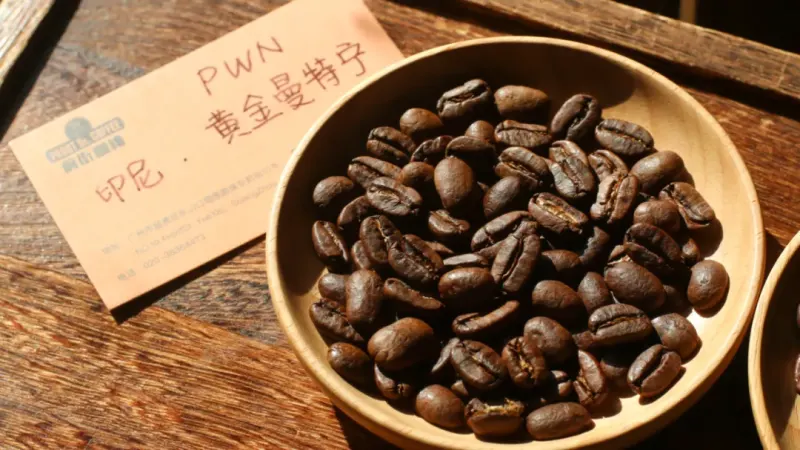
What Makes Golden Mandheling Different From Aged Mandheling?
Golden Mandheling is not aged coffee at all. It is a trademarked product name used by Pwani Coffee Company, known as PWN, an Indonesian exporter that buys Mandheling green beans from many of the country's quality growing regions and hand sorts them repeatedly until only plump, defect-free beans remain. In practice, only beans sold by PWN under that registered name count as Golden Mandheling.
The Front Street PWN Golden Mandheling green beans are screen size 18 or above, with no more than three defective beans in a 300-gram sample, which meets the top G1 grade. The beans tend toward dark green. Because the Mandheling name is not a variety but a trade label tied to a specific region and exporter, careful buyers check the PWN mark before trusting the name on a menu.
The "Golden Mandheling" often seen on café menus—what kind of bean is it exactly? Is it the same thing as Aged Mandheling? The answer starts with Indonesia's famous green bean exporter, PWN. This company buys up Mandheling green beans from most of Indonesia's high-quality growing regions, and after multiple rounds of hand sorting, the plump, flawless beans are given the name "Golden Mandheling" and a registered trademark. So only beans produced by PWN can truly be called Golden Mandheling. This article starts with the Golden Mandheling sold at Front Street's shop, sorting out its origins, specification standards, and how to tell the real from the fake, and shares the brewing parameters and flavor performance Front Street uses when producing this bean, helping enthusiasts brew a cup of mellow, clean Mandheling at home too.
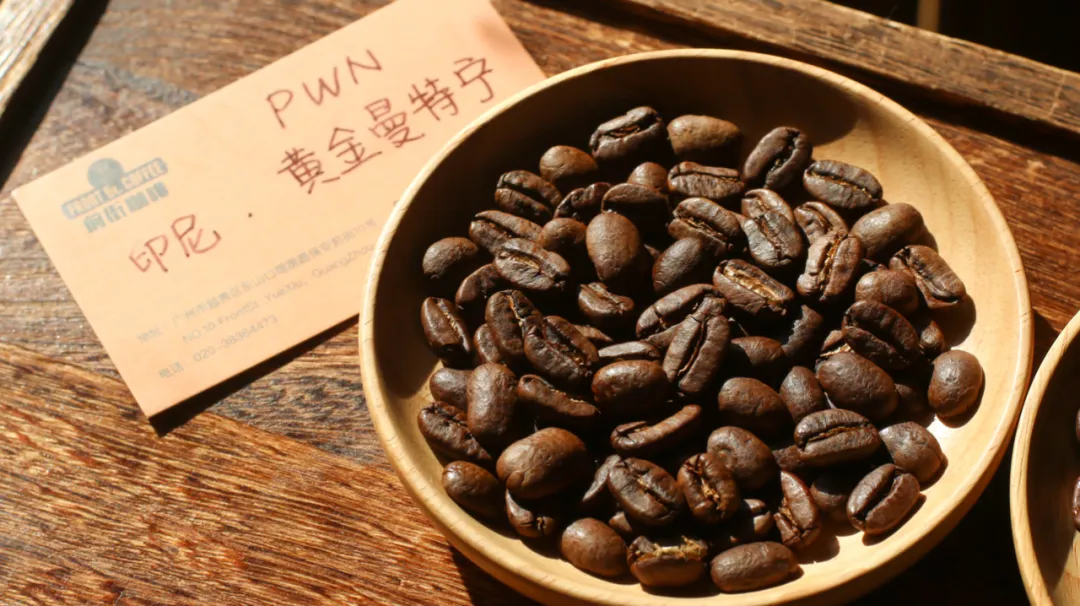
For people who regularly deal with specialty coffee, the name "Golden Mandheling" should be familiar. On the blackboard at the Front Street Coffee shop, in the upper right corner, a Front Street Golden Mandheling is listed. So what exactly is it? Years ago, a friend who ran a coffee shop told me that Golden Mandheling was actually Aged Mandheling, but that's not the case.
To talk about Front Street Golden Mandheling, you can't avoid the three letters PWN, which often appear alongside Mandheling coffee. PWN is short for Pwani Coffee Company, a well-known company in Indonesia whose main business is buying Mandheling green beans. It has taken in almost all of Indonesia's best-quality growing regions, so most beans from PWN are specialty-grade. The Golden Mandheling mentioned earlier is one of the company's products.
After Mandheling green beans are purchased, they still go through repeated hand sorting to pick out plump, defect-free beans. Only beans that pass this层层层层层层层层层层层层层层层层层层层层层层层层层层层层screening are eligible to be classified as Golden Mandheling. PWN also applied for a trademark for "Golden Mandheling." In other words, from then on only Golden Mandheling produced by PWN can count as真正的 Golden Mandheling. This shows that Golden Mandheling is not an aged bean at all—it's simply a name the company gave its own product.
In appearance, Front Street PWN Golden Mandheling green beans are sized 18 screen or above, with no more than three defective beans in a 300-gram sample, reaching the highest grade G1. The color tends toward dark green, and the beans are uniform flat beans. Front Street found that Golden Mandheling, after strict screening, lacks the earthy, muddy off-flavors of ordinary Mandheling, and tastes cleaner and more transparent.
Some friends may ask: as an ordinary consumer, how can you tell whether the Front Street Golden Mandheling you bought is really from PWN?
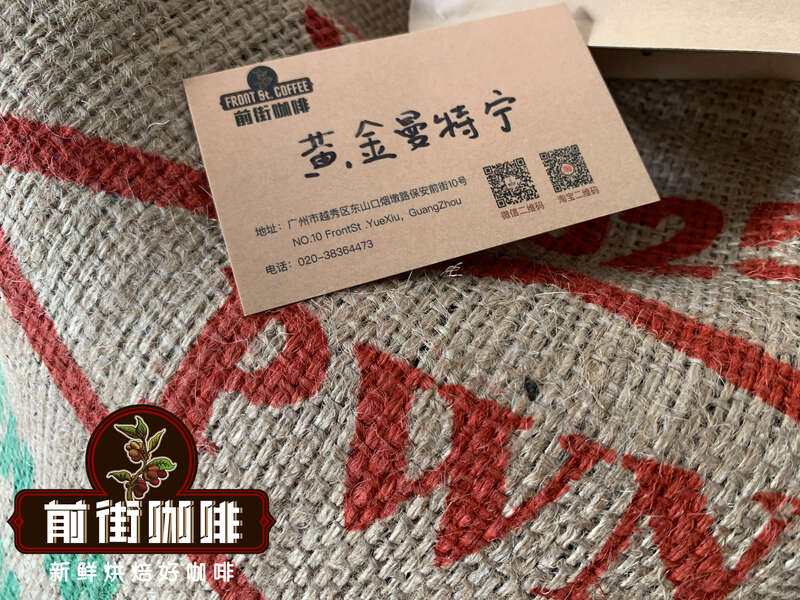
In fact, Front Street PWN Golden Mandheling uses burlap bags printed with the PWN logo for its green beans, and also comes with a certificate of origin issued by PWN. The Front Street PWN Golden Mandheling that Front Street obtained has both of these credentials complete, and they are currently hanging on the wall of the Front Street Coffee shop.
To drink with peace of mind, many people choose to buy a whole bag of coffee beans and brew at home. But quite a few people report that the coffee they brew is either bitter or too sour. Below, Front Street Coffee (FrontStreet Coffee) will explain the parameters Front Street uses when producing Front Street PWN Golden Mandheling.
Dripper: KONO dripper
Water temperature: 88°C
Dose: 15 grams
Coffee-to-water ratio: 1:15
Grind size: 70% passing a Chinese standard No. 20 sieve
Front Street Golden Mandheling is roasted on the darker side, so flavor compounds are released very easily during brewing. Therefore Front Street recommends a coarser grind and a lower water temperature. At the same time, to achieve a mellow mouthfeel, Front Street recommends a dripper with an immersion function, such as the KONO dripper. It is very suitable for brewing medium-dark roasted beans like Front Street Golden Mandheling and Front Street Jamaica Blue Mountain No. 1.
The specific steps are: first pour 30 grams of water for a 30-second bloom, then from the center point pour in a thin stream in slow circles up to 125 grams. When the water level in the dripper drops to where the coffee bed is almost exposed, continue pouring in circles up to 225 grams. Total extraction time is about 2 minutes.
The coffee beans shipped by Front Street are all freshly roasted within 5 days, and usually have already gone through a 4-to-7-day resting period by the time they arrive. During brewing, the first pour of hot water should completely wet the coffee grounds for the bloom. The purpose of the bloom is to help the coffee grounds release carbon dioxide, making the subsequent extraction more stable.
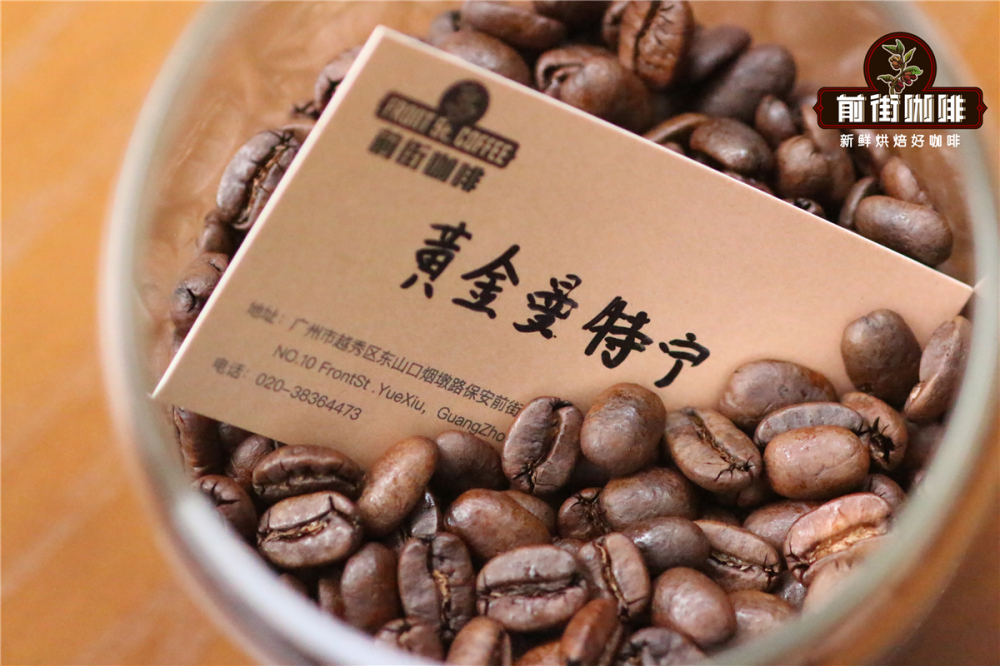
Considering that some people don't have grinding tools at home, Front Street also offers a grinding service. However, Front Street would like to remind you that after coffee beans are ground, the contact area between particles and air increases, degassing becomes more vigorous, and flavor compounds are lost along with it. Front Street suggests that if conditions allow, it's better to buy whole beans and grind fresh right before brewing, so you can taste better flavor.
After Front Street PWN Golden Mandheling is brewed, you can sense aromas of sweet herbs, spices like cinnamon, and fruit peel. The mouthfeel is mellow and rich, with a caramel-like sweetness. After the temperature drops slightly, a rich melon aroma emerges as well.
The above content is compiled by CoffeeHunters, a coffee news website.


