







Which Colombian coffee brands are worth knowing?
Colombia is the world's third-largest coffee producer, with FNC coordinating growers and CENICAFE handling variety research. Harvest seasons split across three regions: the south and north have distinct periods, while the center sees a main crop from October to January and a secondary crop from April to July. Well-known brands include Juan Valdez, Ming Coffee, Cosmo and Colin.
The country divides into commercial MAM production zones in the center and north, and specialty areas such as Huila in the south. A pour-over plan for a Front Street Colombia Huila Caturra washed lot gives staged extraction parameters, covering bean selection through brewing. Many coffee farms in Huila work at high altitude, which supports the smooth, sweet profile.
As the world's third-largest coffee producer, Colombia boasts a well-established industry system including FNC and CENICAFE. Its terrain spans three major regions from south to north, with distinct harvest seasons, nurturing numerous coffee brands each with unique characteristics. This article systematically reviews well-known brands such as Juan Valdez, Ming Coffee, Cosmo, and Colin, analyzes the smooth and sweet flavor profile of Colombian coffee, and provides an in-depth introduction to the regional divide between commercial beans and specialty beans—the three major MAM production regions in the central and northern areas versus specialty regions like Huila in the south, each with its own strengths. Finally, it includes the pour-over parameters and staged extraction plan for Front Street Coffee's Colombia Huila Caturra Washed beans, offering coffee enthusiasts a complete reference from bean selection to brewing.
For more specialty coffee knowledge, welcome to follow our WeChat official account: Front Street Coffee (FrontStreet Coffee).
Colombia ranks third in the world in coffee production, and its industry chain is quite mature. FNC (National Federation of Coffee Growers) is responsible for coordinating coffee farmers' cultivation affairs, while CENICAFE (Colombian Coffee Agricultural Research Institute) focuses on the research and development of coffee varieties. Geographically, the country can be divided into three major regions from south to north: the southern and northern harvest seasons have clear boundaries, while the central region has two rounds of harvest—the main season concentrated from October to January of the following year, and the secondary season falling between April and July.
Based on such an industrial foundation, Colombia has produced quite a few influential coffee brands. Front Street will now introduce several well-known representatives.
JUAN VALDEZ
This brand is not only the number one flagship in the Colombian coffee sector but is also regarded as one of the finest coffee brands in South America. It uses the figure of a coffee grower as its representative symbol, becoming an icon of Colombian coffee, helping it stand out from other origin countries in the international market and gaining widespread recognition across different markets.
Over the past forty years, Colombian coffee growers have poured tremendous effort into building the Juan Valdez brand we know today. In 2005, The New York Times affirmed the brand's important position in the American market. Its trademark recognition has surpassed many leading international brands, gradually joining the ranks of world-renowned brands. JUAN VALDEZ roasted coffee beans come from the finest soils in the world. Colombia's rich and diverse geographical conditions allow the country to cultivate coffees with distinct flavors, thereby satisfying the diverse taste preferences of consumers worldwide.
Ming Coffee
The "Colombia" flavored coffee launched by Ming Coffee has a unique taste profile—rich and full-bodied with a slightly acidic finish, fully releasing the coffee's aroma and leaving a lasting impression, thus widely praised.
Cosmo
Cosmo coffee is made from traditionally dark-roasted coffee beans, perfectly presenting the balance of acidity, bitterness, and sweetness in Colombian coffee. Rich aroma, bright quality acidity, and excellent balance are the inherent advantages of Cosmo coffee.
Colin
The Colombian coffee selected by Colin has a rich and solid aroma, with bright quality acidity and nutty flavors that linger long in the memory. Both in appearance and quality, it can be considered an excellent variety.
Colombian Coffee Bean Flavor
In Front Street's view, the key reason Colombian coffee is so widely favored lies in its silky-smooth mouthfeel. People often directly associate Colombian coffee with high quality and great flavor. It has a sweet finish amid bitterness, gentle acidity, and combines unique fruity notes with a full body. Colombian Supremo coffee in particular perfectly balances the three tastes of acidity, bitterness, and sweetness, leaving one enchanted.
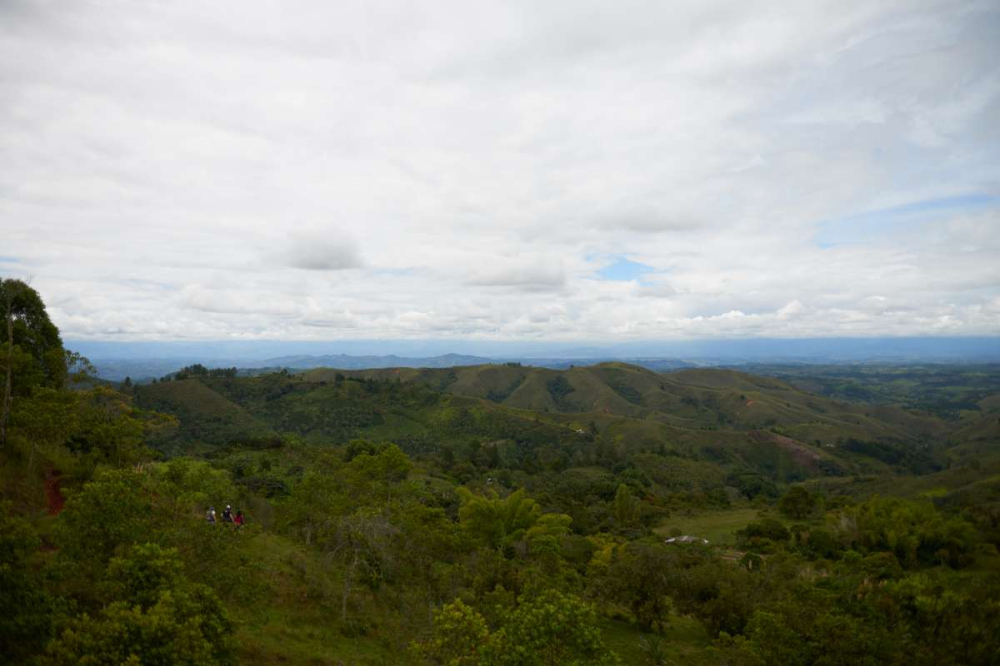
Colombian Coffee Production Regions
Colombian coffee beans can be divided into two categories by characteristics: commercial beans and specialty beans. Commercial coffee beans are mainly produced in central and northern Colombia, mostly from large-scale commercial coffee farms. Among them, the better-known are the three major "MAM" production regions—Medellín, Armenia, and Manizales—with flavors dominated by the familiar Central American style and prominent fruity acidity. However, Bucaramanga produced in the northeastern Santander province is known for its low acidity and heavy bitter aroma, with a style somewhat close to Indonesian Mandheling. (This phenomenon may be related to the lower altitude of the Guane region causing reduced acidity.)
Specialty coffee beans are concentrated in the south, generally at altitudes above 1,500 meters. Combined with numerous volcanoes, this has created many well-known specialty production regions, including Cauca, Huila, Meta, Tolima, and Nariño. The flavors of these regions are dominated by caramel aroma, accompanied by delicate berry notes and acidity, with sweetness also very prominent.
Huila
Huila Province is located in the southern section of Colombia's Central Cordillera and is the country's most renowned specialty coffee production region. Surrounded by mountains with undulating terrain, the cultivation altitude exceeds 1,500 meters. Colombia's most important rivers converge here, bringing abundant water resources and moisture.
Unlike the general impression of Colombian coffee as balanced and smooth, many micro-lot specialty coffees produced by smallholder farmers actually possess distinct regional flavor characteristics. In recent years, as the international market has placed greater emphasis on coffee quality and raised requirements for specialty coffee, the previous grading system based on bean size has gradually been abandoned in favor of micro-regional selections provided by smallholder farmers through micro-production organizations. Dozens of smallholder farmers combine their respective harvests into a single micro-lot for sale, which also provides more opportunities to directly identify many outstanding specific smallholder coffees through batch-by-batch cupping.
Front Street Coffee (FrontStreet Coffee): Colombia Huila Coffee Beans
Region: Colombia
Variety: Caturra
Processing Method: Washed
Roast: Medium-Dark Roast
Altitude: 1500-1800m
Pour-Over Parameters for Colombian Specialty Huila Coffee
Dripper: KONO Dripper
Water Temperature: 86-87℃
Dose: 15g
Coffee-to-Water Ratio: 1:15
Grind Size: 75% passing through No. 20 sieve
Staged Extraction
For the first stage, pour 30g of water for blooming, with a blooming time of about 30 seconds; for the second stage, pour water until reaching 125g, then pause; when the water level drops and is about to expose the coffee bed, continue pouring for the third stage until reaching 225g and finish; when the water level drops and is about to expose the coffee bed, remove the dripper. (Timing starts from the beginning of blooming.) Total extraction time is 2'00".
Flavor Description: Overall quite balanced, with obvious sweetness. On the palate there are dark chocolate, nuts, and caramel, with a soft fruity acidity as the temperature changes.
Daily life is already interwoven with sour, sweet, bitter, and astringent flavors, yet the aroma of coffee is enough to temporarily carry away all the dust of the world. What people savor is never just a cup of coffee—it is also the tranquil moments that coffee brings. The most prominent characteristic of Colombian Supremo coffee is its aroma—rich and substantial, with bright quality acidity and high balance, leaving an endless aftertaste.
The above content is compiled by CoffeeHunters, a coffee news website.


