








What sets yellow bourbon coffee apart in Brazil?
Brazil is the world's largest coffee producer, and yellow bourbon from Queen's Farm in São Paulo state stands as one of its specialty representatives. Grown at 1400-1950m and processed as semi-washed or natural, the beans cup with nuts, cream, peanut, fermented fruit and cane sugar notes, distinct from red bourbon.
The Carvalho Dias family owns Queen's Farm and has collected more than 12 awards since Brazil's first COE in 1999, including a 2004 sweep of champion, 9th and 11th places. The article compares how semi-washed and natural coffee bean processing affect cup quality, and reviews Brazil's bean grading standards.
Brazil, as the world's largest coffee producer, has one of its specialty coffee representatives in the Yellow Bourbon variety from Queen's Farm in São Paulo State. This article, from the perspective of Front Street Coffee, systematically outlines the production region background, variety characteristics, processing method differences, and roasting and brewing recommendations for Queen's Farm. It not only introduces the flavor differences between Yellow Bourbon and Red Bourbon but also provides a detailed comparison of how semi-washed and natural processing methods affect coffee quality, along with Brazil's coffee bean grading standards. Whether you are an enthusiast wanting to learn about Brazilian specialty coffee or a consumer looking for everyday beans, you will find practical references here.
For more specialty coffee knowledge, welcome to follow our WeChat public account: Front Street Coffee
Brazil is the world's largest coffee producer, and the quality of its coffee is equally outstanding. Front Street Coffee believes that the beans best able to showcase the flavor of Brazil's coffee-producing regions are the Bourbon variety from Queen's Farm. In the following article, Front Street Coffee will provide a detailed introduction to the flavor characteristics of Brazilian Queen's Farm coffee beans.
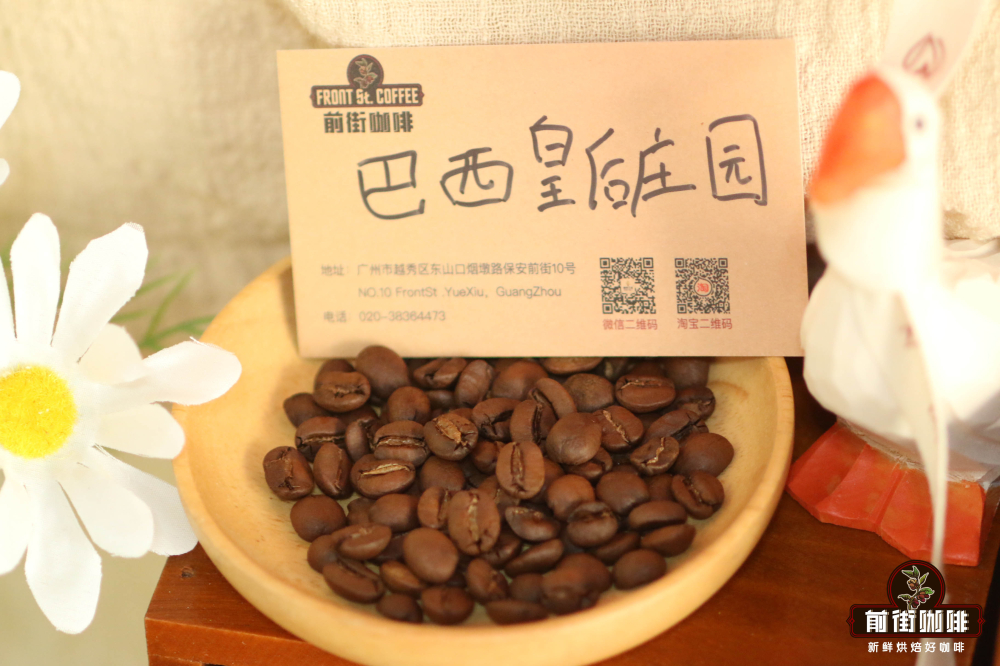
Front Street Coffee Brazilian Queen Coffee Beans
Country: Brazil Region: São Paulo State (Queen's Farm) Altitude: 1400-1950m Variety: Yellow Bourbon Processing Method: Semi-washed / Natural Flavor: Nuts, Cream, Peanut, Fermented Fruit, Cane Sugar
Brazilian Queen's Farm
Front Street Coffee believes that seasoned coffee enthusiasts should be familiar with Brazil's Queen's Farm. This estate is owned by the renowned Carvalho Dias family. The four estates under this family have won awards every year since the first Brazil COE competition in 1999, accumulating more than 12 awards over seven years, and in 2004 they even swept the champion, 9th place, and 11th place, among others. Many estates in Brazil, large and small, have strived for years without making the shortlist, yet the estates under this family have repeatedly taken top honors. Take Queen's Farm's Fazenda Rainfa as an example: it has a 2000 runner-up, 2001 third place, and 2005 29th place, and has won awards three times so far.
Front Street also learned that the Carvalho Dias family is a founding member of the Brazil Specialty Coffee Association, and their commitment to coffee quality and environmental protection is evident to all. The family's farms use natural waterfalls to develop pollution-free hydroelectric power, achieving self-sufficiency in electricity, and have built churches, classrooms, nurseries, and medical stations, insisting on preserving native plants and primary forests and continuously afforestation. As for Queen's Farm, its environmental measures are quite thorough. Because the terrain is high and not flat, mechanical harvesting cannot be used, so the fruit is entirely hand-picked, and low-yield, high-quality Bourbon is planted, making it a quintessential representative estate of Brazil's high-quality coffee.
Therefore, Front Street Coffee believes that the coffee beans from Queen's Farm are undoubtedly the best representation of the flavor of Brazil's coffee-producing regions. Front Street Coffee has also mentioned in previous articles that the flavor of a high-quality coffee bean depends on the origin, variety, and processing method. Next, Front Street Coffee will explain these three major factors that determine the flavor of Queen's Farm coffee beans.
Brazilian Coffee Growing Conditions
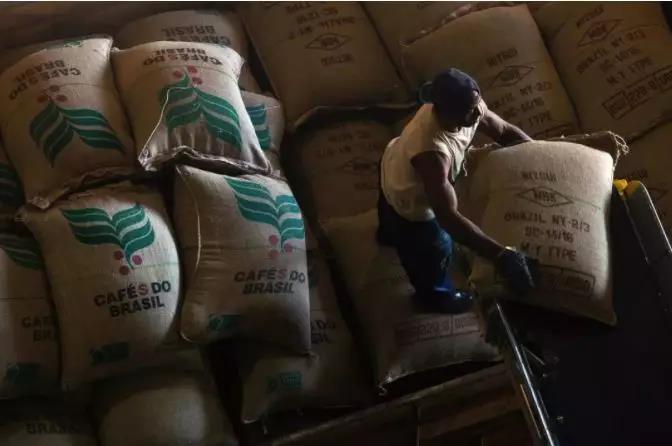
Brazil is located in the Latin American region of the Western Hemisphere, in the eastern part of South America on the western shore of the Atlantic Ocean. Except for Ecuador and Chile, it borders all countries on the South American continent. The vast majority of its territory lies between the equator and the Tropic of Capricorn, making it the country with the largest tropical range in the world. One-third of its territory has a tropical rainforest climate, and two-thirds has a tropical savanna climate. These superior tropical natural conditions are very suitable for the growth and production of tropical cash crops such as coffee.
Brazilian Coffee Growing Regions
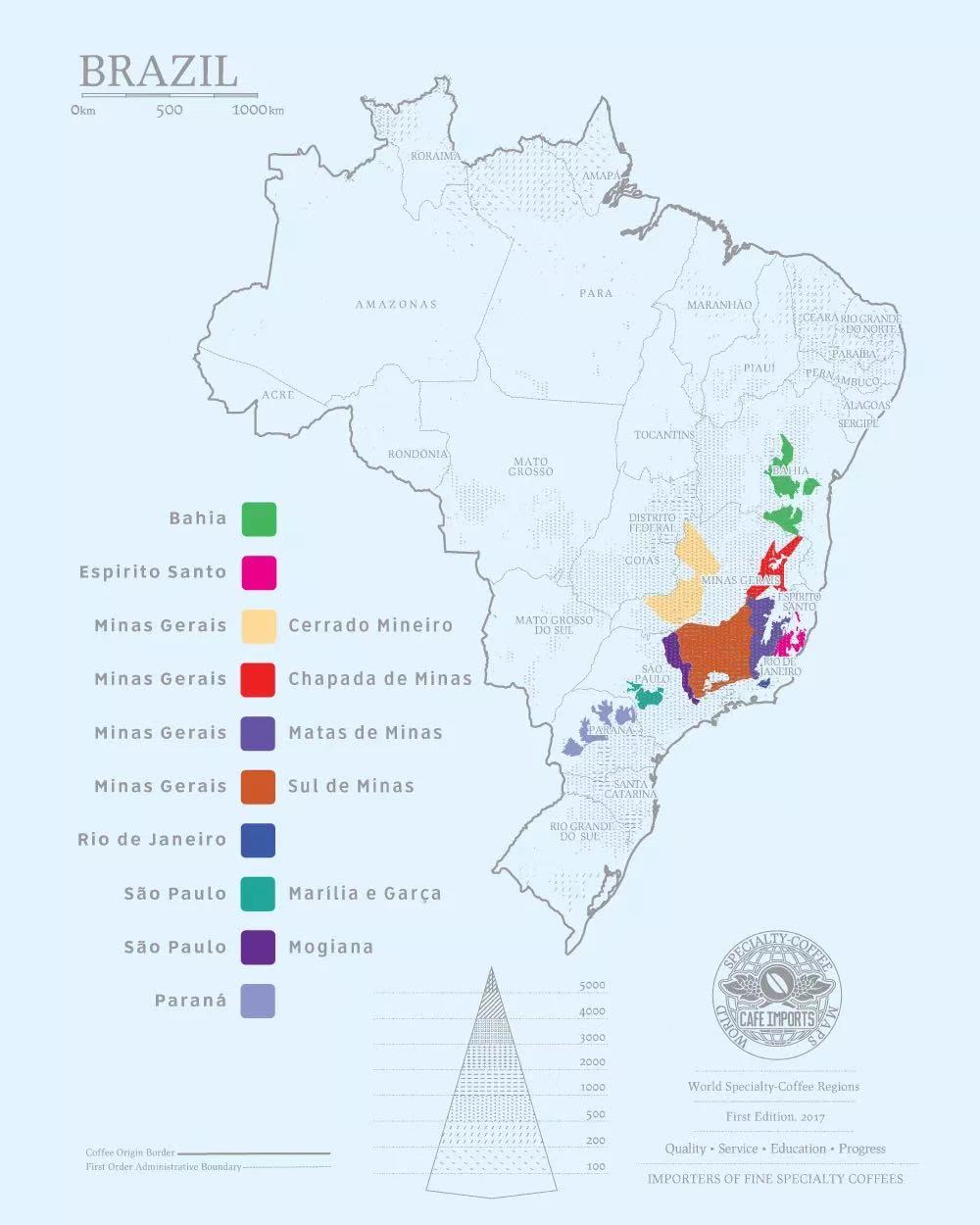
According to Front Street Coffee, Brazil has 21 states in total, and 17 states currently produce coffee, but production mainly comes from four states: Paraná, São Paulo, Minas Gerais, and Espírito Santo, which together account for 98% of the national total. Among them, Paraná in the south has the most astonishing output, accounting for half of the total production by itself.
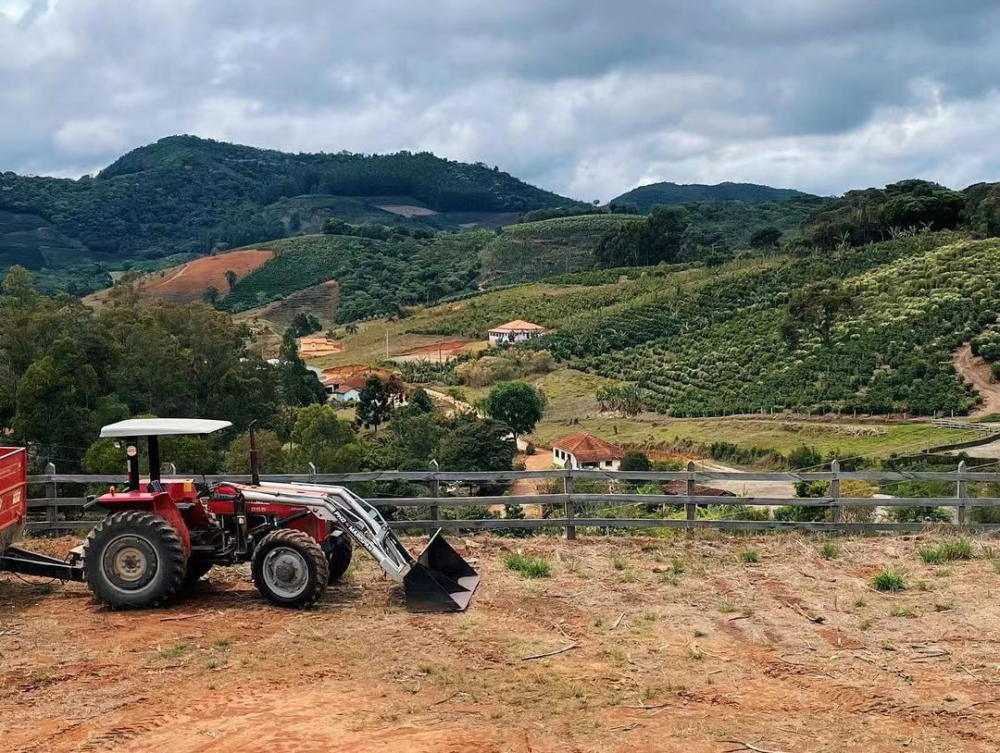
Brazil's Queen's Farm is located in São Paulo State, where coffee is planted among shrubs, grasses, and other vegetation. This region has many farming families, some operating as traditional large farms and others as small-scale modern operations. It is precisely this combination of modern technology and mountainous coffee-growing culture that produces the highest-quality Brazilian coffee beans.
Brazilian Queen's Farm Coffee Bean Variety
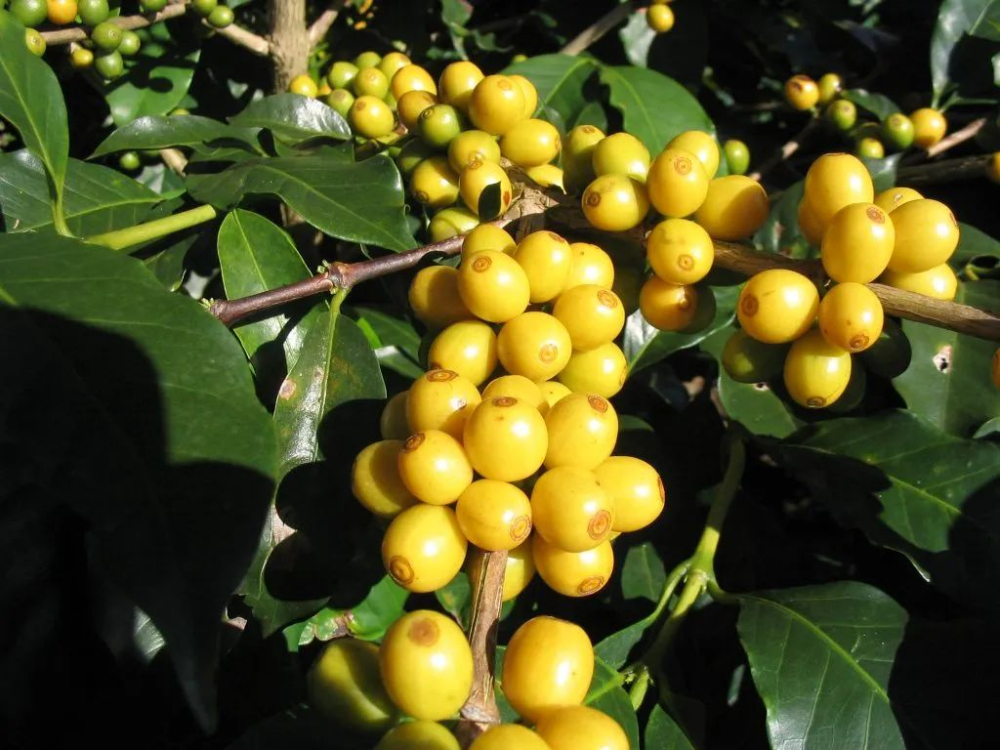
From the above, it can be seen that the coffee beans from Brazil's Queen's Farm are mainly the Yellow Bourbon variety. Yellow Bourbon is a genetic mutation of Bourbon, and Bourbon has always been regarded as among the best in coffee for its low yield and good quality. Yellow Bourbon is a Bourbon variant unique to São Paulo State, Brazil. After the fruit ripens, it does not turn red like Red Bourbon but instead turns orange-yellow, hence the name. Because Yellow Bourbon is grown at very high altitudes and performs excellently in flavor, the Brazilian Queen's Farm coffee beans launched by Front Street are deeply welcomed by Front Street's regular customers, which is precisely the reason.
Bourbon
The Bourbon variety was discovered in Brazil, so it is also the main variety of Brazilian coffee. Since Brazil is the world's largest exporter and producer, many Latin American producing regions now also grow Bourbon. According to Front Street Coffee, Bourbon coffee was first planted on Réunion Island, which was also called Bourbon Island before 1789. Bourbon coffee originates from a natural mutation of the Typica coffee variety derived from Arabica and is the oldest existing coffee variety.
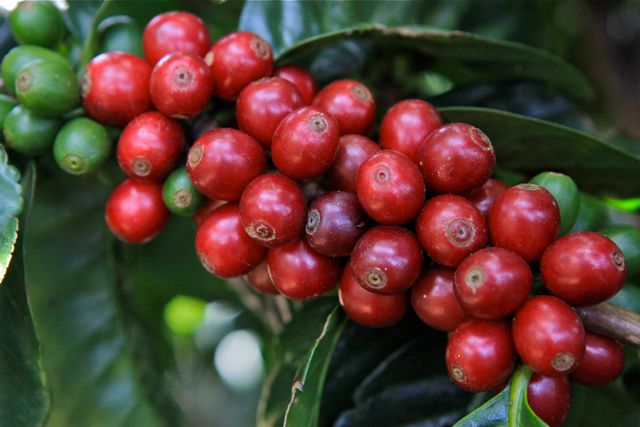
Ordinary Bourbon coffee fruit changes from green to ripe bright red, which is what we have heard of as "Red Bourbon." The fruit is relatively short and round, also called round-bean Bourbon, with high density in the pulp and seed, high sweetness, and bright acidity. But besides Red Bourbon, there are also Yellow Bourbon, as well as the rare Orange Bourbon and the precious Pink Bourbon and Red Bourbon.
What Are Red Bourbon and Yellow Bourbon?
As Front Street Coffee mentioned above, Yellow Bourbon is a Bourbon variant unique to São Paulo State, Brazil, mainly because the fruit does not turn red after ripening but instead appears orange-yellow, hence the name Yellow Bourbon. According to Front Street's cupping practice, Yellow Bourbon coffee beans grown at high altitudes perform exceptionally well in flavor. For two consecutive years, almost all the top three awards in Brazil's Cup of Excellence competition were swept by Yellow Bourbon coffee beans, making it popular in the specialty coffee world.
Front Street believes that Yellow Bourbon's flavor usually features nuts and chocolate, with balanced and smooth acidity, a weak and clean bitterness, and an overall bright and refreshing character.
Red Bourbon, on the other hand, refers to the fruit of an ordinary coffee tree after flowering and fruiting, changing from green to slightly yellow, slightly orange, ripe red, and then to a more mature dark red, hence called Red Bourbon. Its flavor has better aroma, brighter acidity, and even a taste similar to red wine when drunk.
Therefore, Front Street Coffee also introduced Brazilian Red Bourbon coffee beans as everyday beans for coffee fans to taste. It also performs well in flavor and has the inherent characteristics of Brazilian coffee flavor, but it is slightly inferior to Brazilian Queen's Farm coffee beans.
Front Street Coffee Brazilian Red Bourbon Coffee Beans
Country: Brazil Region: South Minas Altitude: 1000m Variety: Red Bourbon Processing Method: Semi-washed Flavor: Nuts, Chocolate, Cream, Peanut, Caramel
Brazilian Queen's Farm Coffee Bean Processing Methods
According to Front Street Coffee, there are four most common processing methods for Brazilian coffee beans: natural processing, semi-washed processing, semi-wet processing, and washed processing. Among them, washed processing started relatively late in Brazil, and market acceptance is still not high.
This is because before 1990, almost all of Brazil used rough natural processing, causing beans to easily take on a rotten wood or earthy taste. Coffee fruit had to undergo two to three weeks of sun exposure, and if it encountered rain and moisture, it would easily mold and affect quality. Therefore, Brazilian coffee farmers developed the semi-washed method to shorten processing time.
Semi-washed processing, which can also be called semi-wet processing, is essentially a combination of natural and washed processing. Brazil lacks water resources, and the rainy season is unpredictable. Using fully washed processing cannot guarantee sufficient water sources, while full natural processing cannot guarantee long-term dry weather. Therefore, by using natural advantages, the semi-washed processing method was created, greatly reducing water consumption and sun-drying time, and reversing Brazil's two hundred years of rough coffee quality.
Semi-washed Processing Method
Semi-washed processing removes the skin and pulp of the coffee cherry, allowing control over the fermentation degree of the mucilage-covered coffee beans after pulping. Traditional natural processing, however, dries the beans with the skin and pulp still on, making it impossible to see the fermentation degree of the mucilage. The semi-washed processing method lies between natural and washed processing, but it does not have the washed processing steps of "tank fermentation and clean water rinsing"; instead, the beans are directly taken out into the sun to dry. Although the method seems similar, without the fermentation step, the coffee bean flavor is completely different. In the semi-washed process, during the removal of skin and pulp, fully ripe pulp is easy to remove, while the skin of unripe green fruit is not easy to handle, so a second screening can be carried out to filter out unripe fruit and standardize the ripeness of the coffee fruit. Compared with the natural method, Front Street believes that coffee beans selected and processed this way have improved cleanliness and ripeness, bringing a more uniform taste.
Because Front Street Brazil Cerrado Coffee and Front Street Brazil Queen's Farm both have rich nutty aromas and balanced mouthfeel, they are suitable for various extraction methods and can be made into moka pot coffee, Americano, siphon coffee, drip bag coffee, and so on. Everyone can purchase them at Front Street's Tmall flagship store.
Brazilian Coffee Bean Grading Standards
According to Front Street, Brazil's altitude is relatively low among the many coffee-growing countries in Central and South America. Therefore, Brazil does not emphasize, as countries like Colombia do, that only hard beans grown at high altitudes can be produced. Instead, it classifies coffee bean grades by four factors: bean size, defect rate, cupping score, and flavor.
Flavor Grade Classification: From high to low: Strictly Soft, Soft, Softish, Hardish, Rioy.
Defect Rate Classification: Based on the number of defective beans, 6 defective beans per 300g of green beans is NY.2. Only beans with no defects at all can become NY.1, and beans with no defects at all are rare and cannot maintain a stable supply, so the best Brazilian green beans are only NY.2.
Cupping Quality Classification: From high to low: Fine Cup, Fine, Good Cup, Fair Cup, Poor Cup, Bad Cup. FC (Fine Cup) and GC (Good Cup) are more common.
Bean Size Classification: The largest screen size for Brazilian coffee beans is 19, but production is not large, so 17 and 18 are the highest grades.
The above is Front Street's compilation of relevant introductions and features regarding Brazilian coffee bean varieties, hoping to help coffee fans who want to learn about Brazilian Queen's Farm coffee. Before launching each new coffee bean, Front Street Coffee conducts extensive roasting and brewing to derive the most suitable parameters for pour-over coffee, ensuring the coffee is presented to coffee fans with the best flavor. Next, Front Street Coffee will share the roasting and brewing parameters for this Brazilian Queen's Farm coffee bean.
Front Street Coffee Roasting Analysis
Brazilian Yellow Bourbon Roasting Recommendation: Yangjia 800N, bean charge 550g: preheat to 200°C and add to the drum, adjust heat to 150, open airflow to 3, turning point at 1'30", maintain heat, turn yellow at 5'10", grassy smell disappears, enter dehydration stage, lower heat to 125, open airflow to 3.5. At 8'20" dehydration is complete, bean surface shows wrinkles and dark streaks, toast aroma turns to coffee aroma, this is the prelude to first crack. At 178°C lower heat to 80, at this time pay attention to listen for the sound of first crack. At 9'14" first crack begins, open airflow fully to 5. Post-first-crack development time 3'00", drop at 201°C.
Front Street Coffee Brewing Recommendation
Dripper: KONO Dose: 15g Water Temperature: 90°C Grind Size: Medium grind, 70% passing through a No. 20 standard sieve Water-to-Coffee Ratio: 1:15
Front Street uses staged extraction. The amount of water for blooming is twice the coffee grounds, that is, 30 grams of water for a 30-second bloom. Pour in a small stream in a circle until 125 grams, then pause. When the water level is about to expose the coffee bed, continue pouring until 225 grams and stop. The total extraction time is 2 minutes.
Flavor of Brazilian Queen's Farm Coffee Beans: Balanced mouthfeel, with the main notes of almond and cocoa highlighting the sweetness of cane sugar. It is a coffee with good body and full sweetness.
The above content is compiled by CoffeeHunters, a coffee news website.


