







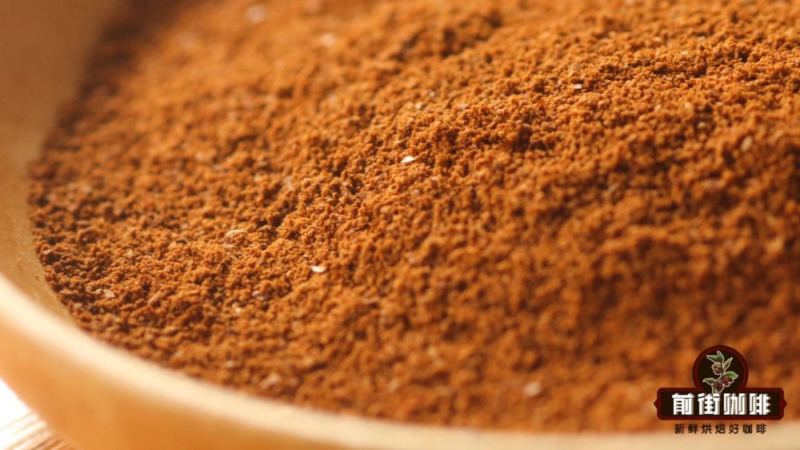
What grind size does an American coffee machine need?
An American coffee machine calls for a medium grind, roughly the texture of table salt, because the drip cycle runs for several minutes and needs enough surface area without clogging the filter. Espresso sits at the other end: a fine powder that resists pressurized water for about 25 to 30 seconds. Matching grind to device is what controls extraction.
Freshly ground coffee beats pre-ground because moisture, oxidation, and carbon dioxide loss drive staleness, and grinding multiplies surface area so oils escape faster. Grinder type matters too, from blade to flat burr, and grinding for coffee italian style means dialing finer for espresso and coarser for drip. Roast level then guides bean choice for each method.
In coffee making, grinding is often seen as the most easily overlooked yet crucial step. Many enthusiasts focus on water temperature, dosage, or equipment, but rarely ask what grind size should actually be. In reality, grind size directly determines extraction efficiency and flavor direction, and different devices require completely different particle specifications. Starting from Front Street Coffee's practical experience, this article first explains why freshly ground coffee is better than pre-ground, then sorts out the types of coffee grinders, and further provides specific methods for judging medium grinding for American drip machines, while comparing the difference between the extremely fine powder required for espresso and the powder used for American coffee. Finally, it returns to bean selection, analyzing the preference logic of espresso and American coffee in terms of roast level, helping readers establish the correspondence between grinding and extraction.
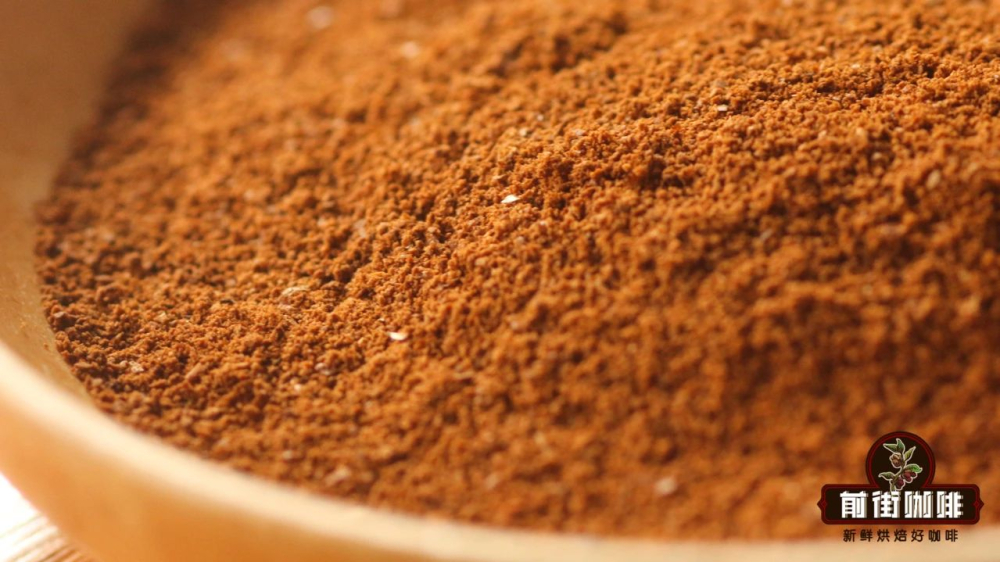
In the coffee-making process, grinding is often the most important step that is also the easiest to skip. Most customers who come to Front Street for coffee ask the baristas how much water temperature to use, how much coffee powder to put in, or ask questions about different beans and pour-over equipment. Very few actually ask about grind size.
These days, many people buy pre-ground coffee powder directly to save trouble, but coffee veterans know clearly that the flavor performance of pre-ground powder is noticeably different from freshly ground. For this reason, more and more businesses are starting to use "freshly ground coffee" as a selling point in their marketing.
What exactly is so good about freshly ground coffee? Front Street gives a brief explanation here:
Even vacuum-packed ground coffee cannot match freshly ground in freshness. There are three main drivers that make coffee go stale: moisture, oxidation, and carbon dioxide loss. Some compounds in coffee beans are inherently unstable, meaning they quickly change and decompose. Once grinding occurs, the oxidation process has already begun.
In addition, grinding the beans in advance greatly increases the surface area, making it easier for moisture in the air to come into contact with the coffee powder. Water can dissolve the oily components in coffee beans, so grinding causes precious oils to be lost more quickly. Carbon dioxide affects the beans in a similar way to water. Therefore, if you use pre-ground powder, it has more or less already lost some of its flavor and aroma. Front Street's advice is to grind and drink immediately; if conditions are really limited, store pre-ground powder in a vacuum, odor-free, light-proof environment.
Grinding your own beans is not only about preserving the flavor of American coffee, but also about more precisely controlling the grind level. Anyone with some pursuit of coffee knows that grind size is one of the key variables determining whether a cup of coffee tastes good, and different extraction methods correspond to different grind sizes.
There are many types of household coffee grinders, roughly divided into manual and electric grinders. Electric grinders can be further divided into three types, which will not be expanded on here. Interested readers can check the Front Street Coffee official account or search for it themselves on coffee websites.
In earlier years, a type of chopper-style or propeller-style coffee grinder was also popular, but it has now been eliminated by the market. Its only advantage was its low price. This type of blade grinder cannot adjust the setting and can only control coarseness through grinding time, producing powder with very uneven particle sizes. If the budget is tight or conditions are limited, it can be used as a makeshift option, but it is not recommended. Of course, the powder from this kind of machine is not suitable for espresso, but it is fine for equipment with low grinding requirements, such as French presses or American drip machines.
Now back to the question of the grind size for American coffee. Although the coffee world now makes very detailed correspondences between grind size and equipment, with levels such as extra coarse, coarse, medium coarse, medium, medium fine, fine, and extra fine to match different extraction tools, Front Street simplifies grind size here into three levels for easier understanding: fine, medium, and coarse.
For drip or immersion equipment represented by American coffee machines, we use a medium grind because the grind level strongly affects the extraction result during brewing.
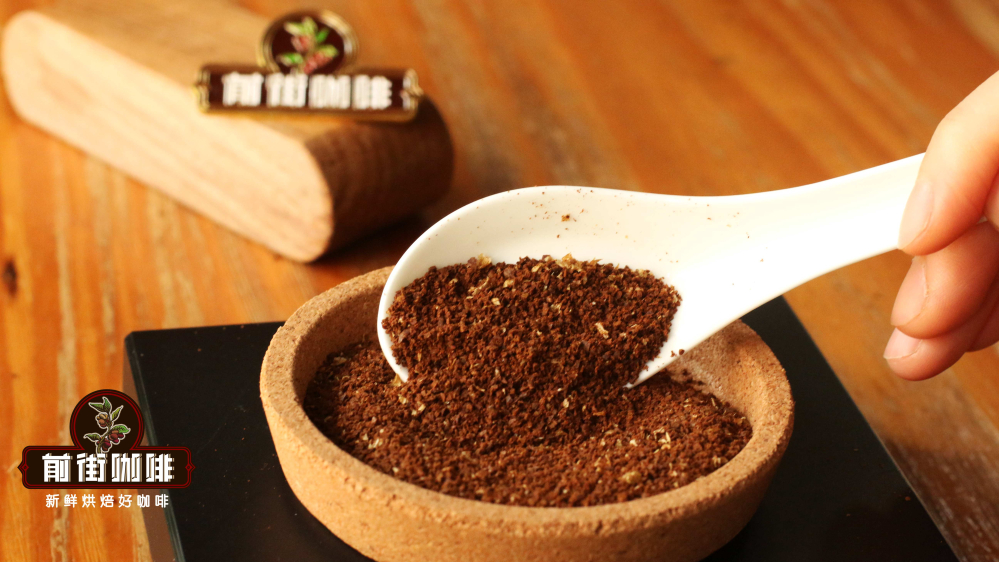
Drip and immersion coffee-making methods leave coffee steeped in water for a long time. If a fine grind is used, the surface area of contact between water and coffee is too large, bringing out a bitter "over-extracted" taste; at the other extreme, using a very coarse grind produces a cup of coffee with a strong "watery" feel. So how coarse should the powder for American coffee be? Just sift it once and you will know. Front Street recommends using a No. 20 national standard sieve; a 70% to 80% passing rate can be collectively called medium grind.
Espresso base emphasizes intensity, balance, richness, and speed, requiring the essence of coffee to be extracted within just 20 to 30 seconds. With such a short time, grind size must be used to increase extraction strength, so the powder for espresso is close to flour in fineness (just a metaphor), while American coffee machines use powder like coarse salt. Friends who often go to Front Street for coffee should have noticed that when Front Street uses a dripper for pour-over, the coffee powder still retains a certain graininess. This is because the extraction time for pour-over is basically about 2 to 3 minutes, similar in principle to American drip machines, with a slightly longer extraction time.
So what is the difference between American coffees made with these two different grind sizes? To understand this relationship clearly, Front Street believes everyone should first understand the difference between espresso and American coffee.
Everyone should know that modern American coffee is derived from espresso. During World War II, American soldiers in Europe drank espresso, and its strong taste was unacceptable to them, so adding water to espresso became popular among American soldiers to approximate the flavor of traditional American drip machines. Because this way of drinking it was popular only among Americans, while traditional Italians and Europeans rather disdained the practice, Europeans called this coffee American coffee. However, American drip machines can only make hot coffee; iced Americano still has to be made with espresso extracted from an espresso machine plus a mixture of ice water.
As for the flavor differences among American coffees, Front Street believes the key still depends on what beans are used. Drip coffee machines can use beans of any roast level, while espresso machines are best used with dark-roasted beans. When beans are roasted for a long time, the flavor is stronger, acidity is largely removed, and more oils are released, making the espresso liquid feel heavier and fuller in the mouth. This is also the direction that espresso generally pursues today.
Beans of other roast levels can actually also be used to make espresso, but the resulting drink may taste a bit strange because the high-temperature and high-pressure characteristics of espresso machines amplify the beans' traits. Light-roasted beans will have an obvious acidity. And if you use over-roasted beans to make espresso, you will also taste a burnt flavor in the coffee.
Professional coffee knowledge exchange
More coffee bean information
Please follow Coffee Workshop (WeChat public account cafe_style )
For more specialty coffee beans, please add the private WeChat Front Street Coffee (FrontStreet Coffee), WeChat ID: kaixinguoguo0925
The above content is compiled by CoffeeHunters, a coffee news website.


