







How Does Wet-Hulling Shape Golden Mandheling Coffee?
Golden Mandheling comes from Sumatra, where wet-hulling strips the parchment early and leaves the beans exposed to humid air. That process creates the herbal, woody, full-bodied profile the coffee is known for, and it also raises the defect rate. A deep roast has traditionally masked those flaws, which is why older Mandheling was uniformly dark.
Two main producing regions stand out: Aceh and Lintong in northwestern Sumatra. PWN's Golden Mandheling became a recognized grade within that trade. As specialty coffee culture spread, roasters moved toward medium and medium-light profiles, which keep more acidity and bring out fruit, floral and tea notes with a lighter body. Hand-brewing with a pour-over suits those lighter roasts.
Mandheling coffee is world-renowned for its rich, full-bodied flavor, and behind this classic Indonesian coffee lies a wealth of history and unique processing methods. From the mispronunciation of a tribal name in northwestern Sumatra, to its accidental discovery by Japanese merchants, to the birth of PWN's Golden Mandheling, Mandheling has gone through nearly a century of development. Meanwhile, with the advancement of the specialty coffee wave, the roasting style of Mandheling has also been quietly changing. In this article, Front Street Coffee will take you through a systematic understanding of Mandheling's origin story, how wet-hulling shapes its flavor, the characteristics of the two major producing regions Aceh and Lintong, and the unique value of Golden Mandheling, and will share a complete practical guide to hand-brewing Mandheling parameters.
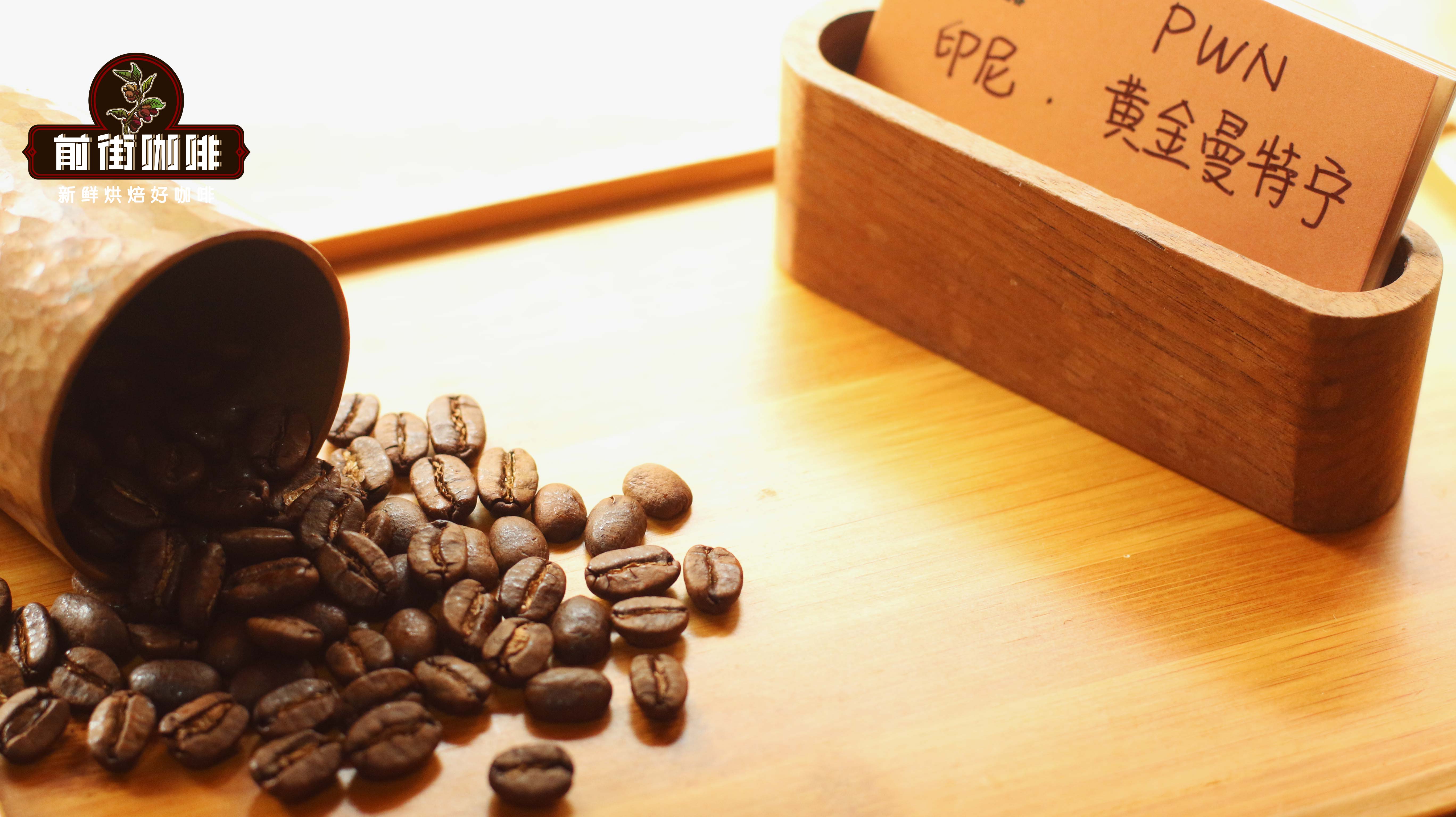
Front Street has noticed that in the past, Mandheling coffee on the market was uniformly medium-dark roasted, presenting the classic rich black coffee flavor profile. With the development of specialty coffee culture in recent years, people have begun pursuing more unique coffee tastes, and many merchants now offer medium-roast, or even medium-light roast Mandheling coffee. The lighter the roast, the more acidity the coffee beans retain, with flavors dominated by fruit, floral notes, and tea-like qualities, and lower body. We might wonder: since medium-light roasted Mandheling is so fresh and bright, why not roast it lighter?
Friends who regularly drink Mandheling probably know about Sumatra's wet-hulling method. Before the final drying stage, wet-hulled beans are poured into a huller, where greater friction is used to tear open the semi-dry parchment layer clinging tightly to the green bean. Through the friction and agitation, the green beans are easily crushed or damaged. The "naked beans" stripped of their parchment layer dry very quickly, but are also directly exposed to the humid environment, becoming susceptible to various strains of bacteria and fungi.
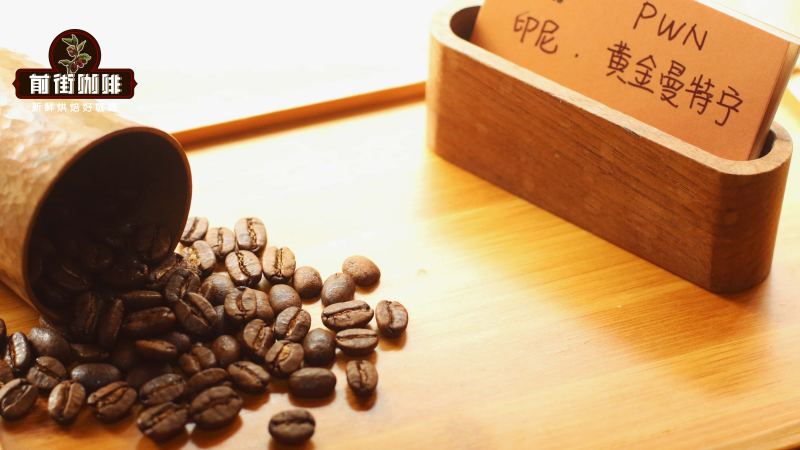
Although wet-hulling does indeed give Mandheling its unique herbal and woody aromas, it also results in a higher defect rate in the green beans, and a deep roast can perfectly mask this flaw. Moreover, Mandheling's fame originated from its early discovery by the Japanese, and given their taste preferences, they favor Japanese-style deep roasting above all—which is why most Mandheling is roasted so dark. Front Street hopes you get to taste the classic Mandheling flavor, so the two Mandheling coffees Front Street sells daily are both medium-dark roasted, including the Lintong region Mandheling everyday drinking beans and the Aceh region Front Street PWN Golden Mandheling coffee.
Where does the name Mandheling come from?
Unlike most single-origin coffees named after their producing region or variety, the name Mandheling comes from a mispronunciation of the Mandailing ethnic group in northwestern Sumatra, Indonesia.
During the Japanese occupation of Indonesia in World War II, a Japanese soldier drank an exceptionally rich and fragrant coffee in a café. He asked the owner for the name of the coffee, but the owner mistakenly thought he was asking where he was from, and answered: "Mandailing." After the war, the soldier returned to Japan and remembered that the delicious coffee seemed to be called "Mandheling." In 1968, Japanese merchants visited the Indonesian company N.V. Pawani Medan and imported 15,000 kilograms of Sumatra Mandheling coffee, which became hugely popular after being launched on the Japanese market. From then on, both Mandheling coffee and the Pawani Coffee Company became famous, and later people also referred to Arabica beans from Sumatra as Mandheling coffee.
Pawani is a trading company engaged in export business, founded by a Chinese family from Quanzhou, Fujian, located in Medan, an important port in Sumatra. It began export operations in 1957, dealing in products such as rubber, cassia seed, cloves, and patchouli oil, and of course also exporting Sumatra coffee beans to Japan. Mandheling coffee's fame stems from Pawani Coffee Company (PWN) successfully bringing Mandheling to the Japanese market. Unlike many local Indonesian green bean traders, PWN is the exclusive supplier of high-grade Golden Mandheling coffee, contracting the best Mandheling coffee producing regions in Indonesia, and the Mandheling beans it produces are all top-grade.
Why is Mandheling also called Sumatra coffee?
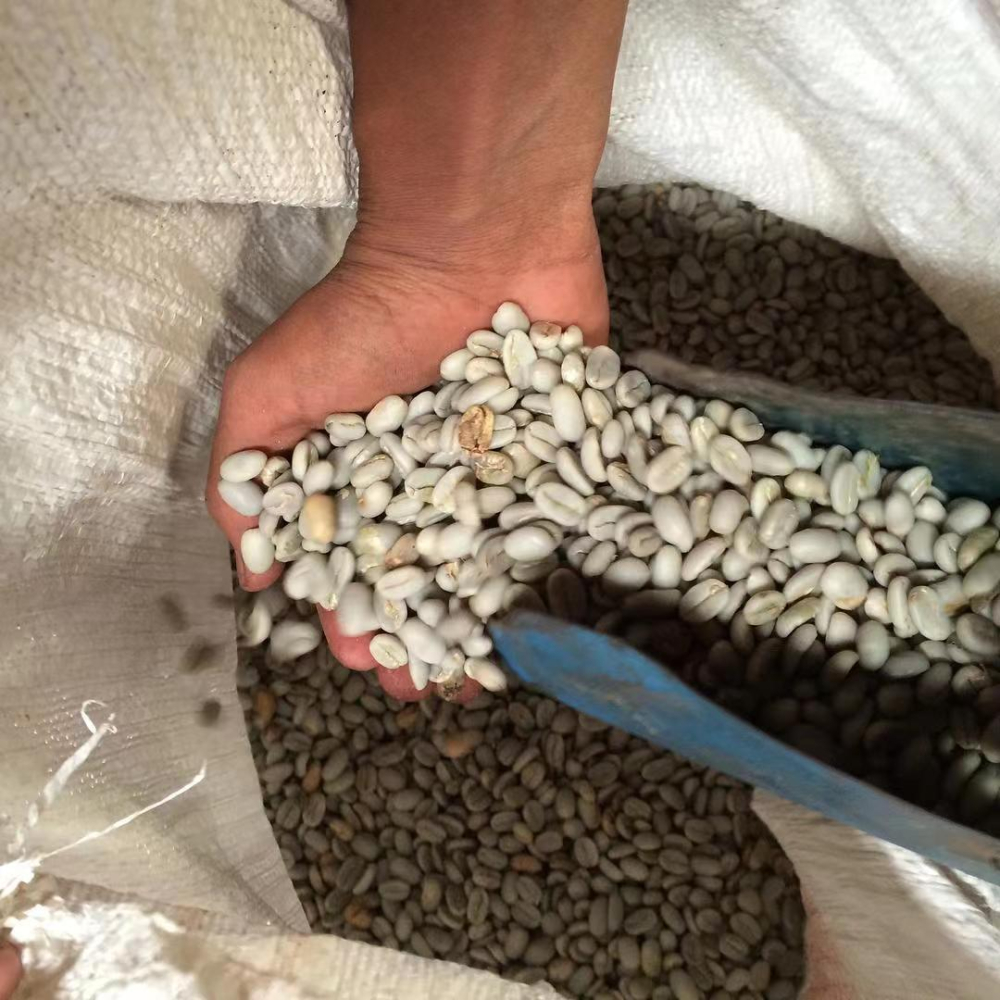
The Sumatran producing regions that yield Mandheling consist mainly of the higher-altitude Aceh Province and North Sumatra Province, where Arabica varieties are predominantly grown, also representing one of Indonesia's minority specialty lots. Traditionally, what we refer to as Mandheling comes from the Lintong region around Lake Toba. After peace came to Aceh Province in 2005, the Lake Tawar area in the far north continued to cultivate Mandheling coffee, also called Aceh coffee. These two Mandheling coffees are known as the "Two Lakes, Twin Mandheling," and are currently the sources of Mandheling coffee on the market.
The Aceh and Lintong producing regions have fertile volcanic soil and abundant rainfall, and are rich in various agricultural products such as spices, timber, and palm oil—and of course coffee. From September each year to April of the following year is the coffee cherry ripening season, when you can see many farmers busy picking in the mountains. Traditional Lintong Mandheling is cultivated by the Mandailing and Batak peoples, while the "rising star" Lake Tawar Mandheling is cultivated by the Gayo people.
Indonesia grows a wide variety of cultivars. Originally, the coffee variety grown in Indonesia was the widely recognized excellent-flavored Typica, introduced by the Dutch at the end of the 17th century, and known in Indonesia by names such as Bergendal and Sidikalang. In 1877, almost all coffee trees across Indonesia were severely affected by leaf rust disease, and large numbers of Typica trees withered.
To solve this predicament, the Indonesian government introduced the more disease-resistant Robusta variety from Africa and elsewhere, and to this day Robusta remains Indonesia's main variety. To increase coffee production, Indonesia continuously introduced various disease-resistant varieties from other countries, including Caturra, Catimor, Timor species, Typica, S288, S795, Sidikalang, and so on. Among them, the Timor hybrid varieties Tim Tim and Bor Bor (Robusta-Arabica crosses) and the Catimor series Ateng, due to their excellent disease resistance and adaptation to Sumatra's terroir, present a distinctive cedar aroma. At present, Ateng and Tim Tim account for as much as 70% of Sumatra coffee. Front Street's Indonesian Lintong Mandheling everyday drinking beans are a blend of Tim Tim and Ateng, while the Golden Mandheling is selected from Ateng.
Golden Mandheling: what makes it so valuable?
Golden Mandheling coffee is PWN's exclusive signature product. Because the "Golden Mandheling" trademark was registered early on, only Mandheling produced by PWN can be called "Golden Mandheling." Golden Mandheling coffee is characterized by green beans that have undergone multiple rounds of screening, with overall very high quality, so the brewed coffee presents excellent cleanliness. PWN purchases Mandheling green beans of 18 screen size and above, G1 grade with fewer than 3 defective beans in a 300g sample—the highest grade of Indonesian green beans. Subsequently, strict standards are followed with 1 round of mechanical sorting plus 3 rounds of manual defect sorting, ensuring the color, shape, and size of the Mandheling coffee beans are uniform.
After Front Street acquired PWN's Golden Mandheling, it applied a medium-dark roast, hoping to present Mandheling's classic caramelized aroma. Front Street first conducted a cupping evaluation of the freshly roasted Golden Mandheling coffee. In the dry aroma stage, Golden Mandheling presents cedar wood, nuts, spices, and herbs; as hot water is poured in, notes of licorice and caramel emerge; and on drinking, there are flavors of dark chocolate, cocoa, nuts, and spices, with an overall clean cup, pronounced sweet aftertaste, and high body. With such a rich flavor profile, Front Street of course had to extract and taste it as a pour-over. Below, Front Street discusses the pour-over details of Golden Mandheling with respect to several key parameters.
Is hand-brewed Mandheling only bitter and burnt? Maybe you just brewed it wrong!
Front Street's coffee brewing parameters are all based on the characteristics of the coffee beans, the roast level, and the flavor profile. Mandheling is a bitter-toned coffee on the darker-roasted side, and Front Street Coffee's baristas choose the KONO dripper to brew this type of full-bodied bean. Compared with the V60, the KONO dripper has a smooth curved surface, weaker exhaust effect, and straight ribs that extend only a quarter of the dripper, allowing the coffee bed to form an immersion extraction with the hot water, making the coffee's taste rounder and fuller. The KONO dripper is equally suitable for coffees like Brazil's Queen's Estate coffee and Jamaica Blue Mountain No. 1 coffee.
Deep roasting loosens the internal structure of the coffee beans, so that we can crush them with a gentle pinch of the hand, indicating that once ground, they have strong water absorption. To avoid the coffee grounds releasing too much bitter substance after absorbing water, Front Street will coarsen the grind and use lower-temperature water for the pour-over.
Grind size is one of the most critical factors affecting coffee taste. After coffee beans are ground, they come into contact with hot water and release a large amount of water-soluble flavor compounds. Front Street adjusts grind size using a tool—the Chinese No. 20 0.85mm standard sieve. For medium-light roasted coffee beans, Front Street consistently uses a 75–80% pass-through rate, while for medium-dark roasted coffee beans, Front Street uses 70–75%. Compared with light-roasted coffee, medium-dark roasted Mandheling beans have a looser internal structure, so they absorb water better and easily release large-molecule bitter compounds. To avoid over-extraction, Front Street chooses a coarseness with a 70% pass-through rate on the No. 20 standard sieve.
Water temperature plays a role similar to grind size: the higher the water temperature, the higher the coffee extraction efficiency, the easier it is to release various compounds, and the higher the concentration. If water close to boiling is used for brewing, it easily extracts unpleasant bitter compounds, so for brewing medium-dark roasted coffee beans, Front Street uses different brewing parameters from light-roasted coffee beans. There is more caramelization reaction than in light-roasted coffee beans, so large-molecule bitter compounds are more easily released. To avoid extracting too much off-flavor, Front Street lowers the water temperature a little. The brewing water temperature for light-roasted coffee is 91–93°C, while for medium-dark roasted coffee beans Front Street recommends 87–88°C.
Recommended brewing water temperature: 87–88°C
Coffee grounds: 15 grams
Coffee-to-water ratio 1:15
Grind size: medium-coarse grind (70% pass-through rate on Chinese No. 20 standard sieve)
The brewing method uses a three-stage pouring technique. Dividing into three pours better expresses the full body of Golden Mandheling coffee as well as its caramel sweetness.
In the first stage, pour 30ml for the bloom. This pour fully wets the coffee grounds and allows them to degas, so that the coffee's flavor compounds can be better extracted afterward. In the second stage, pour 100ml. This stage mainly flushes out all of Mandheling's golden foam and raises the coffee bed. In the final stage, gently pour 95ml in the center. This enhances the coffee's sweetness, expressing overall a solid full body, with caramel sweetness and flavors of chocolate and nuts.
The above content is compiled by CoffeeHunters, a coffee news website.


