







How do you use a coffee maker or espresso machine for Americano?
Americano covers two drinks. One is plain black coffee from a drip coffee maker; the other, and the more common meaning, is espresso diluted with a large amount of hot water. The name is tied to World War II, when American soldiers in Europe added water to concentrated espresso to soften its intensity.
Extraction matters more than the label. Espresso needs a fine grind, level tamping and controlled yield, and the water ratio decides the result: roughly 1:8 keeps more aroma, while 1:6 gives a fuller, heavier cup. Hot and iced versions also differ, with iced Americano reading more refreshing.
Americano may look simple, yet it carries a history dating back to World War II and a complete technical system spanning everything from espresso extraction to water-to-coffee ratios. This article begins with the definition and origins of Americano, sorts out the differences between the drip method and the espresso-plus-water method, and then uses Front Street Coffee's Sunflower Warm Sun blend as an example to break down espresso grinding, tamping, and extraction parameters in detail, along with the comparative conclusions between 1:8 and 1:6 water ratios for Americano. The article also covers the drinking steps and seasoning suggestions for Americano, and compares the differences between hot and iced Americano in aroma and refreshing quality, helping coffee lovers fully understand this most ordinary yet most skill-testing black coffee.
To learn more about specialty coffee, you can follow Front Street Coffee (Frontsteet Coffee).
Coffee-drinking habits differ from region to region, and some methods have gradually become representative because of their distinctive character, evolving into local coffee cultures—Turkish coffee and Italian coffee being typical examples. When these names come up, most people immediately conjure a corresponding image. But once the topic turns to Americano, the reaction is often a brief pause, followed by a split into two impressions: one produced by a drip machine, the other a black coffee made by adding water to espresso.
Coffee made by the drip method is essentially black coffee, as long as no sugar or milk is added. Just as there is a story between Turkish coffee and Turkey, so too between Americano and America—otherwise the prefix "Americano" would have no explanation.
"Americano" (English: Americano, Italian: Caffè Americano) belongs to a category of coffee and is one of the most common. It can be either black coffee made in a drip coffee maker or espresso diluted with a large amount of water. However, what we usually call Americano in daily life generally refers to the latter.
Legend has it that during World War II, American soldiers went to the European continent to fight in support. The locals were already accustomed to highly concentrated espresso, but the Americans found this intense taste hard to accept—even hard to swallow. So they added water to the espresso to dilute it before drinking, and this habit persisted. Europeans rather disdained this practice and named it "Americano," meaning American-style coffee. Note that if you want to order an Americano in an Italian café, be sure to put café before Americano; the same applies to ordering a latte—if you just say latte, what arrives may well be a glass of milk.
Front Street Coffee (FrontStreet Coffee)'s Method for Making Americano
Making Americano is actually not complicated; there are only two core steps: first extract the espresso, then add the coffee liquid to water.
Although the steps are simple, Americano greatly tests a barista's extraction skill. The foundation of a delicious Americano lies in its espresso—that is, the first step—which determines the entire base of the Americano.
Different beans produce different Americano flavors, so which Americano beans are worth recommending? A blend used at Front Street's shop for making espresso is composed of 70% Honduras Sherry and 30% Ethiopian natural Red Cherry.
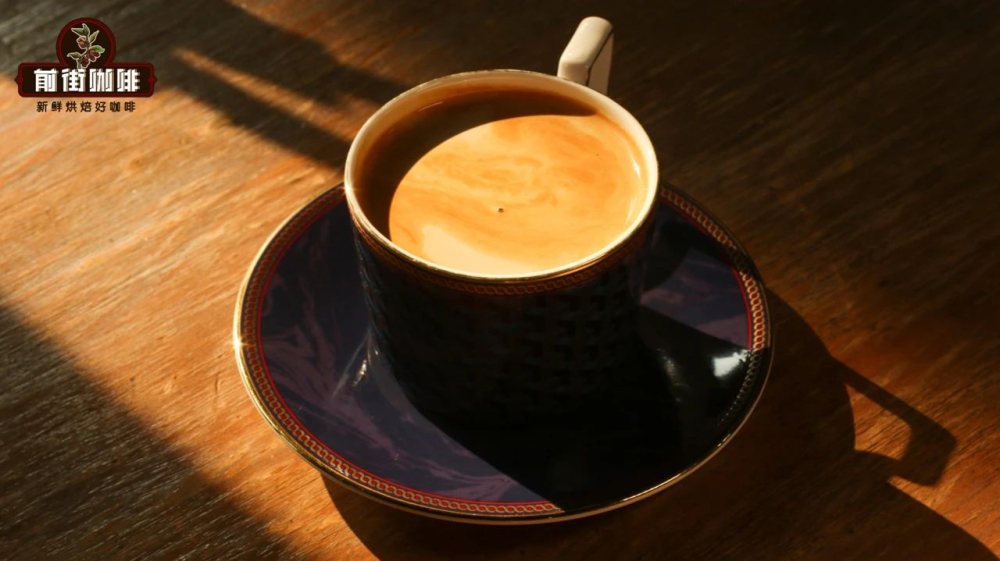
Front Street Coffee (FrontStreet Coffee): Sunflower Warm Sun Blend Coffee Beans
Region: Honduras & Ethiopia
Variety: Caturra, Catuai, Pacas, local heirloom
Processing: Washed & Natural
The 70% Honduras Sherry, fermented in sherry whisky barrels, brings a rich vinous aroma to this blend; the 30% Ethiopian natural Red Cherry contributes a berry-like acidity.
As the base component, it is closely related to many factors: grind size, dose, machine extraction pressure, water temperature, and coffee-to-liquid ratio. Grinding too coarse easily leads to under-extraction with a sharply sour taste; grinding too fine easily leads to over-extraction and bitterness.
The tamping step after dosing and distribution is equally critical. To the layperson, this step is nothing more than pressing the coffee grounds with a tamper; some who are confident in their arm strength may use full force, even risking damage to the portafilter basket, hoping brute force will work miracles, thinking that compared with the 9 bar of pressure provided by the machine, this bit of force is nothing. Little do they know that such brute-force tamping makes the coffee puck too dense, greatly compressing or even blocking the gaps through which water passes, easily leading to over-extraction.
Also pay special attention: the tamper's force must be perpendicular to the portafilter basket, otherwise the puck will be pressed crooked, causing uneven extraction.
When extracting espresso, Front Street uses a portafilter basket that holds 20 grams of coffee grounds according to the shop's basket capacity; Front Street's espresso machine extracts at about 9 bar pressure and 93°C water temperature, ultimately yielding 40 grams of coffee liquid.
Front Street uses a Pegasus E98 espresso machine, with the following extraction parameters:
Pressure: 9 bar±2
Temperature: 90.5~96°C
Time: 20~30 sec
Coffee-to-water ratio: 1:1.7~1:2
Dose: 12g (single espresso) 20g (double espresso)
Extraction yield: 20ml (single) 40ml (double)
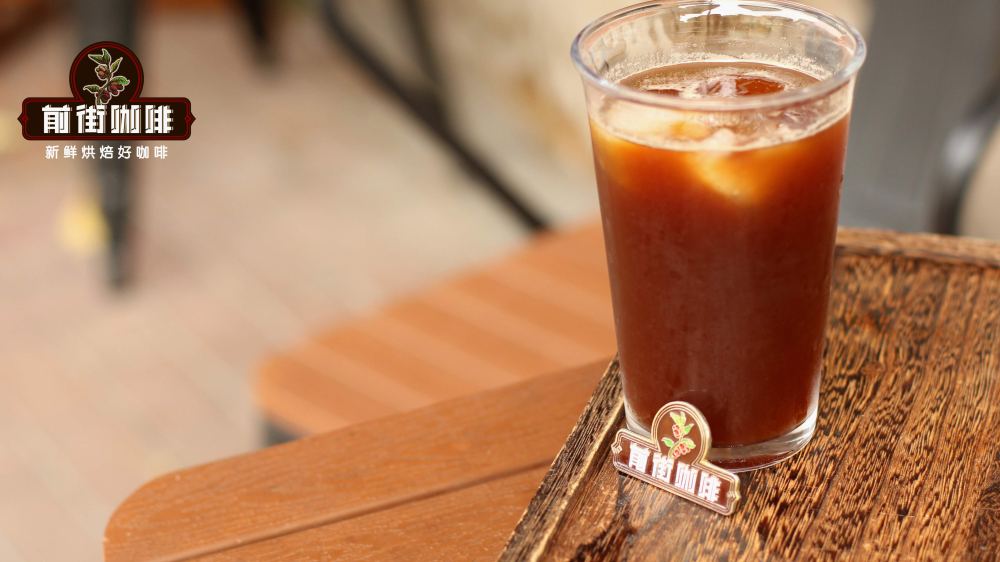
Once the espresso base is ready, only the final step of adding water remains. So what exactly is the ratio for Americano?
In traditional Americano, the ratio of espresso to water is 1:8, but this ratio does not apply to all coffee beans. Front Street Coffee (FrontStreet Coffee) once conducted a comparative experiment with 1:8 and 1:6, and found that when the espresso extracted from this blend is diluted at 1:8, the resulting Americano tastes weak, with too short an aftertaste, and the mouthfeel even seems overly watery. Using a 1:6 ratio, however, better showcases the characteristics of the Americano made with Front Street's Sunflower Warm Sun blend: whisky notes and a dark chocolate aftertaste, along with a good body.
How to Drink Americano?
When the coffee is set before you, Front Street suggests not rushing to take a sip; instead, like drinking tea or tasting wine, go through a process from light to deep, so as to achieve relaxation, refreshment, and enjoyment.
Step one, smell the aroma, experiencing the rich fragrance of freshly ground coffee;
Step two, observe the color; the coffee should ideally present a deep coffee color, not pitch-black and bottomless;
Step three, taste; take a sip first to experience the coffee's true flavor—it should carry some sweetness and a bit of bitterness on entry, sour but not bitter. Then sip slowly, small mouthfuls at a time; don't rush to swallow. You can hold it in your mouth briefly to let the coffee mix slightly with saliva and air, then swallow.
If it tastes bitter, Front Street suggests adjusting according to personal preference, such as adding cinnamon, sugar, milk, or soda.
The Difference Between Hot and Iced Americano
The higher the temperature, the more active the molecular movement, so hot Americano has the advantage in aroma expression. Iced Americano, meanwhile, offers a refreshing quality that hot Americano lacks. If you want to appreciate the coffee's aroma and aftertaste, Front Street suggests choosing hot Americano; if you're after a cooling sensation, then iced Americano is the right choice.
The above content is compiled by CoffeeHunters, a coffee news website.


