







Why Is Mandheling Coffee Known for Body and Herbal Spice?
Mandheling is one of Indonesia's most recognizable coffees, valued for a full body and herbal spice flavors. The name traces to a wartime miscommunication: a Japanese soldier asked about a rich cup in a café, the owner heard a question about his hometown and answered "Mandailing," and the name spread after 15 tons were shipped to Japan after the war.
PWN Pawani Coffee Company, founded in 1957 by that café owner, buys high-quality local Mandheling green beans and built Golden Mandheling as its signature line. The Gayo Mountain terroir, the Ateng variety, and wet-hulling all shape the cup. Cupping Front Street Lintong Mandheling against Front Street PWN Golden Mandheling shows how screening standards and processing change body and spice.
Mandheling coffee is one of Indonesia's most iconic coffees, known for its full body and herbal spice flavors. This article begins with the origin of the name Mandheling, explains how PWN Pawani Company established strict screening standards and built the Golden Mandheling brand, and takes a deep dive into the terroir of the Gayo Mountain region, the characteristics of the Ateng variety, and the impact of wet-hulling on flavor. It also compares the cupping performance of Front Street Lintong Mandheling and Front Street PWN Golden Mandheling, and includes Front Street's brewing recommendations for Mandheling, helping coffee enthusiasts gain a comprehensive understanding of this Southeast Asian classic coffee.
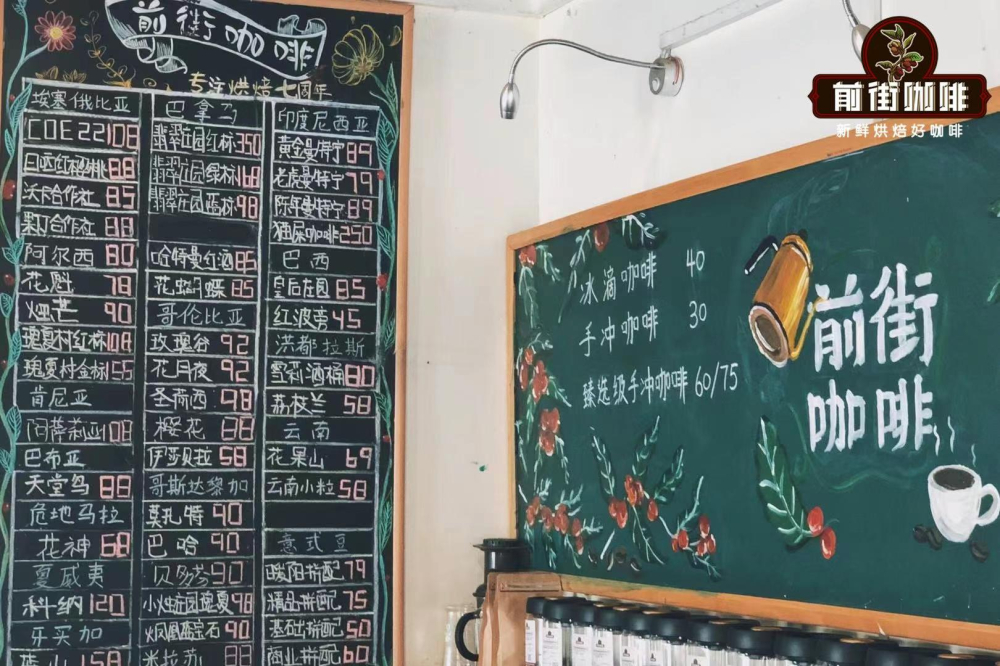
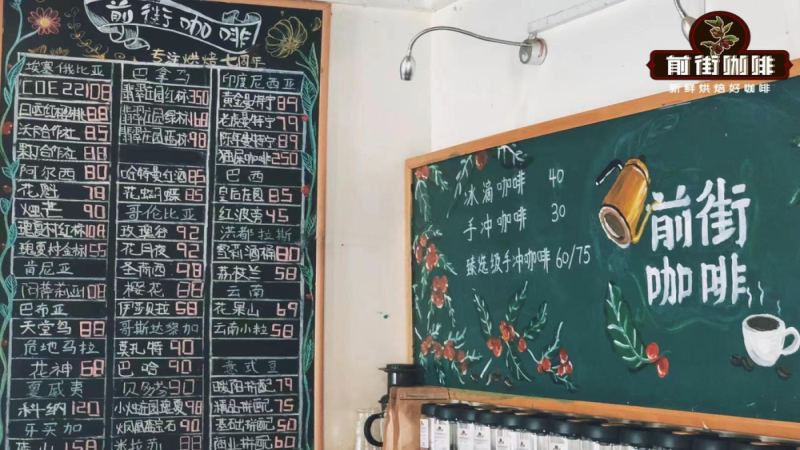
Walking into a coffee shop and facing the wide variety of single-origin coffees on the menu, there's no need to feel lost. Front Street's advice is to first tell the barista whether you prefer acidity or bitterness, so you can get a suitable recommendation more quickly. For example, for those who prefer bitter coffee, Front Street would recommend beans from Brazil or Indonesian regions; if you also want a full body with herbal spice notes, the first thing Front Street thinks of is the Front Street PWN Golden Mandheling coffee on the bean list.
PWN Pawani Company
Regarding the origin of the name Mandheling coffee, there is a story circulating: during World War II, when Japan occupied Indonesia, a Japanese soldier drank an extremely rich and aromatic cup of coffee in a café and asked the owner what coffee it was. The owner mistakenly thought he was asking where he was from, and casually replied "Mandailing." After the war ended, the soldier remembered the "Mandheling" he had drunk in Indonesia and arranged for 15 tons to be shipped from there to Japan, where it became hugely popular, and the name Mandheling spread from then on.
The person who first exported the initial batch of Mandheling coffee beans to Japan was none other than the café owner in the story. He keenly sensed the enormous business opportunity in Mandheling coffee and founded PWN Pawani Coffee Company in 1957. The company specializes in purchasing high-quality local Mandheling green beans, dedicated to producing specialty Mandheling, and Golden Mandheling is its signature product.
In the course of long-term purchasing of Sumatra coffee, the Japanese side gradually realized that the quality of local beans fluctuated considerably. So they invested more effort in the production of Mandheling and established a strict set of defect screening standards and methods, controlling indicators from bean density and screen size to color one by one. The Mandheling produced must undergo one machine screening plus four rounds of manual hand-sorting to remove defects, ensuring complete, uniform, plump, and translucent beans while reducing earthy and grassy flavors. It is said to display a brilliant golden luster in sunlight, hence the name "Golden Mandheling."
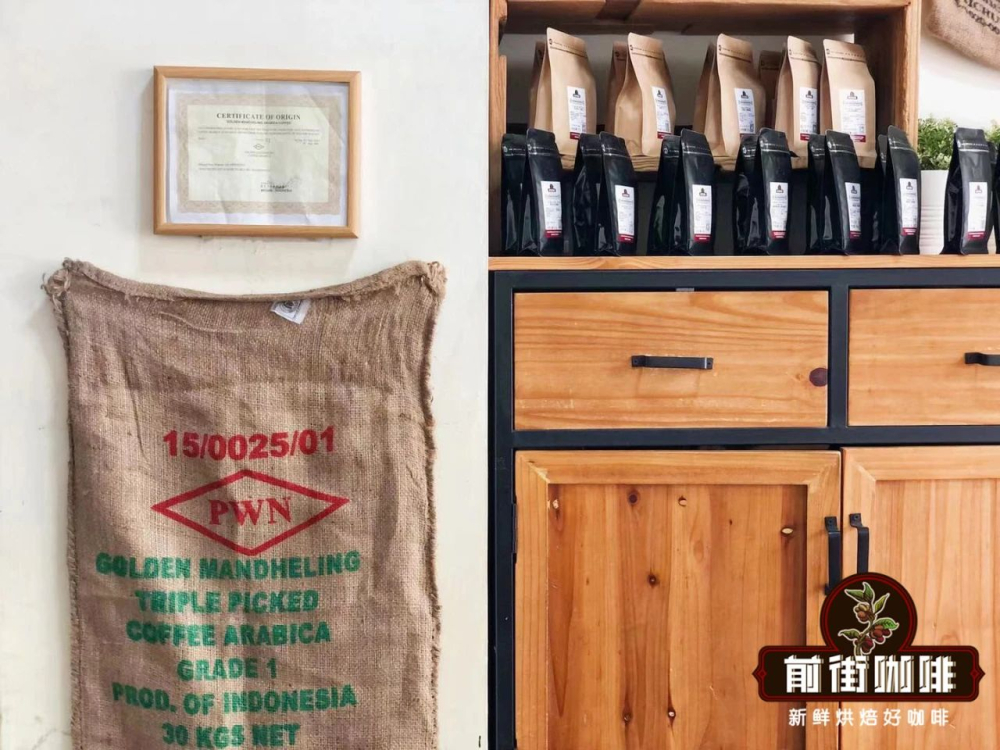
As the specialty Mandheling market continued to expand, PWN also recognized the importance of trademark protection and beat the Japanese side to registering the English name "Golden Mandheling" as an exclusive trademark. Therefore, only Golden Mandheling produced by PWN counts as true "Golden Mandheling" in the strict sense, while Japanese-produced versions can only be renamed "Top Mandheling." This batch of Front Street Golden Mandheling that Front Street acquired is naturally genuine product from PWN. The way to identify authentic Front Street Golden Mandheling is to check the green bean burlap sack bearing the PWN logo and the certificate of origin signed by PWN. Front Street has displayed both of these identifiers in its Dongshankou store.
Front Street PWN Golden Mandheling comes from Gayo Mountain
The Mandheling coffee purchased by PWN comes from coffee grown in the Gayo Mountain of the Aceh region in north-central Sumatra. Sumatra is Indonesia's largest island, with a tropical rainforest climate, high temperatures and humidity year-round, and coffee trees are usually planted among highland forests. Coffee from Gayo Mountain in the Aceh region is considered the finest in all of Sumatra, mostly ancient tree varieties at higher elevations, between 1500 and 2500 meters. Due to political instability in earlier years, coffee exports from the region were difficult. In recent years, as the situation has stabilized, Aceh's coffee growing industry has developed, and its quality is also superior to that of the Lintong region.
The coffee variety used for Golden Mandheling is Ateng, which is actually the Catimor everyone is familiar with—this is what the locals in Indonesia call it. In the 19th century, Indonesia's coffee industry was severely hit by leaf rust, and subsequently a number of disease-resistant varieties were introduced from other countries, including Caturra, Catimor, Timor, Typica, S288, S795, Sidikalong, and others. Among them, the Timor hybrid varieties Tim Tim and Bor Bor, which are crosses of Robusta and Arabica, as well as the Catimor series Ateng, showed a unique cedar aroma due to their excellent disease resistance and adaptation to Sumatra's terroir. The Ateng variety is very well suited for cultivation and flavor development in the Aceh region, and together with the locally customary wet-hulling method, this "taste of Southeast Asia" has become increasingly popular in the market.
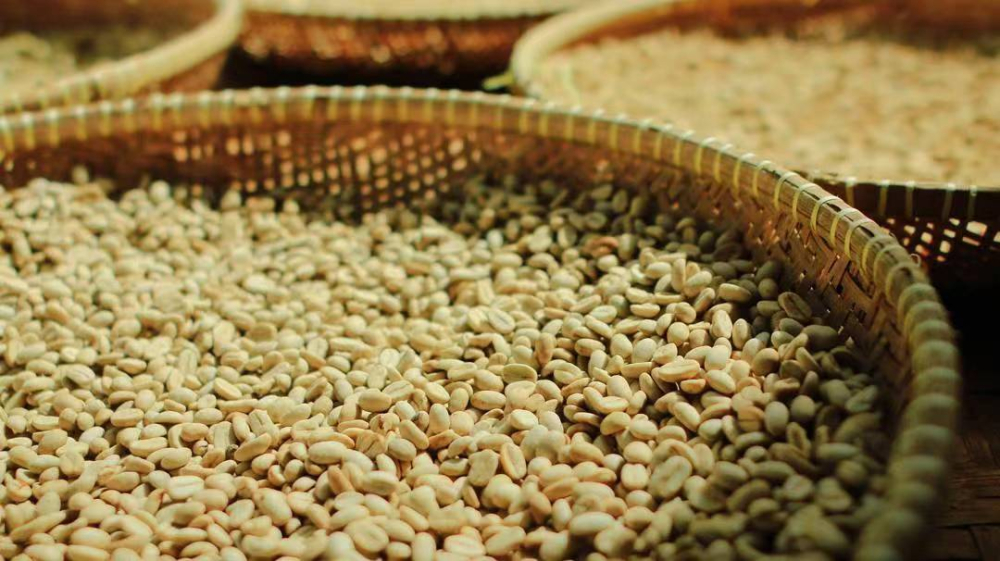
The wet-hulling process is as follows: first remove the skin and pulp of the coffee fruit, ferment briefly, then dry, remove the parchment layer while the beans are semi-dry, and continue drying until the moisture content drops to 12%. Because each step is completed in an environment with 70–90% humidity, and because the parchment layer has already been removed before the final drying, the "naked" green beans easily absorb moisture from the air, so the resulting coffee has more woody, herbal, and spicy subdued aromas. Front Street Lintong Mandheling coffee also uses the wet-hulled method; after roasting, its acidity is reduced and its body increased, while still retaining grassy and spice notes, with the flavor profile unique to Indonesian Mandheling coffee. Front Street has also included it in the Front Street daily bean series, offered in a small 25 yuan/100g package, so everyone can taste the flavor of Southeast Asian coffee.
Flavor differences between Front Street PWN Golden Mandheling and regular Mandheling
In terms of roasting, to present the typical Mandheling flavor and retain more herbal spice notes, Front Street's roasters use a medium-dark roast. Every time Front Street releases a coffee bean, it conducts at least one cupping session; under the same standards, cupping allows us to feel the coffee's strengths and weaknesses more objectively.
Front Street cupped Front Street Lintong Mandheling and Front Street PWN Golden Mandheling side by side for comparison. Front Street Lintong Mandheling has rich chocolate, dark sugar, and nutty flavors, with an herbal note in the aftertaste. Front Street Golden Mandheling offers pine, nuts, spices, and herbs in the dry aroma; as hot water is poured, there are notes of licorice and caramel, and it drinks with flavors of dark chocolate, nuts, and spices, overall clean, with obvious sweetness on the finish and a high body.
Front Street Mandheling brewing recommendations
Brewing water temperature: 87–88°C
Coffee powder: 15 grams
Coffee-to-water ratio 1:15
Dripper: KONO dripper
Grind size: medium-coarse grind (70% passing rate on China standard No. 20 sieve)
The brewing method uses a three-pour approach; dividing into three pours better expresses the full body and caramel sweetness of Front Street Golden Mandheling coffee.
For the first pour, add 30ml for blooming; this pour fully wets the coffee grounds and allows degassing, so that the coffee's flavor compounds can be extracted better afterward.
For the second pour, add 100ml; this stage mainly flushes out Mandheling's golden foam and raises the coffee bed.
For the final pour, gently add 95ml in the center; this can enhance the coffee's sweetness.
For professional coffee knowledge exchange and more coffee bean information, please follow Coffee Workshop (WeChat public account: cafe_style)
For more specialty coffee beans, please add the private WeChat of Front Street Coffee (FrontStreet Coffee), WeChat ID: qjcoffeex
The above content is compiled by CoffeeHunters, a coffee news website.


