







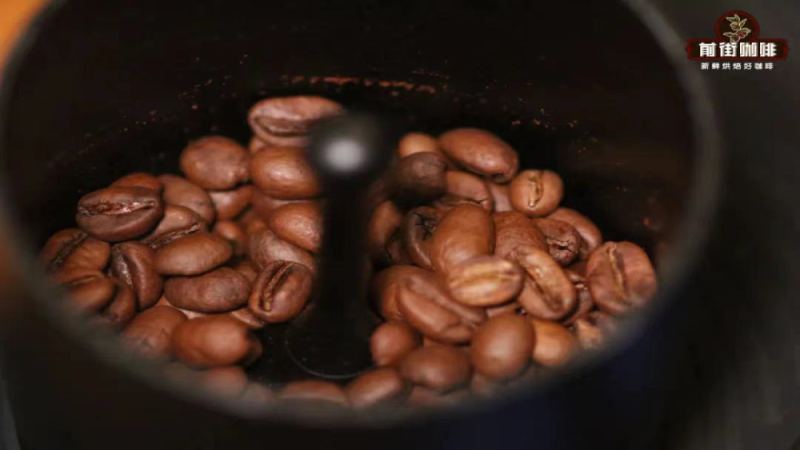
Why Does Blend Coffee Hold Espresso Flavor Steady?
Espresso flavor depends on the whole chain: cultivation, roasting curve, equipment calibration and the barista's extraction. Single-origin beans can show more layered flavors, but blended coffee beans remain a common choice because they hold flavor and quality steady across days of service. A blend spreads that variability across several components instead of resting on one lot.
Coffee is an agricultural product, so terroir and climate shape each harvest, and beans from the same region can differ year to year. Blends offset that by combining origins with complementary roles. In four medium-dark roasted espresso recipes from Front Street Coffee, red bourbon from Brazil's Cerrado region works as the flavor foundation, with other components adding acidity, sweetness or body.
Making a satisfying Espresso involves far more complexity than one might imagine, from the coffee farmer's cultivation and the roaster's curve design to equipment calibration and the barista's extraction technique—any single step will be directly reflected in the cup. This article revolves around the flavor and mouthfeel of espresso, discussing the differences in stability between single-origin beans and blended beans, how terroir and climate affect coffee beans' performance year by year, and common misconceptions and truths about blended beans. It also combines the specific recipes of four medium-dark roasted espresso blends from Front Street Coffee to analyze why red bourbon coffee beans from Brazil's Cerrado region can serve as the flavor foundation of espresso blends, helping coffee enthusiasts gain a more comprehensive understanding of espresso's flavor composition.
For professional coffee knowledge exchange and more coffee bean information, please follow Coffee Workshop (WeChat official account: cafe_style)
For more specialty coffee beans, please add the private WeChat of Front Street Coffee (FrontStreet Coffee), WeChat ID: qjcoffeex
Extracting an ideal Espresso (espresso) demands considerable technical skill—any deviation in a single step will affect the final flavor. From the farmers who grow the coffee to the roasters responsible for roasting, the machinery and equipment used, and finally the barista operating it, every role is indispensable. Therefore, when you taste an outstanding espresso, you are actually tasting the dedication of practitioners across the entire supply chain, as well as the barista's precise execution at the bar—they deserve recognition and applause.
Moreover, a delightful espresso cannot be achieved without long-term stability in flavor and quality. Although more and more coffee shops now tend to use single-origin (single-region) coffee beans to make espresso, blended coffee beans remain the choice of many shops. Extracting espresso with single-origin beans can indeed showcase more layered flavors, but in terms of stability, it often falls short of blended beans.
Coffee beans are essentially an agricultural product, and their flavor is constrained by the terroir and climate conditions of their origin. So even within the same region, coffee beans harvested in different years or different harvest seasons may exhibit variations in flavor performance.
Precisely because long-term stability is so difficult to achieve, professional roasters and baristas conduct in-depth research on coffee beans from various regions, blending different varieties in specific proportions before roasting—or roasting them separately and then blending—with the goal of achieving a harmonious taste in the final extracted espresso while also maintaining consistency in the flavor of every cup of espresso.
Many friends have misconceptions about blended coffee beans, thinking that espresso blends are just inferior-quality beans mixed together, with dark roasting used to mask the beans' defects through bitterness. But not all coffee shops do this. Today, many coffee beans on the market already meet SCA specialty coffee standards. As long as the beans are of solid quality, there is professional knowledge in production, and professional customer service is provided, then whether espresso is made from blends or single-origin beans, it can all fall within the category of specialty coffee.
Based on the taste preferences of general consumers, Front Street Coffee (FrontStreet Coffee) has launched four blended coffee beans specifically for medium-dark roasted espresso. Everyone can choose different flavored blends according to their own preferences. For all coffee beans ordered through online channels, Front Street Coffee (FrontStreet Coffee) will ship within five days after roasting is completed, ensuring everyone can experience the optimal aroma of freshly roasted coffee.
"Front Street Warm Sun Blend Coffee Beans": Ethiopian natural red cherry coffee beans (30%) + Honduras sherry wine barrel coffee beans (70%), presenting rich wine aroma, vanilla cream, berry sweetness and acidity, and roasted nut flavors.
"Front Street Specialty Blend Coffee Beans": Colombian washed coffee beans (30%) + Brazilian semi-washed coffee beans (70%), with nut, dark chocolate, and caramel flavors, able to meet the daily production needs of coffee shops.
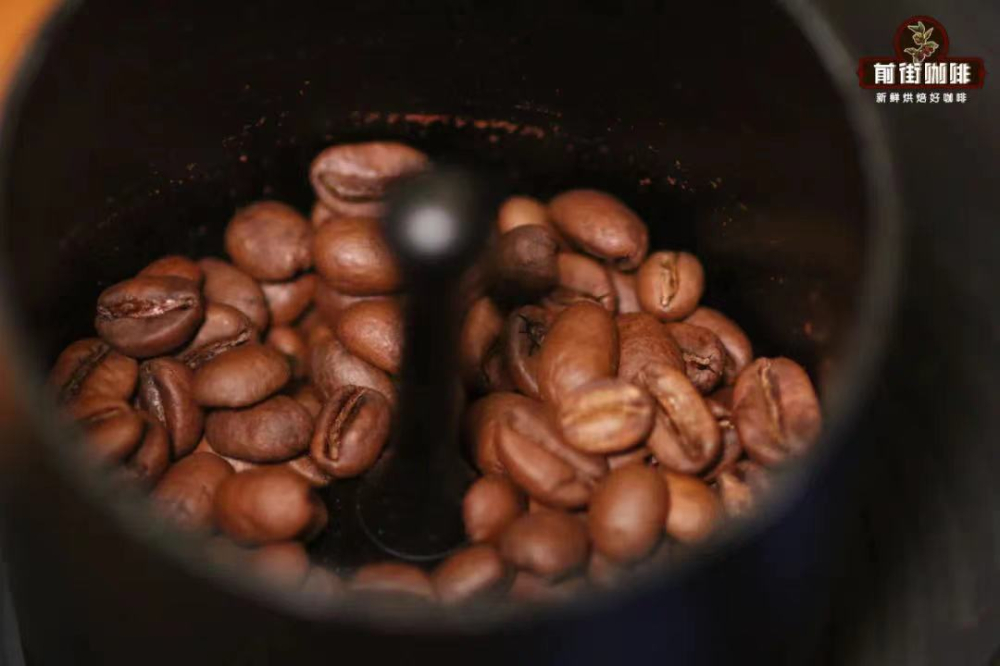
"Front Street Commercial Blend Coffee Beans": Robusta washed coffee beans (10%) + Colombian washed coffee beans (30%) + Brazilian semi-washed coffee (60%), presenting nut, cocoa, and caramel flavors, suitable for daily opening use in coffee shops.
"The Italian Moka Pot Coffee Beans Recommended by Many Baristas - Front Street Black Cocoa Blend Coffee Beans": Yunnan washed small-bean coffee beans (30%) + Brazilian semi-washed coffee beans (70%), with soft fruit acidity, caramel, and nut flavors, suitable for shop owners and home users who prioritize cost and do not have particularly high flavor requirements.
Among the above blends, three use red bourbon coffee beans from Brazil's Cerrado region. These beans have a nutty character, a rich and balanced mouthfeel, and prominent sweetness, making them very suitable as the main flavor foundation for Front Street espresso blend coffee beans.
The Cerrado is a savanna covering 22% of Brazil's total area, located deep in Brazil's interior. The Cerrado coffee-producing region referred to by Front Street Coffee (FrontStreet Coffee) does not mean the entire Cerrado savanna, but specifically refers to the coffee-growing areas in the central-western part of Minas province at elevations above 1,000 meters—only this range can be considered the Cerrado coffee-producing region. This area belongs to the prime zone of the Cerrado savanna, with higher elevation and fertile soil, which is why it can grow specialty coffee beans with high sweetness, high body, and high cleanliness.
Bourbon is a subspecies resulting from a mutation of Typica, and together with Typica, it is one of the oldest existing coffee varieties. The fruit turns bright red when ripe. Compared to Typica, Bourbon has broader leaves and denser growth. Although its yield is higher than Typica, it also requires two years for the harvest period and is likewise a relatively low-yield variety. Through cupping by Front Street Coffee (FrontStreet Coffee), it was found that Front Street Brazil red bourbon coffee has a premium mouthfeel, with an acidity similar to red wine and a sweet aftertaste.
In order to allow Brazilian coffee beans to exhibit a rich and solid mouthfeel, Front Street Coffee (FrontStreet Coffee) roasts the coffee beans until they are released before second crack—that is, a medium-dark roast level—and then pairs them with coffee beans from different regions also roasted to medium-dark, adding soft acidity (Yunnan) / caramel sweetness (Colombia) / a richer taste (a very small amount of Robusta) to the flavor.
The above content is compiled by CoffeeHunters, a coffee news website.


