








Yunnan coffee, a coffee standing on the wave of the times, after a century of tempering, domestic demand for coffee is growing, and the quality of Yunnan coffee is also constantly rising.
Yunnan is one of the few regions in our country capable of growing coffee. Yunnan happens to be located on the golden belt for coffee cultivation, that is, between the Tropic of Cancer and the Tropic of Capricorn. Yunnan's small-seed coffee also has a long historical origin. It comes from wild coffee produced in Africa, and later spread to Europe through Arabia and became widely known, hence its name. In the 1890s it was introduced to Zhukula, Binchuan County, Dali, China, and from then on took root and developed in mainland China. The characteristics of Yunnan coffee beans have also become representative of Chinese coffee, so Yunnan coffee is also called "Yunnan small-seed coffee."
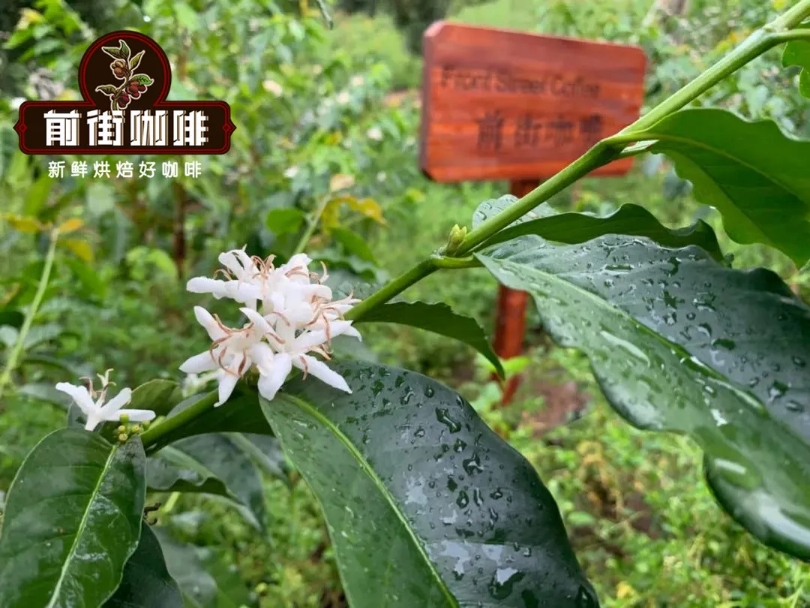
Hainan in our country also produces coffee beans, among which the coffee beans produced in Wanning and Xinglong are the most famous. Hainan's climate conditions are the same as Yunnan's, warm and humid, with an average annual temperature between 22 and 26 degrees, and annual rainfall as high as 16,000 millimeters. Even though Hainan coffee has the conditions for cultivation, its yield is very low. However, Front Street Coffee has learned that Hainan coffee and Yunnan coffee have different terrains. For example, Hainan Island contains fertile volcanic-ash soil. In that loose, fertile, organic-matter-rich soil, coffee trees are very suitable for planting, but Hainan's sunlight is too strong, which is undoubtedly an unfavorable factor for coffee trees. Still, simply planting some taller plants such as rubber trees near the coffee trees can provide shade. On the contrary, Yunnan's weather is often foggy, which can provide very good shading for coffee trees.
There is also something everyone pays close attention to—Yunnan coffee varieties. What Yunnan mainly grows now is the Catimor variety. If you know about Yunnan coffee, you will find that Yunnan also grows a small amount of Typica and Bourbon coffee. These two ancient coffee varieties are the "founding elders" of Yunnan Arabica. Typica is the earliest representative of Yunnan small-seed coffee.
Recommended Yunnan small-seed Typica: Front Street 2013 Yunnan Natural Typica
Typica is the oldest native variety in Ethiopia, and all Arabica coffee is derived from Typica. Typica's top leaves are bronze-colored, and the bean shape is oval or slender-pointed; the flavor is elegant, but disease resistance is poor, and the yield is low. It is suitable for pour-over and cold brew.
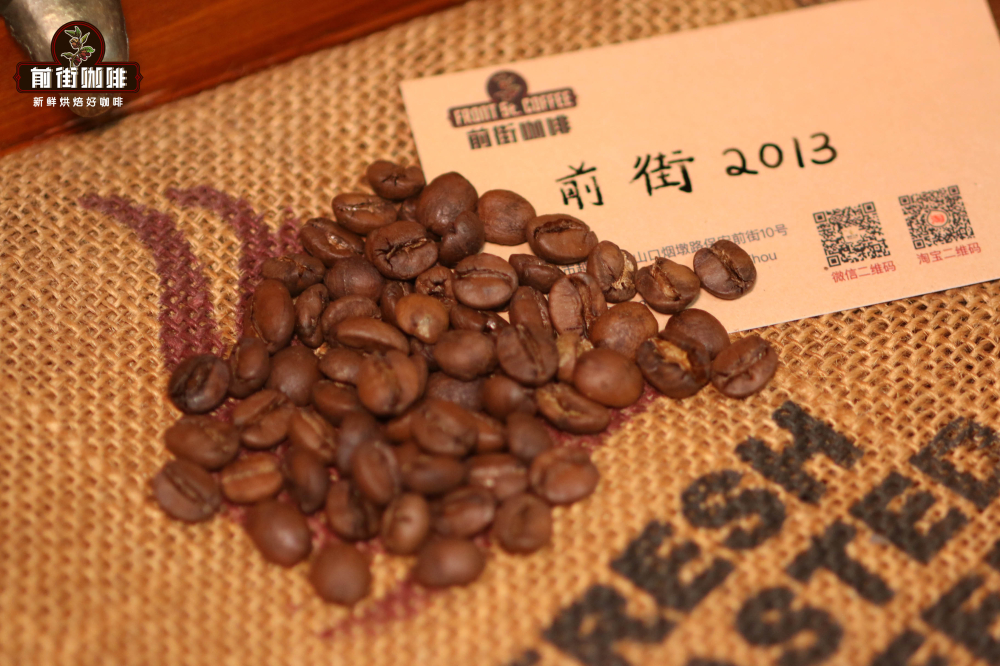
Typica is easily affected by leaf rust, and combined with its low yield, coffee farmers are unwilling to grow it, because coffee trees take at least three to four years from planting to harvest. The low yield of Typica simply cannot sustain local people's lives, while high-yield Catimor coffee is naturally more favored by coffee farmers.In addition, Catimor coffee has the genes of both Arabica coffee and Robusta coffee. While inheriting Robusta's disease resistance, the extracted coffee also has relatively rich oils. It is not only suitable for pour-over, but can also be brewed in a moka pot or an American-style coffee machine.
Recommended Yunnan small-seed Catimor: Front Street Yunnan Small Seed
The Catimor variety is a coffee variety obtained by Portugal in 1959 through crossing Timor and Caturra, with strong resistance to leaf rust, strong resistance to coffee berry disease, and high yield. Because Catimor has Robusta genes, its flavor and mouthfeel are rich and heavy while also carrying a hint of defect.

Front Street Coffee uses a three-stage method to brew this Yunnan coffee bean. First, use 30 grams of hot water to fully wet the coffee grounds layer. The second pour can be done when the electronic scale shows 30 seconds. Starting from the center, pour into the bottom of the grounds layer with a small stream. In order for the stream's penetrating power to be concentrated, the circular movement range should be small, and then spiral outward.
During this process, try to control the speed of the water flow as well as possible. The flow should not suddenly become stronger or weaker, and the stream should try not to break. Because too little poured water will cause the coffee grounds to be not completely saturated, and the coffee will have an obvious rough and astringent feeling on entry, with a short finish; while too much water will cause the hot water in the initial blooming stage not to extract enough coffee components, making the brewed coffee relatively one-dimensional in flavor, and the acidity extracted in the initial stage will be noticeably prominent, thereby masking other flavors. Front Street believes that for a stable circular pouring range, everyone can spiral from the inside out, from the outside in, or use center pouring and spreading. These pour-over gestures can be based on your own habits.
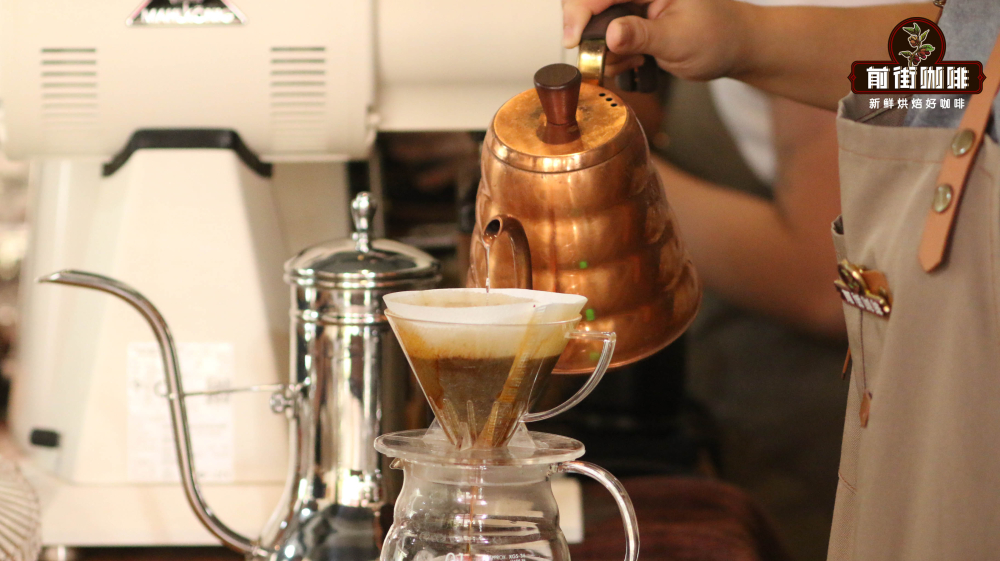
For the third pour, Front Street Coffee (FrontStreet Coffee) suggests that at this time you can carefully observe the drop in the water level, and begin the third pour just before the coffee bed is about to be exposed. Likewise, start pouring from the center in circles, and the water volume should not exceed the height of the grounds layer. Stop pouring at 1 minute 50 seconds, and finish dripping by 2 minutes.
Then, through tasting, Front Street reached the following conclusions about the flavor characteristics of these two Yunnan coffee beans:
Cupping results of Yunnan Huaguoshan coffee beans: rich melon and fruit aroma on entry, herbal aroma, smooth on entry, nuts in the middle, chocolate flavor, lively and bright plum acidity in the finish, and a black tea and brown sugar sensation in the aftertaste.
Cupping results of Yunnan small-seed coffee beans: bright acidity, soft acidity, good body and balance, rich layers, with an aftertaste of obvious dark chocolate, honey, and sucrose, and a brown sugar flavor after completely cooling.

Yunnan small-seed coffee, in terms of mouthfeel, is relatively neutral. It is neither too sour nor too bitter. It is truly a coffee that is aromatic but not bitter, strong but not harsh, and mildly acidic and comfortable. It also suits the general public's taste relatively well. If you prefer fruity acidity, then specifically choose Yunnan small-seed coffee beans grown at high altitude and roasted on the lighter side. These beans have high acidity and weak bitterness. If you simply do not like acidity, then choose dark-roasted beans, though the bitterness will be somewhat higher.
Front Street Yunnan small-seed coffee's cold brew method is actually very simple. We only need to find the right parameters.
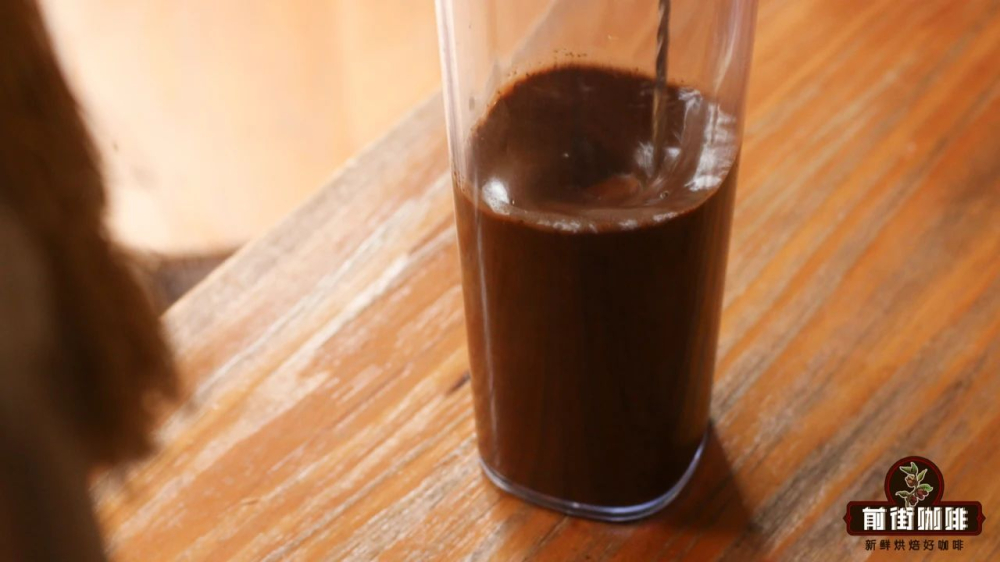
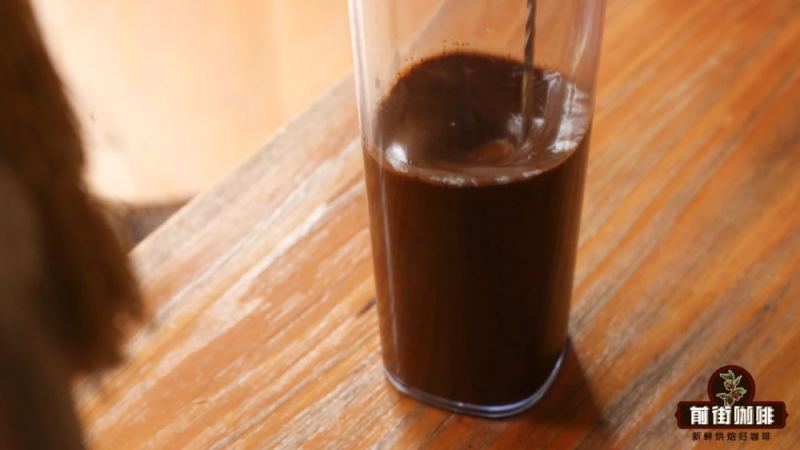
Front Street's cold brew formula is to use 50 grams of coffee grounds, restore the coffee-to-water ratio to 1:10, therefore add 600 milliliters of cold water. The coffee grounds' water absorption rate is twice their own weight. After stirring evenly, seal and place in the refrigerator for 24 hours. Then take it out and filter the coffee grounds with filter paper, then use a clean sealed bottle to seal the coffee liquid and place it in the refrigerator for more than 12 hours.

After extraction, it can be kept fresh in the refrigerator for 5 days. During the freshness-keeping process, the coffee liquid is still fermenting in the bottle, and the fermentation process will also cause the coffee's taste to undergo changes in rich, mellow layers. It is generally recommended to place the completed cold brew coffee in the refrigerator for 1 to 3 days before drinking, because during the 24 to 36 hours of overnight standing, as time passes, the coffee liquid becomes fully mellowed and the flavor is better.
The above content is compiled by CoffeeHunters, a coffee news website.


