How Heat and Fires Are Testing the Coffee Industry in Honduras
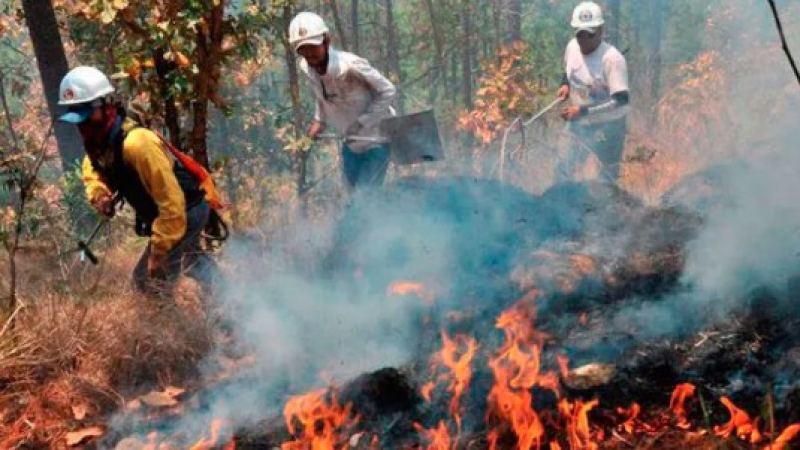
Honduras is having its hottest, driest year since 1992, with temperatures of 38 to 40°C, and the Honduras Coffee Research Institute (IHCAFE) expects the heat and drought tied to El Nino to reduce coffee bean output next season. Since January, 1,903 forest fires have burned more than 150,000 hectares, including land in the coffee-producing provinces of Olancho and Francisco Morazan.
Those two provinces are not core zones among coffee producing countries, so direct fire damage to the coffee industry is limited. The larger risk is rainfall: national precipitation is running nearly 40 percent below last year, which stresses coffee plants at flowering. Burned soil also erodes and loses fertility, and the forest ecosystem needs years to recover.
Recently, due to the impact of bad weather in the local area of Honduras, the Honduras Coffee Research Institute (IHCAFE) is concerned about the future coffee output. According to the data released recently by the Honduras Forest Conservation Institute (ICF), since this year, 1,903 forest fires have occurred throughout Honduras, resulting in more than 150,000 hectares of forests being devoured by the fire, which has seriously affected the country's agriculture.
According to the data, the forest area affected in Olancho Province is the most severely affected, ranking first in the country, reaching 37,100 hectares. Next is Francisco Morazán Province, which is 32,400 hectares. The third place is Gracias a Dios Province, with 23,500 hectares of forest being destroyed by the fire.
Moreover, since entering 2024, the temperatures in many countries in Latin America have reached new highs, and the hot and dry weather has led to frequent fires, and large areas of mountains and forests have fallen into a sea of fire. Many countries have declared a state of emergency. Honduras is no exception. Since this year, it has experienced high temperatures, and local reports say that Honduras is experiencing the hottest and driest year since 1992, with the highest temperature reaching 38-40 ℃.
Currently, the severely affected Olancho Province and Francisco Morazán Province, where the forest fires are severe, are both coffee-producing areas in Honduras. Fortunately, these coffee-producing areas are not the main producing areas and have a relatively small output, so the direct impact of the forest fires on the coffee industry is relatively small.
However, there are some influences. According to the prediction of the Honduras Coffee Research Institute (IHCAFE), the drought and hot weather caused by the El Nino phenomenon will affect the output of coffee beans in the next season. Because according to the data of Honduras weather monitoring, the national rainfall in Honduras will be nearly 40% less than the same period last year, which is not conducive to the growth of coffee plants during the flowering period and will cause a fatal blow.
In addition, although the forest fire has no direct impact on the growth of coffee, there are many potential impacts. After the forest fire, the soil will be damaged and eroded, resulting in a weakening of land fertility and a reduction in agricultural output. In addition, the forest fire causes damage to the forest ecological environment, and the recovery of the ecological environment requires a long time.
In addition, Honduras is a country that is extremely vulnerable to climate change. This year, Honduras has already suffered the impact of the El Nino phenomenon, and it is likely to encounter the influence of the La Nina phenomenon next. According to the warning from the Office of the Honduras Emergency Committee (Copeco), this year may encounter disasters similar to those brought about by the hurricane Mitch in 1998, and this year's hurricane season will pose a serious threat to the country.
It is understood that the hurricane Mitch has brought serious disasters to Honduras, resulting in more than 5,000 deaths, destroying countless bridges, houses, road construction, and crops, resulting in economic losses of up to 4 billion US dollars.
This year, 23 tropical storms will form in the Atlantic hurricane season, of which 11 will evolve into hurricanes, including 5 very dangerous hurricanes. This number of hurricanes is higher than the average level of previous hurricane seasons. In addition, Copeco has formulated an emergency plan and submitted it to the president. The government will invest at least 900 million lempiras to deal with hurricane disasters, but local residents also need to take preventive measures during the hurricane season.
The above content is compiled by CoffeeHunters, a coffee news website.