








People's love for coffee nowadays goes beyond pour-over; more and more, they pursue making espresso at home. You'll notice that many friends go to cafés and directly order a latte or cappuccino or other espresso drinks, but the friends who understand coffee more deeply might order a single-origin specialty coffee. Today, Front Street wants to tell everyone about an easy-to-operate espresso-style coffee. Although its taste isn't as intense as espresso, nor as fresh and bright as pour-over, it is the most accessible kind of espresso brewing equipment.
Let's first look at whatthe moka pot?
The moka potis a steam-pressure coffee pot, and is a must-have coffee brewing device in many Italian homes. The moka pot was invented in 1933 by a man named Alfonso Bialetti. Alfonso had worked for many years in France as an aluminum craftsman, then returned to Italy to open his own aluminum workshop.
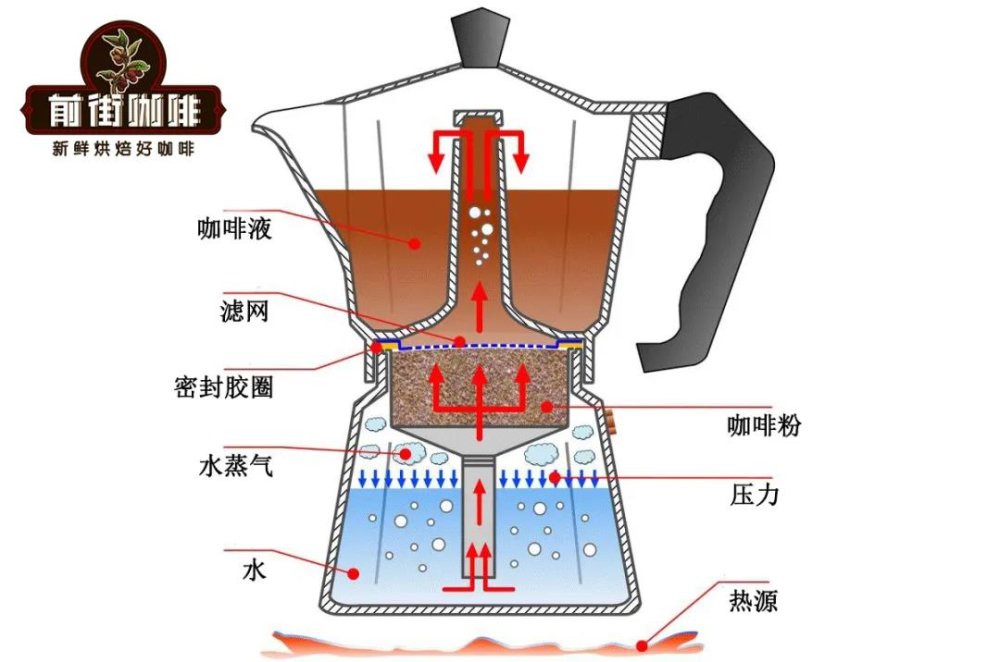
Sincethe moka potcan make such delicious coffee, let's first understand how the moka pot works.
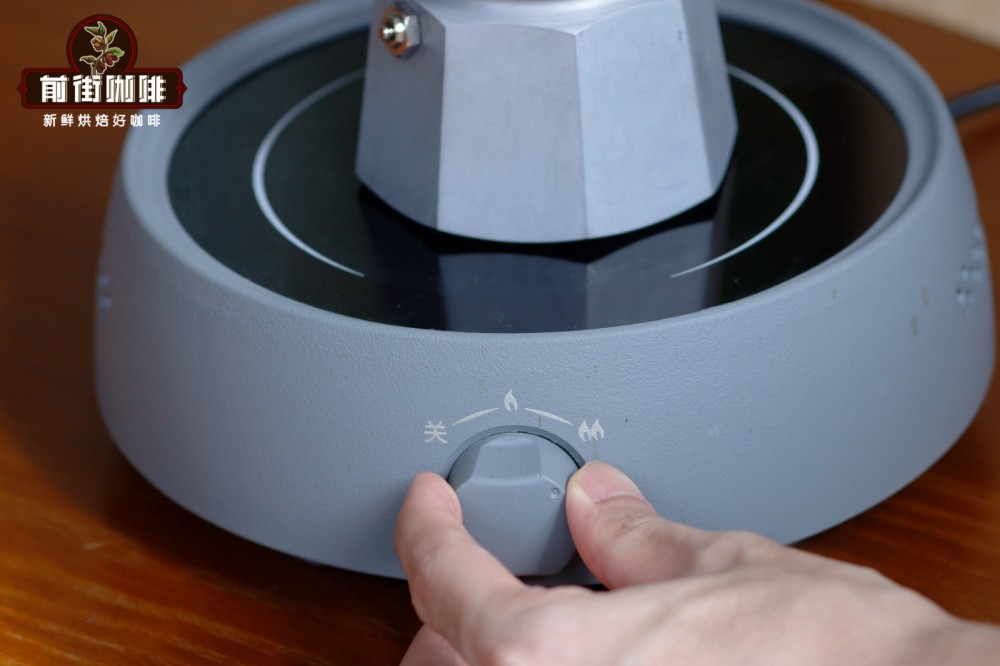
The moka potis divided into upper and lower parts. Water in the lower part is heated to boiling; when the water boils, the pressure from the steam pushes the boiling water upward through the filter containing coffee grounds and into the upper part. When the coffee starts flowing into the upper part, the heat should be turned down, because too high a temperature will give the coffee a burnt taste and destroy its original flavor. The common Japanese siphon method also uses the same principle.
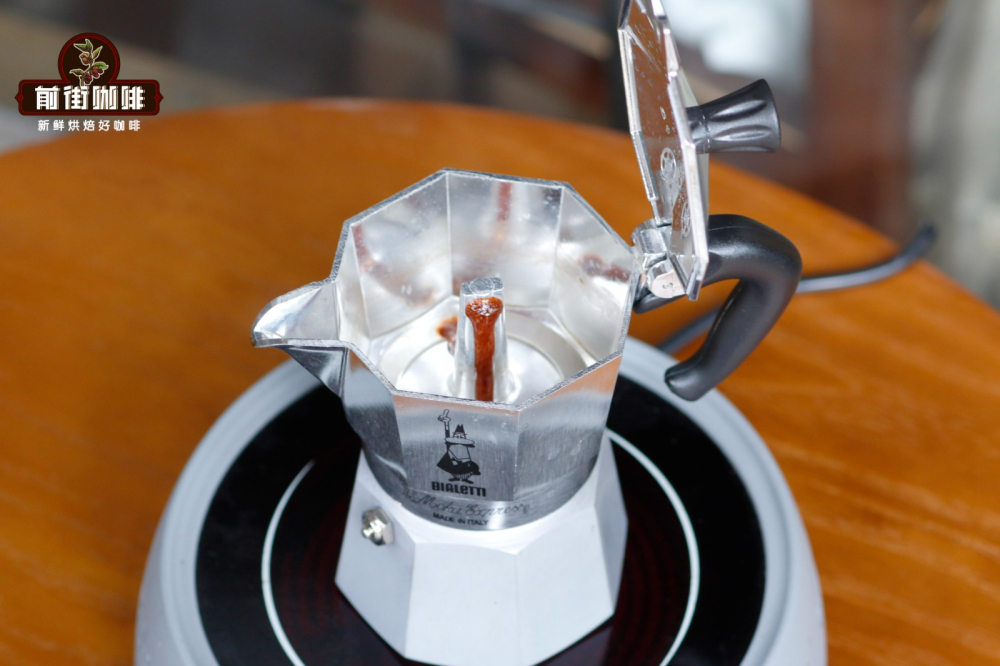
The moka potalso comes in single-valve and double-valve versions. The double-valvemoka potbrews more coffee oils than the single-valve one. Single-valve means the coffee liquid flows directly out of the two small holes at the top of the hollow tube of themoka pot. Double-valve means adding a pressure-regulating valve on top of the hollow tube; this valve normally blocks the small hole through which the coffee liquid exits the hollow tube, and only when a certain steam pressure is reached will it be pushed upward and open, causing the coffee liquid to spray out. The coffee flavor brewed by single-valve and double-valve is also different: the single-valve moka pot produces coffee with lower concentration and less oil; the double-valve one produces higher concentration and more oil.
The coffee ground size for a moka potdegree: medium to fine.
What grind size for a moka potis appropriate? Front Street suggests that the coffee particle size used for a moka pot should be between 0.3 mm and 0.55 mm, that is, coarser than the coffee grounds used for an espresso machine and finer than pour-over coffee grounds.

During brewing, if you observe the coffee liquid gushing out of the upper pot like a fountain, that means the coffee grounds are ground too coarse, the resistance encountered by the water is too small, and the coffee oils will also be relatively thin; when you hear a low "wuwu" sound and the coffee liquid does not rise for a long time, you should immediately pick up the moka pot and move it away from the heat source, and take safety precautions. This phenomenon means the coffee grounds are ground too fine, the resistance encountered by the hot water is too great, and it is difficult for it to rise.
The moka potWhat water temperature is appropriate?
Some people usea moka potwith cold water directly, and some use warm water. Should cold water or warm water be used, or what temperature of water is appropriate?

Front Street believes using water that is about to boil is more appropriate. Because if you use room-temperature or cold water for heating, as the water temperature rises, water vapor increases, and water that has not yet reached temperature comes into contact with the coffee grounds and extracts them, thus affecting the coffee's flavor.
Now that we know the operating principle of the moka pot, let's look at Front Street Coffee (FrontStreet Coffee)steps for brewing coffee with a moka pot:
1. Pour an appropriate amount of near-boiling hot water into the lower pot
2. Pour the ground coffee into the filter basket
3. Attach the filter basket to the lower pot, then screw the upper pot on tightly
4. Keep the upper pot lid open and heat it
5. When coffee liquid emerges in the upper pot, pick up the moka pot and move it away from the heat source
Why does coffee brewed this way have oils? Front Street tells everyone: that's because when the lower pot is heated, the hot water, in a boiling state, forms a large amount of steam within the limited space of the lower pot, creating a certain steam pressure, which pushes the hot water upward through the metal tube in the middle, thereby extracting the oil components from the coffee.
Of course, brewing coffee with a moka pot sounds quite simple, at least it doesn't require as many things to prepare and precautions as pour-over coffee, but Front Street still wants to tell everyone that if you want to brew delicious coffee with a moka pot, you still need certain skills. The following are the small tips and details Front Street wants to tell everyone:
1. The amount of coffee grounds can vary according to personal preference. Because each moka pot's capacity and coffee basket size differ, you need to try a few times to find the amount of coffee grounds that suits your taste. If you like it stronger, when filling the grounds, use the pressure-reducing plate to press lightly, fill the flattened space, then press lightly once more.

2. The size of the filter cloth must not be larger than the surface of the coffee grounds, otherwise it will create too much pressure and the steam will escape.
3. The main function of the pressure-reducing plate is, when using a larger moka pot to brew a small amount of coffee, to be placed on top of the filter cloth, making it convenient to control the number of cups and the amount of coffee grounds. Here it serves the function of a tamper. Because the steam pressure produced by a moka pot is relatively small, generally speaking, it does not need a special tamper like an Italian espresso machine.
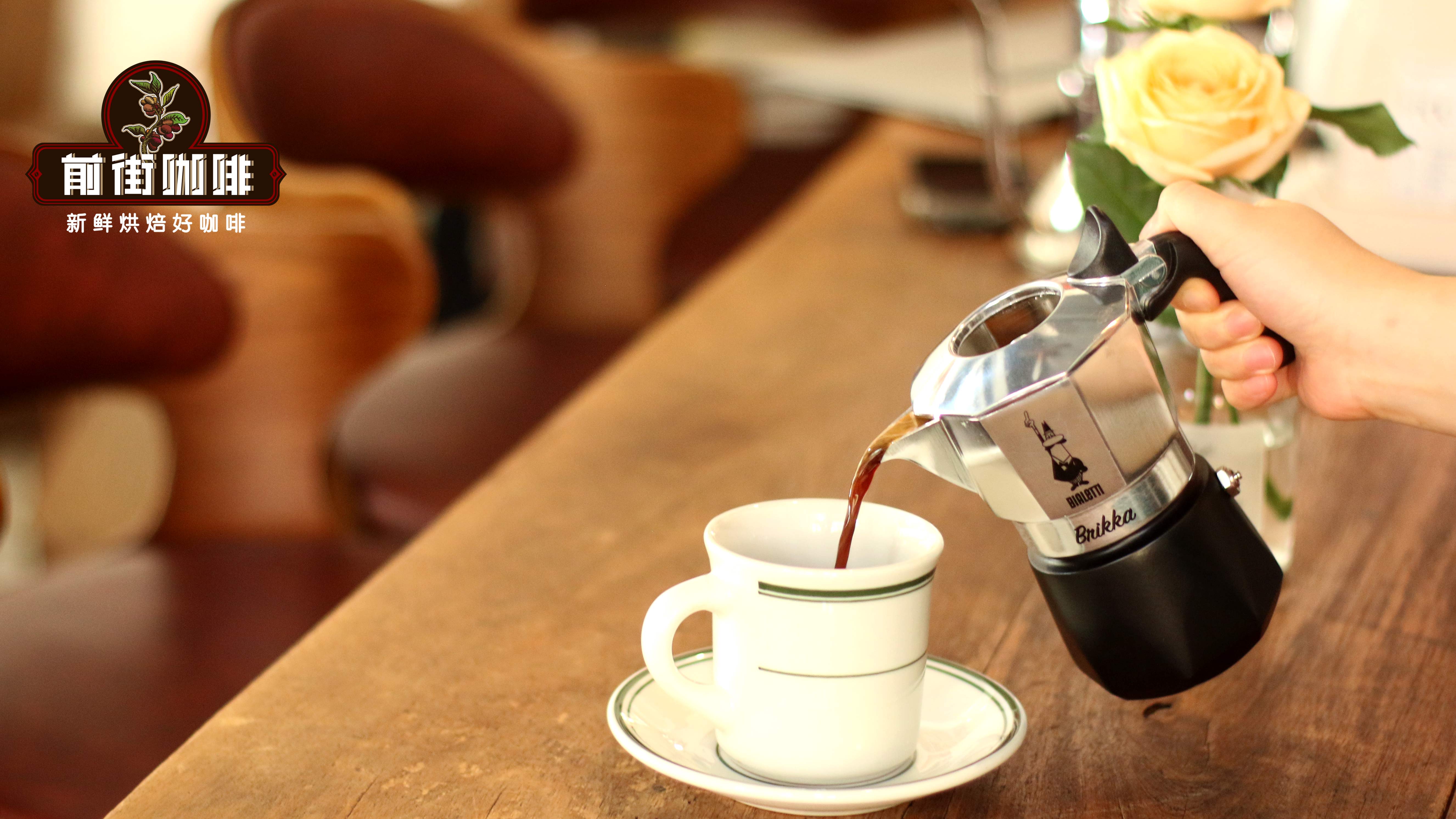
4. You can adjust the coffee's taste by how long the coffee stays in the pot. For example, when using a lighter-roasted coffee bean (the color is closer to light brown, with no oily sheen on the surface), you can let the coffee stay in the moka pot for an extra one to one and a half minutes after extraction is complete; on the contrary, if using dark-roasted beans (dark coffee color, sometimes with an oily sheen on the surface; most Italian blend coffee beans we buy on the market belong to this category), there is no need to let it stay in the pot, and you can pour it directly into an already warmed cup.
5. When making hot cappuccino and latte, you can heat the milk to about 70°C; cold milk foam can be made directly with a milk frother. Cold milk foam takes about 10 or more pumps; hot milk is harder to froth, and may need 50 pumps to succeed. It is best to use whole milk, so that the milk fat can become thick milk foam.
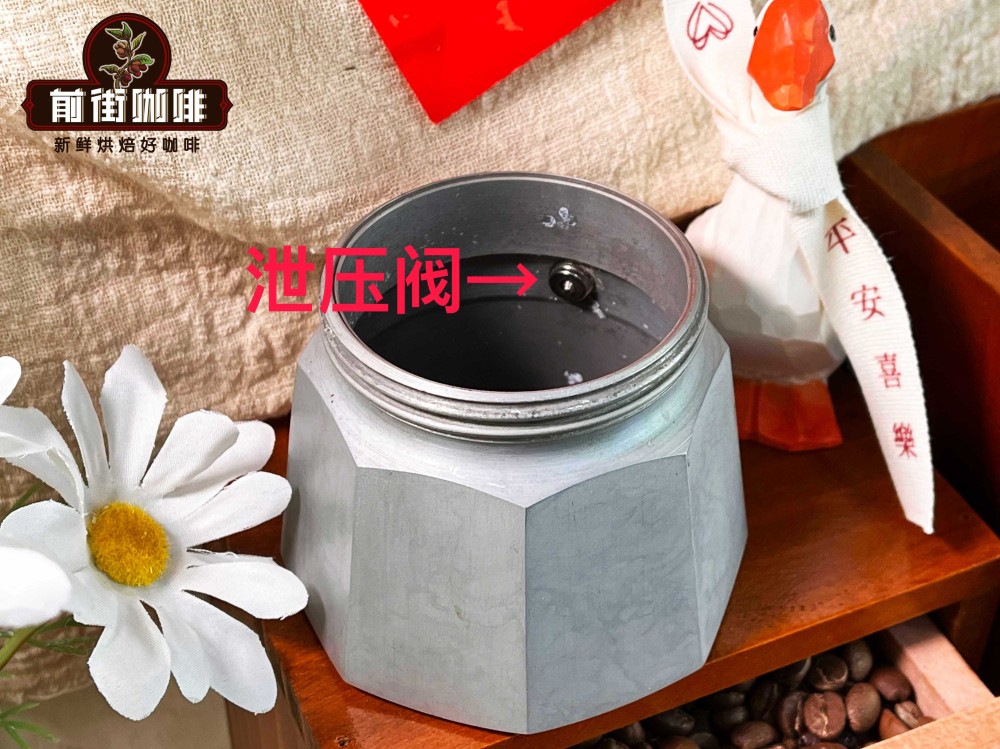
In addition, do not add more water just because you want more coffee. Why? Front Street reminds everyone that the lower pot's design has a pressure release valve, which is the protruding little hole in the picture. The pressure release valve exists to prevent explosions caused by excessive internal pressure in the lower pot due to certain factors. These factors include coffee grounds being ground too fine. Therefore, when adding water, never let the water cover the valve. When water covers the pressure release valve, it loses its pressure-relieving effect and creates a huge safety hazard.
As long as you follow the above steps and tips and practice more, Front Street believes everyone can definitely brew delicious espresso-style coffee!
Finally, here is how to clean a moka pot:
1. After the coffee cools, unscrew the upper pot, remove the funnel, and discard the coffee residue; gently clean the filter funnel of the upper and lower pot bodies, and be sure to dry them!!! Do not use abrasive materials or soda water to clean, as this will damage the shiny surface. Over time, the bottom will inevitably discolor, which is due to hard water; mixing water with vinegar can remove it.
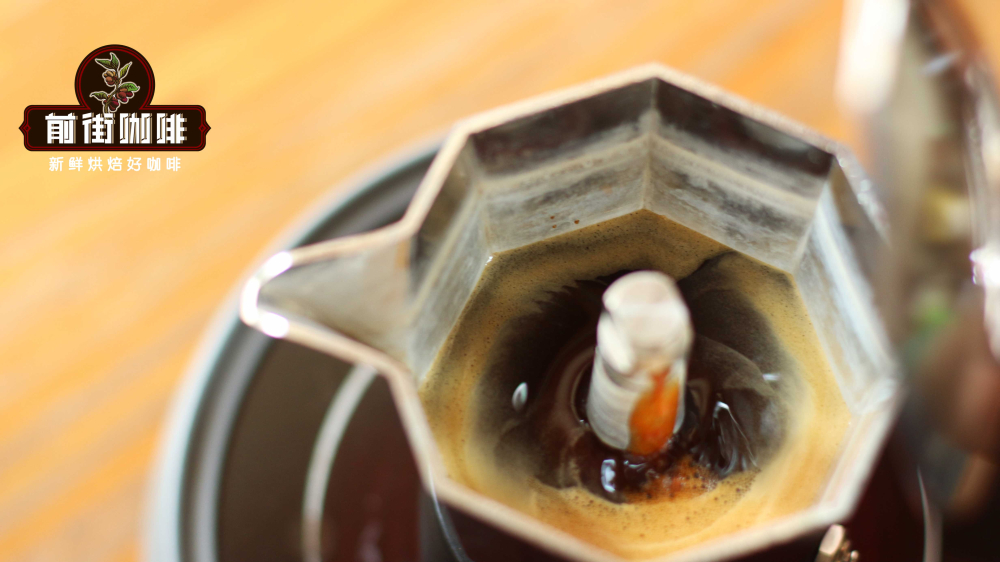
2. For an aluminum alloy coffee pot, all parts should be disassembled and left to dry in the air; the coffee pot must not be washed in a dishwasher.
What kind of coffee beans are suitable for a moka pot?
Are all coffee beans suitable for a moka pot? The answer: no. Just now Front Street said that coffee brewed with a moka pot has oils and is rich. The oils are actually composed of countless tiny carbon dioxide bubbles. Medium-dark roasted coffee beans contain enough carbon dioxide gas. Therefore, if you want an ideal rich, oil-laden moka pot espresso, choosing some medium-dark roasted coffee beans is more appropriate. Light-roasted coffee beans find this relatively difficult to achieve, so Front Street suggests that if using a moka pot to brew coffee, it is better to choose medium-dark roasted coffee beans; the taste will definitely be better too!
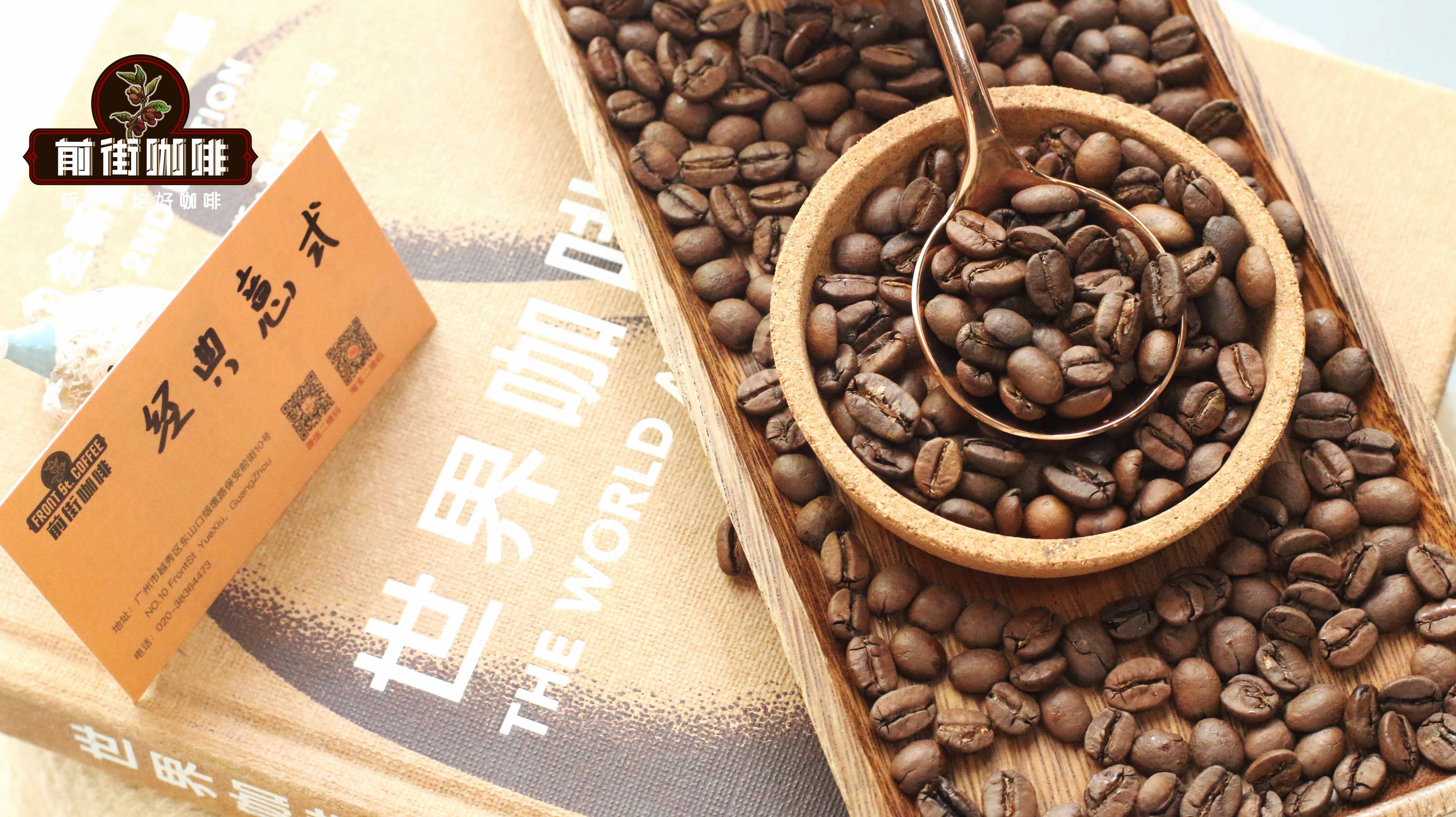
To make moka pot coffee, we recommend buying Front Street Classic Italian Blend Coffee. This is a blend composed of beans from three origins: Brazil, Indonesia, and Vietnam. It uses a dark roast, which maximally highlights the coffee's rich aroma and also allows everyone to easily extract abundant and dense coffee oils. Whether making an Americano diluted with water or a latte paired with milk, it is very suitable. You can place an order at the Front Street Taobao store or the Front Street Tmall flagship store.
For more specialty coffee knowledge, please follow: Front Street Coffee (Frontsteet Coffee)
The above content is compiled by CoffeeHunters, a coffee news website.


