







Espresso is certainly delicious, but not every household has the budget or the space for an espresso machine. That's why more and more people keep a moka pot at home. The moka pot is convenient and quick—just fill it with hot water and ground coffee, place it on a heat source, and wait for your coffee.
However, the coffee brewed with a moka pot isn't as good as what today's espresso machines produce. When the moka pot first appeared, it was more of a substitute for the espresso machine. But we now understand that today's espresso extraction uses extremely high pressure to force nearly boiling water through a tightly packed puck of coffee grounds—and reaching such high pressure was only achieved in modern times, as the manufacturing technology of espresso machines advanced.
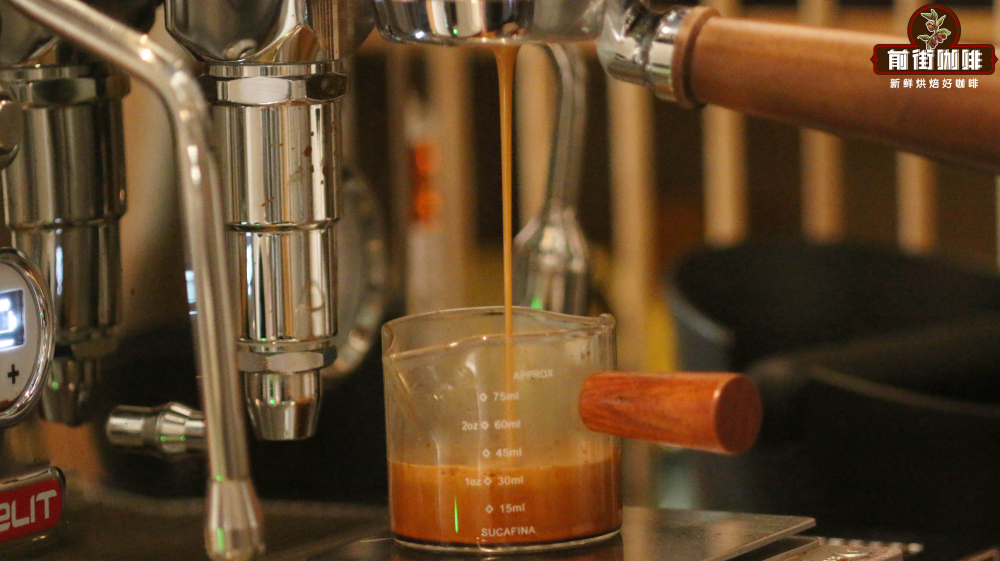
To understand the emergence of the moka pot, one must mention the history of the espresso machine. The first espresso machine was exhibited in Turin, Italy, at the end of the 19th century. By 1905, La Pavoni's first commercial espresso machine appeared, allowing baristas to serve espresso to multiple people in a very short time. Later, more and more cafés across Italy used La Pavoni machines.
This large commercial espresso machine required the entire device to be placed over a flame to heat when making coffee. Inside the machine, steam would push hot water from a compartment at the bottom through a tube leading to the coffee grounds. But this machine was too expensive and too bulky—unless you were a wealthy family, it was impossible to have such a machine at home.

The moka pot emerged in the 1930s, invented by a man from Crusinallo in northern Piedmont. Alfonso Bialetti returned home after working in the French aluminum industry for over 10 years, and set up his own workshop in Piedmont, producing aluminum household items. One day, Bialetti saw his wife doing laundry and had a sudden inspiration that led to the invention of the moka pot. At that time, the washing machine was divided into two layers: the lower layer held soapy water, which was heated to boiling, and the upper layer held the clothes to be washed. A tube connected the two layers, and the hot soapy water rushed up through the tube and spread over the clothes. With the help of Luigi De Ponti, the moka pot as we know it today was developed.
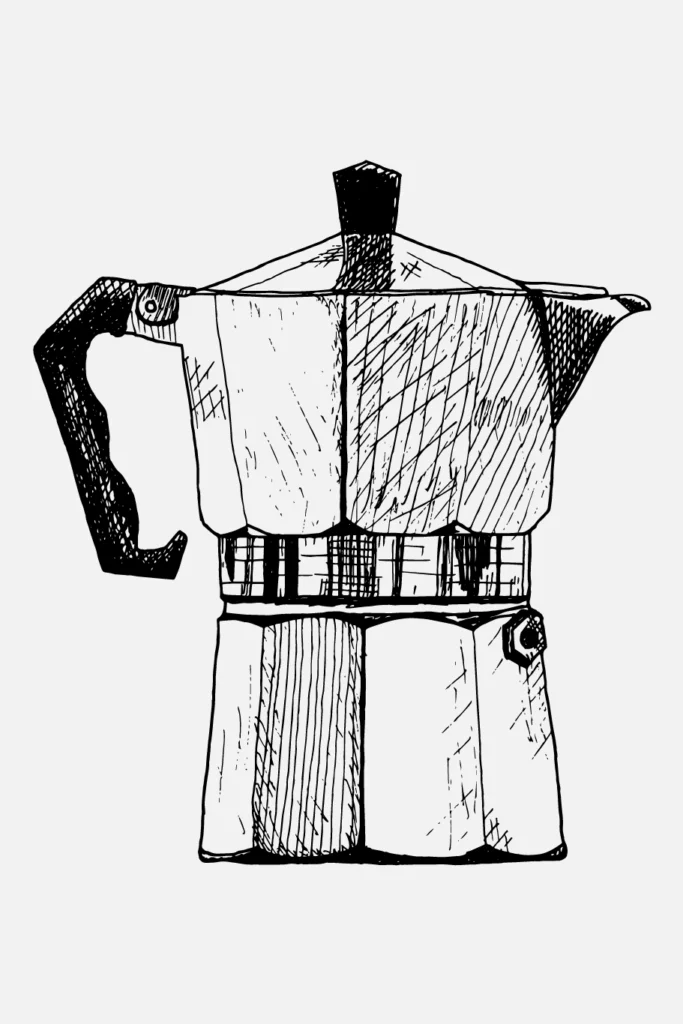
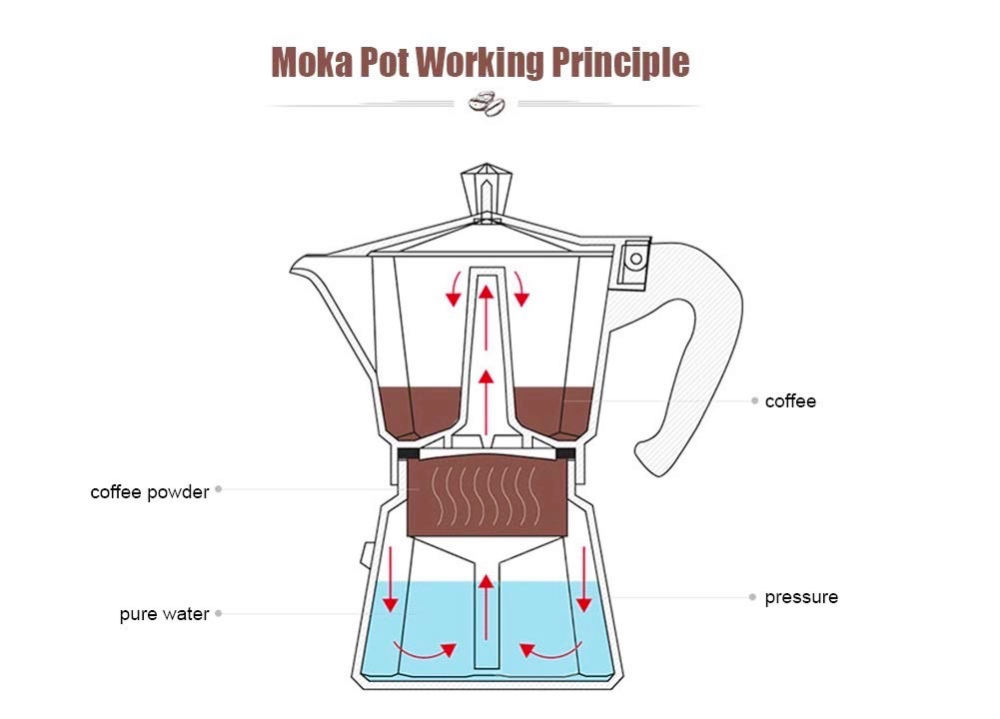
The Bialetti moka pot works on the same principle as the washing machine mentioned above. It is an octagonal aluminum pot with a rubber handle for heat insulation. The device is mainly divided into three parts: the bottom container holds hot water, the top container holds the extracted coffee liquid, and in the middle is a metal filter basket for holding ground coffee.
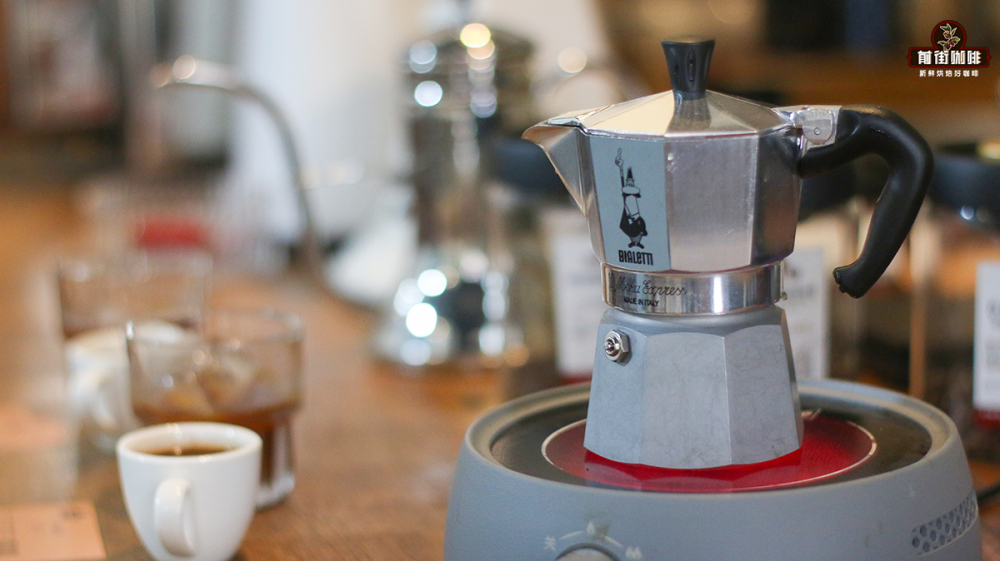
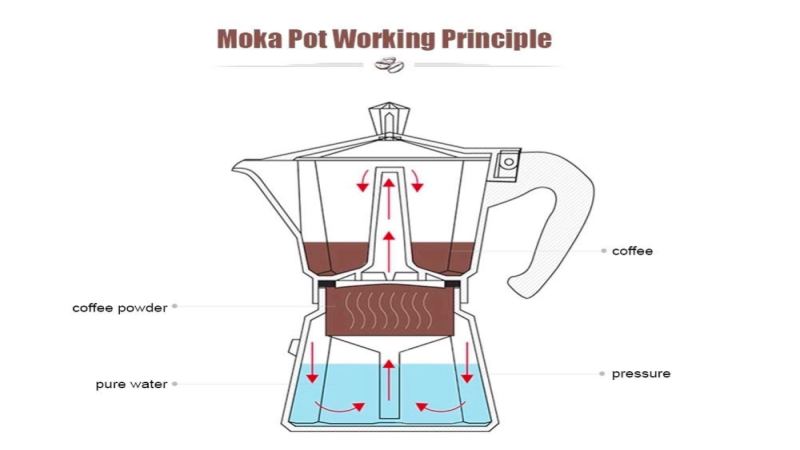
To brew coffee with a moka pot, first fill the bottom chamber with a certain amount of hot water, put coffee grounds into the middle metal filter basket, then install the filter basket onto the bottom chamber, screw the top chamber on tightly, and finally place the entire brewing device on a heat source. When the water in the bottom chamber boils, steam is produced. Since the bottom chamber has limited space, as steam increases, the pressure in the bottom chamber rises, forcing the hot water from the bottom chamber up through a tube to the coffee grounds in the middle layer, and then through a tube in the metal filter up to the top chamber.
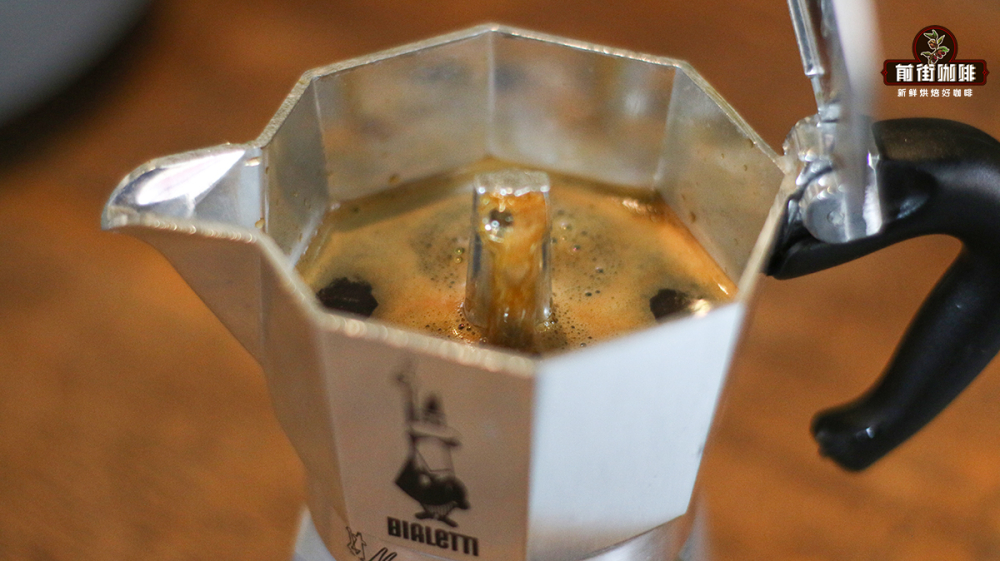
The moka pot was created to replace the espresso machines of the late 19th and early 20th centuries. But after decades of development, the extraction pressure of espresso machines now far exceeds the 1.5 bar of those early days. And since the water rises by boiling, that also means the water temperature is on the high side. This creates a huge difference from the espresso extracted by today's espresso machines.Pros and Cons of Brewing Coffee with a Moka PotOne drawback is the lack of rich crema. Modern espresso machines can achieve extraction pressure far beyond what a moka pot can, which means the coffee brewed with a moka pot won't have as rich a crema as that from an espresso machine.
Additionally, another reason behind this pro and con of moka pot brewing lies in its relatively sparse metal filter,Moka Pot Grind Sizewhich requires a coarser grind than an espresso machine. The coarser the grounds, the smaller the contact area between water and coffee particles, and thus fewer substances can be extracted. That is to say, coffee brewed with a moka pot is not as thick and rich as that from an espresso machine.
Many people want to make espresso at home and have equipped themselves with a moka pot. So here comes the question: what coffee beans are suitable for brewing a delicious cup with a moka pot? Since the moka pot was meant to be an affordable alternative to the early espresso machines, and espresso is characterized by being rich, smooth, and mellow, you'll need some darker-roasted coffee beans to get a rich crema.

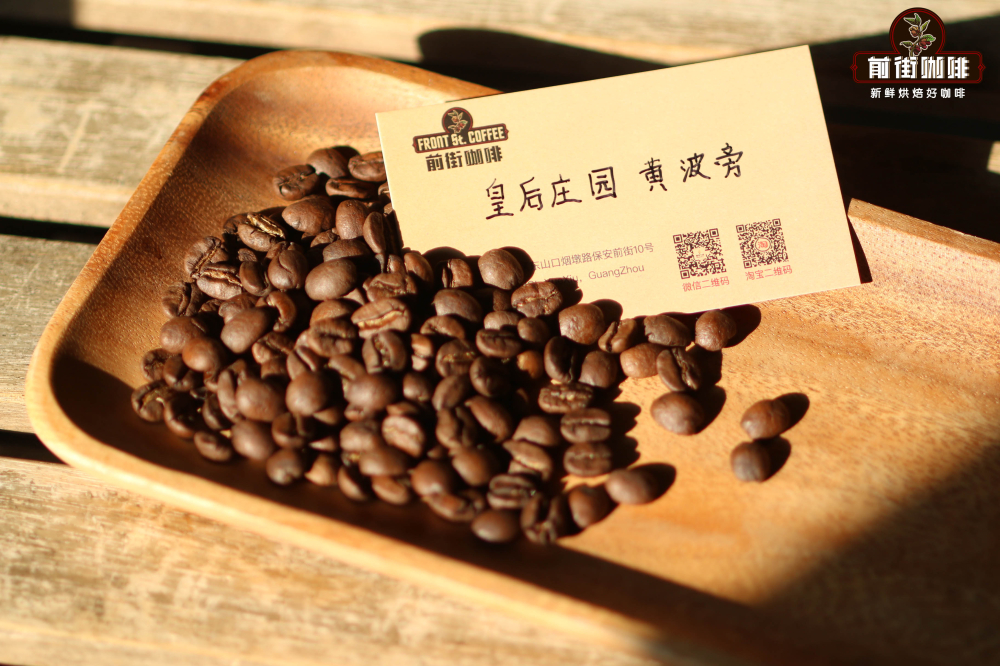
1. Front Street Indonesia PWN Golden Mandheling Coffee Beans
Region: Gayo, Indonesia
Altitude: 1400m–1600m
Variety: Ateng
Processing Method: Wet-Hulled Process
Mandheling coffee beans come from the island of Sumatra in Indonesia, Asia, and are also known as "Sumatra coffee." Mandheling is a premium coffee bean grown in the highlands at altitudes of 750–1500 meters, and is one of the rare Arabica varieties in Indonesia. When it comes to Mandheling coffee, many people love its rich aroma, full body, and intense flavor, and its unique herbal spice notes are also a hallmark of Mandheling coffee. Besides Indonesia's growing conditions, the wet-hulled processing method is also one of the sources of Mandheling coffee's intense flavor.
2. Front Street Brazil Queen's Farm Coffee Beans
Region: Mogiana Region, São Paulo State, Brazil
Farm: Queen's Farm
Altitude: 1400m–1950m
Variety: Yellow Bourbon
Processing Method: Natural Process
The Yellow Bourbon variety was discovered in the 1870s in São Paulo State, Brazil. Later, scientific research found that the Yellow Bourbon variety has a richer mucilage layer, which contains large amounts of sugars, making the sweetness of the Yellow Bourbon variety more pronounced. Front Street's Yellow Bourbon coffee beans use the most primitive and traditional post-processing method for green coffee beans—the natural process. The complete fruit skin and pulp are preserved, allowing more sugars to penetrate into the green coffee beans, achieving a qualitative leap in sweetness.
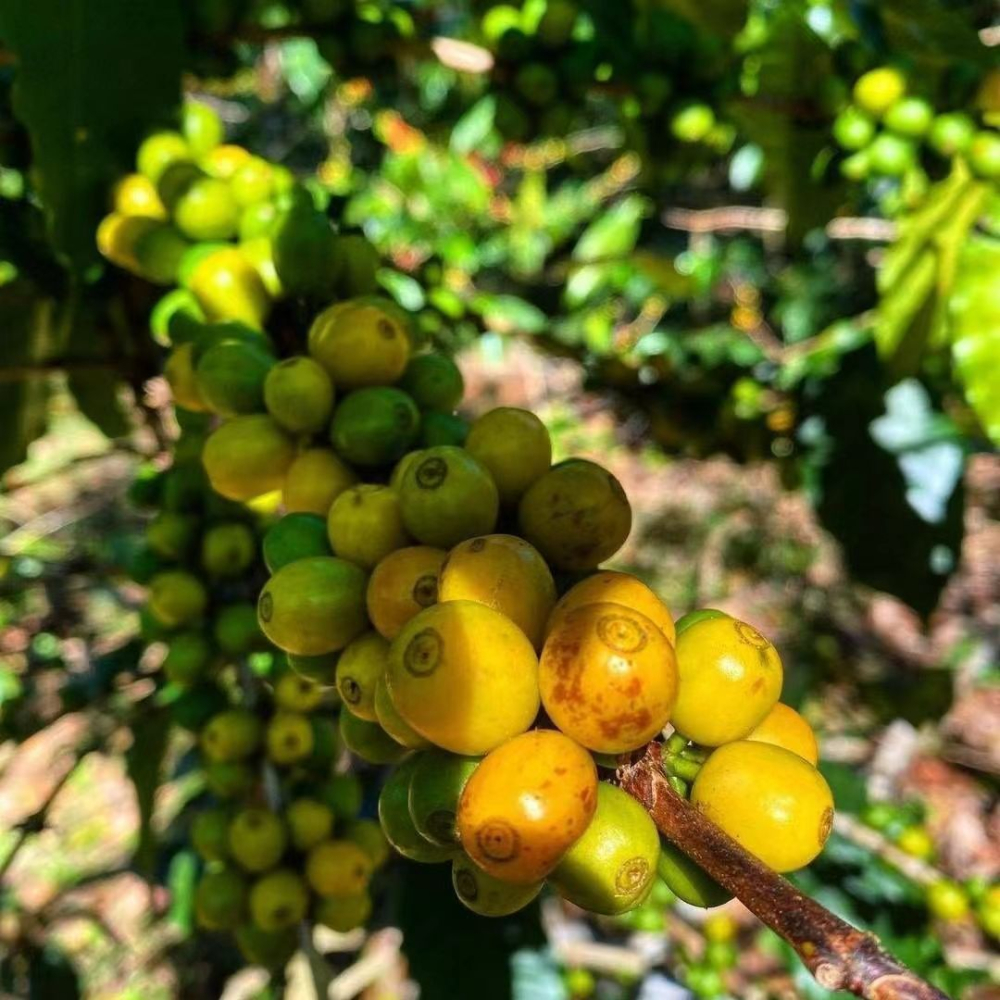
Queen's Farm has won multiple awards since the first Brazil Cup of Excellence coffee competition in 1999, and even won 12 awards within 7 years, demonstrating the superior quality of the coffee beans produced by Queen's Farm. The natural process also requires a large amount of manual labor. To avoid producing undesirable fermented flavors, Queen's Farm specifically adopted small-scale sun-drying to ensure the quality of the green beans.
3. Front Street Classic Espresso Blend Coffee Beans

Brazil Red Bourbon + Indonesia Mandheling + Vietnam Robusta. Brewing with a moka pot yields rich aromas of caramel, dark chocolate, maltose, and cookies, with abundant crema and roasted nut flavors.The unique spice and woody notes of Indonesian Mandheling combined with the nuttiness and balance of Brazilian Red Bourbon create a complex, full-bodied aroma. With the crema contributed by Robusta, it becomes a perfect partner for milk. Making a latte not only allows for beautiful latte art but also provides a full coffee flavor.
4. Front Street Strawberry Candy Espresso Blend
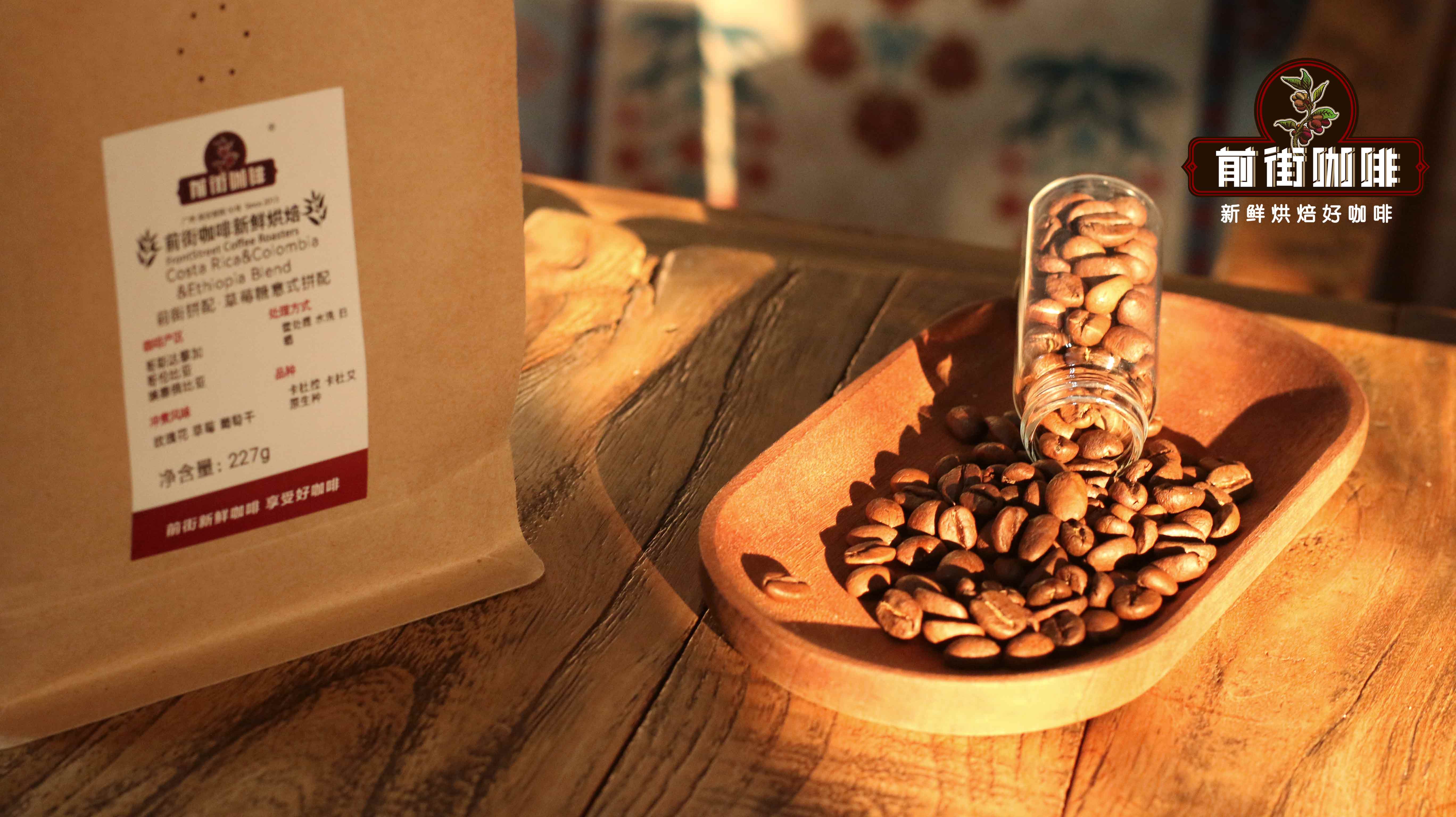
Front Street Costa Rica coffee, known for its honey processing, has outstanding sweetness, while Ethiopia is known for its bright citrus acidity and floral notes. On this basis, combined with the chocolate and nutty flavors of Colombian coffee, the resulting Front Street Strawberry Candy espresso blend carries aromas of rose, strawberry gummy, and dried blueberry, with balanced sweetness and acidity of grape and citrus, and an almond-scented aftertaste. With the extraction power of an espresso machine, the espresso has no harshness, with good crema and a silky texture, while also delivering a sweet-and-sour taste like strawberry gummy. It has distinct aromas of rose, strawberry gummy, and dried blueberry, with balanced grape and citrus acidity and an almond-scented aftertaste.
5. Front Street Colombia Huila Coffee Beans

Front Street Colombia Huila coffee flavor characteristics: rich and solid body, uniform beans, with a pleasant acidity, aromatic and mellow, moderate acidity, and a rich sweetness that is very intriguing. At the same time, Front Street Huila coffee beans are very affordable and have excellent flavor, making them a must-buy daily staple for many moka pot users.
Some who don't have a moka pot at home might wonder:Can a French press make espresso? After all, a French press is the simplest coffee brewing tool, and many people keep one at home. Brewing espresso with a French press, even without that beautiful golden crema, still retains the coffee's natural oils, offering a different kind of flavor.
For more coffee bean information, please follow Coffee Workshop (WeChat public account: cafe_style)
For professional coffee knowledge exchange, please add WeChat ID: kaixinguoguo0925
The above content is compiled by CoffeeHunters, a coffee news website.


