







For more information on coffee origins and coffee knowledge, please followCoffeeHuntersToutiao account
Newcomers to coffee may have misconceptions about the difference between pour-over coffee and drip bag coffee. Due to the packaging costs of drip bag coffee, the price of the same coffee beans in drip bag form is higher than that of whole roasted coffee beans. So can coffee like drip bag coffee be brewed multiple times like tea? Front Street Coffee (FrontStreet Coffee) will explain the correct way to brew drip bag coffee.
Drip bag coffee is a very portable coffee packet. As long as you have hot water and a container, you can brew a delicious cup of coffee anytime, anywhere. Front Street believes that this highly convenient coffee packet is very suitable for office workers or friends going on outings. As a coffee shop that roasts its own beans, Front Street has many friends who come to buy, and they can choose coffee from multiple origins according to personal taste. This existence known as "one-minute brewed coffee" greatly facilitates coffee fans' need for caffeine, and Front Street therefore offers a variety of flavor choices. Although it may be slightly inferior to freshly ground coffee, being able to obtain a good flavor and mouthfeel while saving complicated steps is a sacrifice that is acceptable.
How many times to brew drip bag coffee
Many friends feel that extracting drip bag coffee only once is too wasteful, and that it should be brewed several times like tea to be "flavorful enough." Front Street would like to say that coffee brewed multiple times really tastes bland and bitter, because only 30% of the extractable substances in coffee beans can be extracted. Since coffee is itself a plant, after roasting the extractable substances have been greatly activated, which is also the reason coffee can extract flavor. The remaining 70% is woody fiber, meaning that brewing coffee again can only extract a taste like wood, so coffee can only be extracted once.

Front StreetHow to brew drip bag coffee
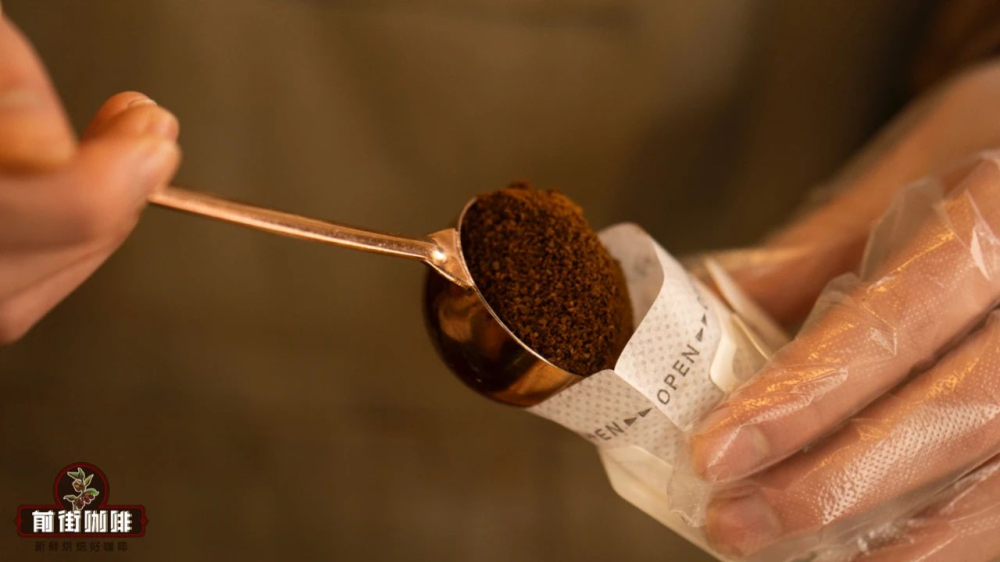
1. First, the net content of coffee powder in drip bag coffee is fixed and marked (generally 10 grams). This solves the problem of the grinder and electronic scale, and the powder-to-water ratio is the conventional 1:15.
2. Next, deal with the amount of water poured and the water temperature. As with pour-over coffee, use a ratio of 1:15 to 1:16, so the brewed drip bag coffee liquid should reach 140 ml to 150 ml. The water temperature depends on the roast level: for medium-light roast, use about 90°C; for medium-dark roast, choose 88°C. If you have a thermometer or temperature-controlled kettle, give priority to using them. If not, you can roughly judge the temperature. Generally, after the kettle comes to a boil, turn off the heat source and open the lid, wait 2-3 minutes, and the water temperature will reach about 90°C (at room temperature 28°C).

3. After preparation, preheat the mug (cup), take out and tear open the sealed opening of the drip bag coffee packet, stretch open the filter paper cardboard on both ends of the filter bag, hang it on the rim of the mug and shake the coffee powder layer flat.
4. First pour: pour 20-30 g for blooming. As with pour-over coffee, because drip bag coffee is also called "convenient pour-over."
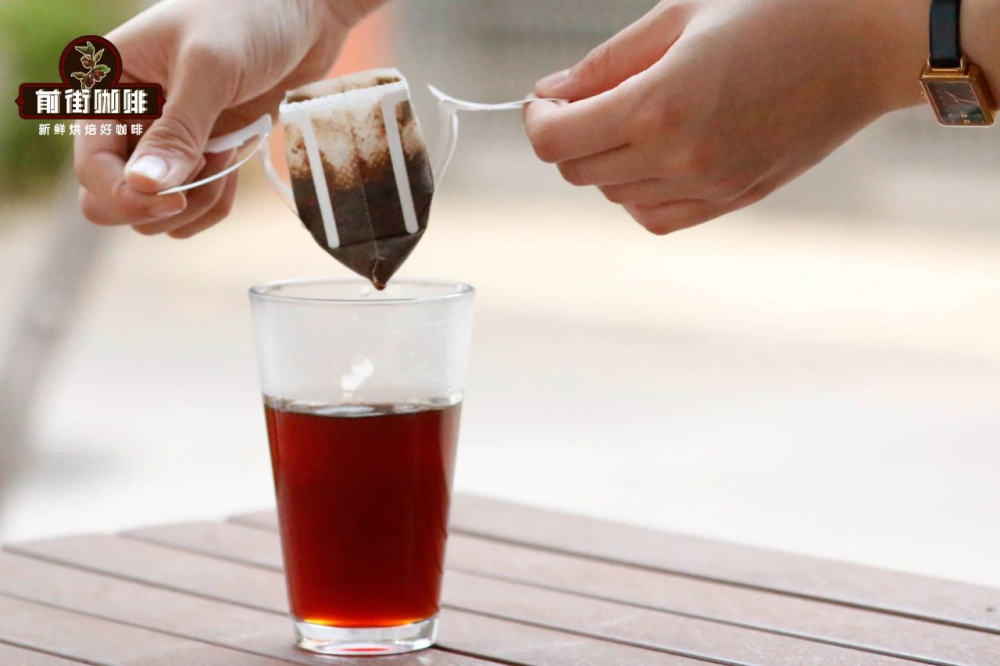
5. After blooming, pour water a second time, using a small stream in a circular motion directly to fill it. When the coffee powder layer drops slightly, continue pouring water until full, repeating until the coffee capacity in the cup reaches about 140-150 ml, then you can remove the drip bag coffee packet and enjoy it.
6. If you want a more precise water amount, you can also pour 150-160 ml of water into the pouring kettle. During brewing, after all the water in the kettle has been poured, wait for the coffee liquid to flow into the cup, then remove the drip bag. The whole brewing process is completed in about 1 minute.
Since drip bag coffee is pre-ground coffee powder, its flavor dissipates faster than whole coffee beans. Therefore, if you want to enjoy the coffee's flavor, consume it as early as possible.

For beginners who want to learn more about coffee flavors, Front Street has launched a five-origin combination drip bag coffee packet. Front Street has selected specialty coffees with flavors from different origins, including coffee from five specialty coffee origins: Ethiopia, Kenya, Panama, Indonesia, and Honduras.
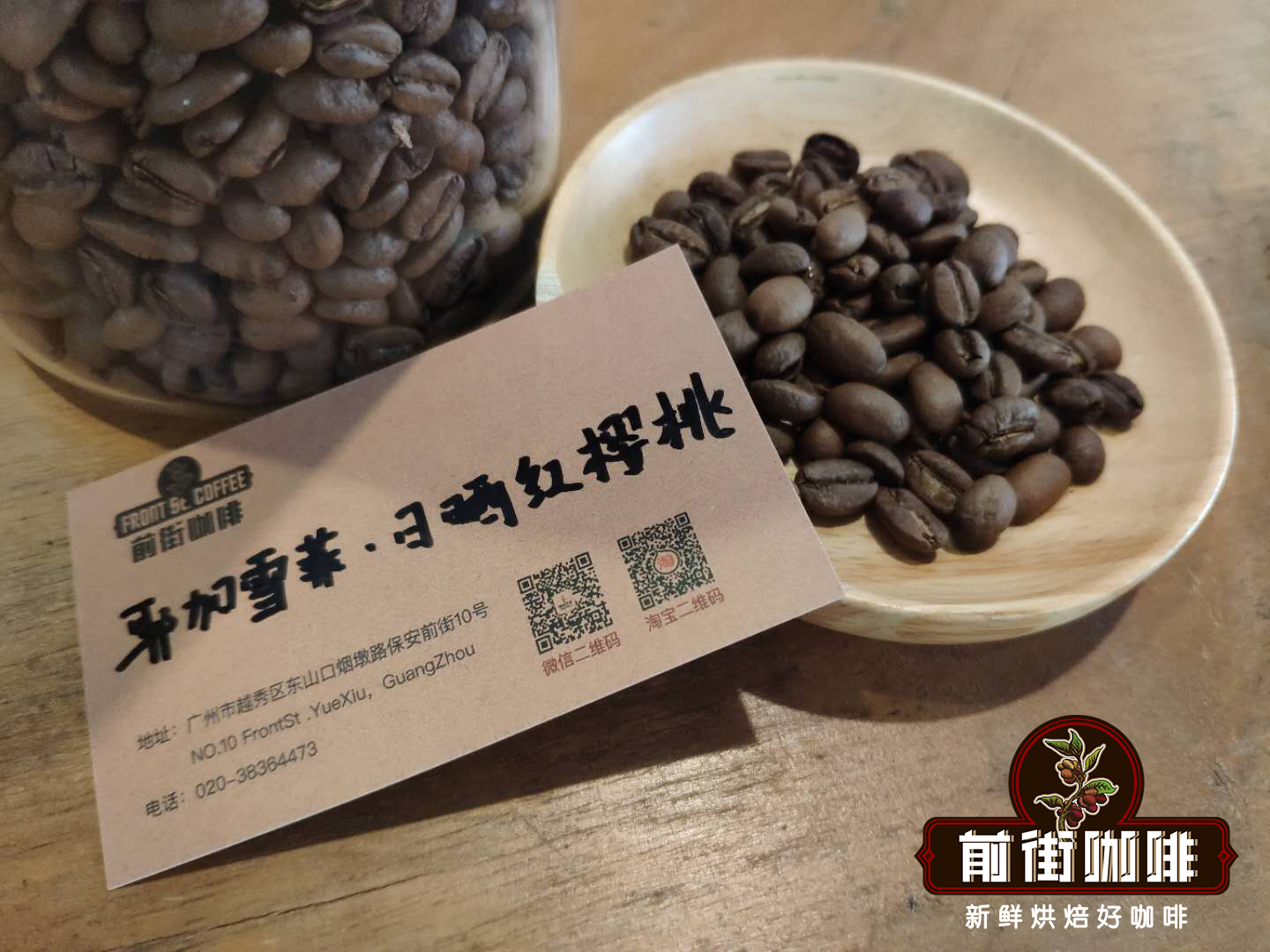
Front Street Coffee (FrontStreet Coffee) Ethiopia Yirgacheffe Natural Red Cherry Drip Bag Coffee
Red Cherry is actually a business plan to promote coffee quality, initiated by Menno Simons, founder of the Dutch green bean trader Trabocca. Trabocca realized that the quality of Ethiopian coffee beans was uneven, making it difficult to raise prices, and coffee farmers' incomes were not high either. To reverse this situation, it jointly launched the Red Cherry plan with local coffee farmers to solve the problem at the source, encouraging farmers to more carefully complete every process such as coffee cherry picking and processing by increasing the purchase price of high-quality green coffee beans. During the picking stage, fully manual picking is used to select highly ripe coffee cherries.

The natural process is the oldest and most primitive method of processing coffee beans. This naturally processed Red Cherry uses coffee cherries with the entire pulp and skin kept intact, placed on raised drying beds for natural drying, isolated from contact with the ground to prevent earthy off-flavors caused by direct exposure to sunlight. After more than two weeks of sun drying, the dark brown coffee fruits are stored, waiting for the entire flavor to mature. Before shipment, the processing station only then removes the coffee beans from the coffee cherries. This natural processing method gives the beans lower acidity, obvious sweetness, and body, but the cleanliness is not as high as that of the washed process.
Flavor: Obvious sweet and sour notes, with lemon, berry, and fermented wine aromas; the lingering lemony acidity is lasting and the sweet aftertaste is obvious.
Front Street Coffee (FrontStreet Coffee) Kenya Little Tomato Drip Bag Coffee
Kenyan coffee mostly grows at altitudes of 1,500-2,100 meters and is harvested twice a year. Kenyan coffee is grown by smallholder farmers. Kenyan coffee is produced near Mount Kenya in the central region, and the coffee beans planted are high-quality Arabica varieties. Kenya grades coffee by bean size and cup test results. According to bean size, shape, and hardness, from high to low: AA or AA+, AB, PB, C, E, TT, T. For green coffee beans of the AA and AB grades, a special grading based on cup test results is added (not officially recognized by the Kenyan government, but set by exporters), from high to low: TOP, PLUS (+), FAQ.
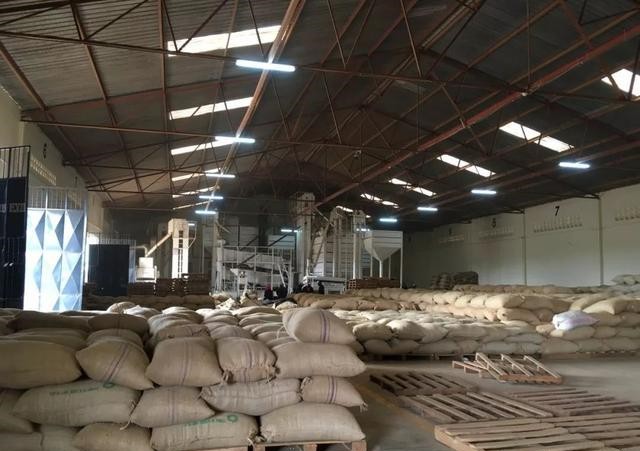
Kenyan coffee's unique acidity is closely related to its excellent processing method. In general washed processing, highly ripe coffee cherries are selected, the skin and pulp are removed, and then they are soaked in a fermentation tank to remove mucilage. This process rarely exceeds 36 hours, but Kenya's fermentation time is as long as 72 hours. After that, they are taken out to dry until the moisture content reaches 12%.
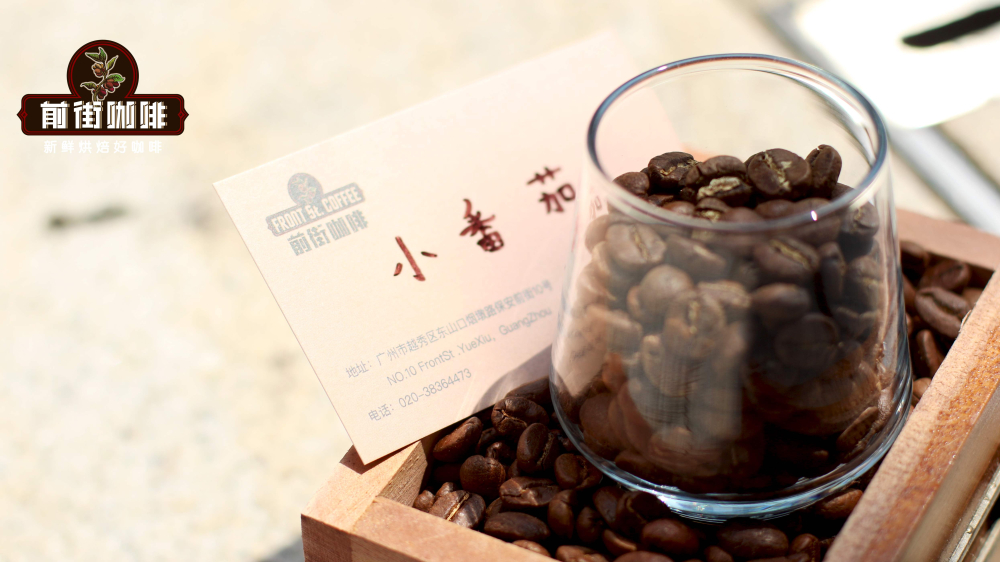
Flavor: Cherry tomato and smoked plum acidity, prominent mid-palate sweetness, lingering berry aroma and yellow sugar sweetness in the aftertaste, and green tea aroma.
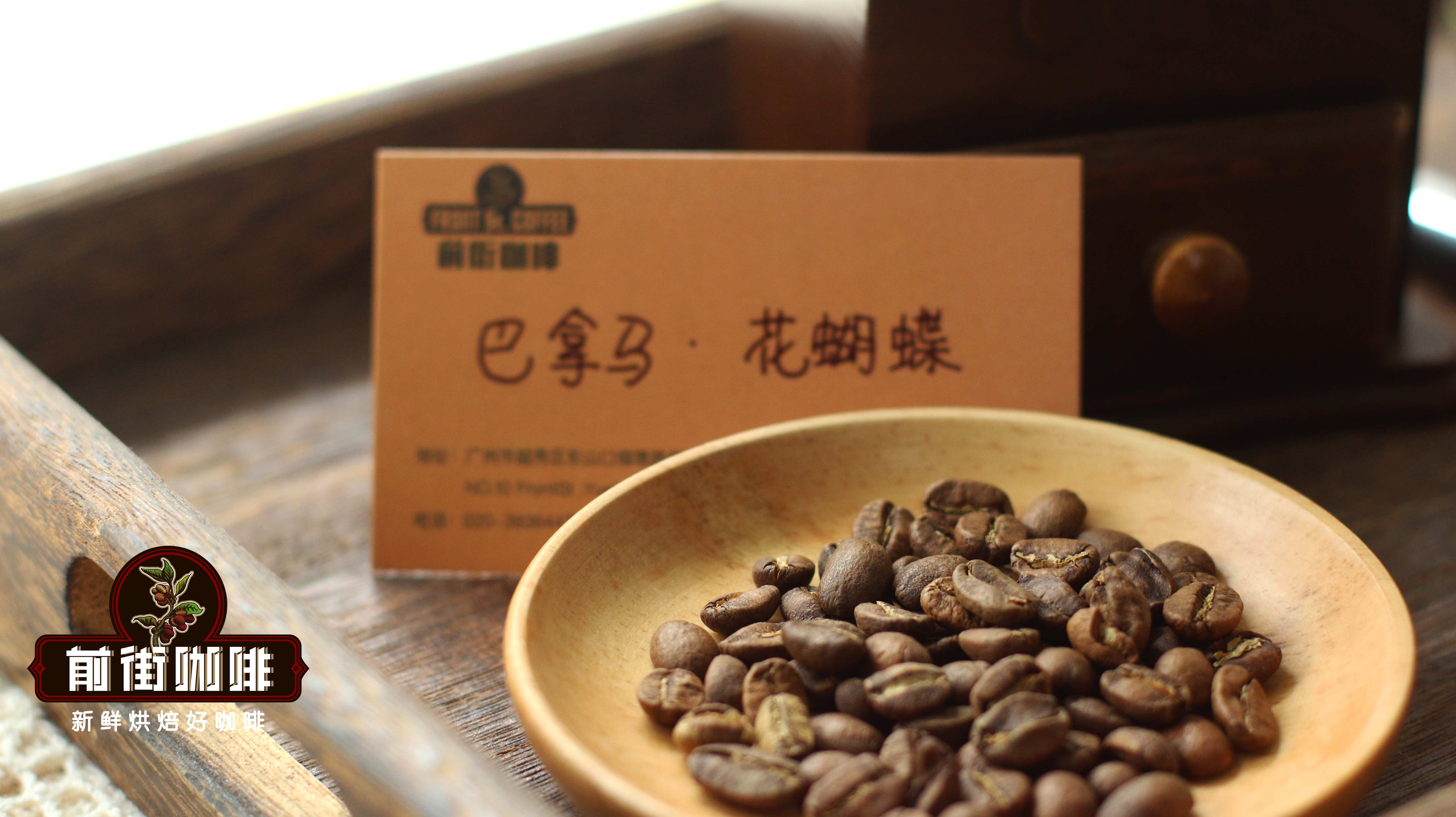
Front Street Panama Butterfly Drip Bag Coffee
Panama is a Central American country, bordering Costa Rica to the west and Colombia to the east. Panamanian coffee is famous in the coffee world for Hacienda La Esmeralda's Geisha coffee. The whole of Panama is filled with a rich Geisha atmosphere, and many estates cultivate Geisha coffee beans, but because Geisha coffee is difficult to grow, low in yield, good in flavor, its price is not low either. However, this Butterfly has 70% high-quality Geisha lineage, as well as Catuai and Caturra, planted in the Baru Volcano area of Boquete, growing at an altitude of 1,600 meters in a volcanic region. The local special microclimate leads to abundant rainfall in this area, as well as a large temperature difference between day and night, and meticulous harvesting and fine processing make this coffee perform quite excellently in body, acidity, and floral aroma.
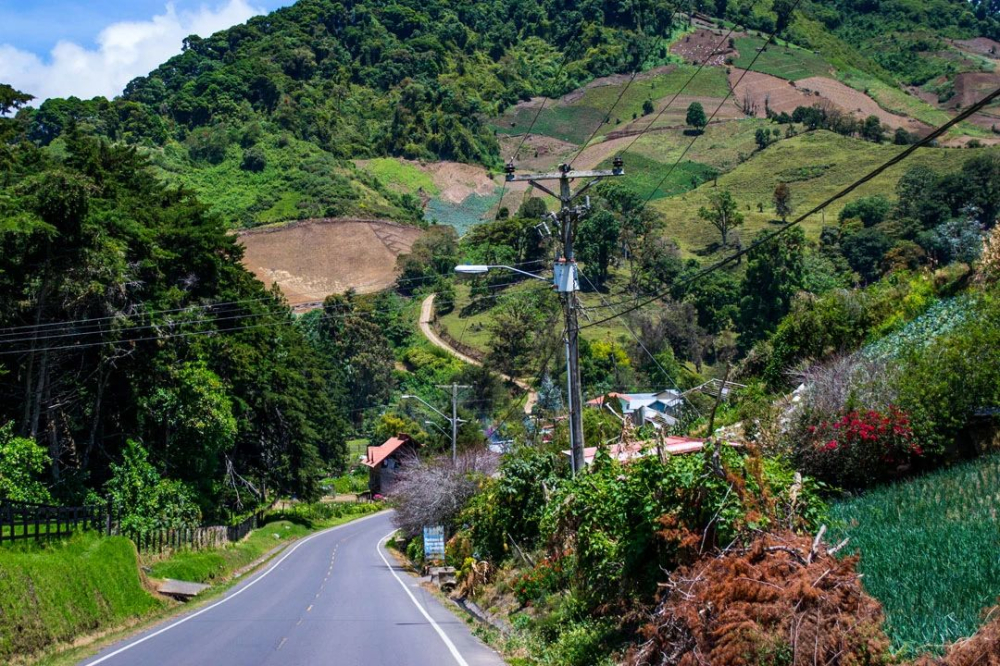
Even more surprising is that despite this excellent quality and these conditions, the price is very affordable, allowing people to experience the Geisha flavor with very high cost-effectiveness.
The washed process uses a machine to first remove the skin and pulp, leaving only coffee beans wrapped in parchment. At this time, the beans still have a layer of mucilage on the outside, and the washing process is meant to wash away this layer of mucilage. But mucilage has strong adhesion and is not easy to remove, so it must be placed in a tank for about 18-36 hours to ferment and decompose the mucilage.
Flavor: Citrus, floral, tea-like, honey, high sweetness.
Front Street Coffee (FrontStreet Coffee) Indonesia Lintong Mandheling Drip Bag Coffee
Indonesia first began growing coffee under Dutch colonial rule, and later gradually developed its own unique coffee flavor, the most famous of which is Sumatra's Mandheling coffee. Mandheling was originally the name of a tribe. Because the Japanese mistakenly thought it was the name of the coffee when spreading it, the name was passed on by a strange coincidence.
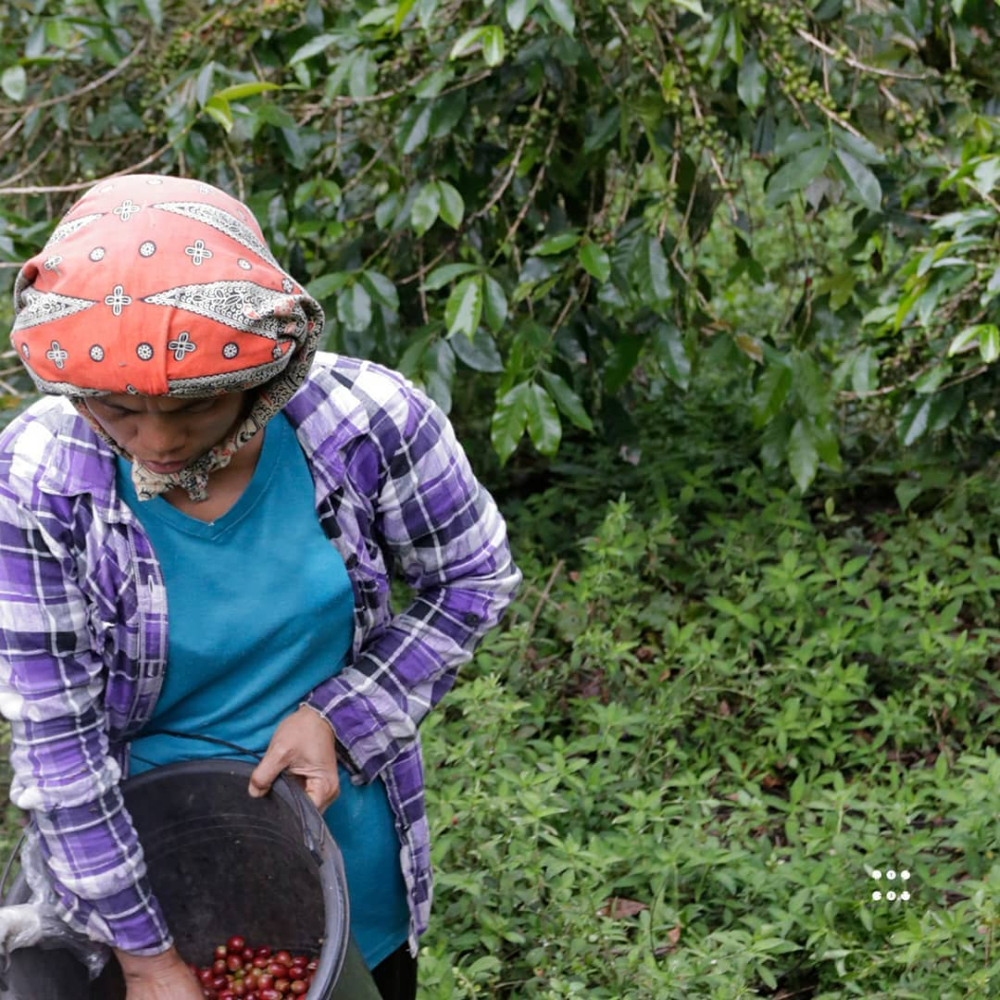
Because the local weather is mostly rainy, with constant typhoons, it cannot achieve the good weather required for natural drying, and the local economy is not good either, so it is likewise impossible to use the more expensive washed method. For various reasons, the locally distinctive wet-hulling method emerged (wet-hulling means that during ordinary washed processing, the beans are sun-dried with parchment for 2-3 days, until the moisture content is 20-24%, then the parchment is removed).
Flavor: Herbal, nutty, cocoa, full-bodied

Front Street Coffee (FrontStreet Coffee) Honduras Sherry Drip Bag Coffee
Honduras's geographical conditions are no inferior to those of its neighboring coffee-producing countries, such as Guatemala and Nicaragua. Honduras has 280,000 hectares of coffee farms, mainly small coffee farms, most of which are less than 3.5 hectares. These coffee plantations account for 60% of Honduras's entire coffee production. Sherry coffee beans come from Masaguara, a city in the Intibuca department in southwestern Honduras, where there is a Mocha estate, which is the production site of this wine-aroma-flavored coffee bean.
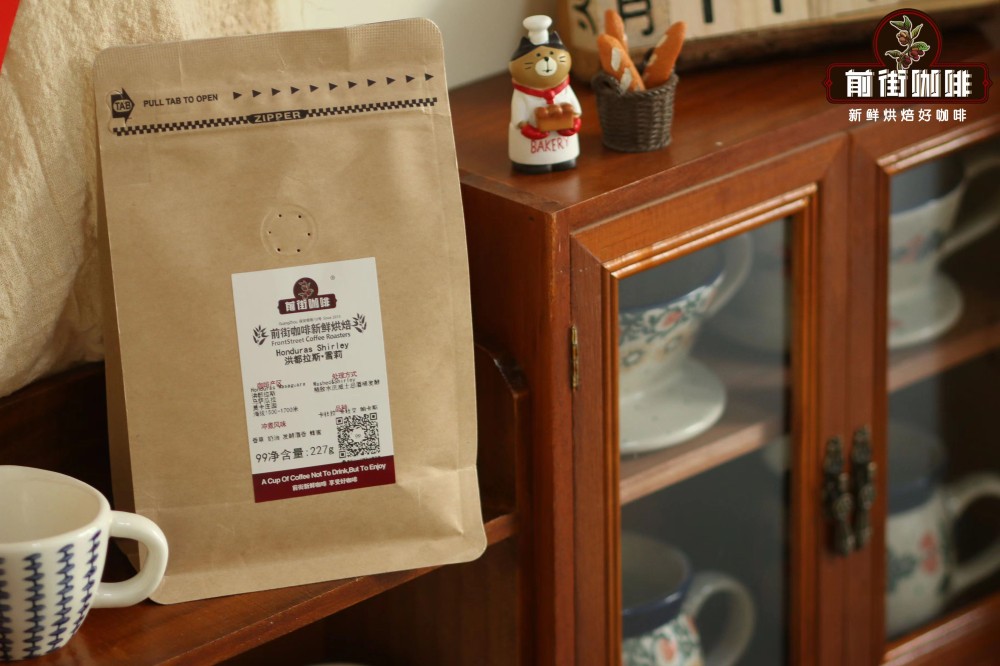
Flavor: Vanilla, cream, sherry aroma
The above content is compiled by CoffeeHunters, a coffee news website.


