








For more specialty coffee knowledge, please follow: Front Street Coffee (Frontsteet Coffee)
If you want to drink cold brew coffee but don't want to go out and buy it, then Front Street Coffee is here to teach you how to make cold brew coffee at home.
Cold brew coffee is a very easy brewing method to master. Front Street Coffee's cold brew coffee is based on 50 grams of coffee grounds. In terms of grind size selection, because the water temperature in contact with the coffee grounds is lower than that of regular pour-over coffee, choose a slightly finer setting than pour-over coffee, that is, a 20-mesh standard sieve with a pass rate of 85%. Put the coffee grounds into a glass bottle, then add 400 milliliters of room-temperature water and 200 grams of hard ice cubes (totaling 600 grams of ice-water mixture), with a coffee-to-water ratio of 1:12. Then use a stirring rod to stir the coffee grounds and water evenly, seal it, and place it in the refrigerator to chill.
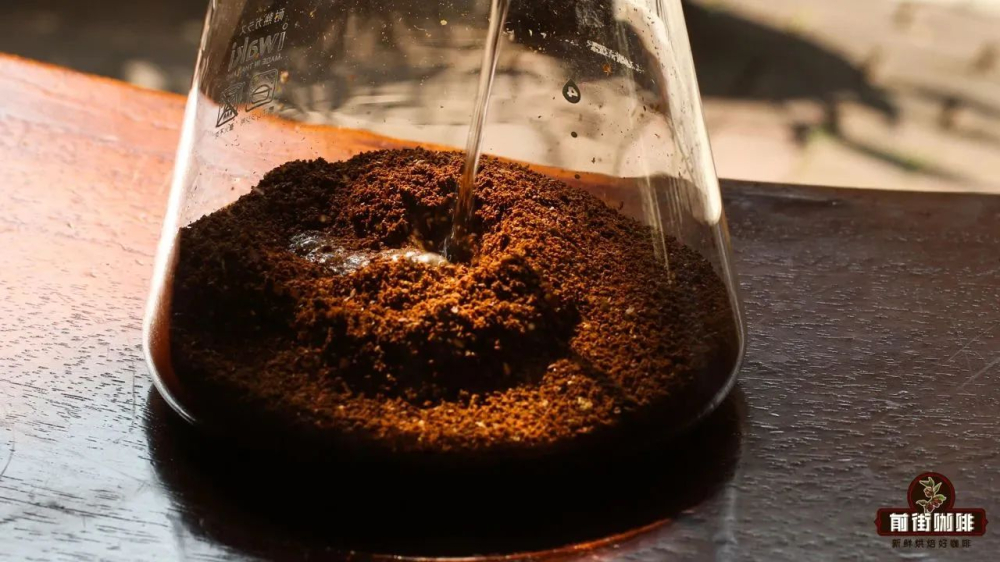
After placing it in the refrigerator for 12–24 hours, use filter paper to filter out the coffee grounds and obtain a clean coffee liquid. Then use a clean sealed bottle to store the coffee liquid and refrigerate it for about another 4 hours before drinking.
Here, Front Street Coffee needs to tell you, friends, that cold brew coffee is not necessarily tastier the longer it is extracted. Whether it tastes good or not is a very subjective matter. Some people like fresh and clean coffee, while others like stronger coffee and coffee with a fermented feel. These all vary from person to person.
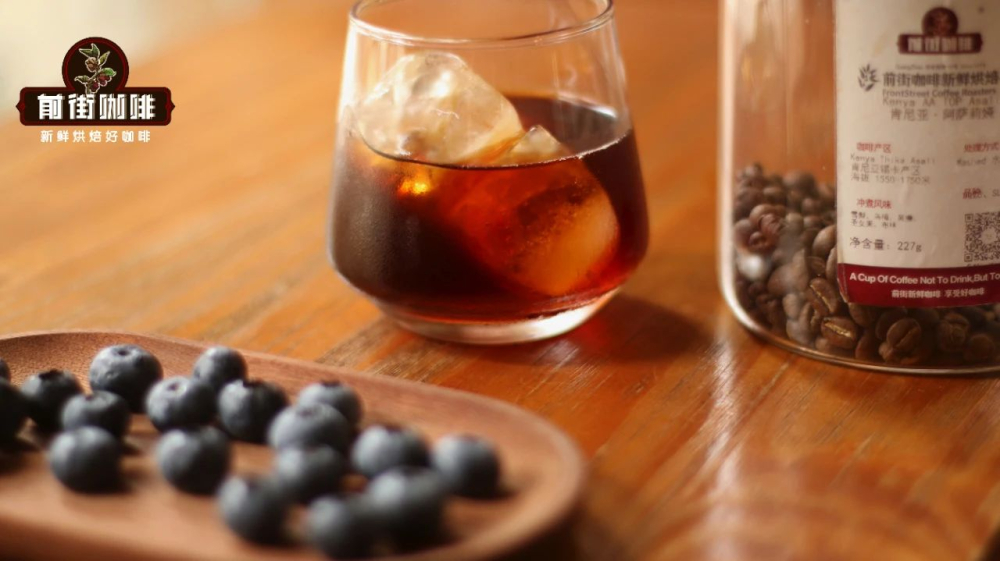
For friends who like a stronger fermented feel, Front Street Coffee recommends that the extraction time can be slightly extended. As time goes on, the fermented feel of the coffee liquid becomes stronger, but the coffee's concentration becomes richer and the mouthfeel layers become more complex. If, when drinking, you feel the coffee liquid is too strong, you can add two ice cubes. As the ice cubes melt, the concentration of the coffee liquid will also decrease accordingly.
Although a type of coffee machine has already appeared on the market that can speed up the release of substances from coffee in a low-temperature environment through pressurization, and can produce good-tasting cold brew in only 2–3 hours, the price is really a bit expensive. Warm water (that is, water that is not cold, but also not too hot) can provide some heat to increase molecular movement. When the thermal motion of molecules competes with the attractive force between solid molecules, the solid molecules will spread apart. At the same time, the thermal motion of molecules increases the number of contacts between water molecules and solid molecules (coffee particles), so when coffee is ground finer, the solid molecules will dissolve faster & more.
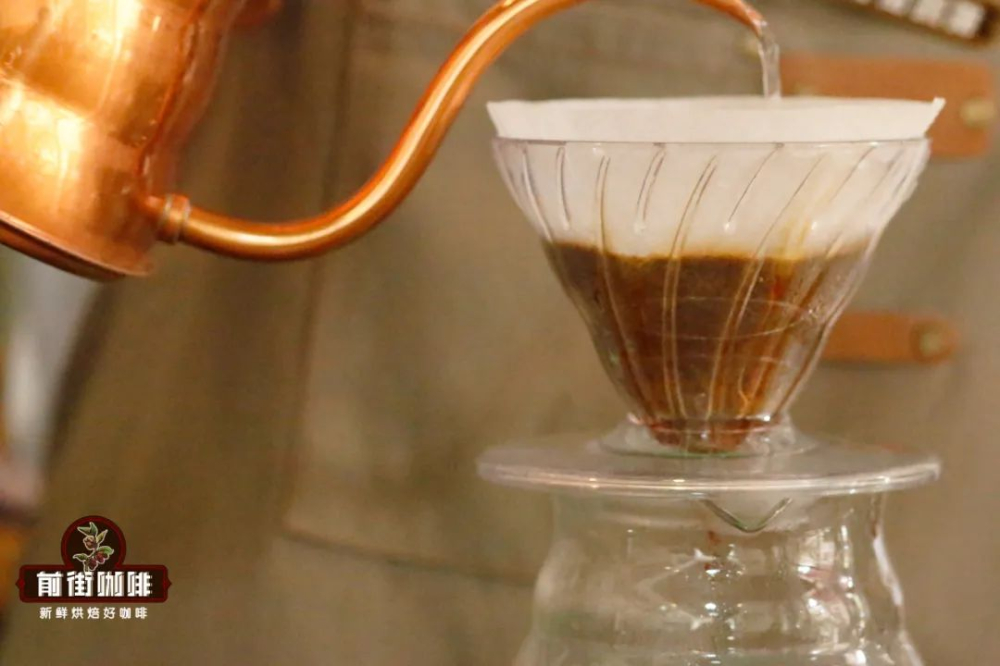
The release pattern of coffee substances is like this: acidity-sweetness-bitterness. After 40°C warm water is poured into the coffee grounds and stirred evenly, the temperature of the warm water will also gradually decrease. It can not only prevent coffee particles from clumping through molecular thermal motion, making the subsequent coffee extraction more even;
it can also more quickly extract a portion of the acidic and sweet substances, reducing the subsequent low-temperature soaking time. Subsequent extraction in a low-temperature environment for 3–4 hours is intended to allow the acidic and sweet substances to be released more fully and also to inhibit the precipitation of bitter substances.
The steps for making cold brew coffee with warm water are as follows:
This time Front Street uses sun-dried coffee beans from Ethiopia Yirgacheffe Red Cherry Project. The biggest characteristic of Red Cherry Project coffee beans is: sweet! The sweetness is really excellent! Because it is 100% hand-picked fully ripe coffee cherries, then sun-dried as whole fruit, the sugar in the coffee pulp can be further absorbed by the coffee beans.
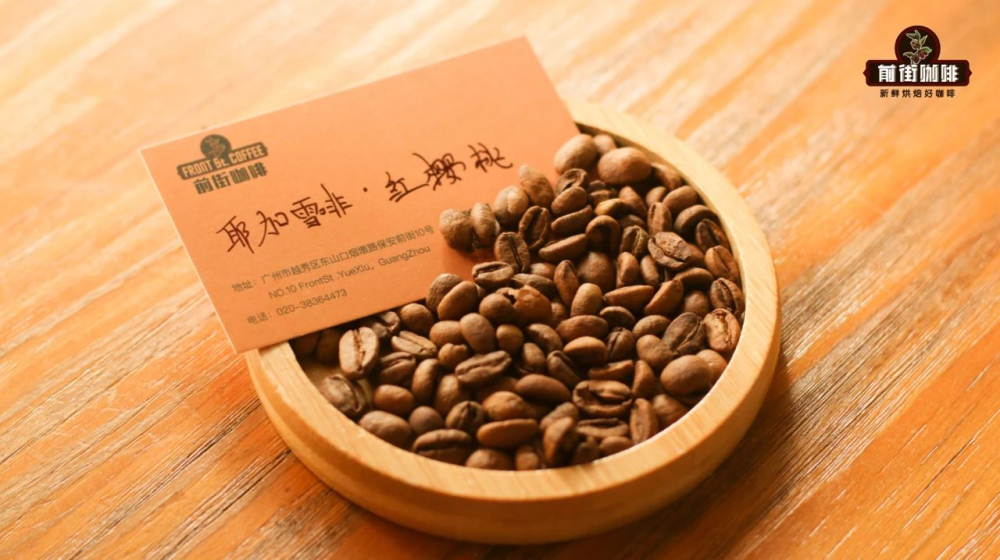
Grind 30g of sun-dried Red Cherry coffee beans to a medium-fine grind (73% passing through a Chinese No. 20 sieve). The approximate coarseness can be seen in the figure below.
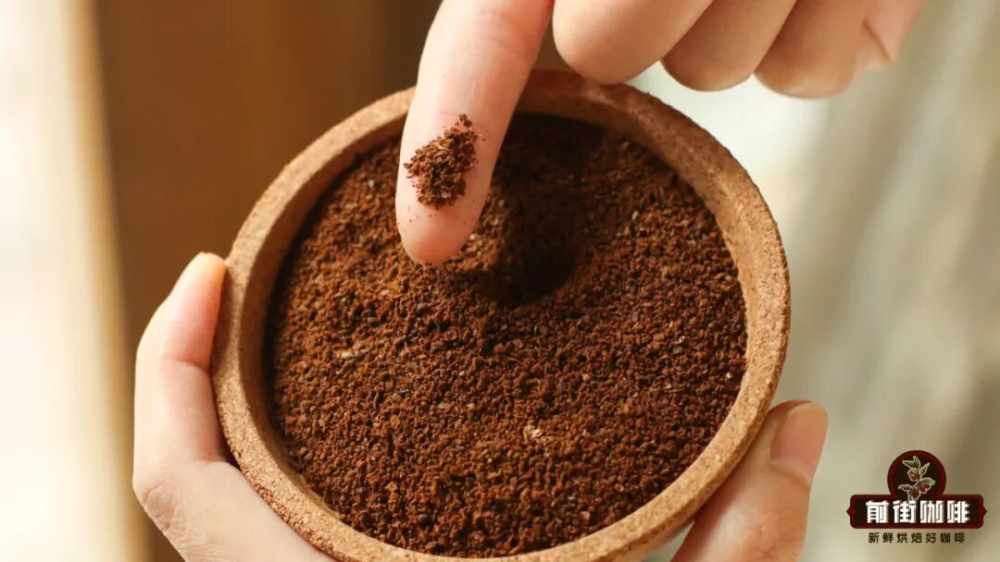
Then add it to a clean container that can be sealed and is resistant to both high and low temperatures, then pour in 390g of 40°C warm water (coffee-to-water ratio 1:13; if you want it stronger, you can try 1:12), then stir for half a minute and soak. (No need to cover with a lid)
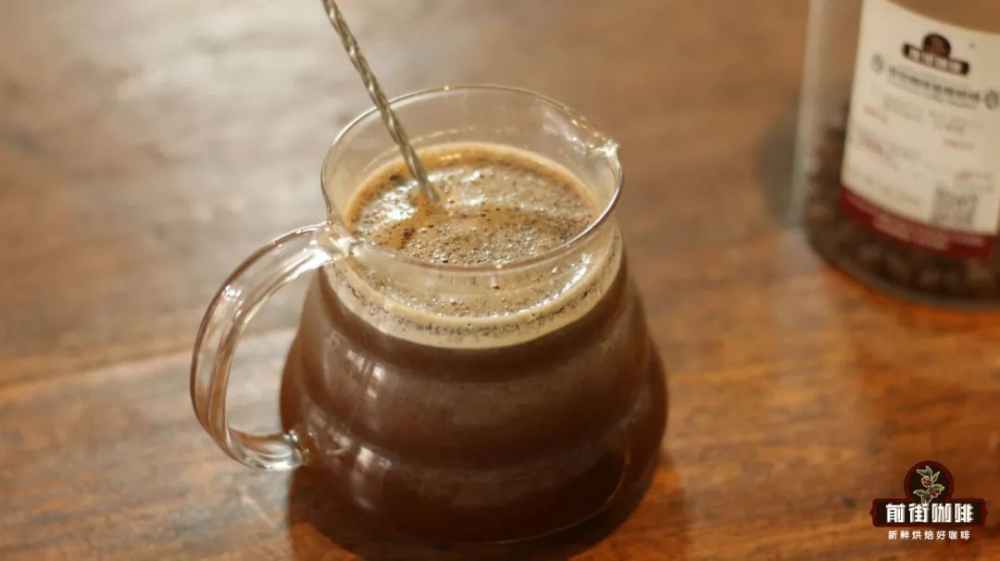
After the temperature of the coffee liquid in the container drops to 35°C (during production, Front Street Coffee's room temperature was 26°C, and it soaked for 16 minutes until it reached the desired temperature), it can be sealed and placed in the refrigerator for extraction.
After 4–5 hours, take it out and use a filtering tool to filter out the coffee grounds, and then it is ready to taste. If you still feel the concentration is a bit high, you can add a small amount of ice cubes/cold water to dilute it.
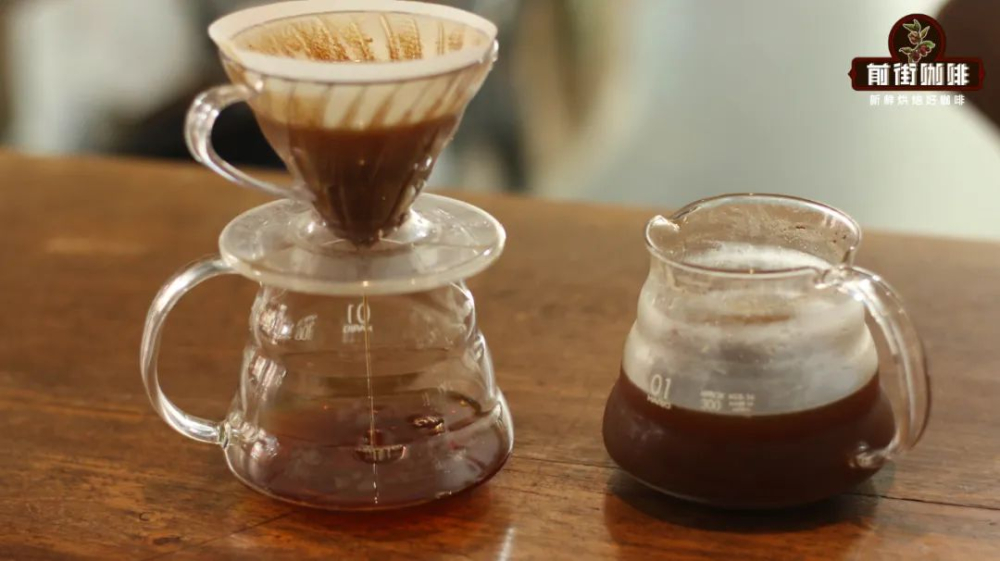
Warm water+How does the flavor extracted at low temperature taste?
Under the same parameters, using room-temperature water + low-temperature extraction for about 12 hours, the flavor profile is: bright citrus acidity, and the sweetness and tea-like notes are also more obvious, feeling like unsweetened lemon tea.
While using warm water + low-temperature extraction for 4–5 hours, the flavor profile is: a full berry juice sensation, the caramel sweetness is very prominent, and the finish has the sweet aftertaste of black tea. The sweetness is really excellent!!!

However, it should be noted that the flavor substances released by cold brew made with warm water will be more than those soaked with room-temperature water, so it should not be stored for too long. If you also make it this way, Front Street recommends keeping it sealed and stored in the refrigerator, and drinking it within 4 days.
The above content is compiled by CoffeeHunters, a coffee news website.


