How Do You Determine Coffee Roast Level by Sight?
Coffee roast level can be judged by color and surface texture. Light-roasted beans are light brown with obvious wrinkling, medium roasts look dark brown with gentler wrinkles, and dark roasts appear black, smooth, and sometimes oily and glossy. Tasting notes give a second cue: floral and citrus flavors point to a medium-light roast, while nutty and cocoa notes point darker.
In a shop, the flavor description on the bag is a practical reference, since it comes from cupping by trained staff rather than guesswork. Espresso beans and Americano coffee beans are usually roasted darker to hold up in the cup, but roast level can also be checked against the SCAA color value, a more objective scale used in roasting.

The coffee beans we usually come into contact with are all roasted. Roasting can bring out the captivating aroma of coffee beans, and different degrees of roasting give people different impressions. In this issue, Front Street Coffee (FrontStreet Coffee) introduces a fewmethods for identifying coffee roast levels.
1. Visual Observation
Based on the coffee roast levels we usually encounter, they can be divided into light roast, medium roast, and dark roast.

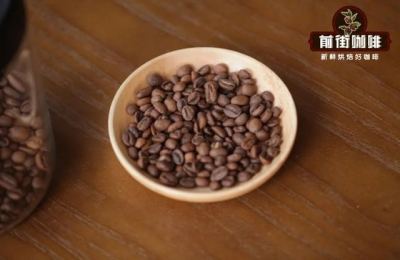
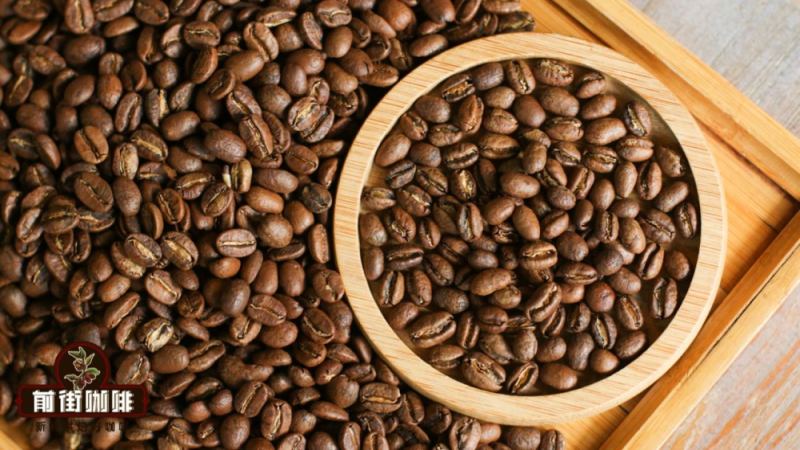
Generally, the color of raw coffee beans is light yellow or pale green. After roasting, the color becomes increasingly darker. Light-roasted coffee beans are generally light brown, with obvious wrinkling on the surface; medium-roasted coffee beans are slightly darker, appearing dark brown, with gentler wrinkling on the surface. Dark-roasted coffee beans appear black on the surface, with a smooth bean surface, and some darker roasts even exude oils, making the bean surface shiny and glossy.

2. Judgment by Tasting
In fact, we can also judge the range of roast level through the flavor descriptions provided by the shop. Generally, if the coffee flavor is described as floral, citrus, berry, and other fruity flavors, the coffee beans mostly belong to medium-light roast. If described as maple syrup, cane sugar, caramel, and other sweetness-dominant notes, the coffee beans are mostly medium roast. If described as nutty, cocoa, caramel, herbal, and other bitter-dominant flavors, the coffee beans are mostly medium-dark roast.
Of course, this classification method is not rigorous, but it works every time. The reason is that as customers, their understanding of coffee roasting is not too deep, nor do they need to understand it to the extent of professionals. However, coffee roasting is handled by professional roasters, and the flavor descriptions are the results of cupping by professional baristas, so the expressed flavors naturally have a relative basis. Using this as a reference is indeed a good judgment standard.

So, is there a scientific method to identify the roast level of coffee? The answer is there really is.
3. Determining Roast Level by SCAA Color Value
In coffee roasting, there are several crucial points, one of which is first crack. Before first crack occurs, the beans can be considered not yet "done." When first crack begins, it is intense, and after it ends, there is a quiet period of 1-2 minutes, then second crack arrives. The later the beans are dropped after first crack, the darker the roast level.
SCAA uses infrared caramelization measuring device technology (Agtron) to measure the color of coffee beans to determine the roast level of coffee, and divides the color from light to dark into eight equal parts, making eight standard color chips for the coffee industry to use as roast identification.

Agtron color value #95: Light Roast
Drop time: When first crack is about to end intensively
Agtron color value #85: Cinnamon Roast
Drop time: Around the end of first crack
Agtron color value #75: Medium Roast
Drop time: After first crack ends
Agtron color value #65: High Roast
Drop time: The quiet period between first crack and second crack
Agtron color value #55: City Roast
Drop time: When second crack begins
Agtron color value #45: Full City Roast
Drop time: Before second crack intensifies
Agtron color value #35: French Roast
Drop time: When second crack is intense
Agtron color value #25: Itatian Roast
Drop time: When oils begin to exude onto the bean surface

So, what connection does this have with the light roast, medium roast, and dark roast we often talk about?
For some coffee enthusiasts who are not very familiar with SCAA's Agtron standards, these eight categories can be grouped into four for understanding
Light Roast (highlighting fruity acidity and floral-fruity aroma): Light Roast, Cinnamon Roast
Medium Roast (increasing sweetness, balanced): Medium Roast, High Roast
Medium-Dark Roast (maximizing sugar transformation, bitterness turning to sweetness): City Roast, Full City Roast
Dark Roast (emphasizing both bitterness and richness): French Roast, Itatian Roast
For more specialty coffee beans, please add the private WeChat of Front Street Coffee (FrontStreet Coffee), WeChat ID: kaixinguoguo0925
The above content is compiled by CoffeeHunters, a coffee news website.